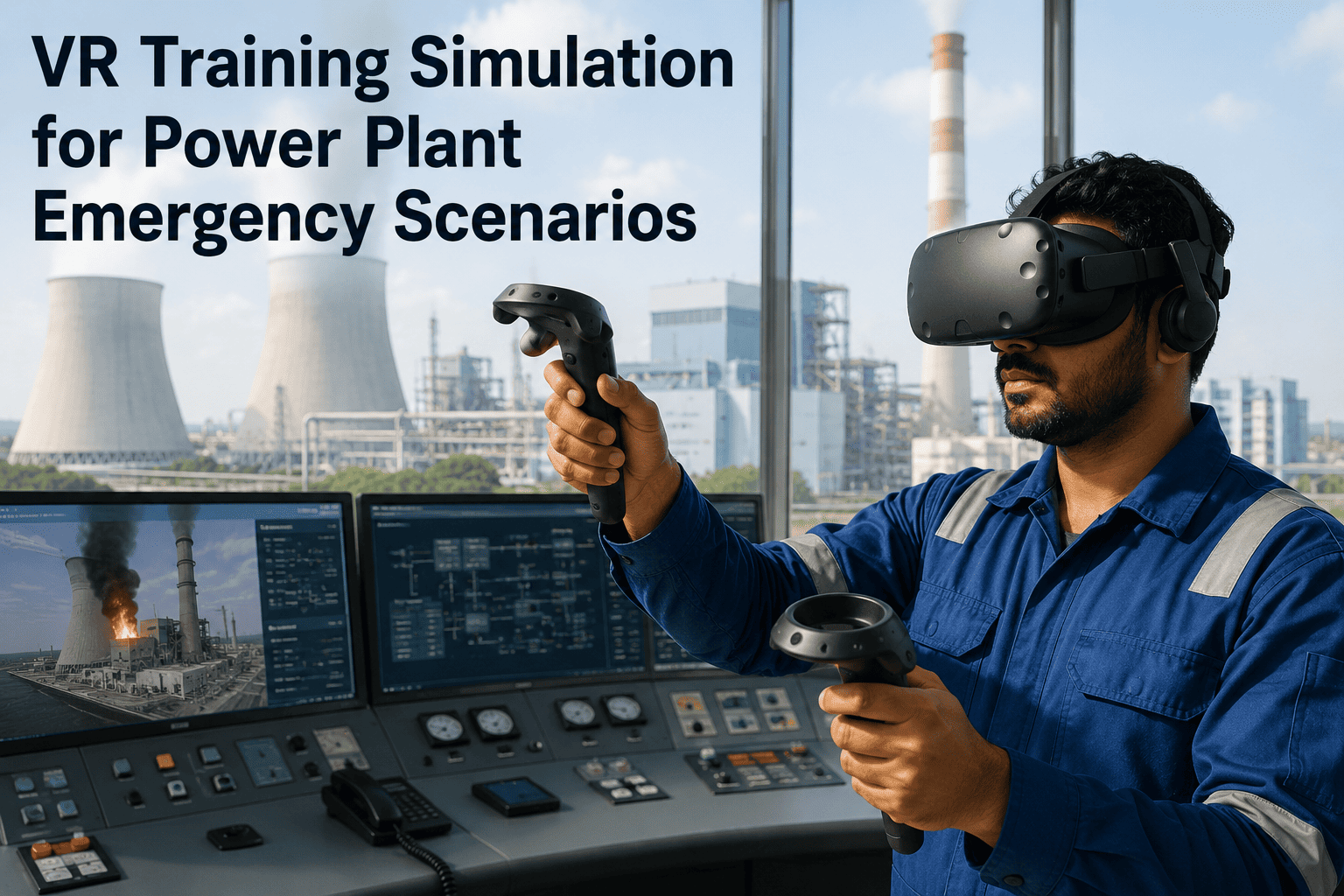
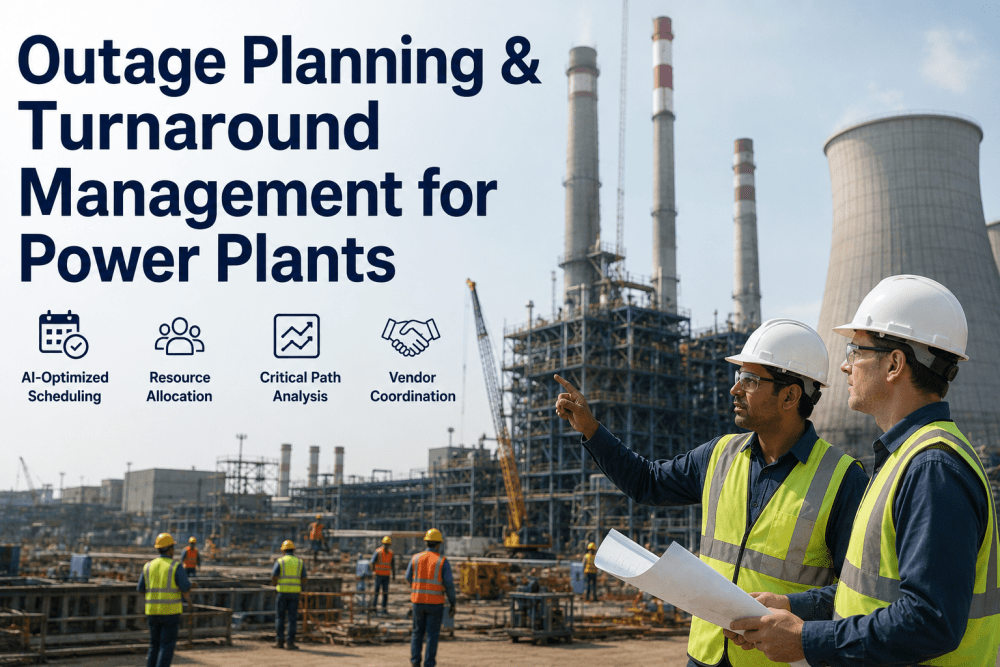
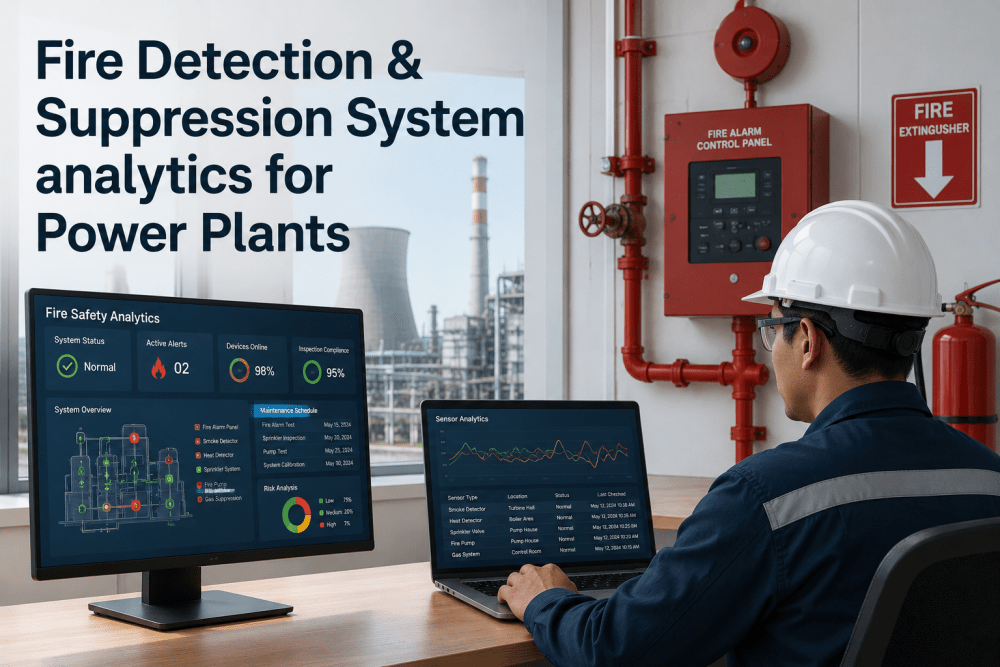
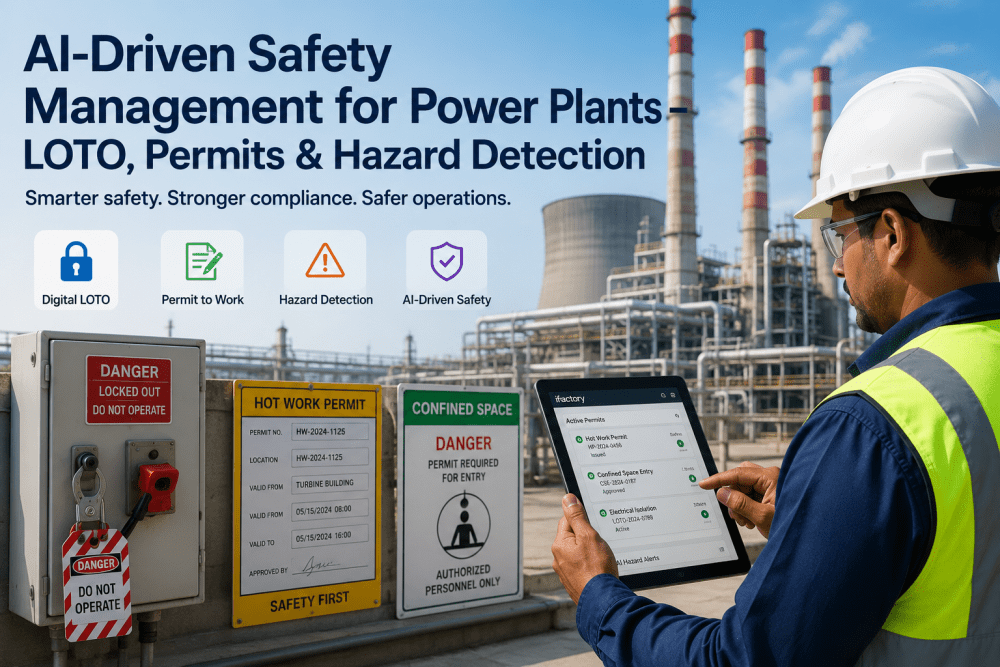
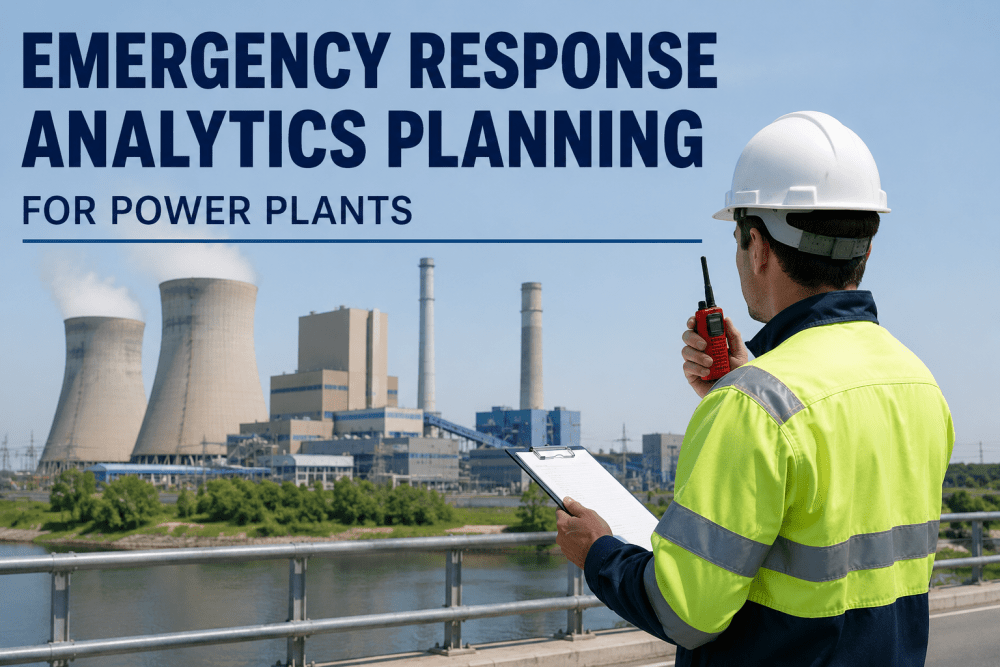
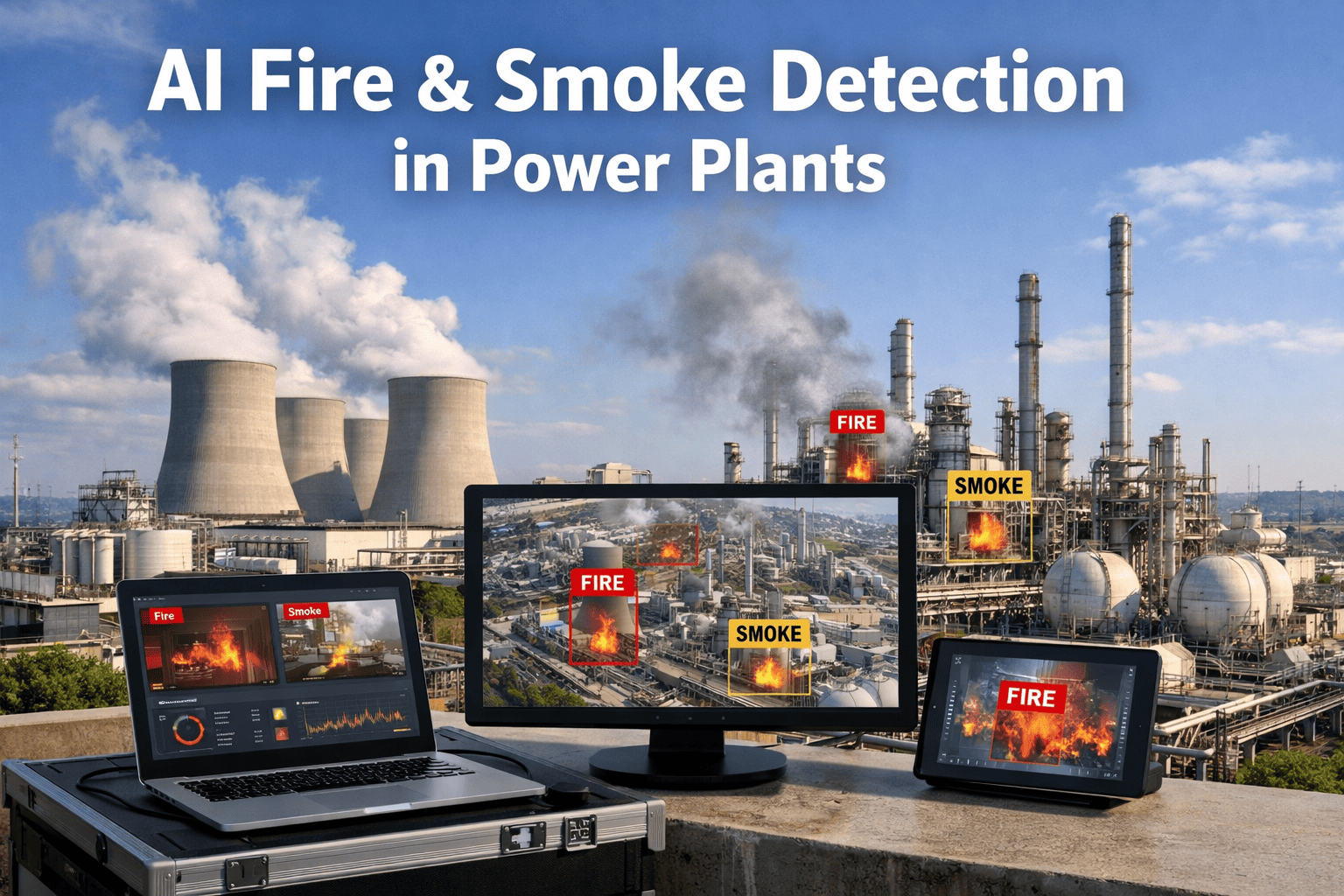
A fire alarm at 2 a.m., a chemical release during a shift change, a transformer fault in the middle of a storm — power plant emergencies never arrive on schedule, and the plans built to handle them are usually tested only once a year, on a calm afternoon, with everyone already expecting the drill. That gap between paper readiness and real readiness is where injuries, citations, and multi-day outages come from. Plant managers responsible for OSHA 1910.38 and NRC emergency preparedness obligations are now replacing static binders with AI-driven scenario simulation that rehearses the response, not just the paperwork, and you can book a demo to see it running against your own facility layout.
EMERGENCY PREPAREDNESS · POWER GENERATION · 2026
Turn Your Emergency Response Plan Into a Rehearsed, Auditable System
iFactory runs AI-generated emergency scenarios — fire, chemical release, electrical incident, natural disaster — against your actual plant layout, staffing roster, and equipment map, then scores every drill for OSHA and NRC audit readiness.
The Readiness Gap
Why Plans That Look Complete on Paper Fail on the Floor
Post-incident OSHA investigations repeatedly find the same pattern: an emergency action plan that satisfies every checklist item, paired with an evacuation or containment response that stalls the moment a real hazard doesn't match the drilled scenario. Annual fire drills rarely account for a simultaneous chemical release, a blocked primary egress route, or a night-shift crew with a different supervisor and headcount than the day shift. The plan was compliant. The response wasn't ready.
AI scenario simulation closes that gap by generating dozens of realistic variations — different shifts, different weather, different combinations of hazards — so the response your team has actually rehearsed is closer to the one they'll eventually need.
61%
of cited emergency response failures involve a scenario variation not covered in the last drill
4
hazard categories every power plant EAP must rehearse: fire, chemical, electrical, natural disaster
24 mo
maximum interval between full emergency preparedness program reviews under current NRC guidance
under 2 hrs
to assemble a complete audit package with automated drill and corrective action logging
Hazard Coverage
Four Emergency Categories, Simulated the Way They Actually Unfold
Every power generation facility carries a distinct combination of hazards depending on fuel type, switchyard configuration, and site layout. A credible emergency response program has to rehearse each category on its own terms, then rehearse the combinations that make an ordinary emergency dangerous.
Fire & Structural Emergencies
Turbine hall fires, transformer bank ignition, cable tray fires, and control room smoke events, simulated with variable wind direction, staffing levels, and secondary egress blockage to test whether evacuation timing and muster accountability hold up under pressure.
Chemical Release & HAZMAT
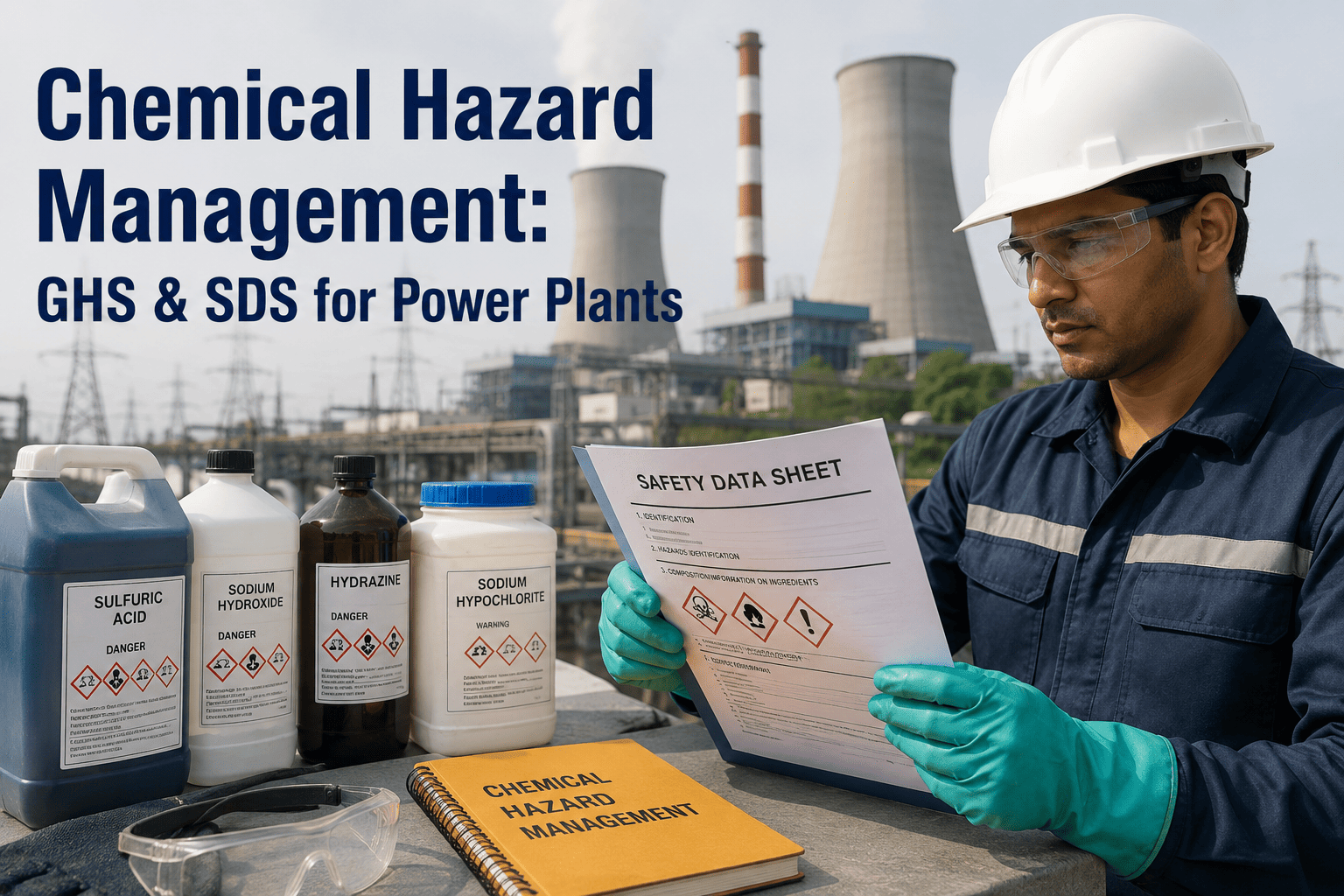
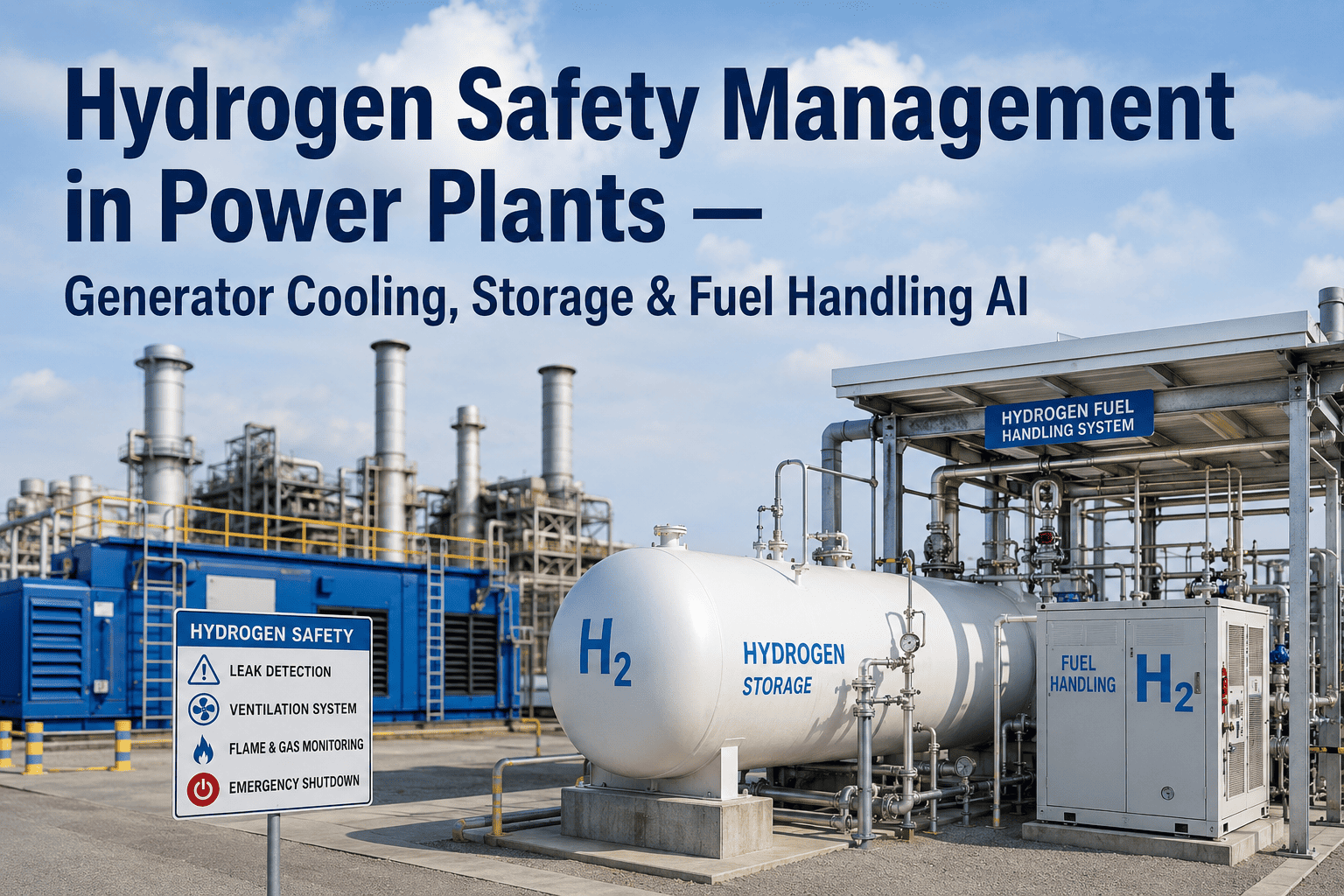
Ammonia slip from SCR systems, sulfuric acid handling incidents, and chlorine storage releases, modeled against wind and dispersion patterns so shelter-in-place versus evacuation decisions are practiced under realistic exposure timelines rather than guessed at.
Electrical & Arc Flash Incidents
High-Consequence
Switchyard faults, arc flash events during energized work, and cascading protection relay failures, simulated to rehearse lockout-tagout verification, medical response sequencing, and the notification chain to grid operators and utility control centers.
Natural Disaster & Grid Loss
Hurricane, flood, seismic, and extended grid-loss scenarios that test black-start procedures, fuel and water reserve management, and multi-day staffing continuity — the emergencies most likely to be under-rehearsed because they happen rarely and last longest.
Program Comparison
Static Emergency Binders vs. AI-Simulated Drill Programs
The table below reflects how emergency preparedness programs typically perform when compared across three maturity levels: a paper-based plan reviewed annually, a scheduled drill program with manual documentation, and an AI-simulation program that generates new scenario variations continuously and scores response performance automatically.
Emergency Preparedness Program Maturity — 2026 Comparison
Drill Lifecycle
How an AI-Simulated Drill Cycle Runs, Start to Finish
Unlike a single annual fire drill, the simulation cycle runs continuously in the background, generating new scenario variants and surfacing readiness gaps before an auditor — or a real emergency — finds them first.
Step 1
Generate the Scenario
The engine builds a hazard scenario against your actual site map, current staffing roster, and equipment status, varying shift, weather, and secondary complications each cycle.
Step 2
Run the Tabletop or Live Drill
Teams execute the response using the generated scenario, with the platform timing notification chains, muster accountability, and command structure activation as it happens.
Step 3
Score the Response
Response time, communication accuracy, and procedural adherence are scored against the benchmark, flagging exactly where the rehearsed response diverged from the plan.
Step 4
Close the Gap
Corrective actions are assigned with owners and due dates, and the next scenario cycle is weighted to re-test the specific weakness identified — so the same gap doesn't reappear at the next audit.
SEE IT ON YOUR OWN SITE MAP
Run a Scenario Against Your Actual Plant Before You Commit
Bring your site layout, staffing roster, and current EAP, and our team will build a live simulation during the call so you can see exactly how the scoring and audit package generation work.
Compliance Mapping
Where Simulation Data Satisfies Regulatory Requirements
Emergency preparedness obligations for power generation facilities span several overlapping regulatory frameworks. An AI simulation platform doesn't replace compliance work — it generates the documentation as a byproduct of running the drills you're already required to run.
OSHA 1910.38
Written emergency action plans with evacuation routes, muster points, and accountability procedures for employees, contractors, and visitors — versioned automatically as staffing or layout changes.
NRC Emergency Preparedness
Drill and exercise objectives, on-shift response organization staffing verification, and the 24-month program review cycle, logged with timestamped evidence for licensing audits.
EPA Risk Management Program
Chemical release scenario coverage and coordination records with local emergency planning committees, generated from the same simulation data used for internal drills.
HAZWOPER 1910.120(q)
Responder training tier verification, PPE matrix currency, and the "rehearsed regularly" standard satisfied through continuous scenario variation instead of a single annual exercise.
Command Structure
Rehearsing the Roles, Not Just the Actions
A response plan can list every correct action and still fail if the person expected to make a call isn't sure it's their call to make. Incident command structure breaks down under stress far more often than the technical response steps do, which is why scenario scoring tracks role activation and decision authority alongside physical response timing.
Incident Commander
Owns the overall response decision authority, confirms hazard classification, and authorizes escalation to external agencies. Simulation tracks how quickly this role is activated and by whom when the primary commander is unavailable.
Shift Supervisor
Executes immediate containment and evacuation actions before the full command structure stands up, and hands off cleanly once the incident commander takes authority — a handoff that scenario variation tests deliberately.
Safety & HAZMAT Lead
Directs PPE selection, exposure monitoring, and decontamination procedures for chemical and HAZMAT scenarios, coordinating directly with medical response and the incident commander on go/no-go re-entry decisions.
External Liaison
Manages the notification chain to fire, EMS, NRC, state SERC, and grid operators, with simulation timing how long it takes from incident declaration to first outbound notification across every rehearsed scenario variant.
Frequently Asked Questions
Emergency Preparedness & AI Drill Simulation — FAQ
Does AI scenario simulation replace our required physical fire and evacuation drills?
No. Physical drills remain a regulatory requirement under OSHA 1910.38 and NRC guidance, and the platform is built to strengthen them rather than substitute for them. What changes is the variety and realism of the scenarios you rehearse — instead of running the same fire drill every year, your team practices dozens of realistic variations, and the platform captures the documentation, timing data, and corrective action history that auditors ask for. Most facilities run their physical drills exactly as scheduled, with the simulation layer generating the scenario and scoring the outcome.
How does the platform build scenarios that match our specific plant layout?
During onboarding, your site map, equipment inventory, staffing roster, and current emergency action plan are loaded into the platform, and scenarios are generated against that specific configuration rather than a generic template. A fire scenario at a coal plant with a specific coal mill layout looks different from one at a combined-cycle gas facility, and the simulation reflects that. You can see this process directly if you
book a demo using your own facility data.
What does the audit package that gets generated actually include?
Each drill cycle produces a timestamped record of the scenario generated, the team's response actions and timing, the score against benchmark response times, any deviations from procedure, and the corrective actions assigned with their closure status. These records are formatted to align with OSHA and NRC documentation expectations, so audit preparation shifts from a multi-week manual assembly effort to a report that can be pulled in under two hours.
Can the platform account for different shifts having different staffing and supervision?
Yes, and this is one of the most common gaps the platform is built to surface. Scenarios can be generated and scored separately for day, evening, and night shifts, accounting for the actual headcount, supervisory coverage, and experience level present on each. Facilities frequently discover that a plan which performs well on day shift has real gaps on a minimally staffed night shift — a difference that annual daytime-only drills rarely reveal.
How long does it take to get a facility fully onboarded and running scenarios?
Most single-site facilities are running their first simulated scenarios within two to three weeks of kickoff, once the site map, roster, and current EAP have been loaded and validated. Multi-facility operators typically roll out a pilot site first, validate the scoring and documentation against their existing audit process, then extend to remaining facilities on a phased schedule. If you'd like help scoping a rollout timeline for your specific site count,
contact support to get started.
EMERGENCY PREPAREDNESS · AI SIMULATION · 2026
Rehearse the Emergency You'll Actually Have, Not the One in the Binder
See how iFactory generates continuous scenario variation, scores response performance, and builds your OSHA and NRC audit package automatically — walk through it live on your own plant layout.