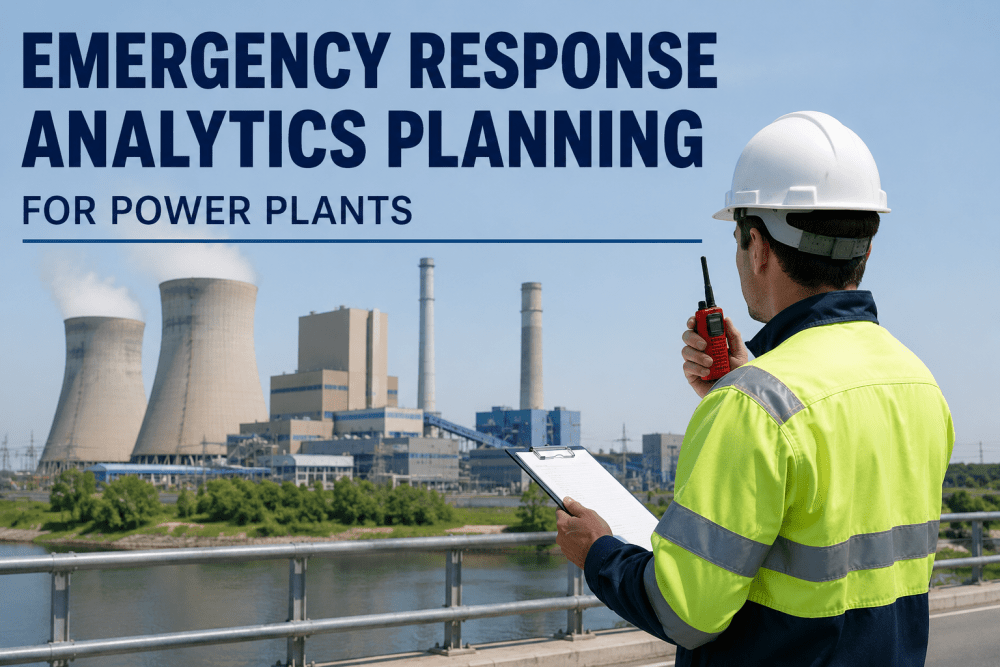
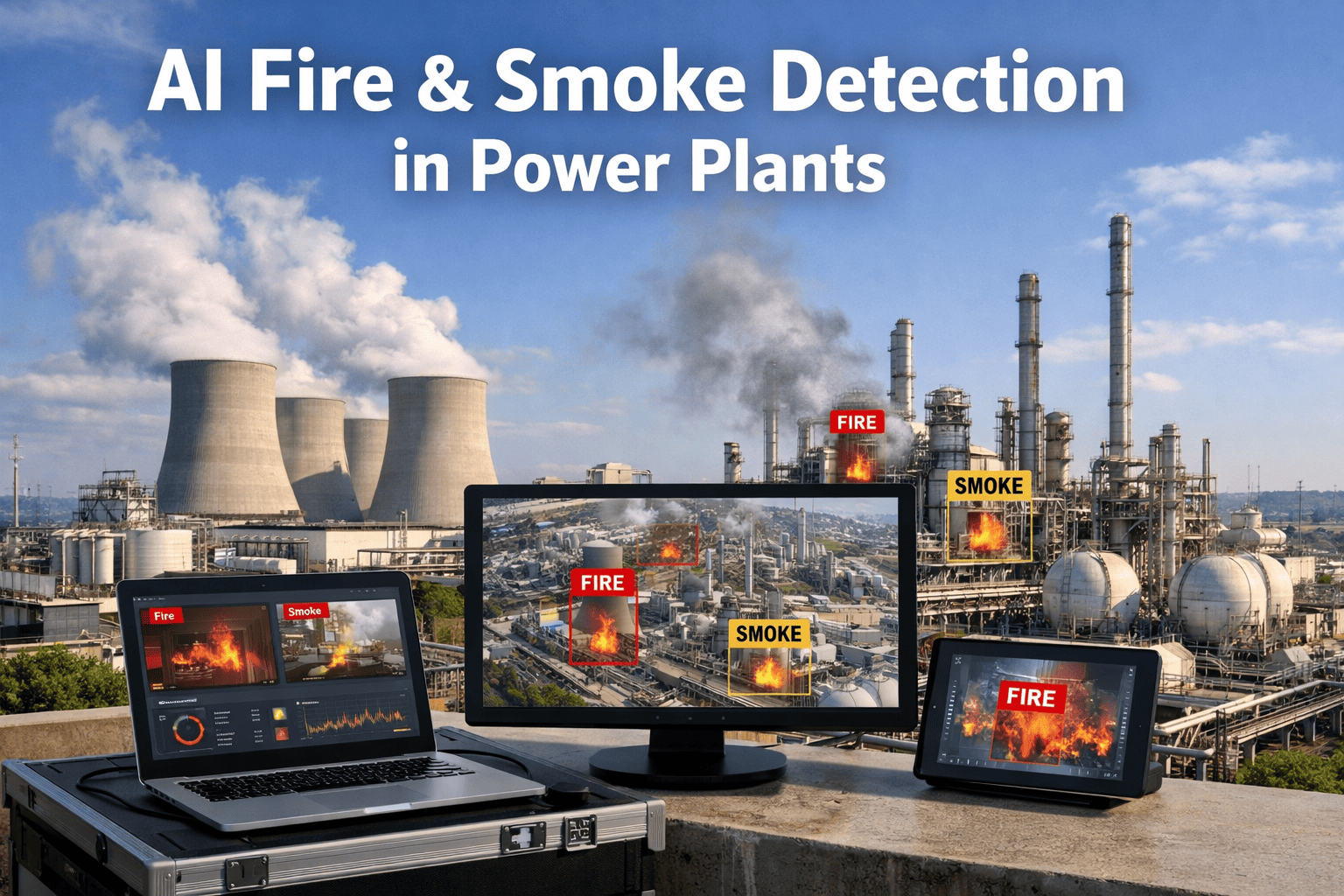
A turbine trip drill that shuts down a real unit costs a plant real generation, real fuel, and a real risk to the crew running it — which is exactly why most power plants can only afford to run a full-scale emergency drill once or twice a year, if that. A control room operator's actual hands-on experience with a fire in the transformer yard, a chemical release in the water treatment building, or a total electrical trip therefore comes almost entirely from a classroom slide deck and a memory of what a checklist says to do, not from anything resembling the sensory chaos of the real event. VR training simulation closes that gap by putting operators inside the emergency itself, as often as the schedule allows, without touching a single real asset — a shift explained in more detail at ifactory.
Workforce & Digital · Emergency Preparedness
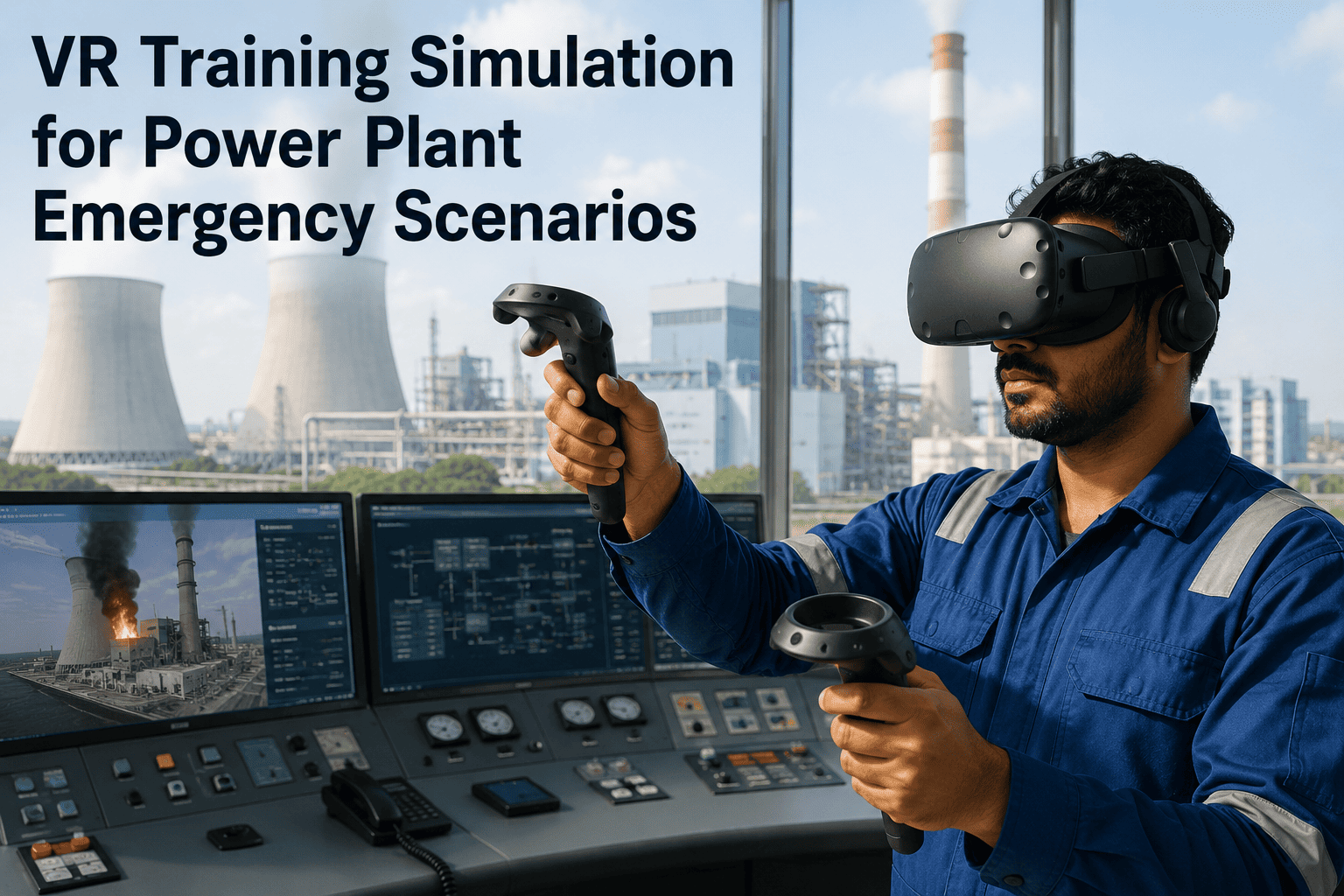
VR Training Simulation for Power Plant Emergency Scenarios
Immersive virtual reality puts operators inside turbine trips, fire response, and chemical release exercises as many times as competency requires — building the muscle memory a real emergency demands without shutting down a unit or putting a single person at risk.
The Training Gap
Why Real Emergency Drills Cannot Cover What Operators Actually Need
Emergency response competency is supposed to be built through repetition, but repetition is exactly what a live power plant cannot afford to give an emergency drill. Taking a turbine offline, filling a room with simulated smoke, or staging a chemical spill response disrupts generation, requires a full shutdown of the affected system, and carries its own safety exposure for the crew running the exercise. The result is a training calendar built around scarcity — one or two full-scale drills a year, tabletop walkthroughs in between, and a workforce whose actual physical experience of a real emergency is thinner than anyone in charge of plant safety would prefer to admit.
1–2
Full-scale drills most plants run per year
Generation loss, staging cost, and coordination overhead limit live emergency exercises to a handful of scheduled events annually.
0
Real turbine trips most operators have handled
Many operators reach senior shift roles having read about a total trip far more times than they have ever physically responded to one.
Unlimited
Repetitions available in a VR scenario
A virtual turbine trip, fire, or chemical release can be run again immediately after debrief, with no equipment downtime and no staging cost.
0
Real assets placed at risk in a virtual drill
Every consequence in a VR emergency scenario is simulated, so operators can make the wrong call and learn from it without real damage or injury.
Inside the Scenario Library
Five Emergency Scenarios Every Plant Rehearses in Virtual Reality
A useful VR training program is not a single generic simulation — it is a library of scenario types, each built around the specific decision points and consequence chains that matter for that class of emergency. The scenarios below represent the core library most power plants start with, each configurable to the plant's own equipment layout, control room design, and emergency response procedures.
Turbine Trip Response
Operators experience the alarm sequence, instrumentation readings, and time pressure of an unplanned trip, practicing the correct isolation and restart sequence under a simulated clock without risking a real unit shutdown.
Fire Response and Evacuation
A simulated fire in the transformer yard, cable spreading room, or turbine hall tests suppression activation, communication protocol, and evacuation routing, with smoke and heat cues that a slide deck cannot replicate.
Chemical Release Containment
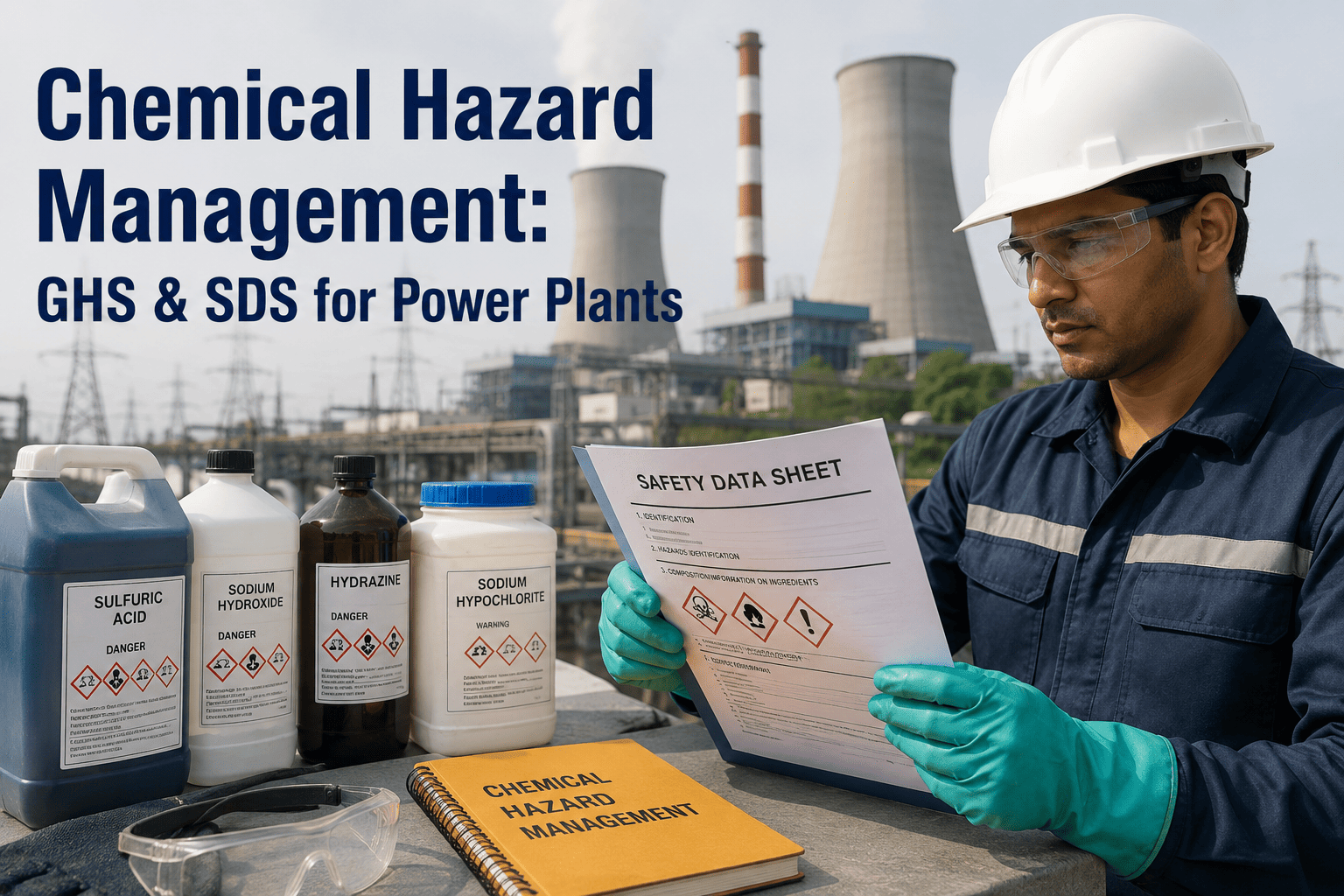
A leak in the water treatment or chemical storage area requires correct PPE selection, containment procedure, and notification sequencing, letting operators practice the exact steps a real spill would demand.
Electrical Arc Flash Awareness
A switchgear-area scenario reinforces safe approach distance, lockout-tagout sequencing, and PPE rating selection before an operator ever stands in front of energized equipment on the actual floor.
Confined Space Rescue
A downed worker in a confined space tests atmospheric monitoring, rescue team coordination, and communication discipline under time pressure, without exposing a real rescue team to the hazard being trained against.
Rehearse the Emergency Before It Happens
Every Scenario Repeatable. Every Decision Tracked. Every Consequence Simulated.
iFactory's VR training library puts your operators inside the exact emergency scenarios your plant is built to handle, as many times as competency requires, with full performance analytics behind every run.
Running a Simulation
What Happens Between Putting the Headset On and Walking Out of Debrief
01
Pre-Brief and Scenario Selection
The instructor selects the scenario, difficulty level, and specific variant matching the plant's equipment configuration, then briefs the operator on the starting conditions before the headset goes on.
02
Immersive Environment Load
The operator is placed inside a photorealistic recreation of the control room, plant floor, or affected area, matched to real instrumentation layouts so spatial memory transfers directly to the physical site.
03
Live Decision Points
As the emergency unfolds, the operator must read instrumentation, select the correct procedural response, and act within the same time pressure a real event would impose.
04
Branching Consequences
Each decision branches the simulation toward a different outcome — a correct isolation sequence contains the event, while a missed step lets the scenario escalate exactly as it would in reality.
05
Performance Capture
Every decision, response time, and procedural deviation is logged automatically during the run, building an objective performance record without an instructor needing to hand-score the exercise.
06
Structured Debrief and Replay
The instructor and operator review a full replay of the scenario together, pausing at key decision points to reinforce what went right and correct what did not, before certification status is updated.
Building Real Competency
From First Exposure to Independent Mastery in Four Stages
The point of repeatable simulation is not simply exposure — it is progression. A single run through a fire scenario teaches an operator what the procedure looks like, but competency is built by moving through increasing levels of independence and pressure until the correct response becomes automatic rather than remembered. VR makes this progression practical in a way a once-a-year live drill never could.
Stage 1
Guided Walkthrough
The operator moves through the scenario with on-screen prompts and instructor narration, learning the sequence of correct actions before being asked to perform them independently.
Stage 2
Assisted Practice
Prompts are reduced and the scenario introduces mild variation, requiring the operator to recall and apply the procedure with only occasional guidance available on request.
Stage 3
Independent Execution
The operator runs the full scenario unassisted, under realistic time pressure and full branching consequences, with performance captured against the same benchmark used for certification.
Stage 4
Stress-Tested Mastery
Compound scenarios introduce a second complication mid-event — an alarm during a fire response, a communication failure during containment — testing whether the response holds up under compounding pressure.
Traditional Drills vs Virtual Reality
What Changes When Emergency Training Moves Into VR
Live drills and tabletop exercises are not being replaced outright — regulatory frameworks still call for periodic full-scale live exercises, and nothing fully substitutes for a coordinated multi-team live drill on the actual site. What VR changes is the volume, frequency, and objectivity of the training that happens between those live events, closing the gap that used to sit empty on the training calendar.
| Training Factor | Traditional Drill / Tabletop | VR Emergency Simulation |
| Frequency achievable |
One to two full-scale drills per year |
Repeatable on demand, limited only by scheduling |
| Risk to personnel or equipment |
Real staging risk, real equipment downtime |
Fully simulated, zero physical exposure |
| Scoring objectivity |
Manual observer notes, variable by grader |
Automatic capture of every decision and response time |
| Scenario variation |
Fixed script, limited by staging logistics |
Configurable branching, new variants on demand |
| New hire readiness timeline |
Waits for the next scheduled live drill |
Available from day one of onboarding |
Regulatory Alignment
Where VR Training Fits Under Existing Safety and Reliability Standards
Power generation training programs already operate under a dense set of reliability and safety training requirements, and VR simulation is increasingly recognized as valid supporting evidence within those frameworks rather than a novelty sitting outside them. The records a simulation platform produces are frequently stronger evidence of demonstrated competency than a signed attendance sheet from a classroom session.
NERC PER-005
Personnel performance requirements call for demonstrated operating competency, and simulator-based training with logged performance data provides direct, auditable evidence of that demonstration.
OSHA 1910.120
Hazardous waste operations and emergency response training requirements are supported by repeatable, scenario-based practice that reinforces the exact procedures a real release or spill would require.
NFPA 70E
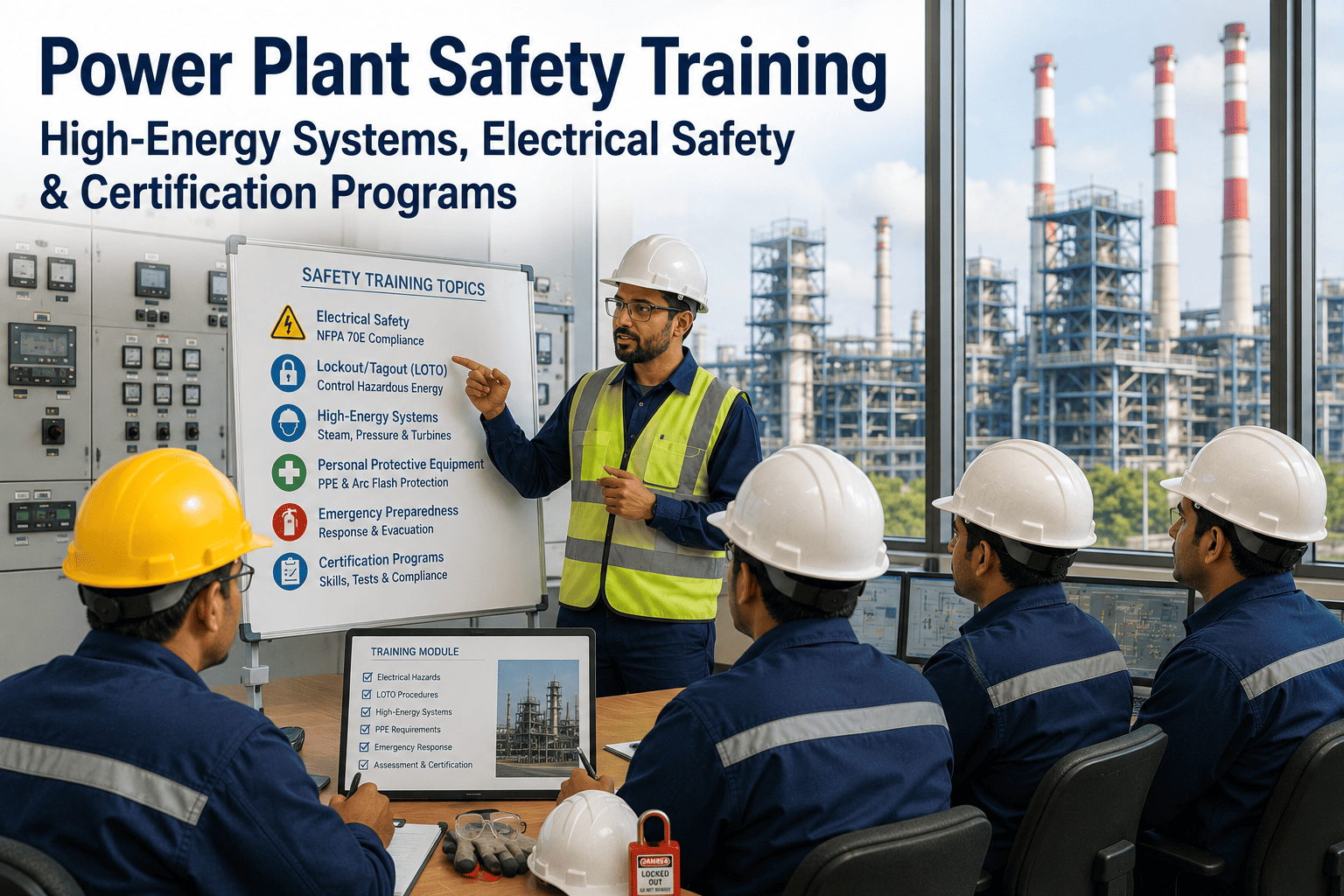
Electrical safety training around arc flash awareness and safe work practices benefits directly from a virtual environment where approach distance and PPE errors have consequences without real energized equipment.
ISO 45001
Occupational health and safety management systems call for competency evidence and continual improvement in training effectiveness, both of which a logged, repeatable simulation record supports directly.
Common Questions
Frequently Asked Questions
Does VR training replace live emergency drills entirely, or work alongside them?
VR simulation is designed to work alongside live drills rather than replace them outright, since regulatory frameworks and multi-team coordination exercises still call for periodic full-scale live events on the actual site. What VR changes is everything that happens between those live drills — the repeated individual practice, new hire onboarding, and scenario variation that a once-a-year live event was never able to provide. Most plants find their live drills improve as a result, since operators arrive already fluent in the procedure rather than seeing it for the first time. Details on how the two programs typically fit together are covered at
ifactoryapp.com/support.
Can scenarios be customized to match our plant's actual control room and equipment layout?
Yes — the environment, instrumentation panel layout, and equipment positioning within each scenario are configured to match the plant's actual site, so the spatial memory an operator builds during a virtual turbine trip or fire response transfers directly to the real control room and floor. This customization is handled during onboarding using facility drawings and photos rather than requiring a fresh build for every plant. Procedural steps within each scenario are also aligned to your existing emergency response procedures rather than a generic script.
What hardware is required to run VR training sessions on-site?
Standard commercial VR headsets are used, without requiring a dedicated simulation room or specialized computing infrastructure beyond what typically supports the headset itself. Sessions can run in a training room, a spare office, or any quiet space with enough clearance for the operator to move safely, and multiple headsets can run parallel sessions for group onboarding. Hardware recommendations and setup guidance specific to your training space are covered during onboarding.
How is operator performance data used, and who has access to it?
Performance data captured during a simulation — decision accuracy, response time, and procedural deviations — is used to build a competency record for that operator and to identify training gaps across a shift or crew. Access to individual performance records typically follows the same access controls a plant already applies to training and certification records, with supervisors and training coordinators able to review results for their team. Aggregated, anonymized data can also highlight scenario types where an entire crew is struggling, informing where additional live drill time should be focused.
How long does it take to stand up a VR training program for a first plant site?
A first deployment typically moves from initial scoping to a live training program within a few weeks, since the core scenario library is already built and configuration focuses on matching it to your specific facility layout and procedures. Instructor training on running and debriefing sessions runs in parallel with that configuration, so the program is ready to onboard operators as soon as the site-specific build is complete.
Book a demo to walk through a realistic timeline and scenario scope for your plant.
Train for the Emergency Before It Happens
Give Every Operator Real Repetitions on the Emergencies That Matter Most
iFactory's VR training platform puts your crew inside turbine trips, fire response, and chemical release scenarios as often as competency requires, with a full performance record behind every session and zero risk to real equipment or people.