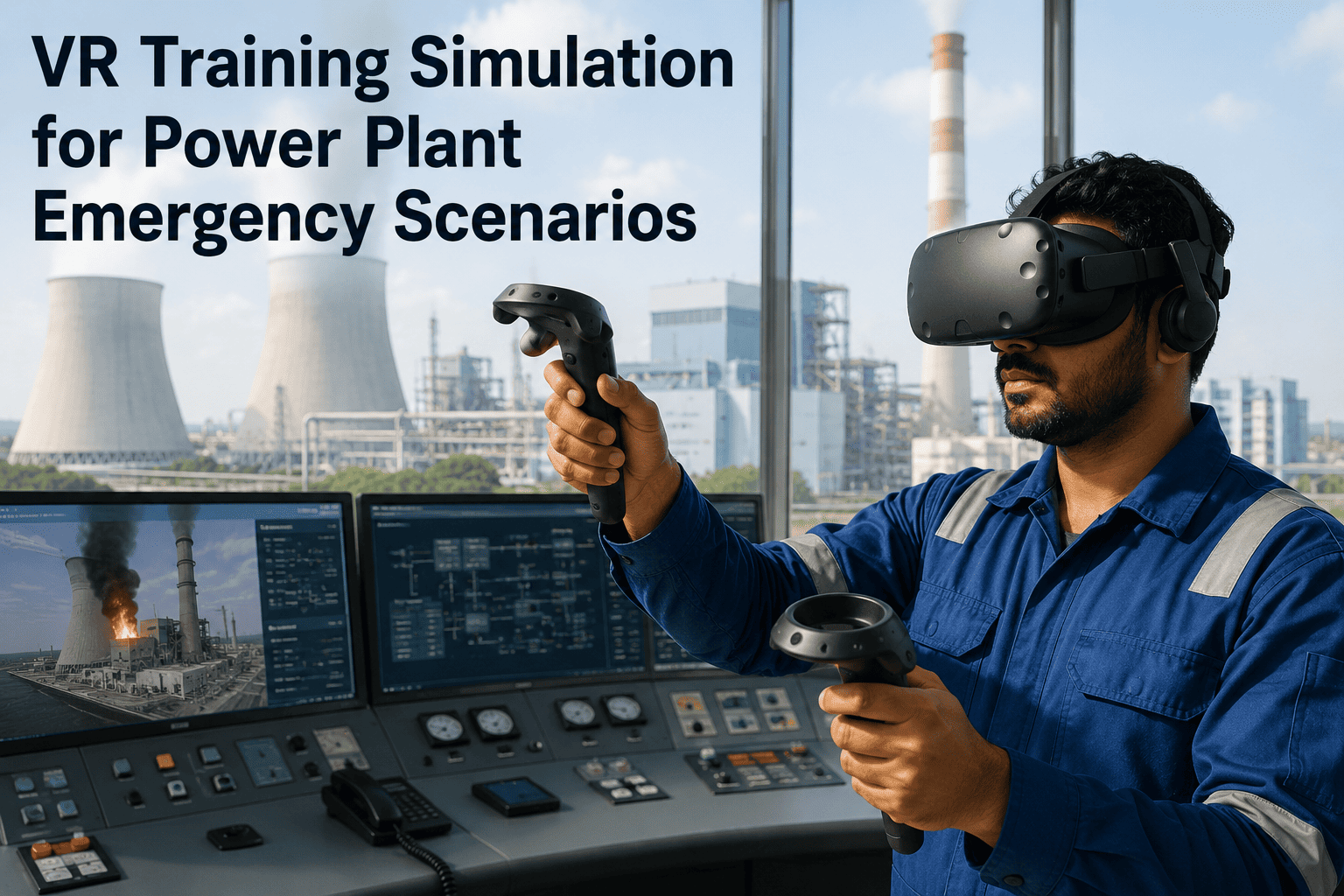
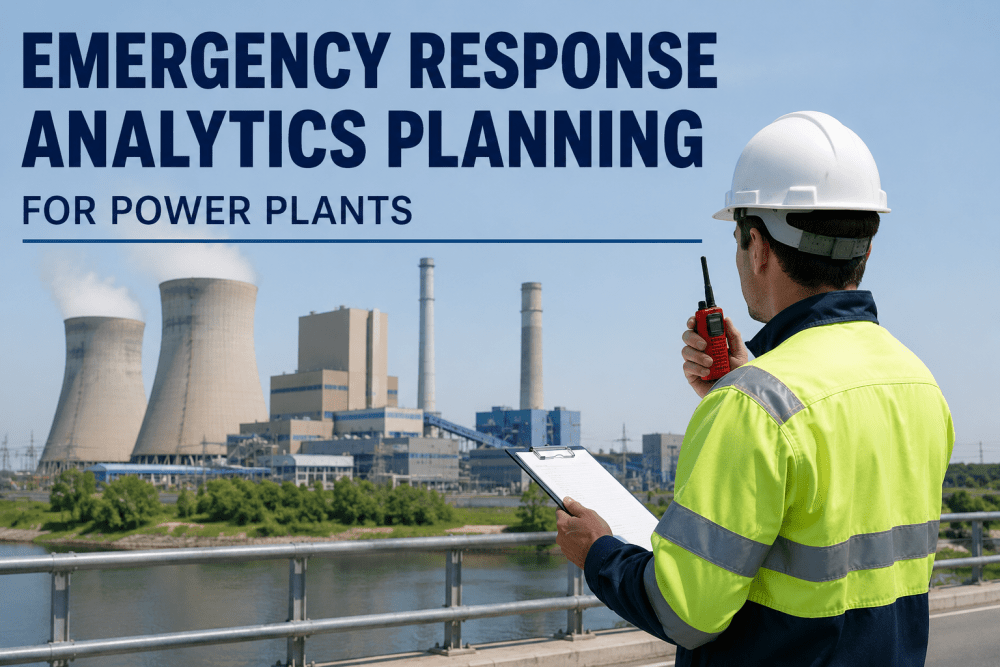
Every power plant manager has lived through the same moment: a young operator freezes for three extra seconds during a real abnormal event because the only place they had ever seen that alarm pattern before was in a classroom slide, not on a live board. Traditional on-the-job shadowing teaches operators what a normal shift feels like, but normal shifts rarely include the startup sequences, trip recoveries, and multi-alarm cascades that actually separate a competent operator from a struggling one. As experienced control room staff retire faster than plants can replace them, the gap between "has completed training" and "can actually run the unit under pressure" has become one of the most expensive blind spots in generation operations, which is why more plants are turning to AI-driven simulation and competency platforms to close it.
Why On-the-Job Shadowing Alone Leaves Dangerous Competency Gaps
Most generation fleets still qualify new operators through a mix of classroom instruction and supervised board time, and both methods share the same weakness: they depend on whatever happens to occur during the training window. A unit can run for months without a real startup, a genuine trip, or a cascading alarm event, which means an operator can complete every formal training hour on the books and still have never made a single high-consequence decision under time pressure. Competency, in that model, is measured by hours logged rather than by demonstrated judgment.
Five Capabilities Inside iFactory's Operator Simulation Platform
A simulation platform earns its place in the training program only if it reflects the plant it is training people for. iFactory builds its scenario library and scoring models around your unit's actual process configuration, not a generic generation archetype, so every drill an operator runs maps directly onto the board they will actually work.
Training Program Impact Across Six Measured Outcomes
Training budgets get scrutinized like every other line item, so the results below reflect the outcomes plant managers actually track when they justify a simulation investment to leadership: time to qualification, incident correlation, and readiness confidence.
| Training Outcome | OJT-Only Baseline | AI Simulation Result |
|---|---|---|
| Time to independent qualification | 11–16 months average | 7–11 months average |
| Abnormal-event decision accuracy | Inconsistent, supervisor-rated | Scored against unit-specific criteria, 22–30% higher pass rate |
| Scenario repetition per trainee | Dependent on real event frequency | Unlimited, scheduled repetition until proficiency |
| Skill decay detection | Rarely tracked between rare events | Automated refresher scheduling based on skill decay flags |
| Human error contribution to incidents | Baseline industry range 35–45% | 18–26% reduction reported after 12 months |
| Supervisor time spent on assessment | High, largely subjective | Reduced 30–40% via automated scoring reports |
How a Simulation-Based Training Program Rolls Out
Standing up a simulation-based competency program does not require replacing your existing training curriculum. iFactory layers onto what you already have, converting classroom and procedural content into scored, repeatable simulation drills.
Competency You Can Prove, Not Just Certify
Attendance-based training records satisfy an audit checkbox, but they do not answer the question that actually matters at 3 a.m. during a cascading alarm event: is the person on the board ready for this. AI-driven simulation and competency scoring turns that question from a guess into a measurable, defensible answer — and gives plant managers a way to close the experience gap left by a retiring workforce before it becomes an incident report.
There is also a cultural shift that plant managers report once scoring becomes routine: operators stop viewing simulation sessions as a compliance obligation and start treating them as a genuine opportunity to sharpen judgment before it is tested for real. When feedback is specific — this decision was three seconds slower than the target window, this procedural step was skipped — training stops feeling generic and starts feeling like coaching. That shift in how training is received tends to matter as much for retention and morale as the raw competency numbers do.
For plant managers building the business case internally, the strongest argument is rarely the training budget line item itself. It is the cost of the alternative: an undertrained operator making the wrong call during the one event a year that actually tests their judgment, when a trip, a cascading alarm, or an emergency shutdown does not wait for someone to be ready. Simulation-based competency programs exist to make sure that readiness is not left to chance.
Frequently Asked Questions
Not necessarily. iFactory's platform is built to layer AI scoring, scenario automation, and skill analytics on top of an existing simulator investment where one is already in place, or to serve as the primary simulation environment where a dedicated simulator does not yet exist. The scoring and analytics layer is what most legacy simulators lack, and it can typically be integrated without replacing hardware you have already paid for. Contact support to review your current simulator setup against integration requirements.
The simulation environment is built from your unit's process configuration, control logic, and historical operating data, so trainees experience response times, coupling between systems, and instrumentation behavior specific to your plant rather than a generic reference model. Accuracy is validated against your operations subject matter experts during the scenario build-out phase before any pilot cohort runs a drill, and is re-validated whenever significant plant modifications occur.
Every scenario is scored against explicit criteria covering decision timing, procedural accuracy, and communication quality, all defined in collaboration with your operations leadership during calibration. Supervisors have full visibility into scoring criteria and individual results, and the system is designed to support rather than replace supervisor judgment on final qualification decisions. Book a demo to see a sample scoring report.
Most plants see measurable reductions in time-to-qualification within the first pilot cohort, typically inside 90 days of program launch, since repeatable drilling directly compresses the reps an operator needs to demonstrate proficiency. Incident-rate correlation takes longer to validate statistically and is generally assessed at the 12-month mark, once a full cohort has been through both training and live board exposure.
Yes. Each unit or plant configuration is modeled separately so scenario libraries and scoring criteria reflect the specific equipment and procedures at each site, while skill analytics can still be rolled up across the fleet for workforce planning and cross-site benchmarking. Contact support to discuss a multi-unit deployment plan.