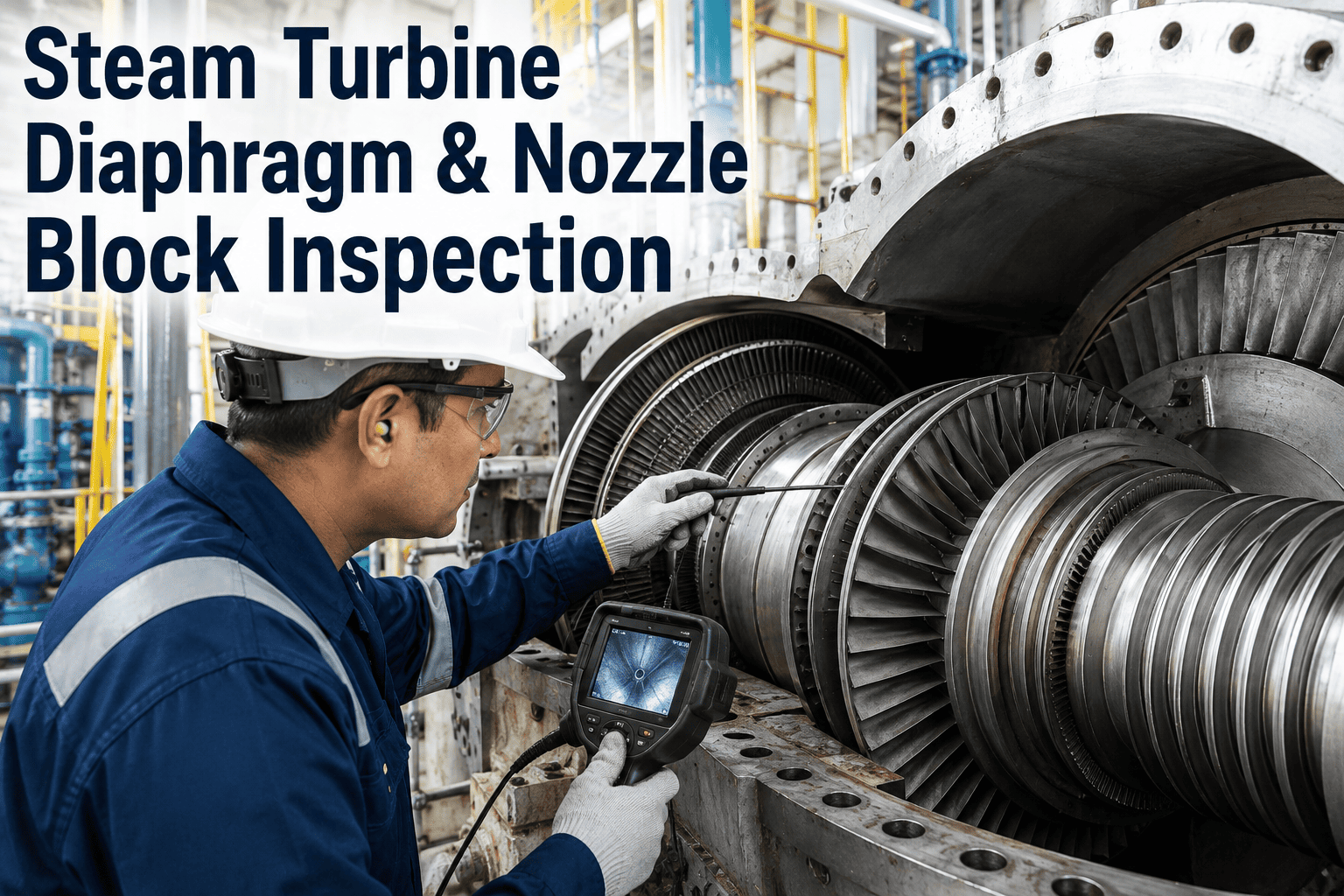
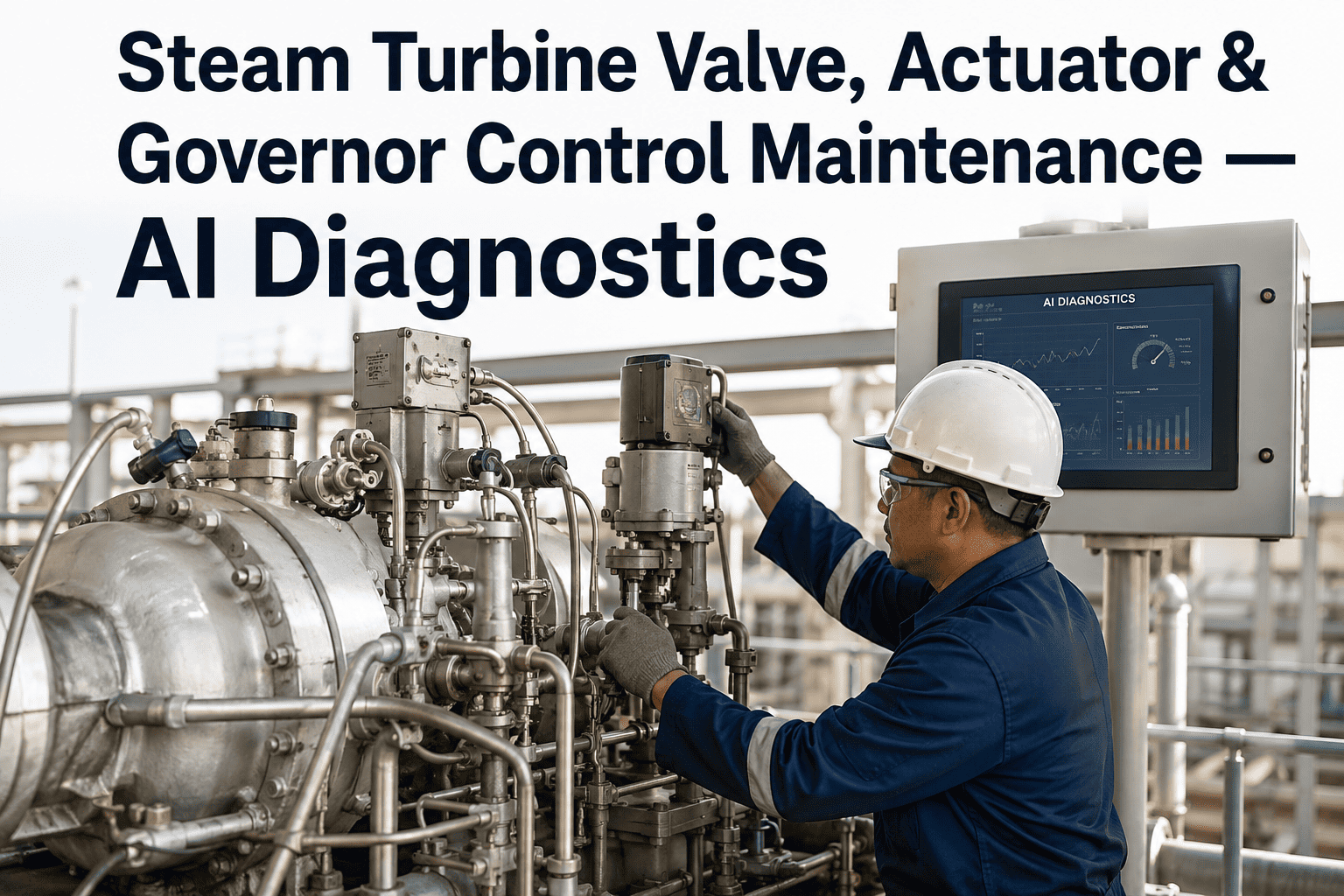
A steam turbine casing is only as reliable as the joint holding its two halves together, and that joint depends on dozens of bolts each carrying tens of thousands of pounds of tension you cannot see or feel by hand. Torque a wrench to spec and you still don't know the real clamping force sitting inside the metal — friction, thread condition, and thermal cycling can throw that number off by a wide margin, which is exactly how casing joints start weeping steam years before anyone expected a leak. iFactory's condition monitoring platform gives maintenance teams a way to track flange integrity continuously instead of finding out about it at the next scheduled outage, and if you want to see how that looks on your own turbine fleet, our team can walk you through it.
Every Casing Leak Starts As A Bolt You Trusted Too Much
Flange bolts on a large steam turbine hold two casing halves together against steam pressures that routinely exceed 2,400 psi. Torque alone cannot tell you how much of that clamping force actually survives years of thermal cycling — and by the time a leak is visible, the joint has usually been losing preload for a long time.
Why Torque Numbers Lie To You
The instinct on any bolted joint is to trust the torque wrench: hit the spec, walk away, move to the next bolt. The problem is that torque only measures the rotational effort needed to turn the fastener, not the actual tension locked inside it once you stop turning. Friction between the threads, condition of the lubrication, galling on the nut face, and even how many times that bolt has been reused all change how much of your applied torque actually converts into clamping force. Industry testing has repeatedly shown that torque-based tightening can deviate from actual bolt tension by as much as 25 to 30 percent, which on a casing joint carrying superheated, high-pressure steam is not a rounding error — it is the difference between a joint that holds for another five years and one that starts seeping steam at the next thermal cycle.
What Actually Happens Inside A Flange Joint Over Time
A turbine casing runs hot on the inside and cooler on the outside, and that temperature gradient through the thickness of the flange creates differential thermal expansion between the two faces. Every start-up and shutdown cycles that stress, and over hundreds of cycles the joint faces can separate microscopically even while the bolts still look perfectly intact from the outside. Add in bolt spacing that was designed decades ago for a different pressure profile, or pressure cones from adjacent bolts that were never quite merging in the first place, and you have a joint that was marginal on day one and has only gotten worse with every outage. None of this shows up on a walk-by visual inspection — it shows up as a hiss you can hear standing next to the machine, usually months or years after the actual loss of clamp load began.
Torque Wrench Versus Ultrasonic Elongation Measurement
Both methods aim to achieve the same result — the correct clamping force on every bolt in the joint — but they measure fundamentally different things, and that difference is exactly why one is a rough estimate and the other is a direct physical reading.
| Factor | Torque Wrench Method | Ultrasonic Elongation Method |
|---|---|---|
| What it measures | Rotational effort applied to the fastener | Actual physical stretch of the bolt under load |
| Sensitivity to friction | High — thread and face friction distort the reading | None — friction plays no role in the elongation reading |
| Typical accuracy | Can deviate 25 to 30 percent from real tension | Within 1 to 3 percent of actual bolt load |
| Access requirement | Access to the nut or bolt head to apply torque | Access to one end of the fastener only |
| Documentation value | Records the torque applied, not the result achieved | Produces a direct, auditable elongation and load record |
Reading Casing Distortion Before It Becomes A Joint Failure
Bolt tension is only half the story on a casing joint — the other half is whether the casing itself is still round. Turbines that have run for years through repeated thermal cycles gradually develop non-round distortion in the shell, and when that happens the bolts around the joint start fighting an uneven battle: some are carrying far more load than their neighbors just to hold the shape together. A joint with uneven bolt loading is a joint where the weakest bolts fail first, not because they were defective, but because they were quietly compensating for a casing that had already started to drift out of tolerance. Full 3D metrology and bolted-joint structural analysis on failing casings has repeatedly traced leaks back to exactly this combination: bolt spacing that was too sparse in one section, pressure cones that never fully merged, and a temperature gradient through the flange thickness that was steeper than the original design assumed.
This is also why fixing the same leaking section over and over rarely holds. A crew retorques the suspect bolts, the joint seems fine for a few weeks or months, and then the same hiss returns at roughly the same spot. If the root cause is casing distortion rather than a handful of relaxed bolts, retorquing without correcting the underlying geometry just resets the clock on the same failure. Design engineers who have gone back and reworked chronically leaking joints have found the fix usually involves more than tightening — added bolts where original spacing was too sparse, adjusted bolt sizing and torque to increase preload clamp force, and re-machined thread starts so pressure cones from adjacent bolts actually merge instead of leaving gaps between them. None of that is visible from a torque log. It only shows up once someone measures what the joint is actually doing under load.
The Outage That Almost Wasn't
A combined-cycle plant running a mid-size steam turbine had been chasing a slow steam leak along the horizontal joint for two outage cycles, retorquing the same section each time without resolving it. Ultrasonic elongation checks across the flange during the next scheduled outage found that six adjacent bolts were holding barely half the clamping force of the bolts around them, while torque records for every one of those bolts showed spec had been met each time they were tightened. The uneven loading traced back to casing distortion the team had never measured directly. Re-torquing to the correct sequence and verified elongation, rather than to torque spec alone, closed the leak path in that outage — the kind of fix that only becomes visible once you are measuring what the bolt is actually doing instead of what the wrench says it did.
A Practical Bolt And Flange Maintenance Sequence
Casing joint integrity is not a single inspection task — it's a sequence that has to be followed in order, because skipping a step or doing them out of order is how uneven loading gets baked back into the joint at the next outage.
Stop Guessing What Your Bolts Are Actually Holding
iFactory connects flange and bolt inspection data into one condition record per turbine, so torque logs, elongation readings, and casing distortion trends live in the same place instead of three different clipboards.
Signs Your Next Outage Should Include A Full Flange Audit
Not every outage needs a full bolt-by-bolt elongation survey, but certain signs mean skipping one is a bet you are making with the next unplanned shutdown.
Frequently Asked Questions
Why does a properly torqued bolt still end up under-tensioned?
Torque measures the rotational force needed to turn the fastener, not the tension that ends up locked inside it, and the relationship between the two is distorted by thread friction, lubrication condition, and face friction under the nut. Two bolts torqued to the exact same spec can end up with meaningfully different actual clamping force simply because one had slightly more friction in the threads. That gap is well documented in industrial bolting research and is the core reason critical joints — casing flanges included — increasingly rely on ultrasonic elongation measurement rather than torque alone, since elongation reflects the bolt's real physical stretch and is unaffected by friction. Our support team can walk through what a baseline elongation survey looks like for your fleet.
How often should casing flange bolts be checked for tension loss?
There is no single universal interval, because it depends on cycling frequency, bolt age, and prior joint history, but the safest practice is to take baseline elongation readings at every major outage rather than only when a leak is already suspected. A joint that has never been measured directly gives you no way to tell whether tension loss is gradual and expected or accelerating toward a real problem. Turbines approaching the upper end of the typical 20 to 30 year bolt working-age window, or joints with any history of repeat retorquing, warrant checking at every outage without exception.
Can casing distortion cause a leak even if every bolt is at spec?
Yes, and this is one of the more counterintuitive failure paths on a casing joint. If the shell itself has drifted out of round from years of thermal cycling, bolts around the joint end up carrying uneven loads even when each one was individually torqued correctly at the last outage — some bolts are quietly doing more work than their neighbors to hold the shape together. Structural analysis on failed casing joints has repeatedly traced leaks back to exactly this pattern: correct torque records everywhere, but real clamping force distributed unevenly because the underlying geometry had shifted.
What's the difference between bolt stretch and bolt elongation?
They describe the same physical phenomenon and are generally used interchangeably in bolted-joint maintenance — both refer to the small increase in a bolt's length that occurs as tension is applied during tightening. That elongation is directly proportional to the tension in the bolt within its elastic range, which is exactly why measuring it gives a far more reliable read on actual clamping force than measuring the torque applied to create it. Ultrasonic tools measure this by timing how long a sound pulse takes to travel the bolt's length before and after tightening, then converting that time difference into a precise elongation and load value.
Is ultrasonic bolt measurement worth it for a joint that isn't currently leaking?
It's worth it specifically because the joint isn't leaking yet. By the time steam is audibly or visibly escaping from a horizontal joint, clamp load has typically already been dropping for an extended period — the leak is a lagging indicator, not an early one. A baseline ultrasonic survey on a healthy joint costs far less than an unplanned outage, and it gives you a real record to compare against at every future outage instead of relying on torque logs that were never a direct measurement of tension in the first place. Book a demo to see how that baseline data gets tracked over the life of the turbine.
Give Your Next Outage A Real Bolt Load Record, Not Just A Torque Log
iFactory tracks flange bolt condition, casing alignment history, and outage findings in one place, so the next turnaround starts with data instead of guesswork.