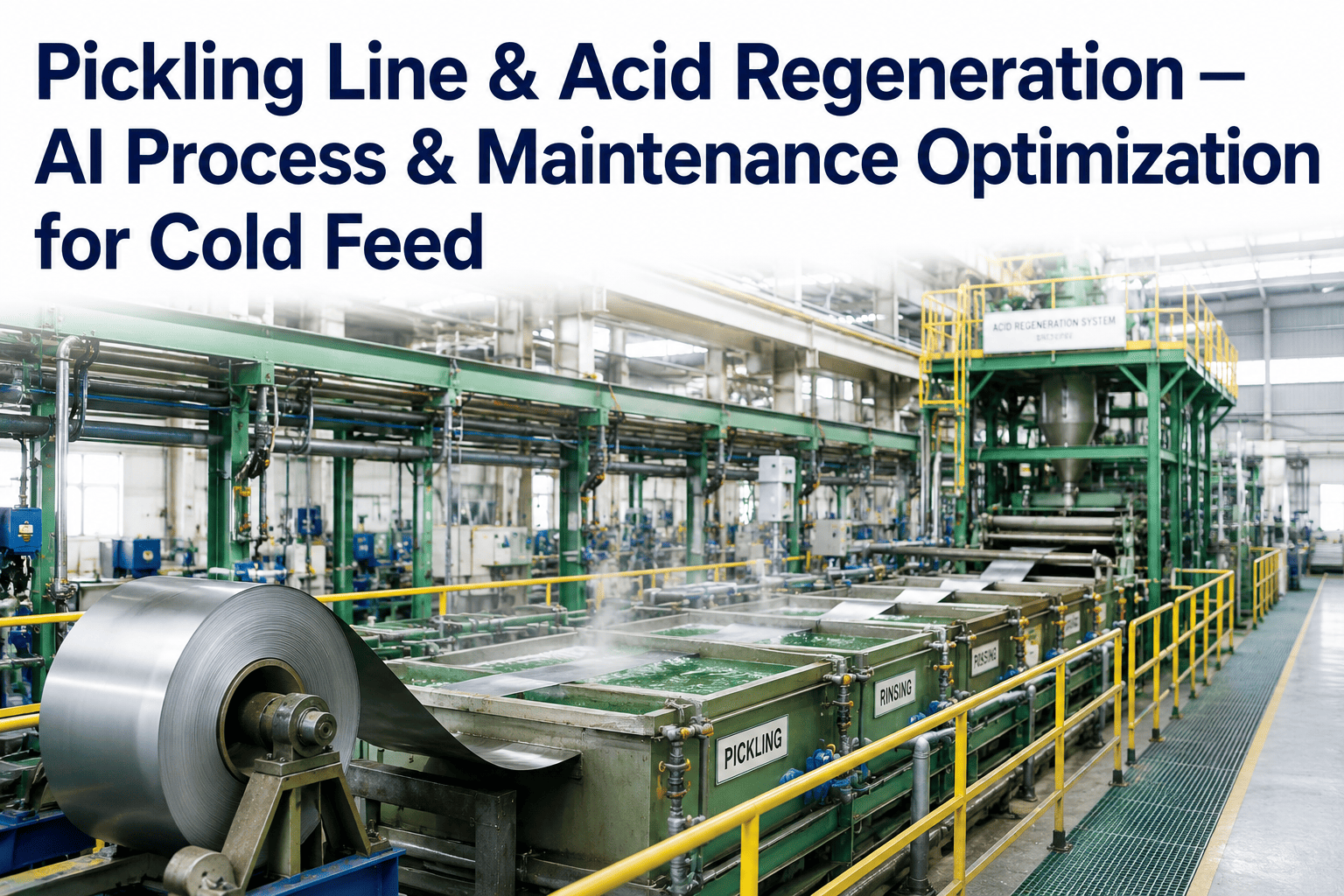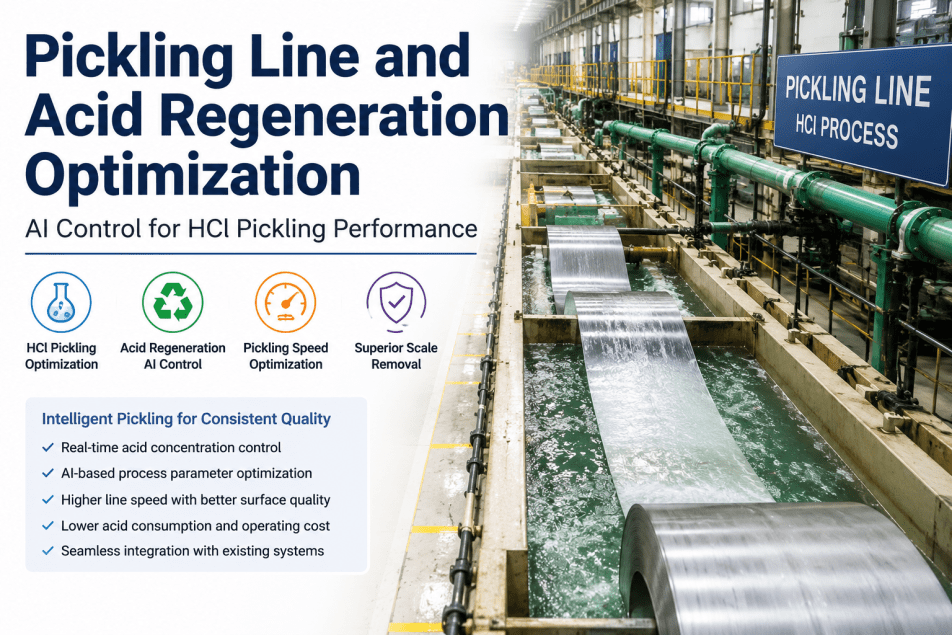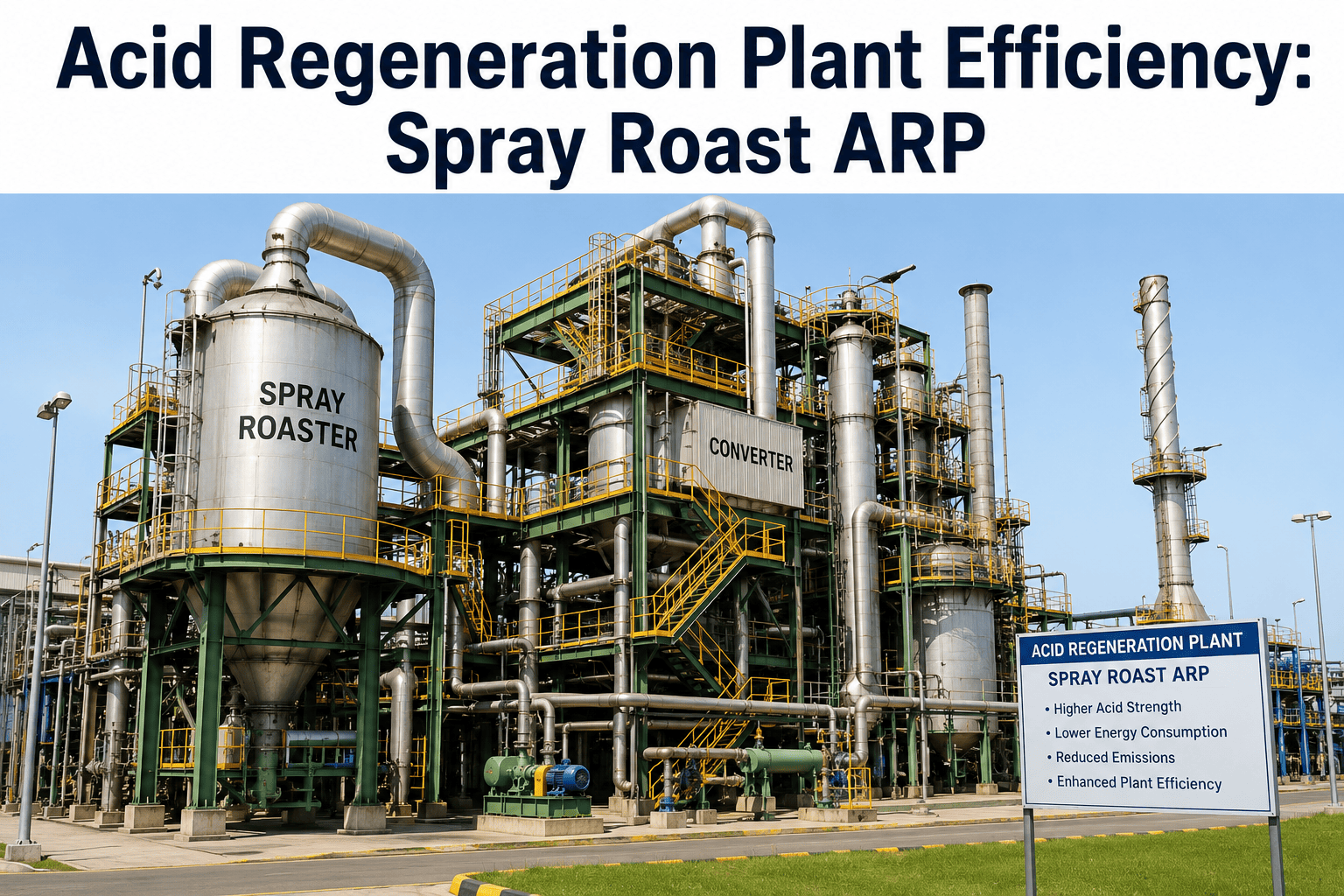
An acid regeneration plant is the piece of equipment that turns pickling from a consumable-heavy process into something close to a closed loop, taking spent hydrochloric acid loaded with dissolved iron and giving back usable acid plus a saleable iron oxide byproduct. When a spray roaster is running efficiently, the economics of an entire pickling line change — acid purchase volume drops, effluent treatment cost falls, and the byproduct iron oxide becomes a revenue line instead of a waste stream. When it runs poorly, none of those benefits show up and the plant ends up paying for regeneration capital without collecting the return, which is why teams evaluating an ARP's real performance often start with a conversation with iFactory's support team about what full-loop monitoring looks like across the regeneration cycle.
A Spray Roast ARP Is Only as Efficient as Its Weakest Stage
Roaster temperature, iron oxide quality, and acid recovery rate move together across the regeneration cycle. Track all three and the plant can defend its acid economics with data instead of assumption.
Why the Spray Roast Process Exists
Spent pickle liquor is not waste in the conventional sense — it is a mixture of unreacted HCl, dissolved iron chloride, and water that still contains most of the acid value the line paid for. A spray roaster applies heat at high temperature to thermally decompose the ferrous chloride, driving off HCl gas that is recovered as regenerated acid while the iron converts to iron oxide particles that fall out as a dry, saleable powder. Getting this reaction to run efficiently and consistently is what separates a regeneration plant that pays for itself from one that becomes a maintenance burden nobody wants to defend in a budget review.
The Four Stages of a Spray Roast Cycle
Each stage of the regeneration cycle has its own failure modes, and a problem in an early stage compounds through everything downstream of it. Understanding the sequence is the first step to diagnosing where an underperforming ARP is actually losing efficiency.
Pre-Concentration
Spent liquor is pre-heated and partially concentrated before entering the roaster, and under-concentration here forces the roaster to burn extra fuel evaporating water it should never have received in the first place.
Spray Roasting
Liquor is atomised into a high-temperature chamber where ferrous chloride thermally decomposes into iron oxide and HCl gas — roaster temperature control is the single biggest lever over both reaction completeness and oxide particle quality.
Quench and Absorption
Hot HCl gas is cooled and absorbed back into water to form regenerated acid, and absorption efficiency here directly sets the acid recovery rate the plant can actually report and rely on.
Oxide Separation and Handling
Iron oxide particles are separated from the gas stream via cyclones and bag filters, and particle size distribution here determines whether the byproduct meets buyer specification or has to be discounted or landfilled.
See Full-Loop ARP Performance in One View
Book a 30-minute walkthrough of how iFactory tracks roaster temperature, absorption efficiency, and oxide quality together across the regeneration cycle.
Regeneration Technologies Compared
Spray roasting is the most widely deployed HCl regeneration technology, but it competes with a couple of alternative approaches that suit different plant sizes and acid volumes.
| Technology | Best Fit | Typical Recovery Rate | Key Trade-Off |
|---|---|---|---|
| Spray Roasting | Medium to large continuous pickling lines | High, with mature process control | Higher capital cost, needs skilled operation |
| Fluidized Bed Roasting | Very high-volume operations | High, with strong oxide quality control | Larger footprint, higher capital investment |
| Ion Exchange / Diffusion Dialysis | Smaller volumes or partial recovery needs | Moderate, acid-only recovery | Does not produce a saleable oxide byproduct |
Reading a Roaster Performance Report
A well-instrumented spray roast ARP produces a handful of numbers that, read together, tell an operator exactly where efficiency is being gained or lost across a shift.
The Economics That Make Regeneration Worth the Capital
A spray roast ARP is a significant capital investment, and the case for building one usually rests on three overlapping savings streams that compound over the plant's operating life rather than any single line item on its own.
Reduced Fresh Acid Purchase
Regenerated acid displaces fresh HCl purchase directly, and at high recovery rates this can offset a substantial share of what a plant would otherwise spend buying acid at market price every month.
Avoided Effluent Treatment Cost
Spent liquor that would otherwise require neutralisation and disposal is instead processed on-site, cutting a recurring effluent treatment expense that scales directly with production volume.
Iron Oxide Byproduct Revenue
High-quality oxide sold to pigment, cement, or ferrite industry buyers turns what would be a waste stream into a revenue line, though this revenue is the most sensitive of the three to particle size and purity consistency.
The payback period for an ARP investment depends heavily on plant throughput and local fresh acid and disposal pricing, but the pattern across most steel and pickling operations is consistent: the plant that treats all three savings streams as things to actively manage and monitor recovers its capital faster than one that installs the equipment and assumes the savings will show up on their own.
A Composite Scenario: The Oxide That Stopped Selling
A steel plant running its own ARP had sold iron oxide byproduct to a pigment manufacturer for several years at a stable price, until the buyer began rejecting shipments over inconsistent particle size and iron content. The plant's acid recovery rate looked normal on paper, and the roaster's temperature setpoint had not changed in the maintenance log, so the quality team initially assumed a raw material issue on the buyer's side.
A deeper look found that roaster temperature control had drifted from tight regulation to a wider swing across each batch cycle, caused by a burner control valve that had begun sticking intermittently. The wider temperature swing was producing a bimodal oxide particle distribution — some oxide sintered from momentary overheating, some under-processed from momentary cooling — and averaged fine enough on a bulk sample to pass a casual check while failing the buyer's tighter specification. Replacing the valve and tightening the temperature control band brought oxide consistency back within days, restoring the sale price the byproduct had lost during the drift.
Common Efficiency Losses in ARP Operation
Under-Concentrated Feed Liquor
Feeding the roaster liquor that has not been adequately pre-concentrated forces excess fuel burn evaporating water, inflating energy cost per ton without improving recovery.
Loose Roaster Temperature Control
A wide temperature swing produces inconsistent oxide particle quality even when average recovery figures look acceptable, exactly as seen in operations where buyers reject batches despite normal bulk metrics.
Neglecting Absorption Tower Maintenance
Scaling or packing degradation in the absorption tower lets HCl gas slip past unabsorbed, quietly lowering acid recovery rate and raising stack emissions at the same time.
Treating Oxide Handling as an Afterthought
Poor cyclone or bag filter maintenance degrades particle size control right at the point where byproduct value is determined, turning a sellable oxide into a disposal cost.
Running Without a Mass Balance Check
Without periodically reconciling acid in versus acid recovered, a slow efficiency decline can persist for months before anyone notices the gap between expected and actual regenerated acid volume.
Deferring Preventive Maintenance to Save Downtime
A regeneration plant that skips scheduled maintenance to avoid a shutdown usually pays for it later in an unplanned outage that stops acid regeneration entirely and forces a return to full-cost fresh acid purchase.
Building a Monitoring Plan Around the ARP Cycle
A monitoring plan for a spray roast ARP works best when it is built stage by stage rather than as a single blanket instrumentation project, since each stage has a different failure signature and a different tolerance for delay before a problem compounds downstream.
Is Your ARP Being Run at Its Actual Potential
You track acid recovery rate against a mass balance, not just an assumed percentage
A recovery figure that is not periodically reconciled against actual acid entering and leaving the plant can drift for a long time without anyone catching the gap.
Roaster temperature is logged continuously, not spot-checked
A continuous temperature record is what catches the kind of intermittent swing that a periodic spot check will almost always miss, exactly the pattern behind most oxide quality complaints.
Oxide quality is tested against buyer specification, not a generic internal standard
A byproduct that passes an internal quality check but fails the actual buyer's specification generates no revenue regardless of how good it looks on the plant's own paperwork.
Fuel consumption per ton is tracked as its own trend line
Energy cost is usually the largest controllable operating expense in regeneration, and a rising fuel-per-ton trend is often the earliest sign of a feed concentration or burner efficiency problem.
Frequently Asked Questions
What acid recovery rate should a spray roast ARP achieve?
Well-tuned spray roast plants commonly achieve recovery rates in the high nineties on a mass balance basis, though the achievable figure depends on feed liquor concentration, roaster temperature control quality, and absorption tower condition. A plant seeing recovery meaningfully below that range over a sustained period usually has an identifiable inefficiency in one of the four process stages rather than a fundamental limitation of the technology itself, and a mass balance audit is typically the fastest way to locate it.
Why does iron oxide byproduct sometimes fail to sell even when the plant runs normally?
Byproduct buyers, particularly pigment and cement industry purchasers, specify tight particle size and iron content tolerances, and a roaster that looks normal on bulk recovery metrics can still produce oxide with inconsistent particle distribution if temperature control has drifted from tight to loose regulation. This is why oxide quality needs its own dedicated monitoring rather than being inferred from overall acid recovery figures alone.
How does spray roasting compare to fluidized bed roasting for HCl regeneration?
Spray roasting is the more widely deployed technology across medium and large pickling operations, offering strong recovery rates with a moderate capital footprint, while fluidized bed roasting typically suits very high-volume operations where its larger footprint and higher capital cost are justified by superior oxide quality control at scale. Most mid-sized steel and pickling operations find spray roasting the better economic fit, reserving fluidized bed technology for the highest-throughput sites.
What is the biggest controllable cost in running an acid regeneration plant?
Fuel consumption for the roasting reaction is typically the largest controllable operating cost, and it is directly sensitive to feed liquor concentration — under-concentrated feed forces the roaster to burn extra energy evaporating water that should have been removed in an earlier stage. Tracking fuel consumption per ton of liquor processed as its own trend line is one of the simplest ways to catch this kind of inefficiency early. Book a demo to see how iFactory surfaces this trend alongside recovery rate and oxide quality data.
Can an existing ARP be retrofitted with better monitoring without a full rebuild?
Yes, most spray roast plants can add continuous temperature, flow, and gas composition monitoring around existing process equipment without a full rebuild, since the sensors and data infrastructure sit alongside the roaster rather than requiring changes to the core thermal process itself. Plants considering this kind of retrofit can get a walkthrough of what instrumentation typically needs adding by contacting iFactory support directly.
Get Full Visibility Across Every Stage of Your ARP
iFactory tracks roaster temperature, acid recovery, and oxide quality together, so efficiency losses get caught at the stage where they start instead of showing up as a lost buyer or a rising fuel bill. Book a walkthrough to see it running on a live regeneration plant.