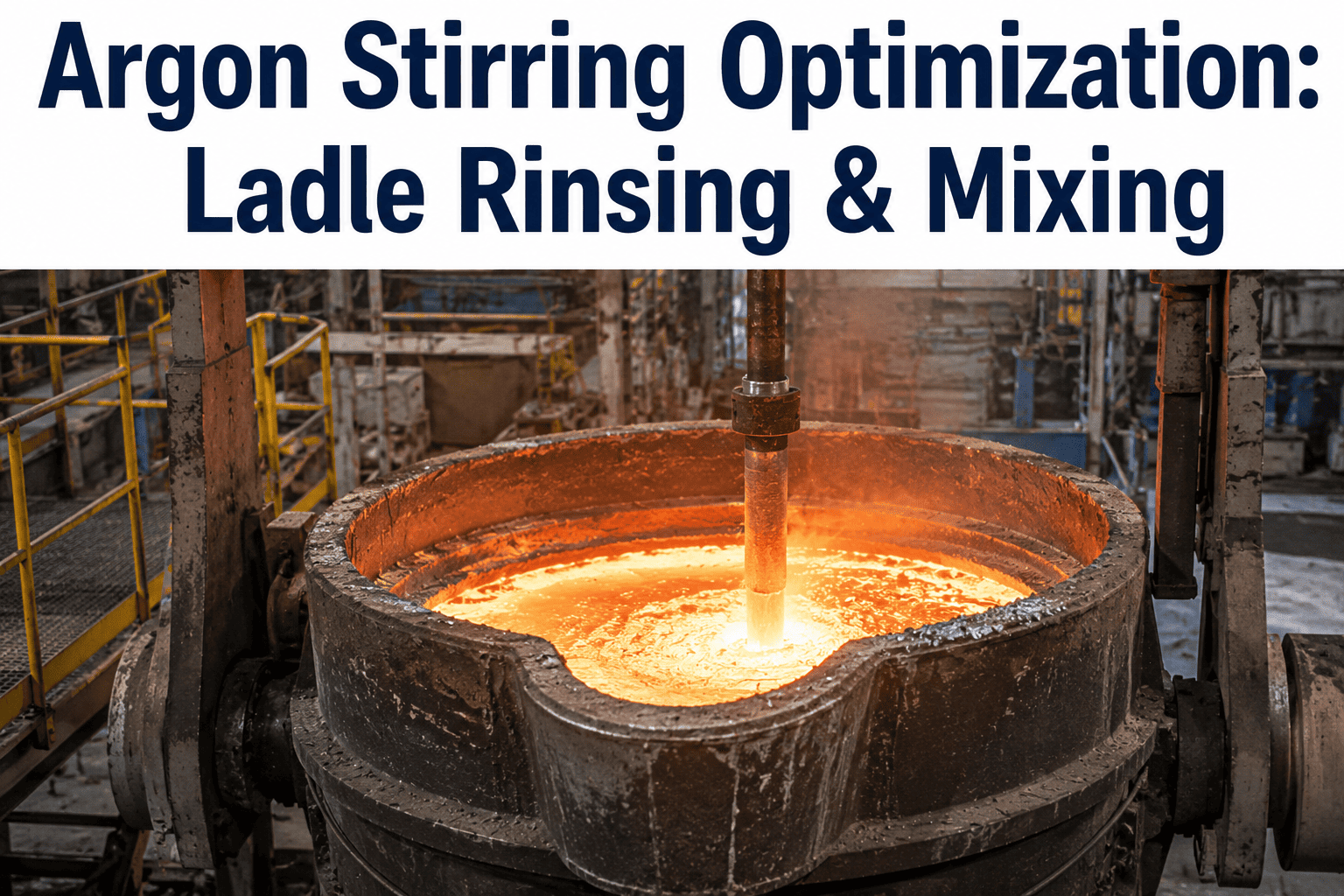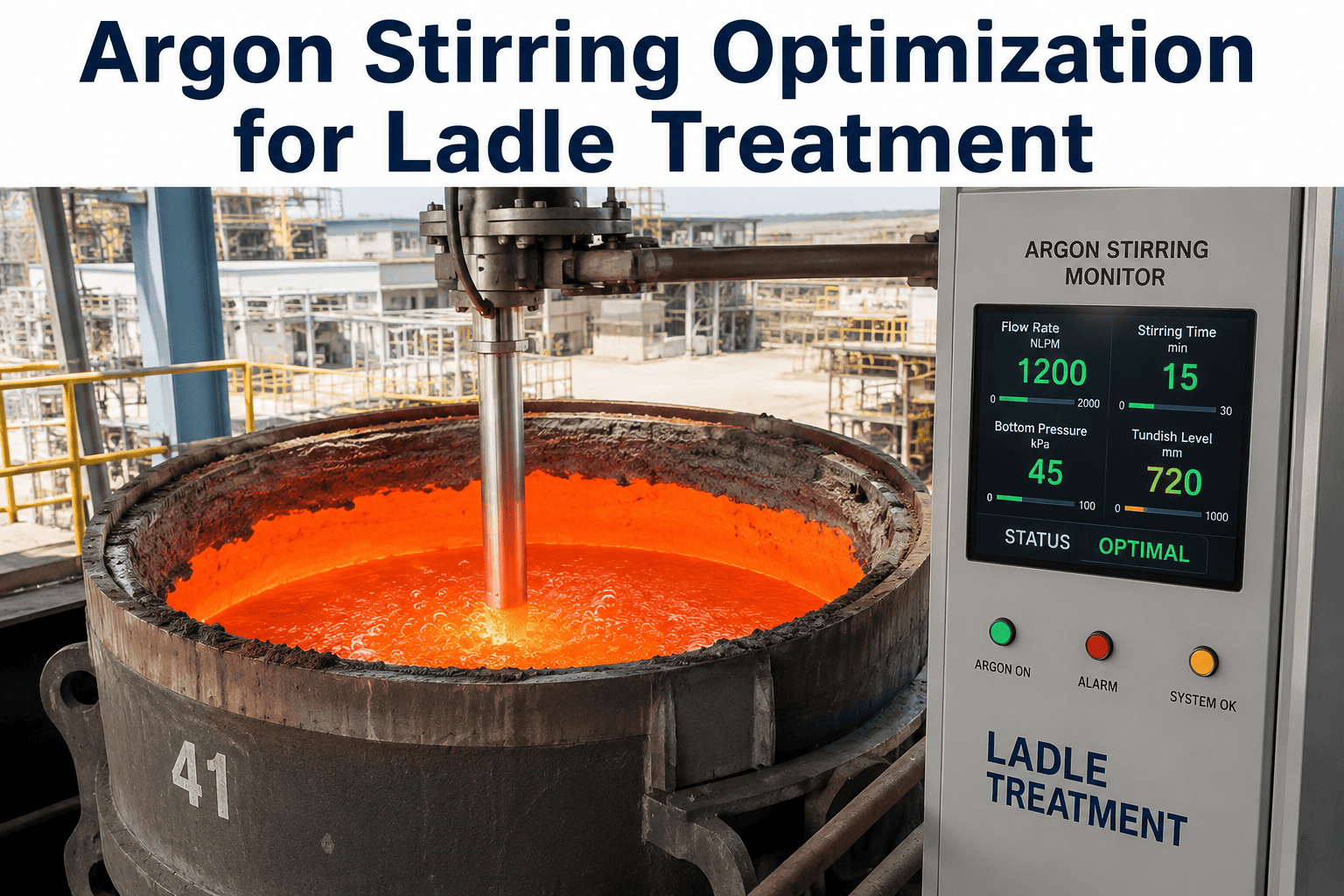
Argon stirring looks simple from the pulpit: open the valve, watch for the bath "eye" to appear at the surface, adjust if it looks too big or too small. In practice, the right stirring intensity depends on bath depth, slag thickness, current treatment stage, and how close the heat is to tap, and getting it wrong either under-mixes the bath or exposes it to reoxidation through an eye that's too large. iFactory reads tuyere pressure and bath surface behavior to tune stirring intensity per stage of treatment, and the logic behind it is easiest to walk through in Book a Demo.
Too Little Stirring Leaves Inclusions Behind. Too Much Opens The Bath To Air.
The right argon flow rate at any given moment depends on where the heat is in treatment, how much slag is covering the bath, and how close the ladle is to tap. iFactory tunes stirring intensity to match each stage, keeping mixing effective without exposing bath surface unnecessarily.
Stirring Needs Change Constantly Through The Same Treatment
A ladle treatment moves through several distinct phases, and each one calls for a different stirring intensity. Early in treatment, when alloy additions need to dissolve and distribute quickly, higher stirring energy speeds homogenization. During desulfurization, stirring needs to be strong enough to bring sulfur to the slag-metal interface without becoming so vigorous that it emulsifies slag into the bath, which can actually reverse sulfur removal. Near the end of treatment, when inclusion flotation matters most and reoxidation risk from an exposed bath becomes a real concern as the ladle approaches the caster, stirring typically needs to soften. A single fixed flow rate applied throughout treatment inevitably compromises at least one of these stages.
Under-Mixing Leaves Inclusions Trapped
Too little stirring energy fails to bring non-metallic inclusions to the slag interface where they can be absorbed, leaving them suspended in the bath and eventually showing up as cleanliness defects in the final product.
Over-Stirring Exposes Bath To Air
Excessive flow opens too large a bath eye through the slag layer, exposing liquid steel to atmospheric oxygen and nitrogen pickup, undoing much of the cleanliness benefit stirring was meant to provide in the first place.
Slag Emulsification Reversing Desulfurization
When stirring is too aggressive during desulfurization, slag droplets can become emulsified back into the bath instead of staying at the interface, occasionally reversing sulfur removal that had already been achieved.
Tuyere Wear From Constant High Flow
Running tuyeres at consistently high flow regardless of what the stage actually requires accelerates porous plug wear, shortening tuyere service life and increasing maintenance frequency without a corresponding process benefit.
What The Model Adjusts As Treatment Progresses
Rather than a single setpoint, iFactory schedules stirring intensity against the specific stage of treatment, using tuyere pressure feedback and bath surface behavior to confirm the actual mixing achieved matches what each stage needs.
Alloy Homogenization
Higher stirring energy immediately after alloy addition speeds distribution and reduces the risk of localized composition variation within the bath.
Desulfurization
Moderate, sustained stirring maximizes sulfur transfer to the slag interface while avoiding the emulsification risk that comes with excessive flow.
Inclusion Flotation
Gentle, controlled stirring in the final stage promotes inclusion rise to the slag layer while keeping the bath eye small enough to limit reoxidation exposure.
Match Stirring Intensity To What Each Stage Actually Needs
iFactory tunes argon flow per treatment stage using tuyere pressure and bath surface feedback, not a single fixed setpoint.
What Changes When Stirring Adapts To The Treatment Stage
| Aspect | Fixed Flow Setting | Stage-Tuned Stirring |
|---|---|---|
| Inclusion flotation effectiveness | Compromised at one stage or another | Optimized per stage requirement |
| Reoxidation risk near tap | Elevated if flow stays high late in treatment | Reduced through controlled late-stage softening |
| Tuyere wear rate | Higher from sustained high flow | Reduced from stage-appropriate flow reduction |
| Desulfurization reliability | Variable depending on operator judgment | Targeted to avoid emulsification risk |
We used to run a fairly standard flow rate through most of treatment and only adjust near the end if the eye looked too large. Since iFactory started scheduling stirring intensity to each stage automatically based on tuyere pressure feedback, our inclusion-related cleanliness complaints have dropped, and we're seeing noticeably longer tuyere life since the plugs aren't running at high flow the entire treatment cycle anymore.
What Plants Report After Adopting Stage-Tuned Stirring
Where Stage-Tuned Stirring Programs Run Into Trouble
Worn Tuyeres Skewing Pressure Feedback
A porous plug nearing the end of its service life behaves differently under the same commanded flow, so pressure feedback needs to account for plug condition rather than assuming a constant relationship between flow and pressure.
Inconsistent Slag Thickness Tracking
Bath eye behavior depends heavily on slag layer thickness, and plants that don't track slag volume consistently across heats give the model less reliable information about how a given flow rate will actually behave.
Operators Reverting To Habit Under Pressure
During a busy shift with tight caster sequencing, operators sometimes default back to a familiar fixed flow rate rather than following stage-specific recommendations, which limits how much benefit is actually realized.
Not Adjusting For Ladle Size Differences
A stirring recommendation calibrated for one ladle size doesn't transfer directly to a different capacity ladle without adjustment, since bath depth and volume both affect how a given flow rate translates into mixing energy.
Frequently Asked Questions
Q: Does this require new tuyere or flow control hardware?
Most ladle stations already have tuyere pressure instrumentation and flow control valves capable of adjusting to a recommended setpoint, so iFactory typically works with existing equipment rather than requiring new hardware installation. Where a station lacks pressure feedback instrumentation, the model can still provide stage-based flow recommendations, though the ability to confirm actual mixing achieved through pressure response is reduced without that feedback loop. Reach out through Support Contact to review your current tuyere instrumentation.
Q: How does the model know when to transition between treatment stages?
Stage transitions are identified from the treatment sequence itself, such as the moment an alloy addition is logged, the start of a desulfurization hold, or the point in the schedule when the ladle is approaching its caster slot, combined with elapsed treatment time and bath temperature trend. This allows the model to adjust stirring intensity automatically as the heat progresses through its normal treatment sequence rather than requiring manual stage entry from the operator.
Q: Can this reduce nitrogen pickup specifically, or only improve inclusion removal?
Both benefits are connected to the same underlying adjustment, since a smaller, better-controlled bath eye late in treatment reduces the exposed surface area available for nitrogen and oxygen pickup from the atmosphere, while still providing enough mixing for inclusion flotation earlier in the cycle. Plants targeting nitrogen-sensitive grades often see this as one of the more noticeable benefits of stage-tuned stirring specifically during the final minutes before tap.
Q: Does the model account for different ladle sizes across our shop?
Yes, ladle capacity and bath depth are part of the model's context for generating a flow recommendation, since the same commanded flow rate produces different mixing energy in a smaller versus a larger ladle. Recommendations are calibrated per ladle size using that vessel's own treatment history rather than applying a single generic profile across the whole shop. Discuss your specific ladle fleet during a Book a Demo session.
Q: How quickly can operators expect to see the benefit after adoption?
Some benefits, such as reduced tuyere flow during stages that don't need high intensity, show up almost immediately once recommendations are followed, while others, such as improved cleanliness statistics or extended tuyere service life, take longer to become statistically visible since they depend on accumulating data across many heats. Most plants track both types of metrics from the start so the longer-term trend can be confirmed as more heats are processed under the new stirring profile.
Stop Choosing Between Mixing And Reoxidation Risk
iFactory tunes argon stirring to what each treatment stage actually needs, protecting both cleanliness and tuyere life.