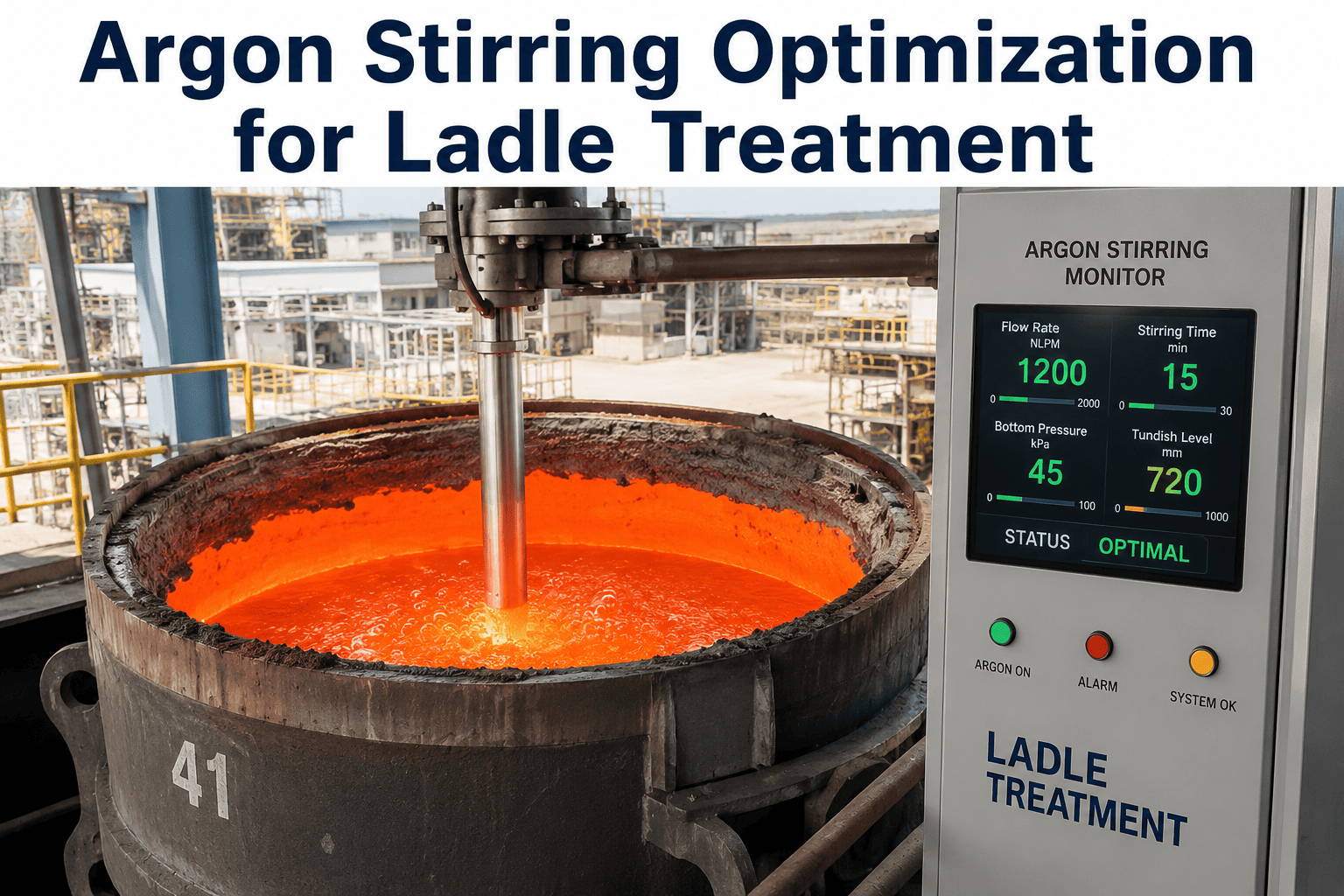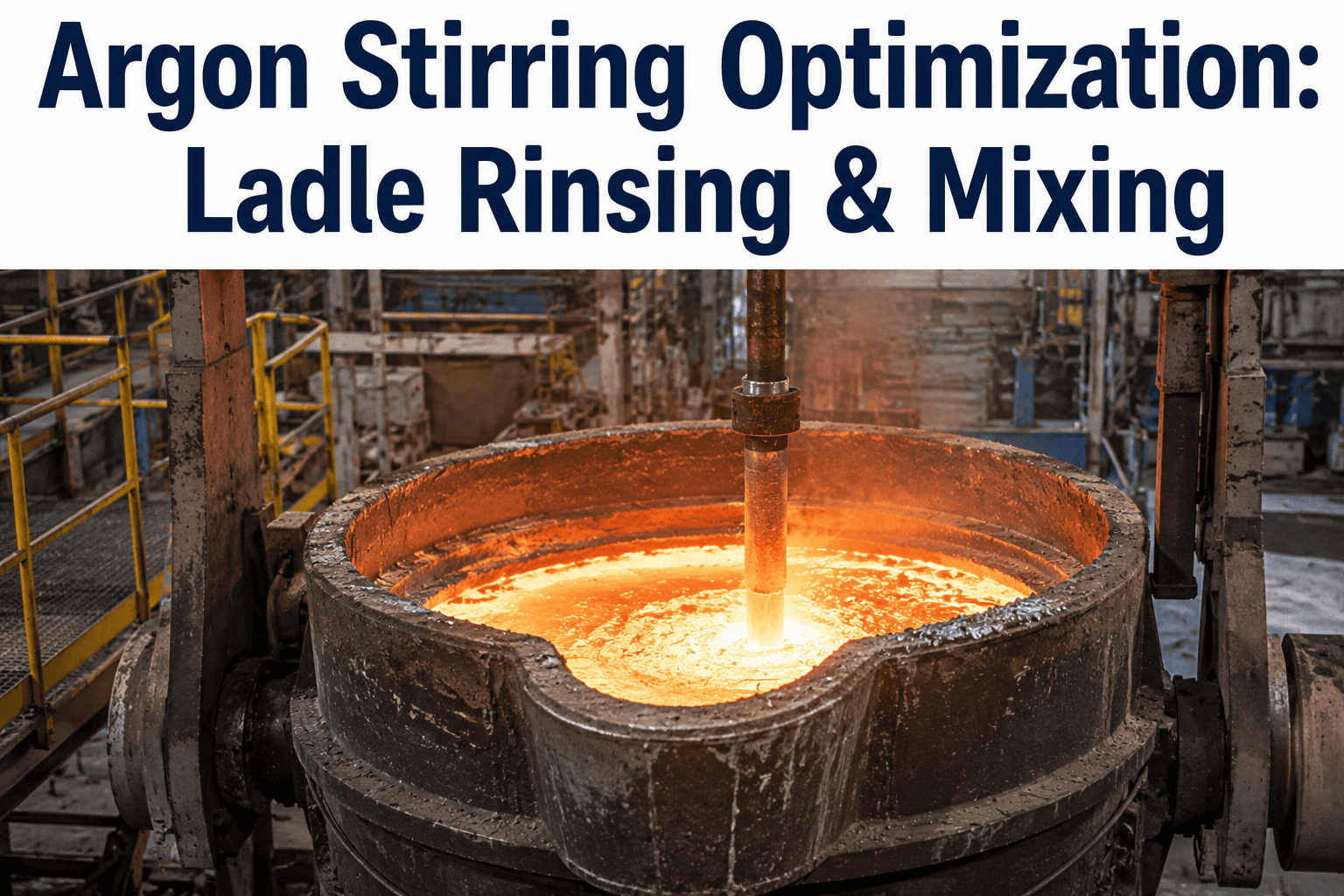
Argon stirring looks like a simple bubble pattern rising through a ladle, but the intensity and stability of that flow determines whether an entire heat reaches homogeneous temperature and chemistry or leaves the ladle with pockets of unmixed steel that show up as inconsistent results downstream. A worn porous plug, an undersized gas flow, or stirring cut short before full rinsing completes are easy to miss on the floor and expensive to trace back once a heat is already at the caster. Making that connection visible in real time is exactly where iFactory's process monitoring platform supports secondary metallurgy teams.
SECONDARY METALLURGY · ARGON STIRRING
Argon Stirring Optimization for Ladle Rinsing and Mixing
Stirring intensity, plug condition, and gas flow rate tracked together to keep every ladle achieving true chemistry and temperature homogenization before it reaches the caster.
Stirring's Outsized Role in Steel Quality
Full mix
is required to bring the entire ladle to uniform chemistry after every alloy addition, not just the surface layer
Plug wear
gradually reduces effective gas flow even when the flow meter reading appears unchanged
Too much, too little
both under-stirring and excessive stirring create distinct quality risks that need to be balanced
Invisible until sampled
an unmixed ladle usually shows no visible surface indication of the problem underneath
Finding the Right Stirring Intensity
Too Weak
Alloy additions remain unevenly distributed through the bath depth
Temperature stratification leaves top and bottom layers at different values
Sample results become location-dependent rather than representative
Inclusion float-out to the slag layer takes longer than the treatment window allows
Too Strong
Excessive surface exposure increases reoxidation risk during treatment
Slag emulsification can pull slag particles back into the steel bath
Refractory wear accelerates at the point of greatest turbulence
Argon consumption cost rises without proportional mixing benefit
Verify Full Homogenization Before Every Heat Moves On
iFactory tracks gas flow, plug condition trends, and stirring duration together, giving operators confidence a heat is truly mixed before it leaves the ladle station.
Argon Stirring Parameters and Their Effects
Stirring Parameter Reference
| Parameter | What It Affects | Watch For |
|---|---|---|
| Gas flow rate | Mixing energy delivered to the bath | Deviation from set point over the treatment |
| Plug back-pressure | Actual plug permeability condition | Rising trend indicating plug wear or clogging |
| Stirring duration post-addition | Time available for full homogenization | Cycles cut short relative to established norm |
| Bath eye size at surface | Visual indicator of stirring intensity | Excessive eye size signaling over-stirring |
| Plug position and count | Mixing pattern uniformity across the ladle | Single-plug operation when dual was designed |
Where Stirring Programs Typically Break Down
Undetected Plug Degradation
A porous plug losing permeability gradually can still register a normal flow rate reading while actually delivering less effective stirring energy to the bath.
Fixed Duration Regardless of Addition Size
Applying the same stirring time after a small trim addition and a large alloy addition ignores that larger additions genuinely need more mixing time to homogenize.
No Verification of Actual Homogenization
Assuming a standard stirring time was sufficient without correlating to sample consistency leaves the actual mixing quality unverified heat after heat.
Single Plug Operation Going Unnoticed
A blocked secondary plug that shifts a dual-plug ladle to effective single-plug stirring changes the mixing pattern significantly if it isn't caught quickly.
Improving Stirring Consistency
1Track plug back-pressure trends over the campaign life, not just the current flow rate
2Scale stirring duration to addition size rather than applying one fixed time to every event
3Correlate sample consistency results with stirring parameters to validate actual homogenization
4Flag any deviation from expected dual-plug flow pattern for immediate review
5Set plug replacement intervals based on measured wear trend rather than a fixed calendar schedule
Argon Stirring — Common Questions
How do we know if a heat achieved true homogenization versus just adequate stirring time?
The most reliable confirmation comes from correlating multiple sample locations or comparing consecutive samples for consistency, since a truly mixed bath should show minimal variation between them. Relying on stirring duration alone as a proxy for homogenization can be misleading if plug condition or gas flow has degraded without being noticed.
How can plug wear be detected before it noticeably affects stirring quality?
Tracking back-pressure at a given flow rate over the plug's service life is one of the more reliable early indicators, since permeability loss typically shows up as a gradual rise in required pressure to maintain the same flow before it becomes severe enough to visibly change bath behavior.
What is the risk of over-stirring a ladle, beyond wasted argon cost?
Excessive stirring intensity increases surface exposure to atmosphere, raising reoxidation risk, and can also emulsify slag into the steel bath, introducing exogenous inclusions that treatment was meant to remove in the first place. Balancing intensity to the minimum needed for full mixing avoids both under- and over-stirring risks.
Can stirring data be connected to downstream casting quality results?
Yes. iFactory's platform links stirring parameters for each heat to downstream sample and casting outcomes, making it possible to identify whether a quality issue correlates back to insufficient mixing rather than treating it as an isolated event with no clear cause.
How often should porous plugs be inspected or replaced?
Replacement is best driven by measured back-pressure trend rather than a fixed calendar interval alone, since actual wear rate varies with heat volume, steel grade, and treatment intensity. A plug showing a consistent upward pressure trend at constant flow should be scheduled for replacement before it fails during an active treatment.
SECONDARY METALLURGY · LADLE MIXING
Make Sure Every Ladle Is Truly Mixed
See how iFactory tracks stirring intensity and plug condition to protect chemistry and temperature homogenization across your heats.