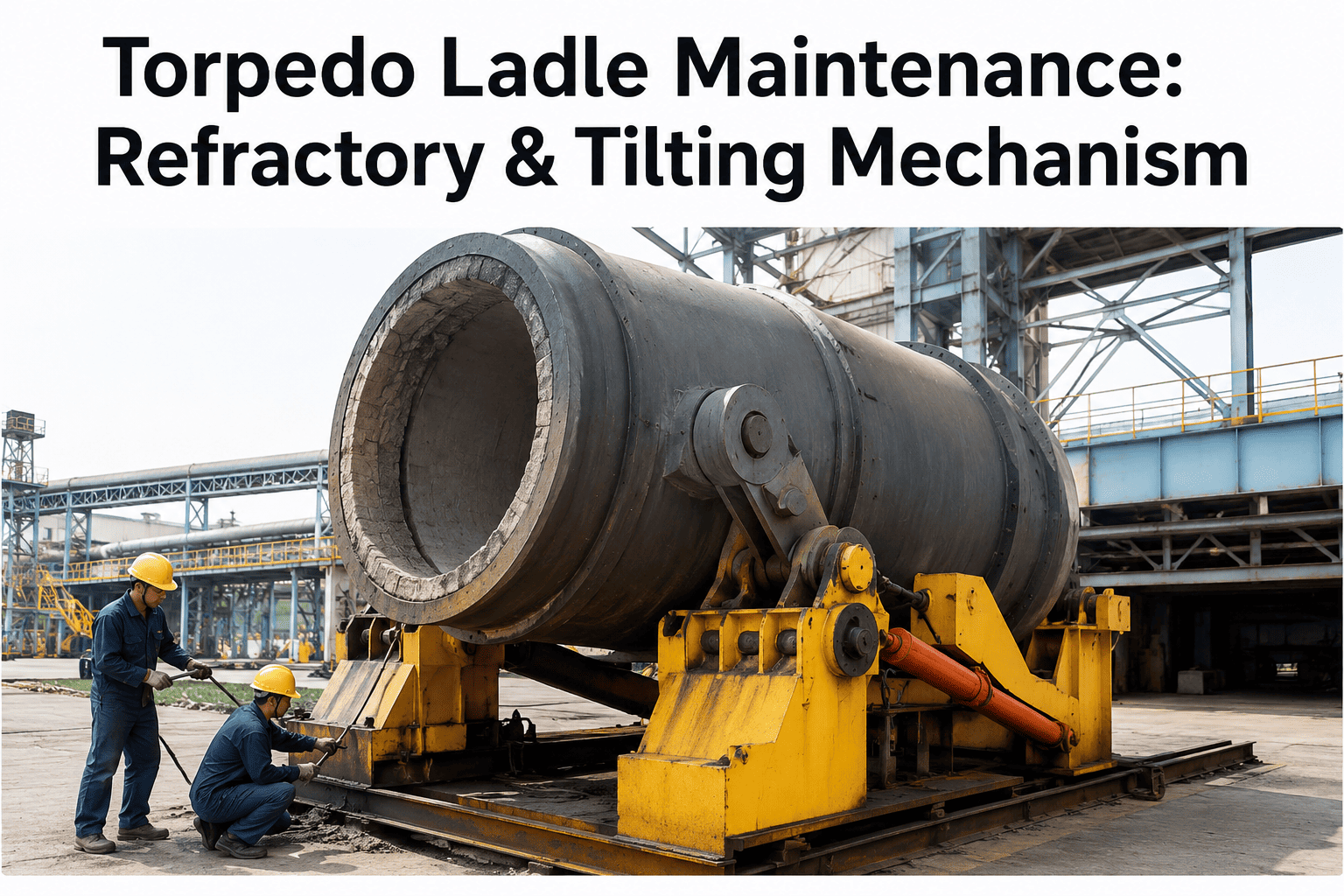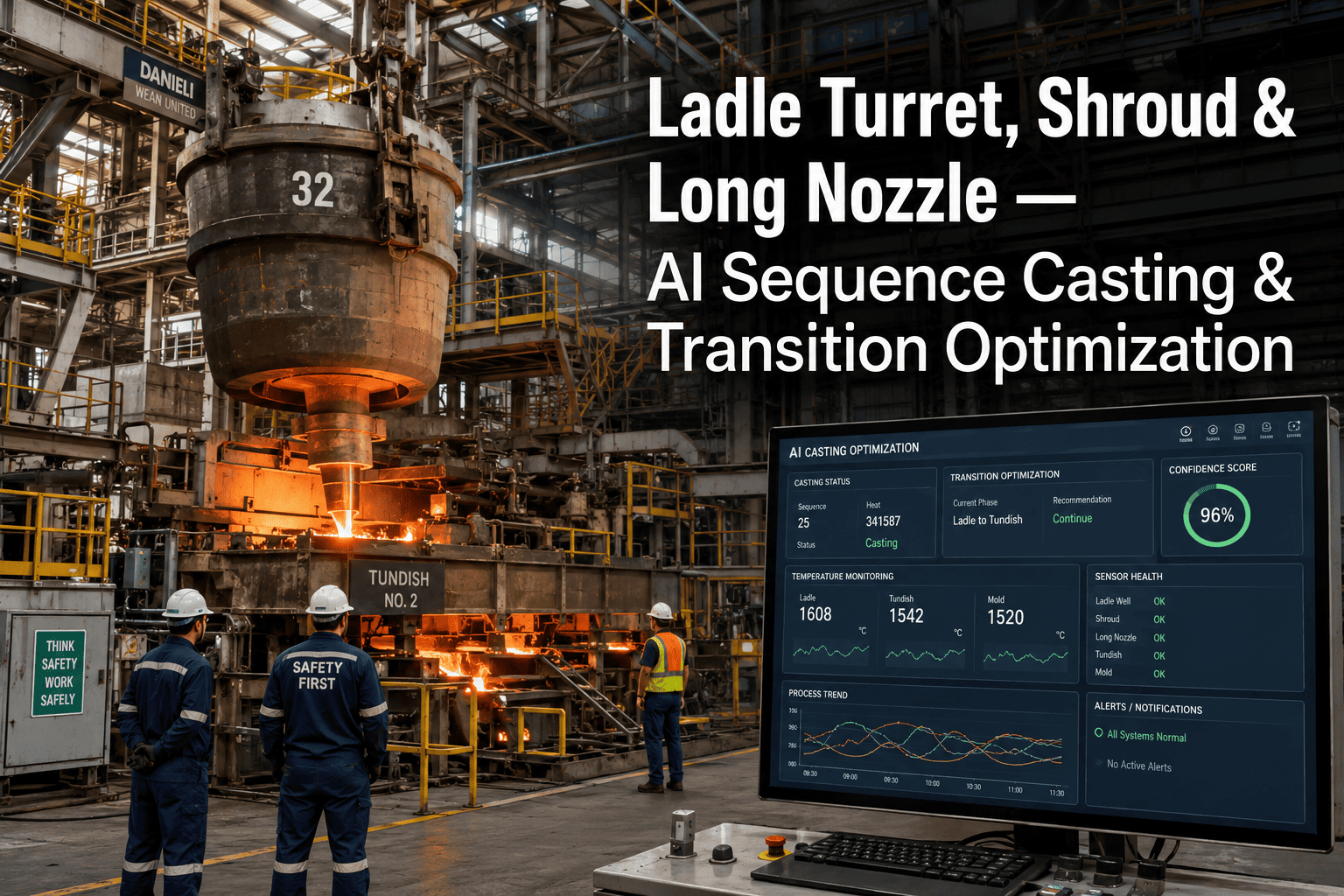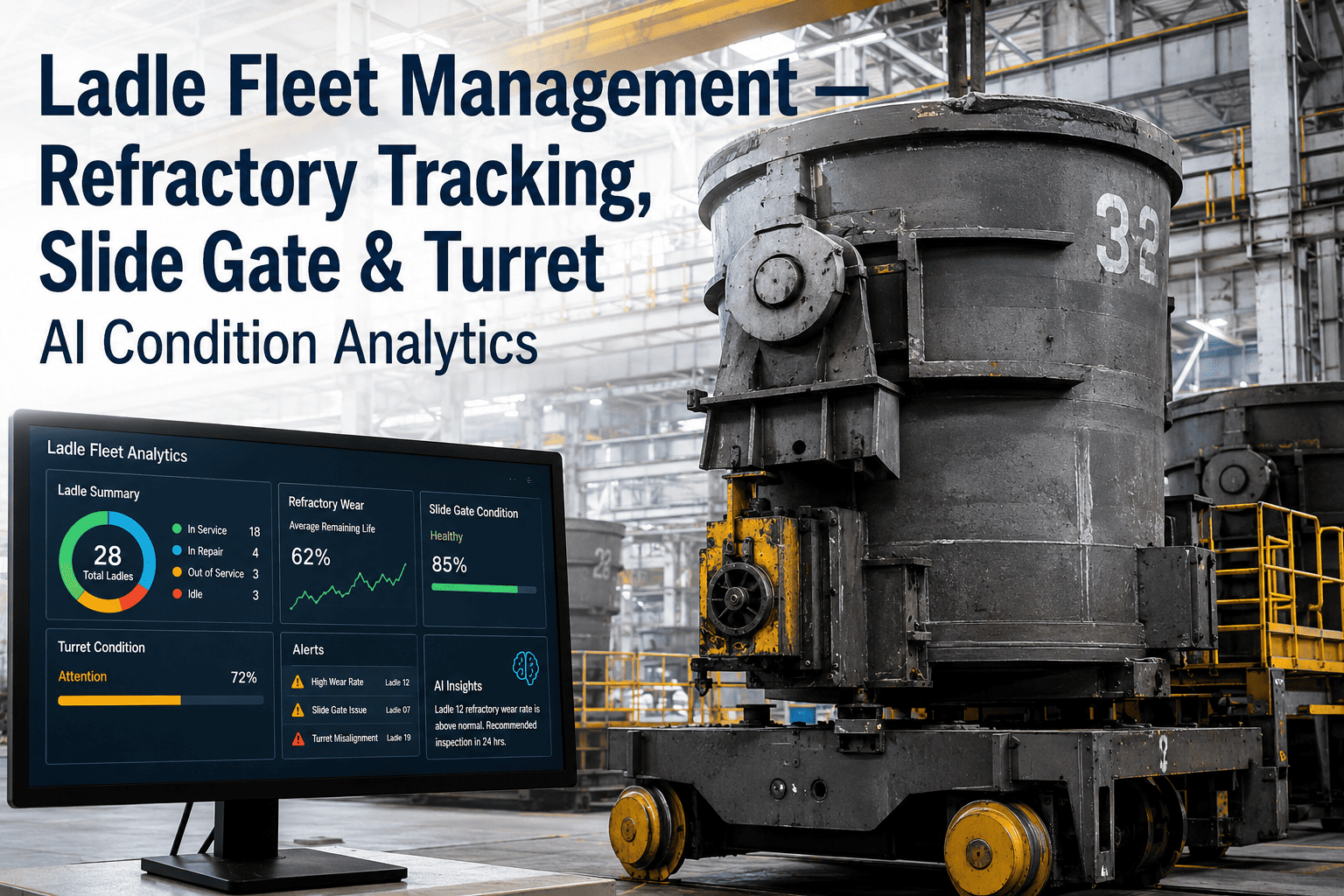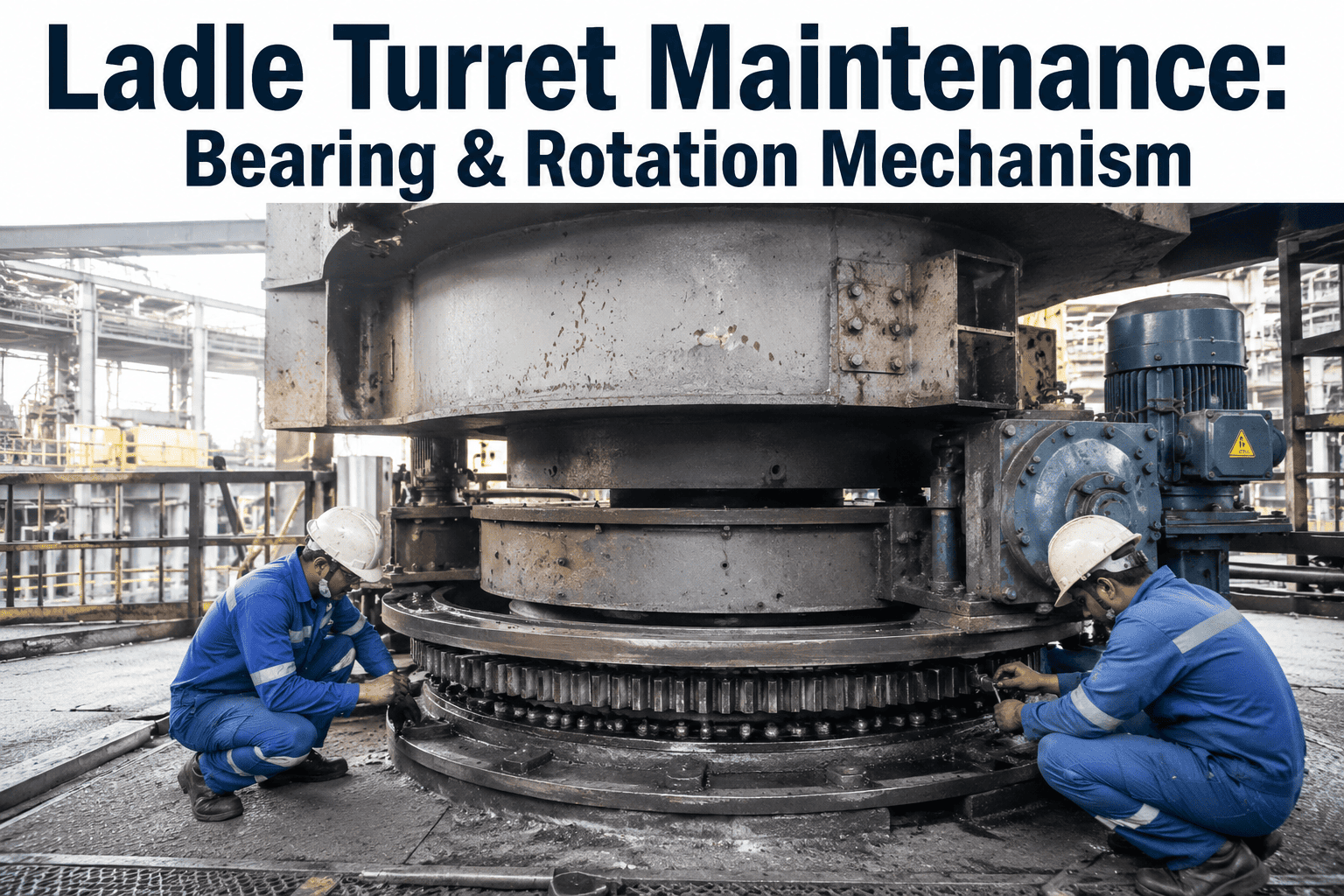
A ladle turret carries the full weight of a filled ladle, sometimes well over a hundred tons, while rotating it into casting position under heat, vibration, and thermal cycling that most other rotating equipment on the shop floor never experiences. When the turret bearing or rotation mechanism starts to degrade, the failure rarely announces itself cleanly, it shows up first as a slightly slower rotation, a small positioning error, or an unusual sound that a busy shift can easily explain away as normal wear. By the time misalignment becomes visible to the naked eye, the turret is often already close to an unplanned stoppage that can halt casting entirely, and catching that drift early depends on tracking turret condition continuously rather than only during scheduled inspection windows.
A Turret Failure Doesn't Just Stop One Ladle — It Can Stop The Entire Cast
Ladle turret bearing and rotation mechanism wear develops gradually, but an unplanned turret stoppage during casting is one of the most disruptive failures a steel plant can experience. Consistent condition monitoring turns a sudden failure into a scheduled repair.
Turret Wear Rarely Looks Like A Problem Until It Already Is One
A ladle turret's job looks mechanically simple from the outside, rotate a loaded ladle from the tapping position to the casting position and back, but the loads involved make even small tolerances critical. Bearing wear, rotation drive degradation, and positioning drift all tend to progress slowly and predictably, which is exactly what makes them easy to miss during a routine visual walk-down, since a turret that "looks fine" and rotates smoothly enough for one more shift can still be well into a wear curve that ends in a forced stoppage.
Bearing Load Distribution
Uneven load distribution across turret bearings accelerates localized wear, and because the turret continues rotating even as this develops, the imbalance is easy to miss without direct load or vibration monitoring.
Rotation Drive Condition
Gearing, motor, and coupling wear on the rotation drive gradually increase rotation time and reduce positioning precision long before an outright drive failure occurs.
Positioning Accuracy
Small positioning errors during ladle exchange increase risk during the handoff between tapping and casting positions, and accumulated drift here is one of the earliest reliable indicators of underlying mechanical wear.
Thermal Exposure And Cycling
Repeated heating and cooling cycles from proximity to molten steel place ongoing thermal stress on turret components, accelerating wear rates beyond what load alone would predict.
Five Failure Patterns That Show Up Repeatedly Across Ladle Turret Systems
While every plant's turret system has its own maintenance history, a handful of failure patterns recur consistently across ladle turret operations. Recognizing which pattern is developing early is what separates a planned bearing replacement from an emergency stoppage in the middle of a cast.
Progressive Bearing Wear From Cyclical Loading
Repeated loading and unloading as ladles are exchanged causes gradual fatigue wear on turret bearings, typically the single most common root cause behind turret condition issues over the equipment's service life.
Seal Degradation Allowing Contamination
Heat and particulate exposure near the casting floor can degrade bearing seals over time, allowing contamination into the bearing housing that accelerates wear well beyond what normal cyclical loading alone would cause.
Lubrication Breakdown Under Heat
Elevated ambient temperature near the ladle can break down lubrication faster than a standard maintenance interval assumes, leaving bearings running under reduced protection between scheduled service points.
Drive Coupling Misalignment
Gradual misalignment between the rotation drive and the turret structure increases vibration and uneven load transfer, a pattern that tends to accelerate once it begins rather than staying stable.
Structural Fatigue At High-Stress Points
Repeated thermal and mechanical cycling concentrates fatigue stress at specific structural connection points, making periodic structural inspection as important as bearing-focused monitoring alone.
Catch Turret Drift Before It Becomes A Casting Floor Emergency
iFactory continuously tracks turret rotation time, positioning accuracy, and vibration signatures against your maintenance history, flagging gradual drift long before it becomes visible during a routine walk-down.
What A Turret Inspection Schedule Should Actually Check, And How Often
A maintenance schedule that only says "inspect turret monthly" leaves too much room for inconsistent execution across shifts and crews. A schedule built around specific checks, specific intervals, and specific pass criteria is far more likely to actually catch developing wear before it becomes a failure.
| Check Item | Recommended Frequency | What To Look For |
|---|---|---|
| Bearing temperature and vibration | Continuous or daily | Gradual upward trend versus established baseline |
| Rotation cycle time | Every rotation cycle | Increasing time to complete standard rotation |
| Positioning accuracy at exchange | Every ladle exchange | Deviation beyond tolerance during handoff |
| Seal and lubrication condition | Weekly to monthly | Contamination ingress or lubricant breakdown signs |
| Structural connection points | Quarterly or per campaign | Fatigue cracking at high-stress structural joints |
A Scheduled Inspection Only Catches What's Already Visible That Day
Even a disciplined inspection schedule has a fundamental limitation, it only captures the turret's condition at the specific moment someone happens to be looking. Wear that develops between inspection windows, or that only becomes detectable through vibration signature changes too subtle for a visual check, can progress significantly before the next scheduled walk-down catches it.
Continuous monitoring closes that gap by tracking rotation time, positioning accuracy, and vibration data automatically across every single rotation cycle rather than a sampled few. That shift matters because turret degradation, once it starts accelerating, often does so faster than a monthly or even weekly inspection interval can keep pace with, meaning the difference between catching a developing bearing issue with weeks of lead time versus discovering it during an unplanned stoppage frequently comes down entirely to how continuously the equipment is actually being watched.
Common Questions On Ladle Turret Maintenance
Turn Turret Maintenance From Reactive Into Predictable
iFactory tracks bearing condition, rotation performance, and positioning accuracy continuously against your maintenance history, giving your team weeks of lead time instead of a surprise stoppage. Book a demo to see it running against your own turret data.