A pickling tank failure is rarely sudden — it is the end point of a lining degradation process that has usually been visible for weeks or months to anyone doing a proper inspection, which is exactly why the plants that never have an acid leak incident are not lucky, they are disciplined about lining condition, weld integrity, and structural inspection on a schedule that does not slip when production gets busy. A tank holding concentrated acid at elevated temperature is one of the least forgiving pieces of equipment on a pickling line to get wrong, and the cost of a missed inspection interval is measured in emergency shutdowns, environmental incidents, and safety risk rather than a simple repair bill. Plants building or tightening a tank inspection program can start with a conversation with iFactory's support team about tracking lining condition data over time instead of relying on memory and paper logs.
A Pickling Tank Never Fails Without Warning — It Fails Without Inspection
Lining wear, weld integrity, and structural condition all degrade gradually and predictably. A disciplined inspection schedule is the only thing standing between a routine repair and an emergency shutdown.
Why Pickling Tanks Fail the Way They Do
Acid-resistant lining protects the underlying steel shell from direct chemical attack, but no lining is permanent — it wears from mechanical abrasion of moving strip, thermal cycling as the tank heats and cools, and chemical attack that accelerates at weak points like seams, penetrations, and repair patches from earlier work. Once lining integrity is compromised at even a small point, acid reaches the steel shell directly and corrosion can progress quickly relative to the slow, predictable wear of the lining itself, which is why catching lining wear before breakthrough matters so much more than catching a shell corrosion problem after the fact.
The Three Zones of a Tank Inspection
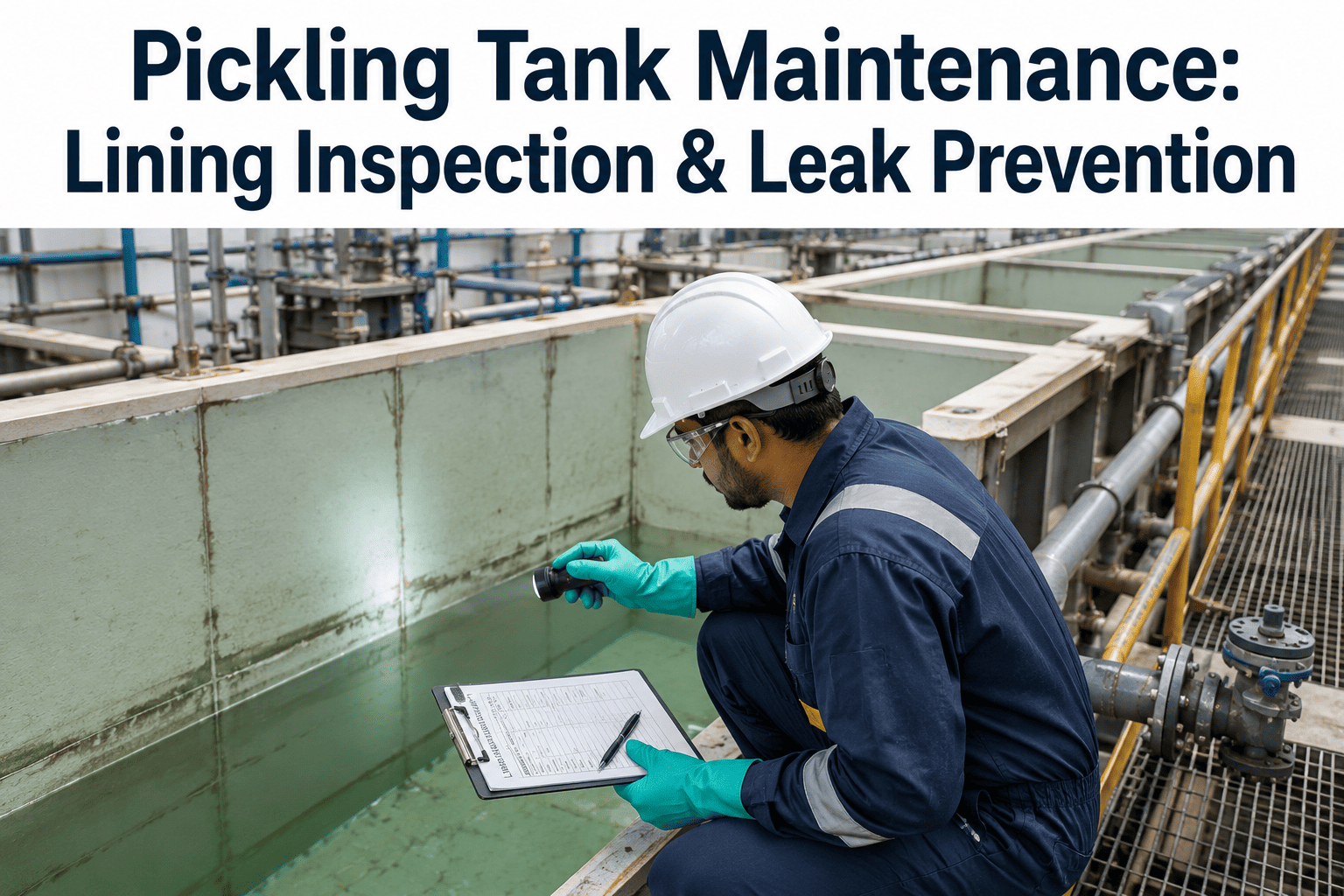
A thorough tank inspection covers three distinct zones, each with different wear patterns and different consequences if a problem is missed.
Lining Surface
Checked for thinning, blistering, cracking, and discoloration that signals chemical attack has already begun penetrating toward the shell, particularly around strip entry and exit points where mechanical wear concentrates.
Weld Seams and Joints
Inspected separately from the general lining surface because seams, penetrations, and any prior repair patches consistently wear faster than the surrounding lining and are the most common origin point of a leak.
Structural Shell
Assessed for corrosion behind the lining, typically via ultrasonic thickness testing at known vulnerable points, since shell degradation is invisible from inside the tank until lining has already failed locally.
Track Tank Condition Instead of Relying on Memory
See how iFactory logs lining wear, weld condition, and shell thickness trend data across every pickling tank inspection cycle.
Inspection Methods and What Each One Catches
No single inspection method catches every failure mode, which is why a complete tank inspection program combines several techniques rather than relying on visual inspection alone.
| Method | What It Detects | Typical Frequency | Limitation |
|---|---|---|---|
| Visual Inspection | Surface cracking, blistering, discoloration | Every scheduled shutdown | Cannot detect subsurface or behind-lining wear |
| Ultrasonic Thickness Testing | Shell metal loss behind the lining | Periodic, at known vulnerable points | Needs known inspection points, not a full-surface scan |
| Spark or Holiday Testing | Pinhole defects and lining discontinuities | After lining repair or install | Only detects through-lining defects, not thinning |
| Dye Penetrant on Welds | Surface-breaking cracks at weld seams | Targeted at known high-wear seams | Will not catch subsurface weld defects |
A Composite Scenario: The Leak That Started at a Repair Patch
A pickling line experienced a slow acid leak that first showed up as a small puddle beneath one corner of the tank during a routine shift walk-through. Production was stopped immediately and a full drain and inspection followed, revealing the leak originated at a lining repair patch installed roughly a year earlier following a minor mechanical impact from a coil handling incident.
The original repair had been visually sound at installation, but the patch boundary — where new lining met the original material — was exactly the kind of seam that wears faster than the surrounding surface, and it had not been flagged for closer attention in subsequent routine inspections because the visual inspection log simply noted "lining condition acceptable" without tracking the patch as a distinct higher-risk zone. Adding a standing requirement to inspect all prior repair patches at every scheduled shutdown, rather than treating them as equivalent to original lining once installed, closed the gap that had allowed this specific leak origin to go unflagged for months.
Mistakes That Lead to Preventable Tank Failures
Treating Repair Patches as Equivalent to Original Lining
A repair boundary is a known higher-wear zone and needs its own tracked inspection status rather than being folded back into general lining condition once the repair is complete.
Relying on Visual Inspection Alone
Visual checks cannot detect shell metal loss behind an intact-looking lining, which is why ultrasonic thickness testing at known vulnerable points has to run on its own schedule regardless of how the lining looks.
Letting Inspection Intervals Slip During Busy Periods
A scheduled inspection pushed back because the line is busy is exactly the kind of deferred maintenance that turns a routine finding into an emergency one.
Logging Inspections With Vague Pass or Fail Notes
A log entry reading "condition acceptable" without measurements or photos gives future inspectors nothing to compare against, making it impossible to spot a slow degradation trend across cycles.
Ignoring Thermal Cycling Effects on Lining Life
Frequent heating and cooling cycles stress lining adhesion and can accelerate wear beyond what a purely chemical-exposure-based replacement schedule would predict.
Skipping Weld Seam Inspection Because the Lining Looks Fine
Weld seams and joints wear faster than flat lining surfaces almost universally, and a lining that looks fine on open areas can still be failing right at a seam that was not checked separately.
Is Your Tank Inspection Program Actually Catching Problems Early
Repair patches are tracked as distinct, higher-risk inspection zones
A patch boundary consistently wears faster than surrounding lining, and treating it as equivalent to original material after installation is one of the most common gaps in tank inspection programs.
Ultrasonic thickness testing runs on its own schedule, independent of visual findings
Shell thickness testing catches a failure mode that visual inspection physically cannot see, and it needs to happen regardless of how good the lining looks from the inside.
Inspection logs include measurements and photos, not just pass or fail notes
A record with measurable data lets the next inspection cycle compare against a real baseline instead of relying on someone's memory of what the lining looked like last time.
Inspection cadence does not slip when production schedules get tight
A scheduled inspection that gets pushed back under production pressure is the single most common precursor to an inspection catching a problem too late instead of on time.
Frequently Asked Questions
How often should a pickling tank lining be inspected?
Most operations schedule a full visual inspection at every planned tank shutdown, with more targeted ultrasonic thickness testing and weld seam checks at a somewhat longer interval tied to the specific tank's service history and lining material. Tanks with a history of prior repairs or known high-wear zones typically warrant more frequent targeted checks at those specific locations even if the general inspection interval remains standard, since risk is rarely distributed evenly across the tank surface.
What are the earliest visible signs of lining wear before a leak develops?
Discoloration, surface blistering, and fine surface cracking are typically the earliest visible indicators that chemical attack has begun penetrating the lining material, well before any actual breach reaches the steel shell underneath. Catching these signs during a routine inspection and scheduling a repair before breakthrough is significantly less costly and disruptive than responding to an active leak, which is why routine inspection frequency matters more than the sophistication of any single inspection technique.
Why do weld seams and repair patches wear faster than the rest of the lining?
Any boundary between two sections of lining material, whether an original weld seam or a later repair patch, represents a discontinuity where adhesion and chemical resistance are structurally weaker than the surrounding continuous surface. Thermal cycling stress concentrates at these boundaries as the tank heats and cools, accelerating wear at exactly the points that a casual visual check is most likely to treat as equivalent to the surrounding, more robust lining.
What causes a pickling tank leak that visual inspection missed?
Shell corrosion behind an intact-looking lining is the most common cause of a leak that visual inspection alone would miss, since the lining can appear structurally sound from the interior while the steel shell behind it has already lost meaningful thickness to corrosion at a point where a small, hard-to-see lining defect allowed acid through. This is why ultrasonic thickness testing at known vulnerable points has to run as its own independent check rather than being skipped whenever a visual inspection comes back clean. Book a demo to see how iFactory tracks shell thickness trend data alongside lining inspection records.
How should a plant prioritize inspection effort across a large tank fleet?
Prioritisation should weigh a tank's service history, including prior repairs, known high-wear zones, and its acid concentration and temperature profile, rather than applying an identical schedule to every tank regardless of its individual risk factors. A tank with a documented repair history or a more aggressive chemical duty cycle warrants a tighter inspection interval than a newer tank in lighter service, and tracking this history systematically is what allows a plant to allocate inspection resources where they actually reduce risk. Plants building this kind of prioritized program can reach iFactory support for guidance on structuring it.
Give Every Tank Inspection a Trackable, Comparable Record
iFactory logs lining condition, weld inspection findings, and shell thickness trend data across every pickling tank, so problems get caught while they are still a routine repair. Book a walkthrough to see it running on a live inspection program.