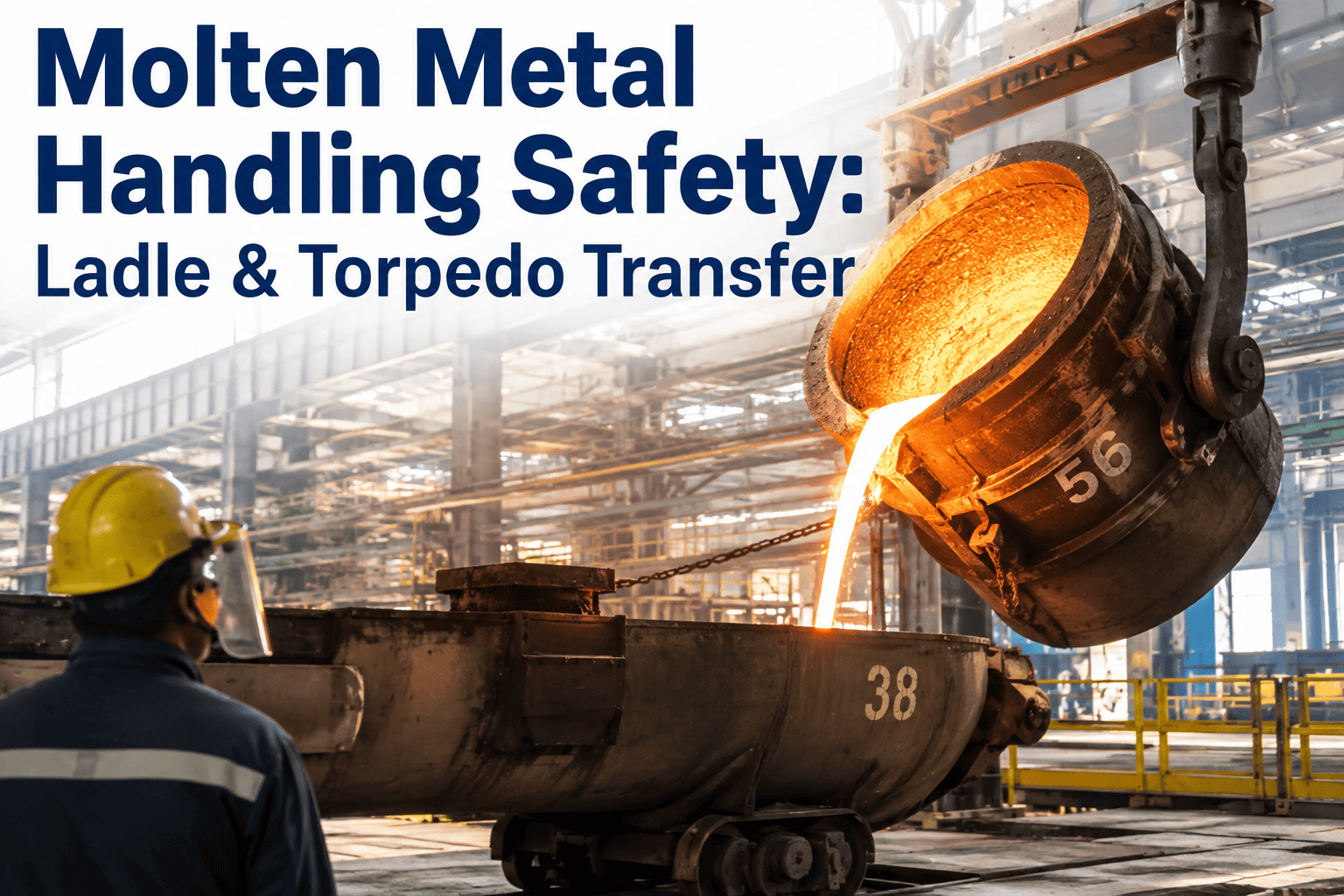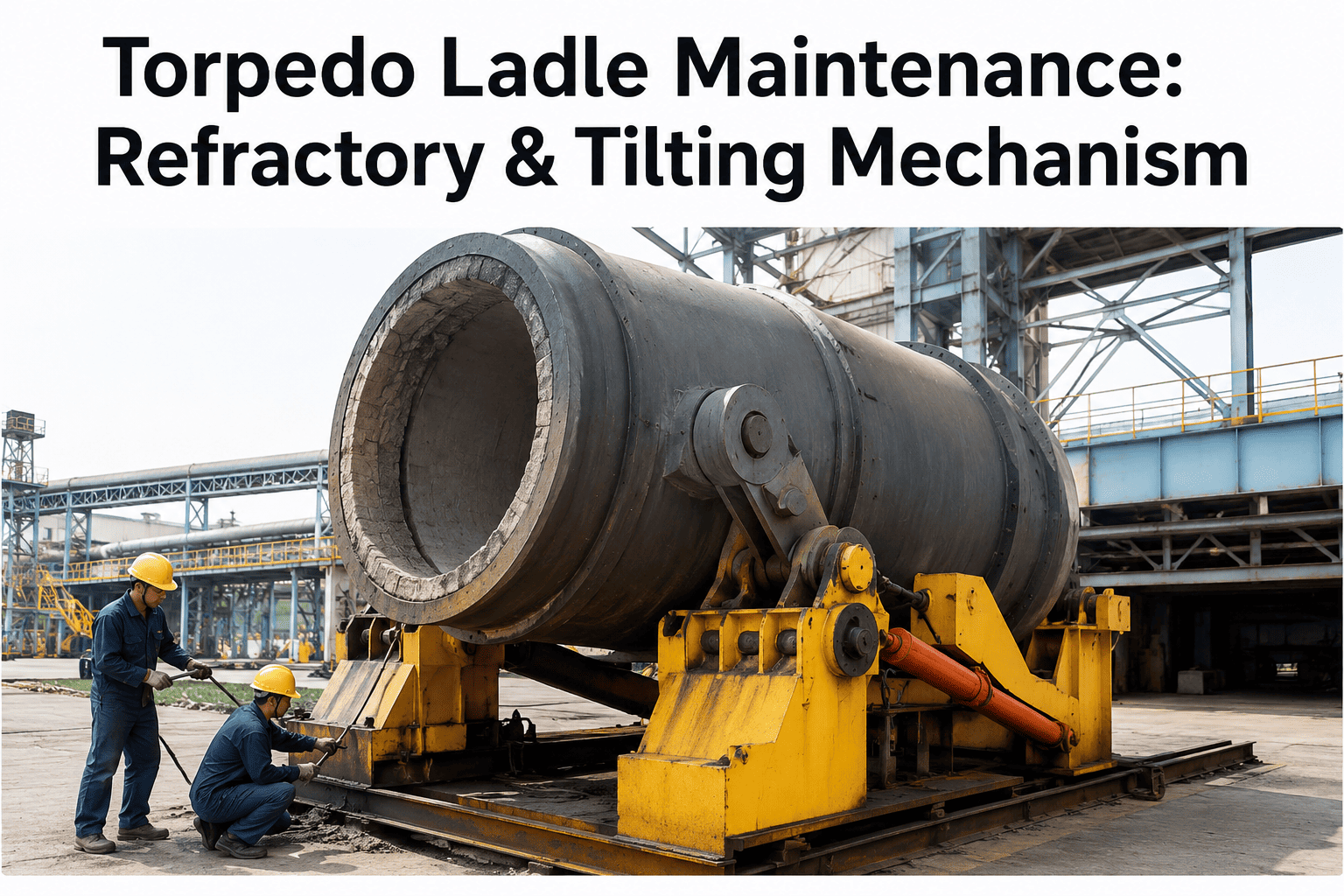
A torpedo ladle car that ruptures its refractory lining mid-transfer, or a tilting mechanism that seizes under a full load of hot metal, does not fail quietly. It fails in front of a crew standing next to several hundred tons of liquid iron, which is exactly why torpedo car maintenance gets treated differently from almost every other piece of rolling stock in a steel plant. Two systems decide whether that car makes it from the blast furnace to the BOF shop without incident: the refractory lining that holds the metal in, and the tilting mechanism that pours it out. Get either wrong and the consequence is not downtime, it is a breakout. Talk to our team at ifactory support about building a monitoring program around both.
Refractory Wear and Tilting Mechanism Failure Are Different Problems With One Shared Outcome
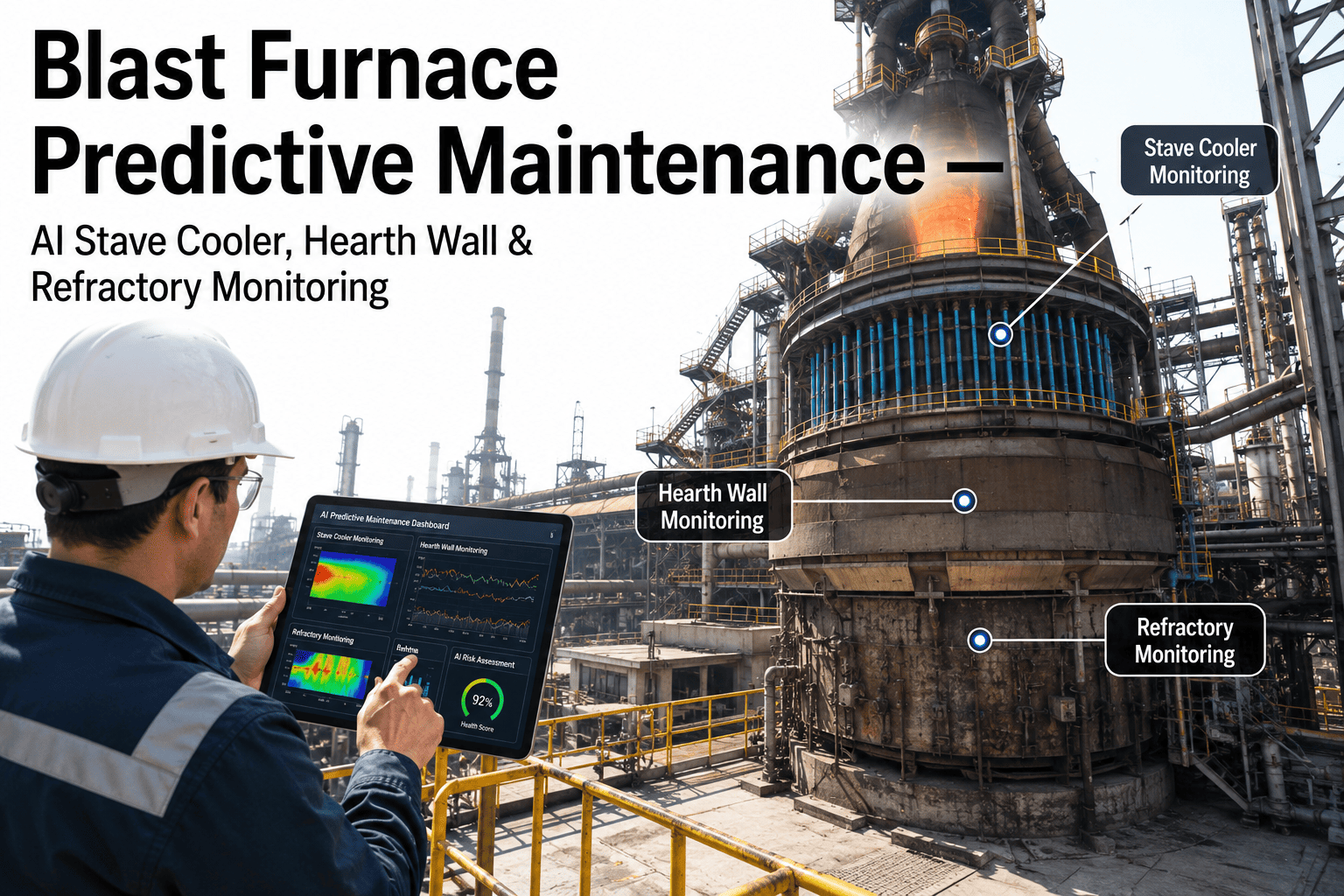
AI-assisted torpedo ladle maintenance tracks refractory thickness trends, tilting drive load signatures, and rail car undercarriage condition together, so a car is pulled for repair before either system reaches a failure point.
Why Torpedo Cars Get Their Own Maintenance Category
A torpedo ladle car looks like a piece of railway rolling stock, and mechanically it is one, but it is also a mobile refractory vessel that spends its working life doing three things a normal rail car never does: carrying molten iron at over 1,300 degrees Celsius, tilting under that full load to discharge it, and doing this cycle dozens of times a week for years. Every one of those three activities degrades a different component, and none of the degradation is visible from a walk-around inspection until it is already advanced.
Refractory wear happens slowly and internally, hidden behind a steel shell, and by the time thinning shows up as a visible hot spot on the exterior skin, the safety margin has already been consumed. Tilting mechanism wear happens in the drive train, bearings, and hydraulic or gear-driven tilt system, and it tends to announce itself first as a subtle change in tilt speed or load signature long before it produces an audible or visible symptom. Treating these as one generic "torpedo car maintenance" task, inspected on the same interval with the same checklist, misses the fact that they degrade on entirely different timelines and demand entirely different sensing approaches.
How Refractory Condition Is Actually Tracked Across a Campaign
A torpedo car's refractory lining is not expected to last forever, it is designed against a campaign life measured in heat cycles or tonnage of iron transported, and the maintenance question is never whether the lining will eventually need replacement, it is whether this specific car, on this specific cycle count, is tracking ahead of or behind its expected wear curve.
The value of tracking this curve car by car rather than relining on a fixed calendar schedule is that campaign life varies meaningfully between cars depending on route, iron chemistry, and how each car has actually been operated, and a fixed schedule either wastes remaining refractory life or, worse, leaves a car in service past the point its own data says it should have come out.
Refractory Monitoring Methods Compared
| Method | What It Measures | Frequency | Main Limitation |
|---|---|---|---|
| Manual Shell Temperature Scan | Exterior surface temperature at fixed points | Periodic, by hand-held sensor | Misses hot spots between scan points |
| Fixed Thermocouple Array | Continuous temperature at embedded points | Real time | Only covers instrumented zones |
| Continuous AI Thermal Trending | Full shell profile trended against wear curve | Real time, every cycle | Requires thermal imaging integrated into car cycle |
| Physical Thickness Gauging | Direct refractory thickness at relining stops | Only during scheduled outages | Cannot inform in-service decisions between outages |
Find Out Which Torpedo Cars Are Ahead of Their Reline Schedule
Bring your current campaign records and shell temperature data. We will walk through how AI trending would flag which cars in your fleet need attention first.
The Tilting Mechanism: A Different Failure Pattern Entirely
While refractory wear is thermal and gradual, tilting mechanism degradation is mechanical and often more sudden, driven by cyclic loading on gears, bearings, and drive components every time a full car rotates to charge or discharge. A tilt drive carrying several hundred tons through a rotation many times a day accumulates fatigue in ways that a simple visual inspection of the exterior housing will not reveal until a component is already close to failure.
What Happens When Maintenance Runs on a Fixed Calendar Instead of Condition Data
Most torpedo car fleets still run on a mix of manufacturer-recommended relining intervals and periodic mechanical inspection windows, both set conservatively enough to avoid catastrophic failure but without any real feedback loop from how an individual car has actually performed. This produces two costly outcomes at once: cars with refractory life remaining get pulled and relined early, wasting usable campaign life and unplanned production capacity, while a smaller number of cars with unusually fast wear, often due to route, iron chemistry, or a prior thermal shock event, continue running past the point their own condition data would have flagged for early attention.
A condition-based program does not eliminate scheduled outages, relining will always require a planned stop, but it changes which car gets pulled and when, based on that car's actual wear trajectory rather than a fleet-wide average interval. The same logic applies to tilting mechanism service: a drive train showing early load signature drift gets scheduled for bearing or seal service during the next planned stop, rather than waiting for a fixed interval that may arrive too late or unnecessarily early.
Four Mistakes That Shorten Torpedo Car Life
Who Owns Torpedo Car Reliability Day to Day
A torpedo car fleet touches several teams, and reliability tends to fall through the gaps unless each role has a clear, specific piece of the monitoring picture rather than a shared, vague responsibility for "torpedo car condition."
Frequently Asked Questions
See Refractory and Tilt Drive Condition for Your Whole Fleet
Bring your current campaign and inspection records to the call. We will walk through how continuous condition tracking would flag risk across your torpedo car fleet.