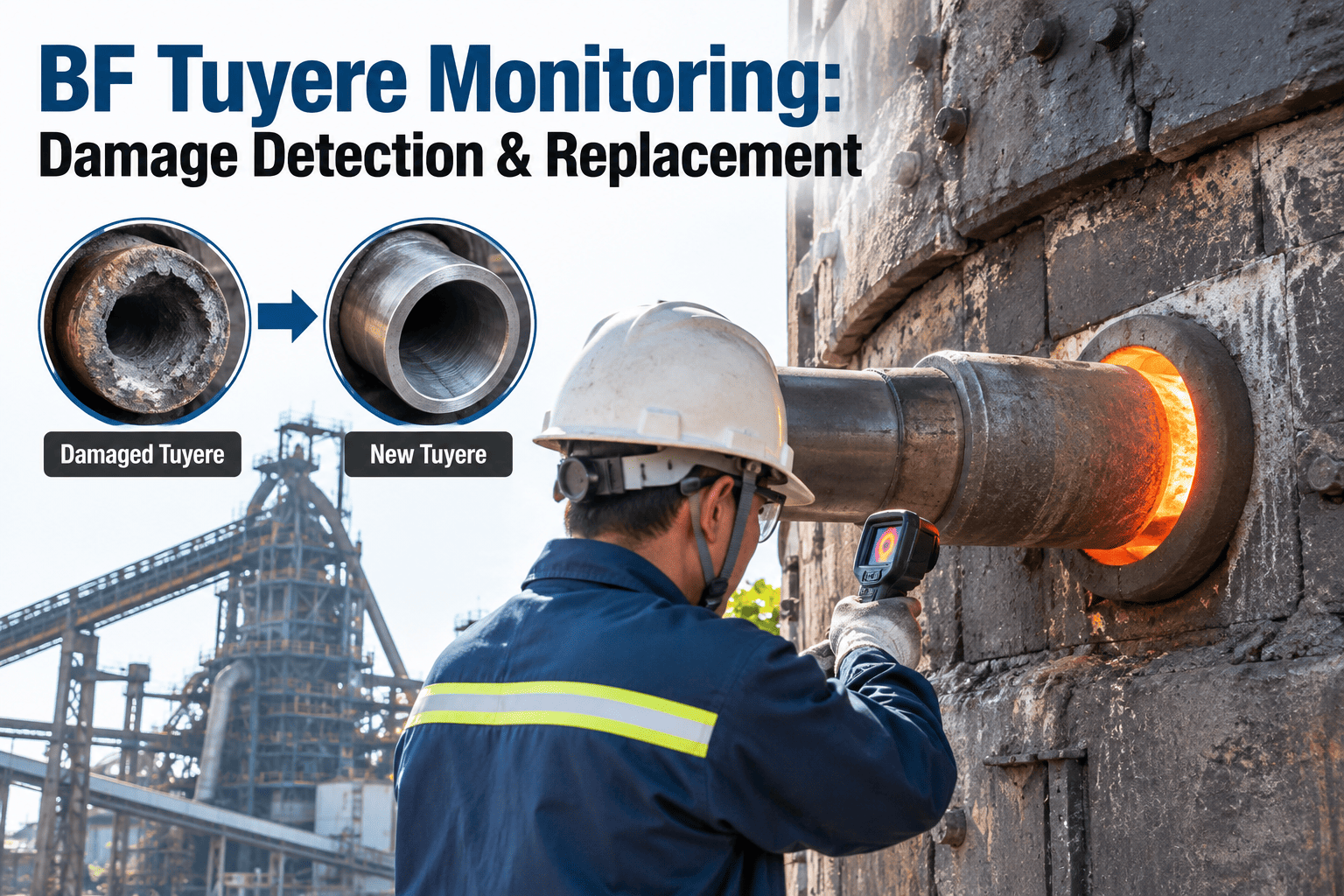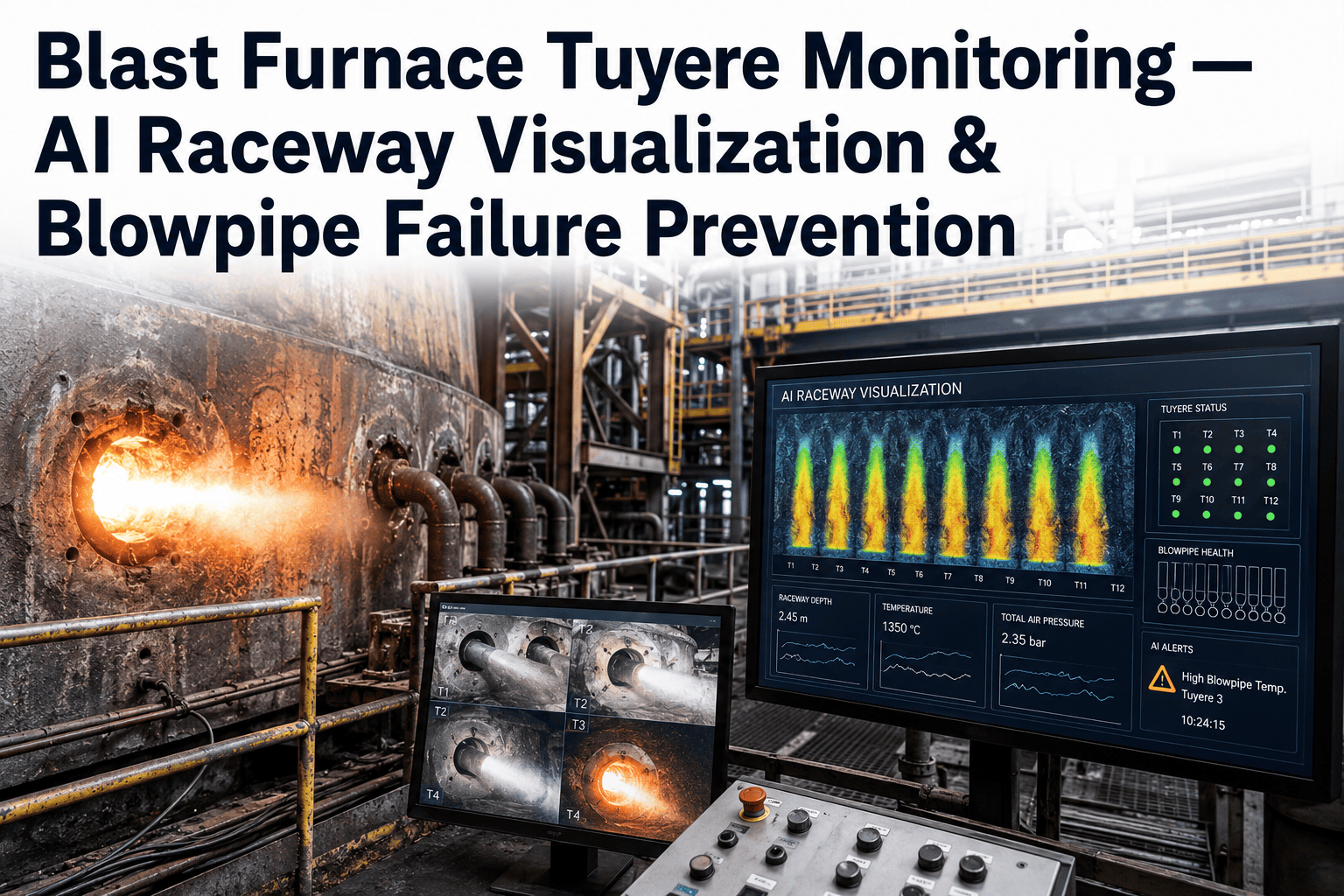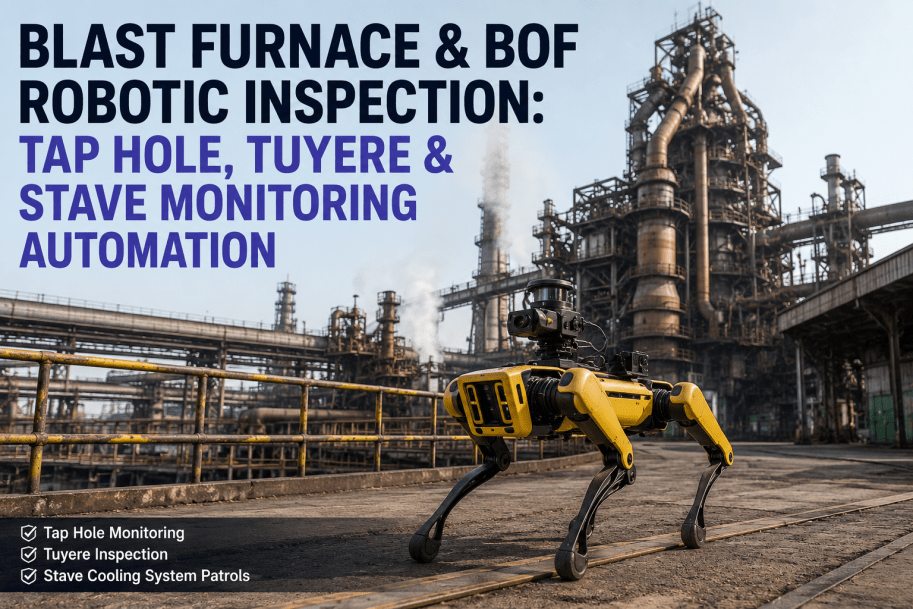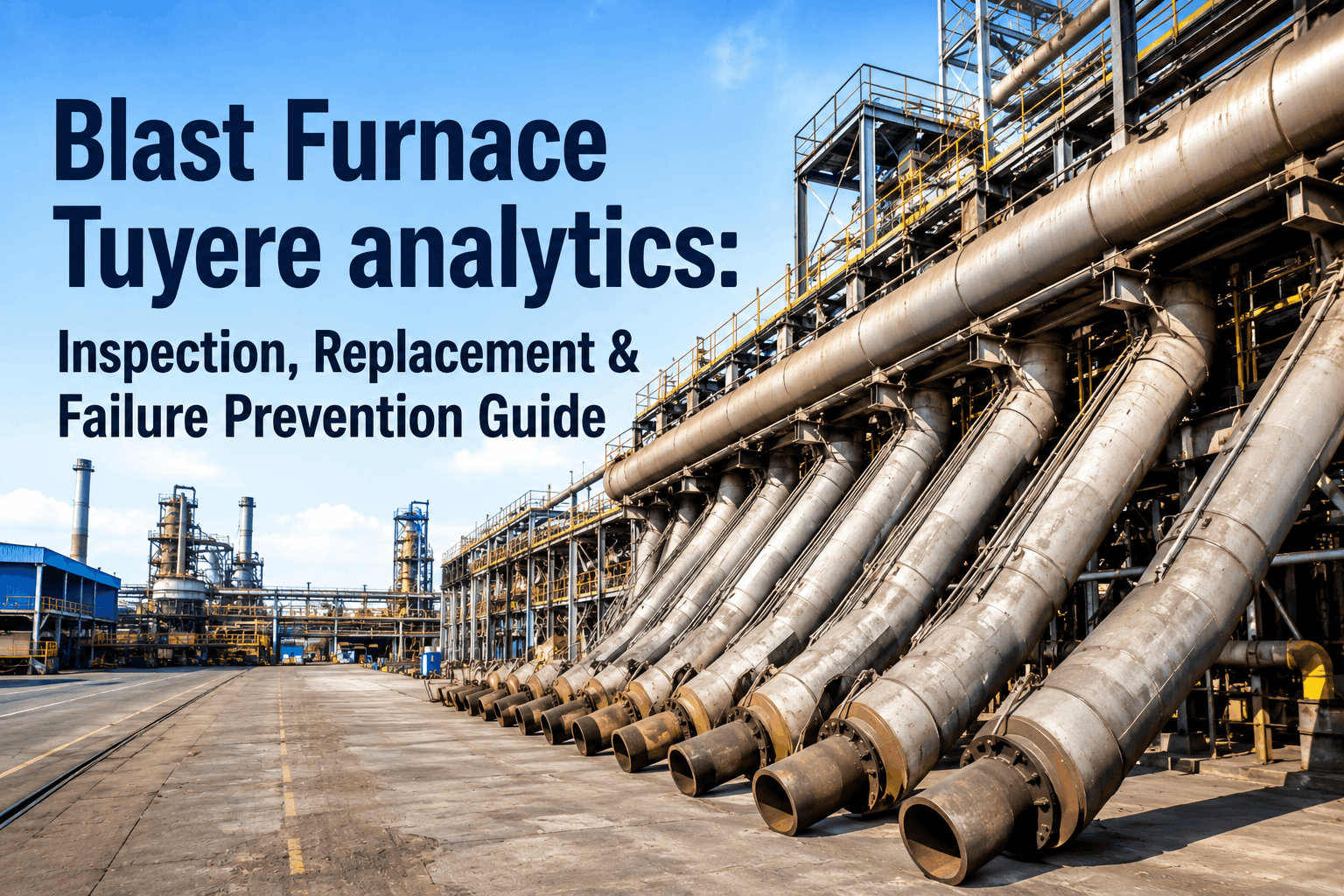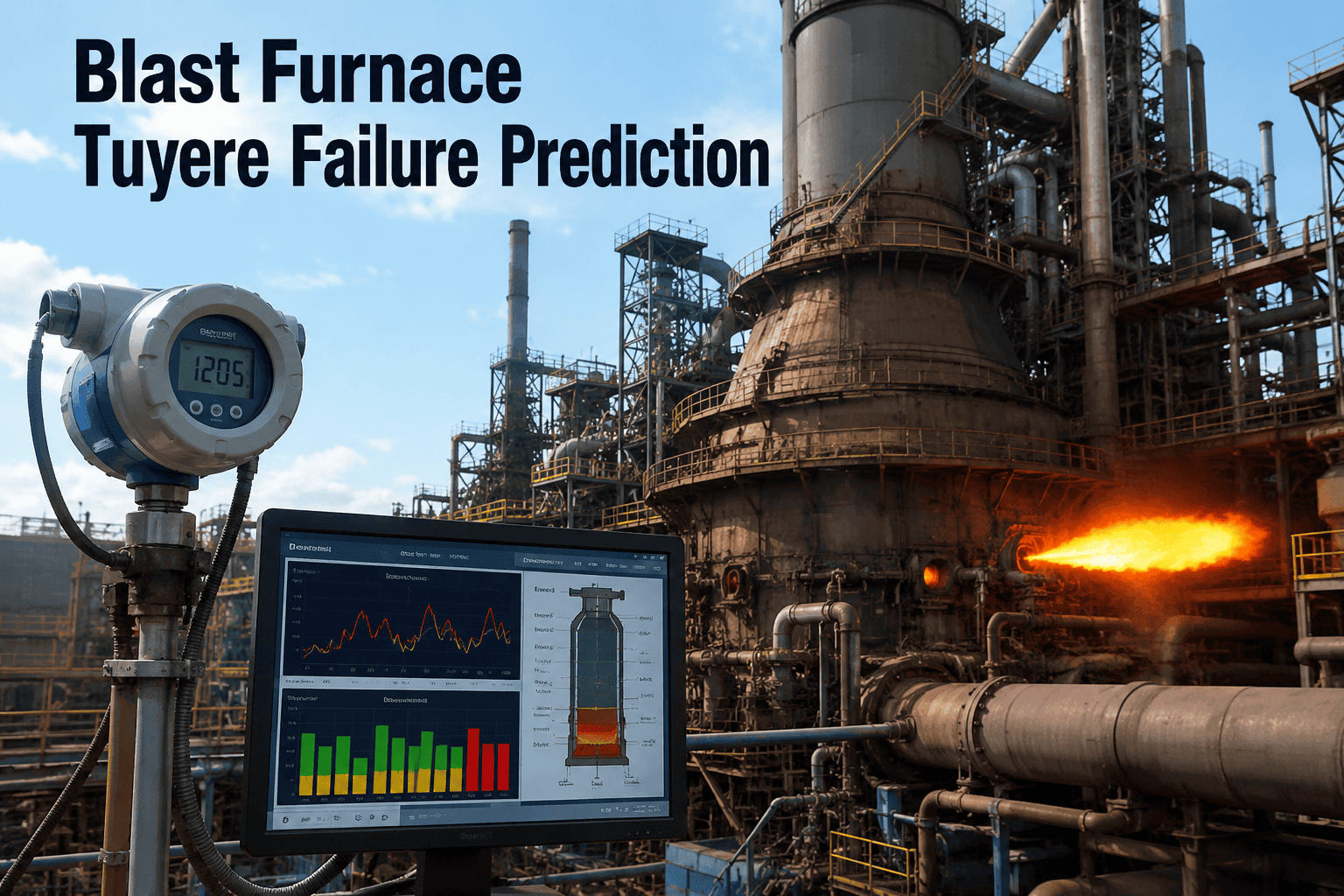
A single tuyere burning through costs a blast furnace anywhere from four to twenty-four hours of lost production, plus the risk of hot metal or gas escaping into the cooling water circuit if the failure isn't caught in time. Most plants still rely on operators noticing a visual flame change through the peephole or a sudden pressure swing on the cooling water line, both of which are late-stage signs that damage has already started. iFactory watches cooling water flow, return temperature, and blowpipe pressure continuously to flag a weakening tuyere days before it fails, and teams can walk through the model with Book a Demo.
By The Time You See The Flame Change, The Tuyere Is Already Failing
Tuyere burn-through rarely happens without warning. Cooling water return temperature creeps up, flow resistance shifts, and blowpipe pressure starts behaving oddly days before the visible failure. iFactory catches that pattern early enough to schedule a change instead of reacting to an emergency shutdown.
A Failing Tuyere Sends Signals Long Before It Burns Through
Tuyeres sit at the hottest, most mechanically stressed point of the blast furnace, exposed to hot blast temperatures above a thousand degrees Celsius while being cooled internally by circulating water. Failure typically begins as a small internal crack or erosion point that gradually thins the copper wall until the cooling water can no longer keep pace with the heat load, at which point the tuyere burns through and can allow hot metal or raceway gas to reach the water circuit. The signals that precede this event are subtle individually but distinctive as a combined pattern, which is exactly why manual monitoring tends to catch them too late.
Gradual Cooling Water Temperature Rise
A thinning tuyere wall allows more heat into the cooling water before the tuyere actually fails, producing a slow upward creep in return temperature that is easy to dismiss as normal variation on a single tuyere among dozens.
Flow Resistance Changes
Scale buildup or early erosion inside the cooling passage changes the flow resistance in ways that show up as small but measurable shifts in flow rate at constant supply pressure.
Blowpipe Pressure Fluctuation
As the tuyere nose geometry begins to erode, blast pressure at that specific tuyere can start to diverge slightly from its neighbors, a signal that is nearly impossible to catch by eye across dozens of tuyeres.
Reactive Change-Out Scheduling
Without early warning, tuyere changes only happen after failure or during planned campaign maintenance, meaning a weakening tuyere either fails unexpectedly or survives past its safe service life purely by chance.
Turn An Emergency Change-Out Into A Scheduled One
iFactory flags a weakening tuyere days in advance so your team can plan the change instead of reacting to a burn-through.
What The Data Typically Shows In The Days Before Failure
While every tuyere failure has its own specific cause, the progression of measurable signals tends to follow a recognizable pattern once enough failure history has been analyzed.
The Measurements The Model Watches On Every Tuyere
Rather than requiring new sensors on each tuyere, iFactory works from cooling water and blast instrumentation most furnaces already have in place, applying the analysis across every tuyere position simultaneously.
| Monitoring Point | Source System | What A Shift Indicates |
|---|---|---|
| Cooling water return temperature | Tuyere cooling water manifold | Heat load increasing due to wall thinning |
| Cooling water flow rate | Tuyere cooling water manifold | Scale buildup or passage erosion |
| Blast pressure per tuyere | Bustle pipe instrumentation | Nose geometry erosion changing flow characteristics |
| Raceway flame observation | Peephole camera feed | Visual confirmation once erosion is advanced |
Before this, a tuyere burn-through meant an unplanned trip and hours of lost production while we scrambled to isolate the water circuit and change it out under pressure. Since iFactory started flagging cooling water temperature drift days ahead, we've been able to schedule tuyere changes during a planned window on nearly every case it's caught, which has made a measurable difference to our monthly production numbers.
What Plants Report After Adopting Early Tuyere Warning
These figures reflect the range typically reported by furnaces after adopting continuous tuyere health monitoring, and they vary with furnace age, tuyere count, and existing cooling water instrumentation quality.
What Undermines Early Tuyere Warning Systems
Plants introducing continuous tuyere monitoring tend to run into a specific set of issues that reduce how much benefit the system actually delivers.
Inconsistent Sensor Calibration Across Tuyeres
If individual cooling water flow meters drift out of calibration at different rates, the model's baseline for each tuyere becomes unreliable, producing false positives on some and missed warnings on others.
No Clear Escalation Procedure
An early warning is only useful if there's a defined process for who reviews it and how quickly a change-out gets scheduled, otherwise warnings pile up without action until they're effectively ignored.
Underestimating Spare Tuyere Inventory Needs
Catching failures early only helps if spare tuyeres and change-out crews are readily available, so plants that don't adjust their spares planning still end up delaying the scheduled change past the ideal window.
Dismissing Early Warnings As Noise
The first few warnings on a new furnace deployment sometimes get dismissed as sensor noise before the pattern is well understood, which delays the point at which operators start trusting and acting on the model consistently.
Frequently Asked Questions
Q: Does this need new sensors installed on every tuyere?
Most furnaces already have cooling water flow and temperature instrumentation along with per-tuyere blast pressure measurement, and iFactory is designed to work from that existing data rather than requiring new sensors on each individual tuyere. Where a furnace has only partial instrumentation, such as manifold-level rather than per-tuyere cooling water measurement, the model can still provide value at a coarser resolution while flagging where additional instrumentation would sharpen the warning. Reach out through Support Contact to review what your furnace currently has installed.
Q: How far in advance does the model typically warn before a failure?
Warning lead time varies by the specific failure mode, but plants typically see meaningful warning several days before a tuyere would otherwise burn through, based on the gradual temperature and pressure drift pattern the model tracks. Faster-developing failures, such as those caused by a sudden mechanical impact rather than gradual erosion, may provide a shorter warning window, which is why the model is designed to complement rather than replace visual peephole inspection.
Q: What happens if the model flags a tuyere but the change-out has to wait for a planned outage?
The model continues tracking the flagged tuyere's trend and updates the urgency of its recommendation as the drift progresses, giving operators a continuously updated view of how much margin remains before the risk of unplanned failure increases significantly. This lets a plant make an informed decision about whether to hold for a planned outage or bring the change forward, rather than treating every warning as an immediate emergency.
Q: Can this help plan spare tuyere inventory levels?
Yes, tracking warning frequency and typical lead time over several months gives a plant a clearer picture of how many tuyere changes to expect in a given period, which helps size spare inventory and change-out crew scheduling more accurately than relying on historical average failure rates alone. Discuss how this data could feed into your spares planning during a Book a Demo session.
Q: Does the model distinguish between normal operating variation and an actual developing failure?
Yes, the model is calibrated against each furnace's own historical operating range so that normal shift-to-shift and campaign-stage variation in cooling water and pressure readings does not trigger unnecessary warnings. It looks specifically for the combined pattern of gradual temperature rise alongside flow and pressure divergence that has historically preceded failure, rather than reacting to any single reading moving outside a fixed threshold.
Catch The Warning Before The Flame Changes
iFactory tracks cooling water and blast pressure across every tuyere so failures become scheduled changes, not emergency trips.