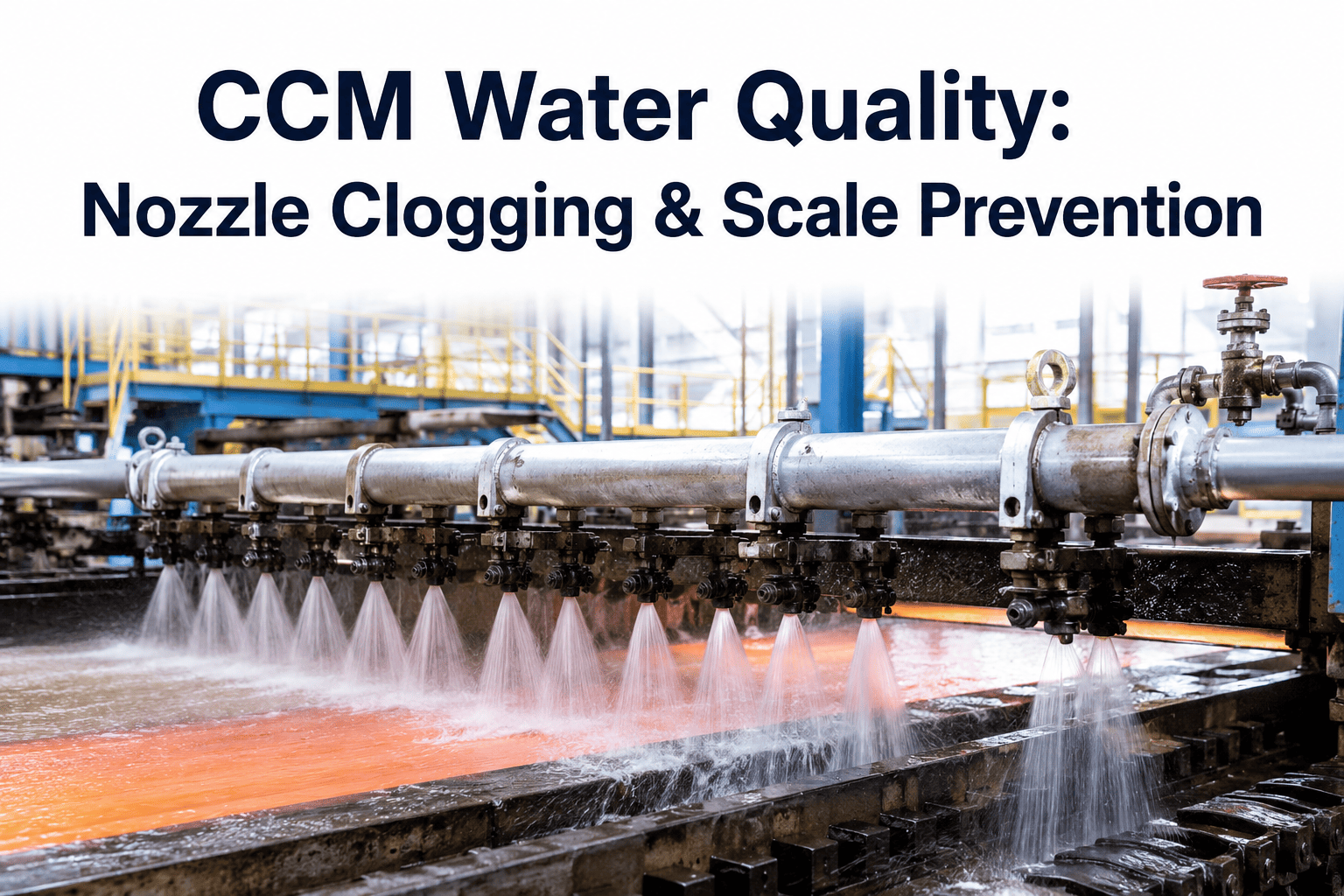
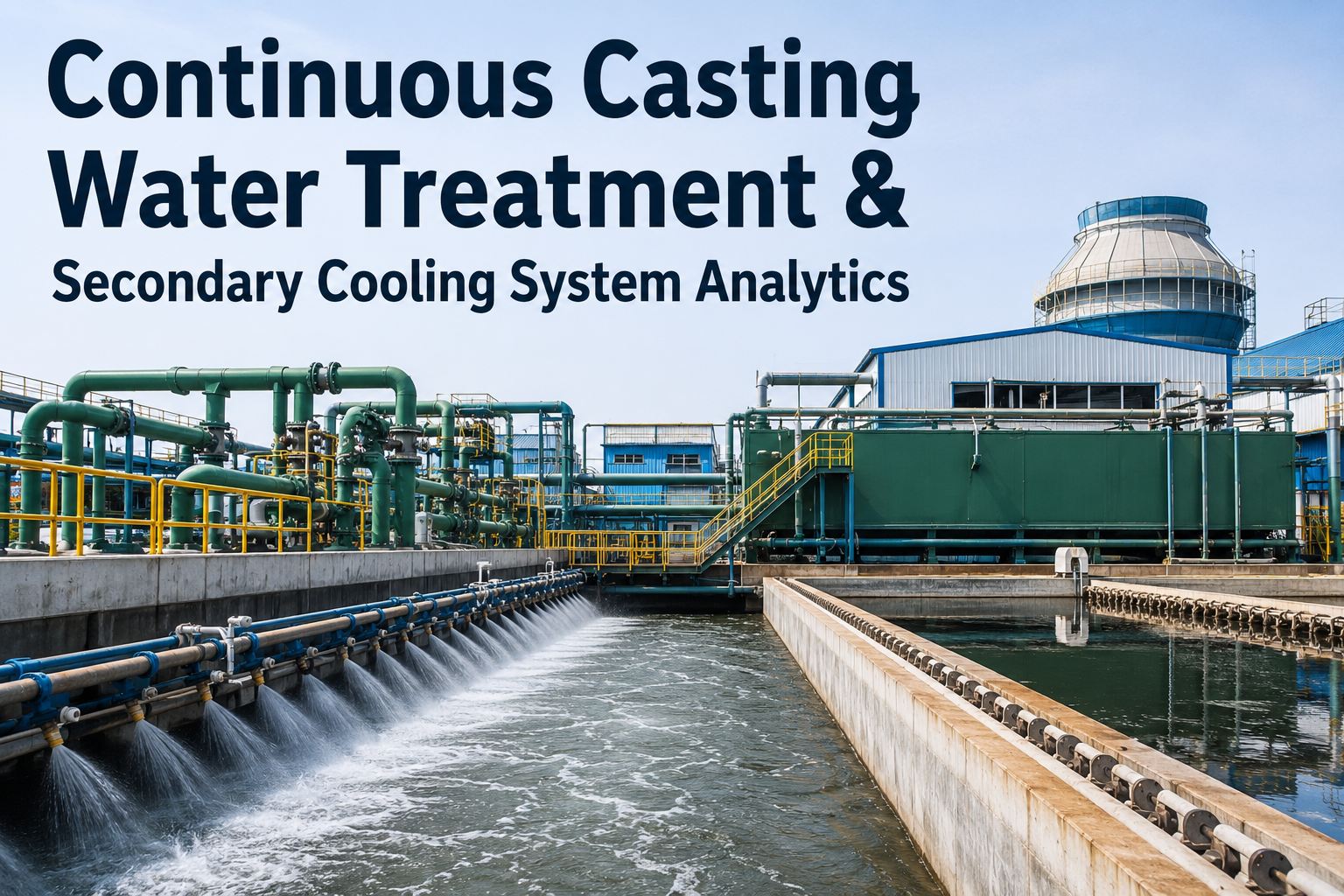
A continuous caster running smoothly for weeks can suddenly develop an intermittent nozzle clog that no one can trace back to a single cause, and by the time maintenance pulls the spray header apart, the culprit is usually sitting in plain sight, a fine layer of mineral scale built up over months inside the water lines feeding the secondary cooling zone. Water quality is one of the least glamorous variables in continuous casting, and also one of the most consistently underestimated, because its effects show up as someone else's problem, a quality defect, a maintenance callout, an unplanned stoppage, rather than as an obvious water issue. Getting ahead of it starts with actually monitoring what is flowing through those lines, and the fastest way to see how that fits your caster is to book a demo with our team.
CONTINUOUS CASTING · SECONDARY COOLING · WATER TREATMENT
The Spray Nozzle Did Not Fail, the Water Feeding It Did
Nozzle clogging and scale buildup in continuous casting cooling systems are almost never a nozzle design problem, they are a water quality problem that has been quietly accumulating for far longer than anyone noticed. iFactory helps casting teams monitor treatment, filtration, and quality in real time before it turns into a spray pattern failure on a live strand.
WHY WATER QUALITY MATTERS SO MUCH IN CCM
Secondary Cooling Depends on Uniform Spray, and Uniform Spray Depends on Clean Water
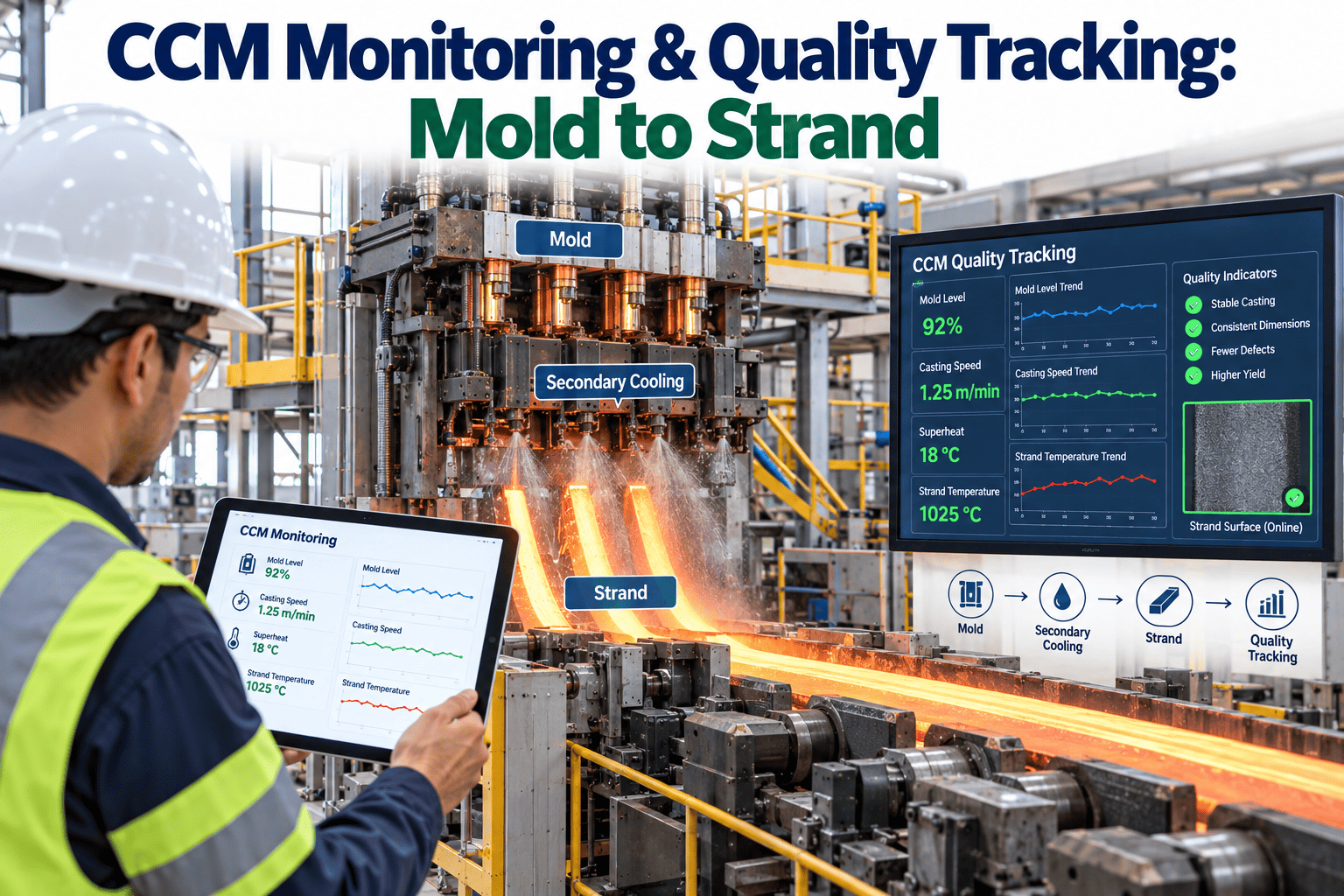
The secondary cooling zone of a continuous caster relies on a precise, uniform spray pattern from each nozzle to control the solidification rate of the strand as it moves through the machine. Even a small deviation in that spray pattern, caused by a partially clogged nozzle or an uneven scale deposit inside the water line, changes the local cooling rate enough to trigger surface cracks, internal defects, or breakout risk on a strand that otherwise looks completely normal from the outside.
What makes this especially difficult to catch is the gradual nature of the buildup. Scale and fine particulate do not clog a nozzle overnight, they accumulate slowly over weeks or months of operation, which means the spray degradation is often invisible until it crosses a threshold and suddenly shows up as a cluster of quality defects that seem to appear out of nowhere.
THE TWO CULPRITS
Nozzle Clogging and Scale Are Related Problems With Different Root Causes
Though they often get lumped together, clogging and scale buildup come from different sources and need different countermeasures. Understanding which one is actually degrading your spray pattern determines whether the fix is a filtration upgrade or a water chemistry adjustment.
Nozzle Clogging
Caused by suspended solids, fine mill scale, or debris in the recirculating water that physically lodges in the small nozzle orifice, restricting or completely blocking flow through that spray point.
Scale Buildup
A chemical process where dissolved minerals, primarily calcium and magnesium hardness, precipitate out of the water as temperature and concentration change, coating the inside of pipes and nozzle bodies over time.
WATER PARAMETERS THAT MATTER
The Water Quality Parameters Worth Tracking Continuously
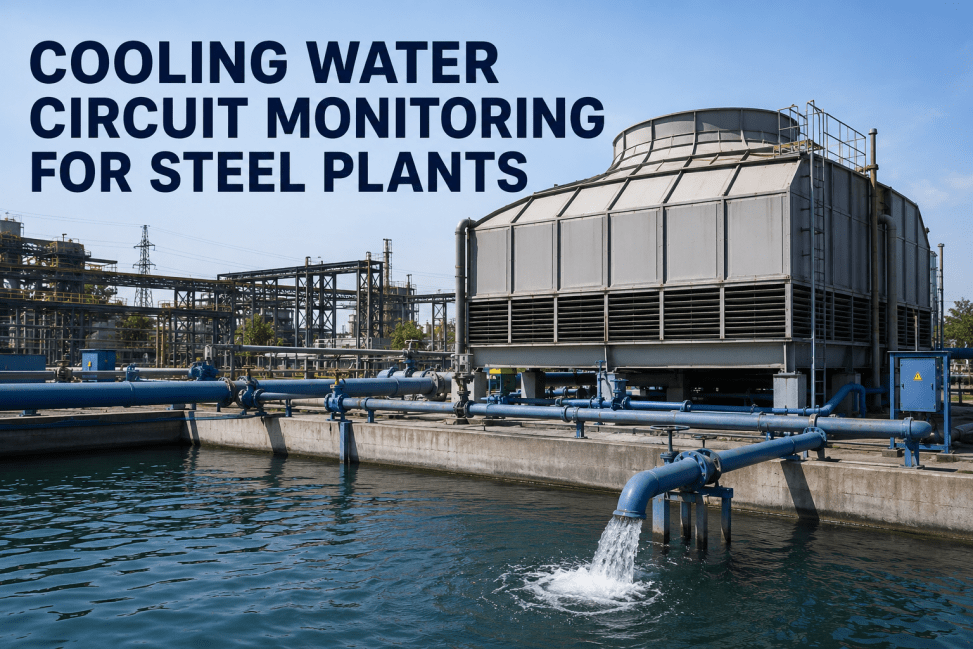
Most secondary cooling water problems trace back to a small set of measurable parameters drifting outside an acceptable range, often gradually enough that nobody notices until the drift has already caused a problem. Continuous monitoring of these parameters turns a reactive maintenance callout into a proactive adjustment.
Total Suspended Solids
Elevated suspended solids are the most direct driver of nozzle clogging, since particles above a certain size simply cannot pass through a fine spray orifice.
Water Hardness
Calcium and magnesium concentration drives scale formation, particularly as water heats up passing near the strand and through recirculation.
pH Level
Water outside the optimal pH range accelerates both scale formation and corrosion inside pipes and spray headers, compounding both problems at once.
Conductivity
Rising conductivity in a recirculating system often signals concentrating dissolved solids, an early warning sign before hardness and scale problems become visible.
See Your Secondary Cooling Water Quality Monitored Continuously
iFactory connects to existing water treatment and filtration instrumentation to flag drift in these parameters before it reaches a nozzle or shows up as a strand defect.
TREATMENT AND FILTRATION
The Treatment Stack That Keeps Spray Cooling Reliable
Effective water management for continuous casting is rarely a single treatment step, it is a layered stack where each stage catches what the previous one missed. Skipping a stage to save cost tends to show up later as a more expensive nozzle replacement or an unplanned strand quality investigation.
STAGE 1
Coarse Filtration
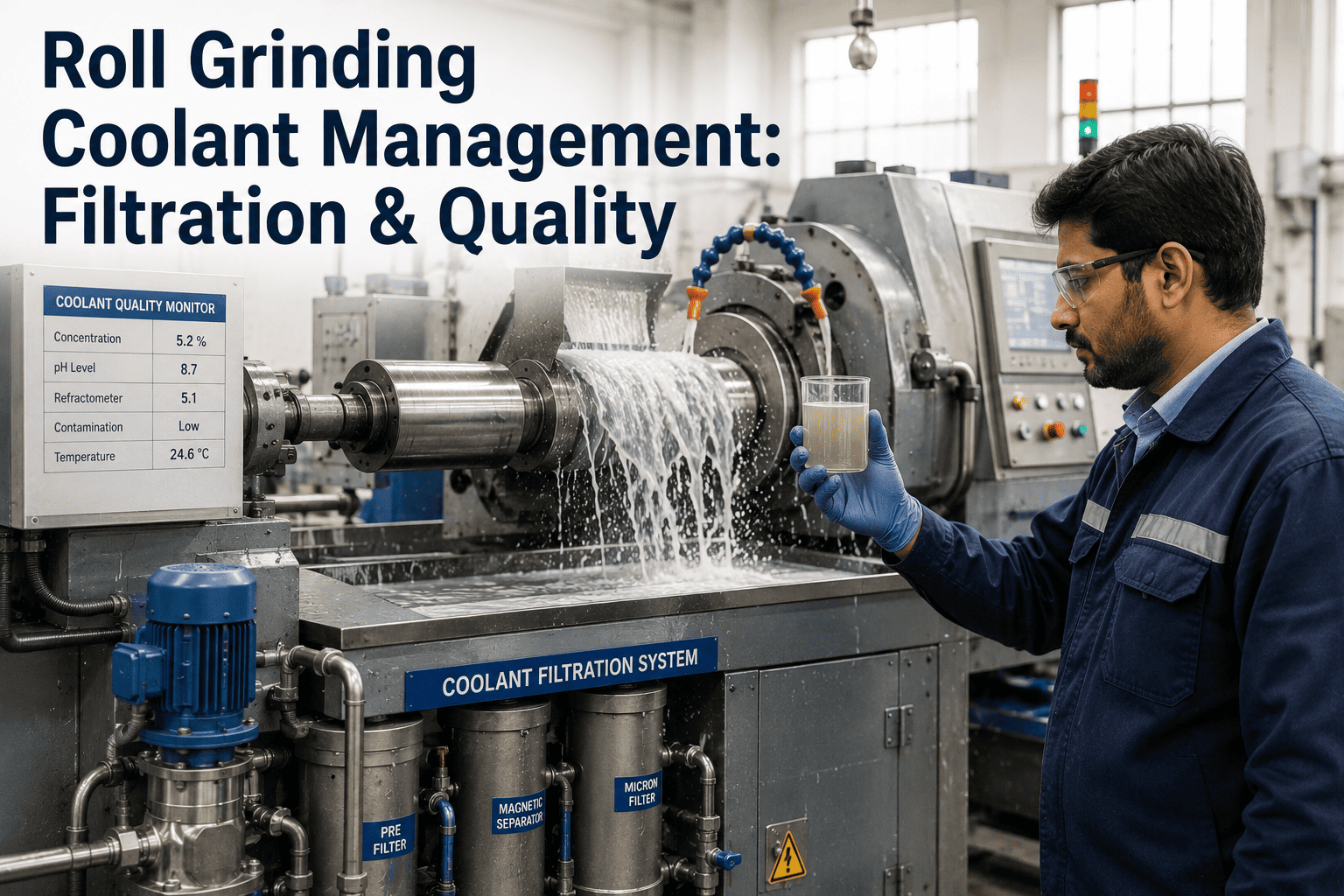
Removing larger debris and scale fragments before water reaches the recirculation loop, protecting downstream equipment from the largest particles first.
STAGE 2
Fine Filtration
Targeting the smaller suspended solids most likely to physically lodge inside a spray nozzle orifice, the single biggest lever against clogging specifically.
STAGE 3
Chemical Treatment
Adjusting pH and applying scale inhibitors to prevent dissolved minerals from precipitating out inside pipes and nozzle bodies as water heats and recirculates.
STAGE 4
Continuous Monitoring
Tracking suspended solids, hardness, pH, and conductivity in real time so a drift in any parameter triggers an adjustment before it becomes a spray pattern problem.
WHAT GOOD MONITORING PREVENTS
The Downstream Cost of Ignoring Water Quality, Compared to Catching It Early
| Consequence |
Reactive Approach |
Continuous Monitoring |
| Nozzle clogging detected |
After a spray pattern defect already shows on the strand |
Before it reaches the point of affecting quality |
| Scale buildup inside piping |
Discovered during a teardown or unplanned maintenance event |
Tracked via hardness and conductivity trend, addressed proactively |
| Root cause of a defect cluster |
Investigated manually across multiple systems after the fact |
Correlated automatically with water quality trend data |
| Maintenance planning |
Reactive callouts disrupting the casting schedule |
Scheduled cleaning and treatment aligned to actual drift trends |
RESULTS PLANTS REPORT
What Changes Once Water Quality Becomes a Tracked Variable
Earlier
Detection of clogging risk before it affects strand quality
Fewer
Unplanned nozzle replacements and spray header teardowns
Traceable
Defect clusters linked directly back to a water quality trend
Scheduled
Cleaning and treatment planned around actual drift, not guesswork
FREQUENTLY ASKED QUESTIONS
Questions Casting Teams Ask About Secondary Cooling Water Quality
How can we tell whether a spray defect is caused by clogging or scale?
Clogging tends to show up as an isolated, localized spray pattern gap tied to a specific nozzle, while scale buildup usually affects a wider section of the header more gradually and evenly over time. Tracking suspended solids and hardness trends separately makes the distinction clear well before a teardown is needed.
Book a demo to see both parameters tracked side by side on your own system.
How often should secondary cooling water actually be tested?
Periodic manual sampling, even weekly, still leaves a gap where a rapid drift can go unnoticed for days, which is exactly the window where a clog or scale event tends to develop. Continuous, automated monitoring closes that gap and catches a drift as it happens rather than at the next scheduled sample.
Contact support to discuss a monitoring frequency that fits your caster.
Can existing water treatment equipment be monitored without replacing it?
In most cases yes, monitoring instrumentation can be added to existing filtration and treatment systems to capture the relevant parameters continuously, without requiring a full replacement of equipment that is already functioning correctly. The value comes from visibility into trends, not from new hardware alone.
Book a demo to see how this fits your current treatment setup.
Is scale buildup ever a bigger risk than nozzle clogging?
Scale buildup can be the more expensive long-term problem, since it accumulates inside piping and headers where it is harder to inspect, and by the time it is discovered it often requires a more extensive cleaning or replacement effort than a single clogged nozzle would. Tracking hardness and conductivity continuously is the most reliable way to catch it early.
Contact support for guidance on prioritizing scale versus clogging risk in your system.
What is the fastest first step toward better water quality control?
Establishing a continuous baseline for suspended solids, hardness, pH, and conductivity is usually the fastest and most valuable first step, since it immediately reveals whether the system is drifting and how quickly, before any equipment changes are made. That baseline then informs whether filtration or chemical treatment needs the most immediate attention.
Book a demo to set up a baseline monitoring view for your caster.
Stop Losing Strand Quality to a Water Problem Nobody Is Watching
iFactory brings continuous visibility into secondary cooling water quality, catching drift before it becomes a nozzle clog, a scale event, or a defect on the strand.