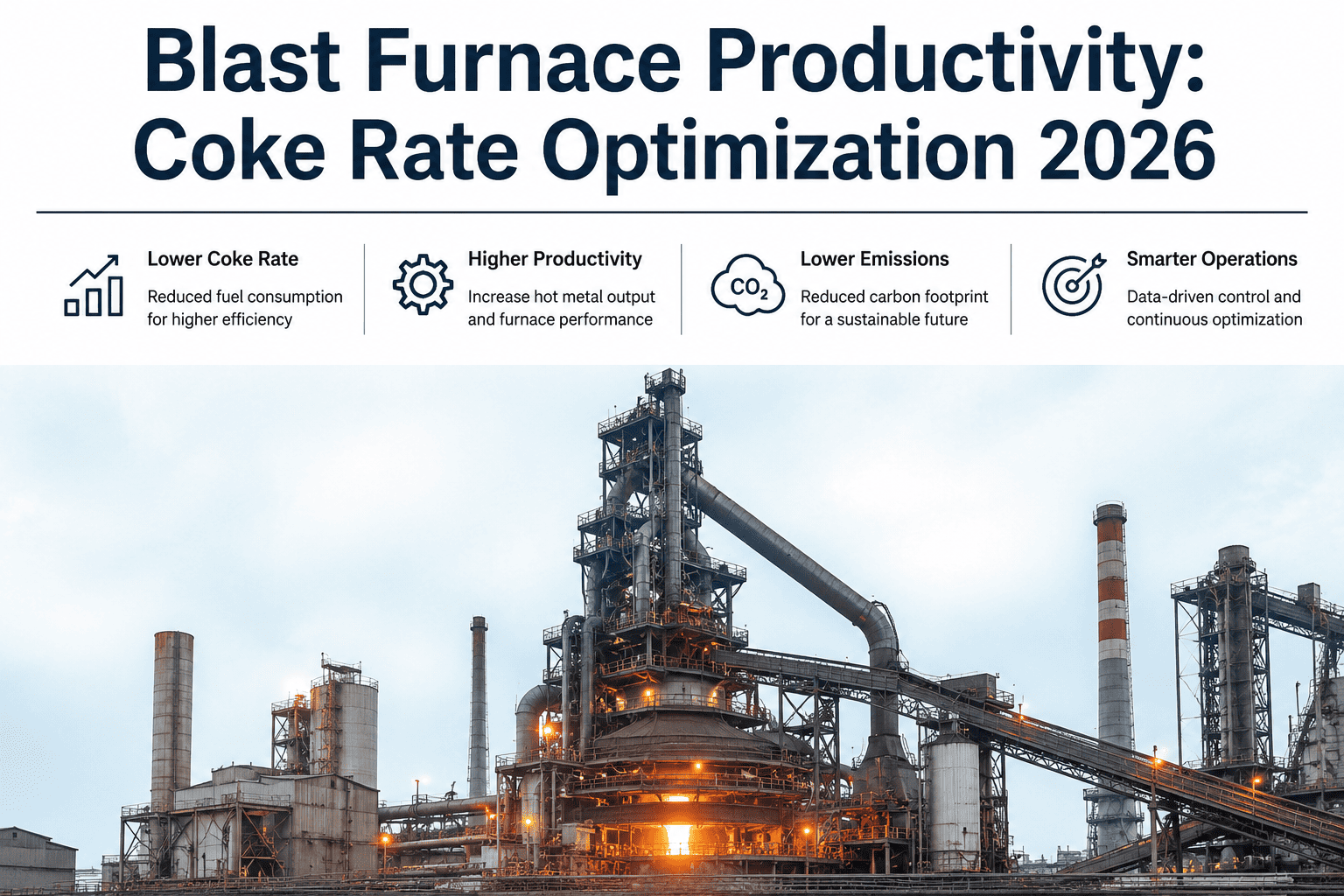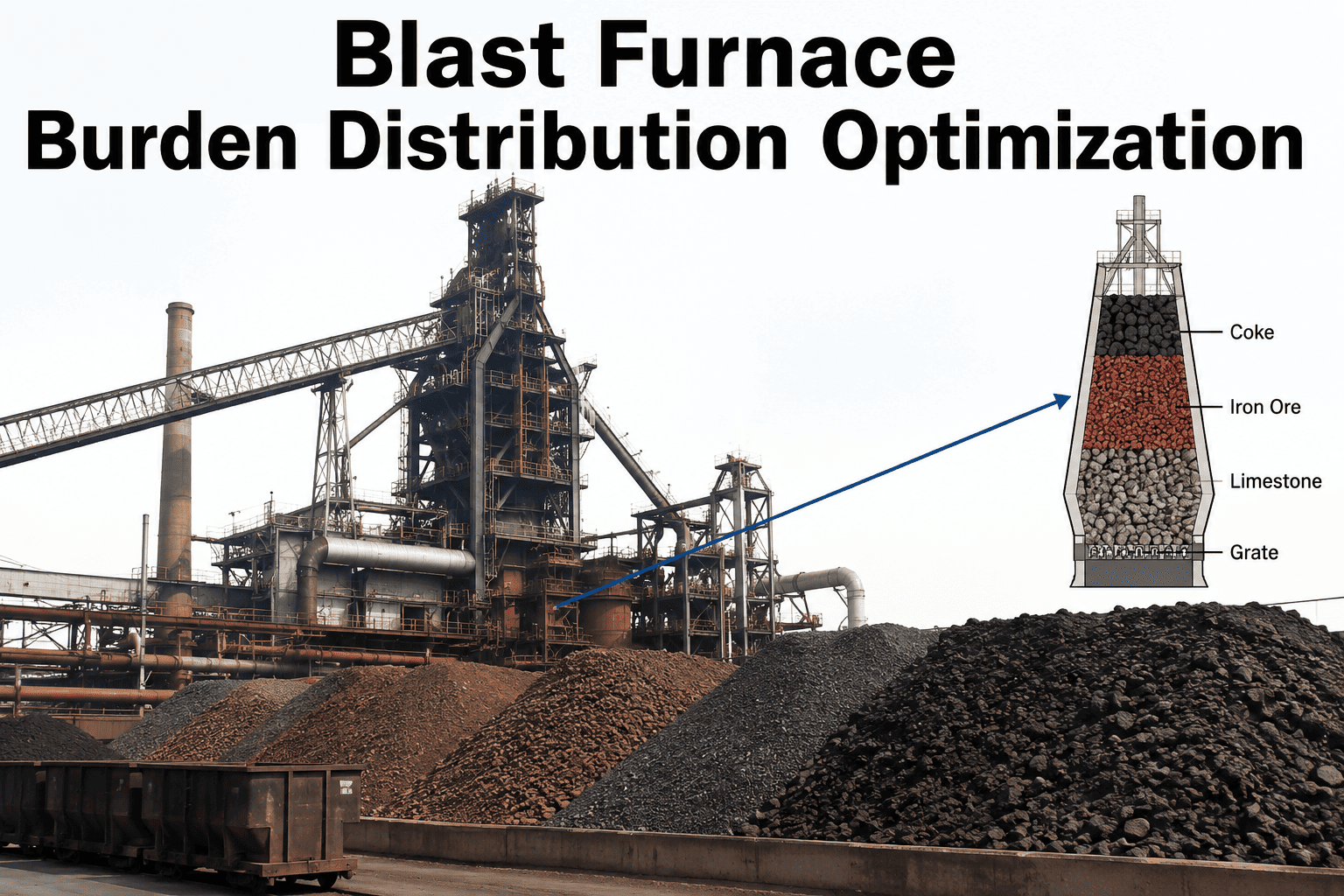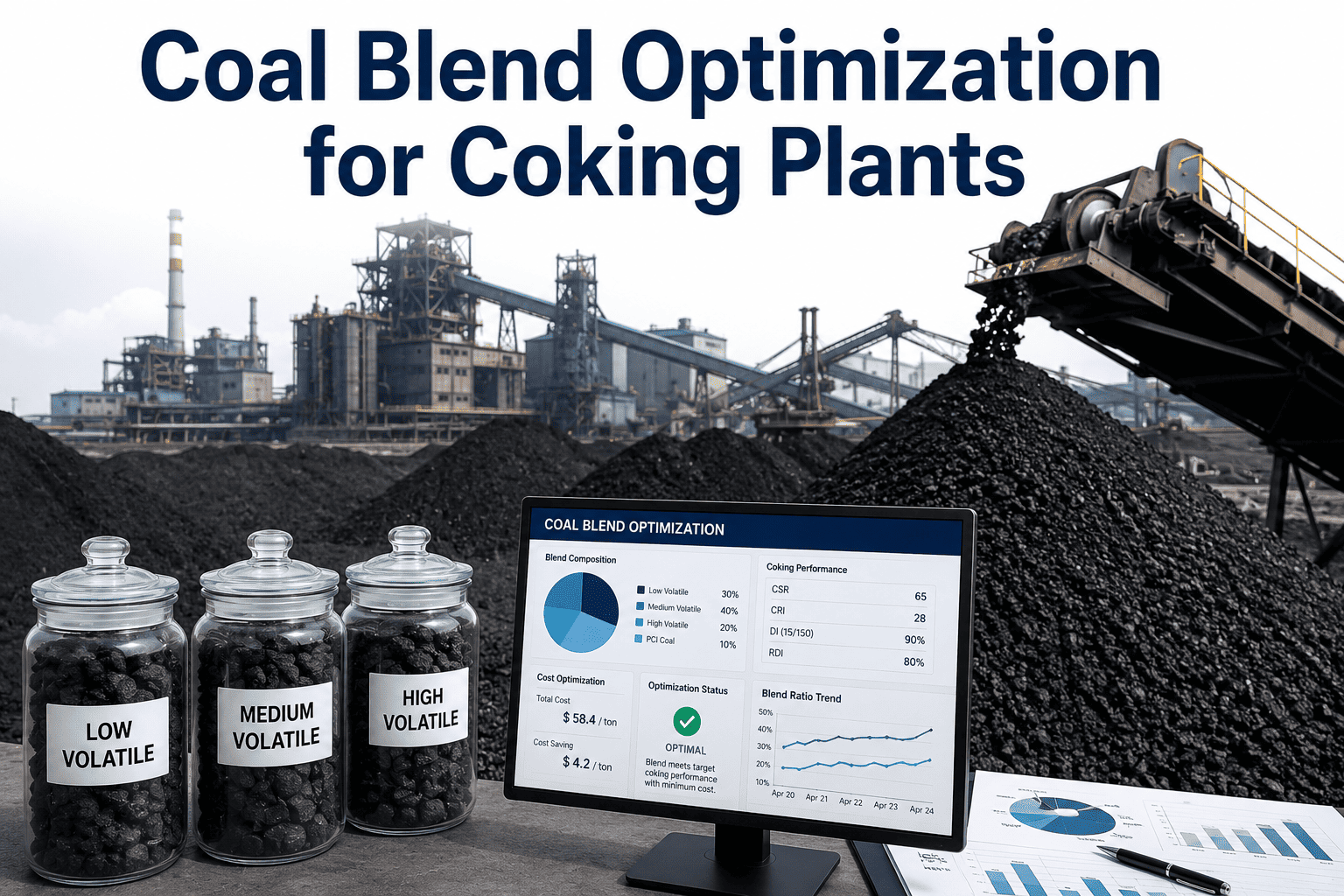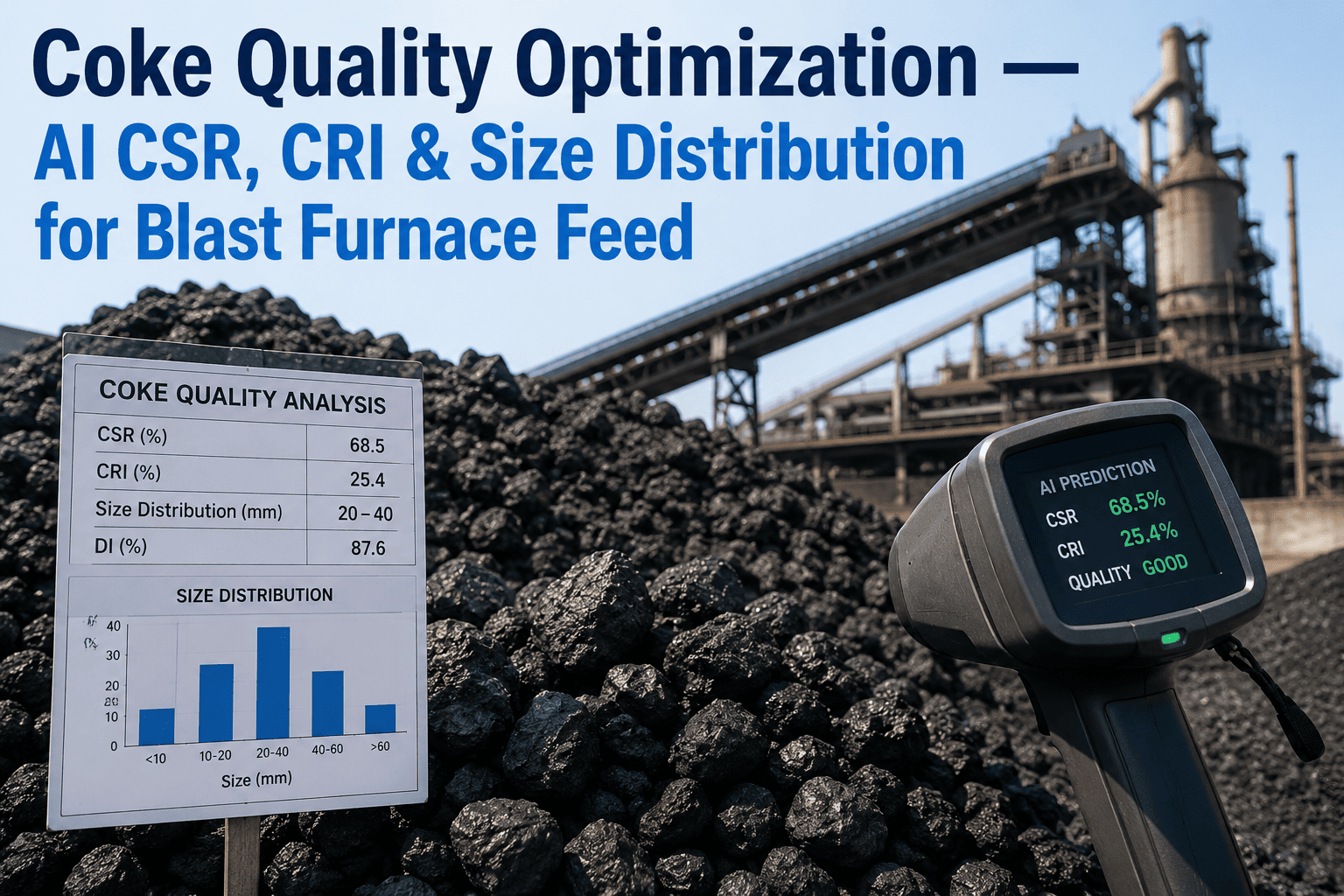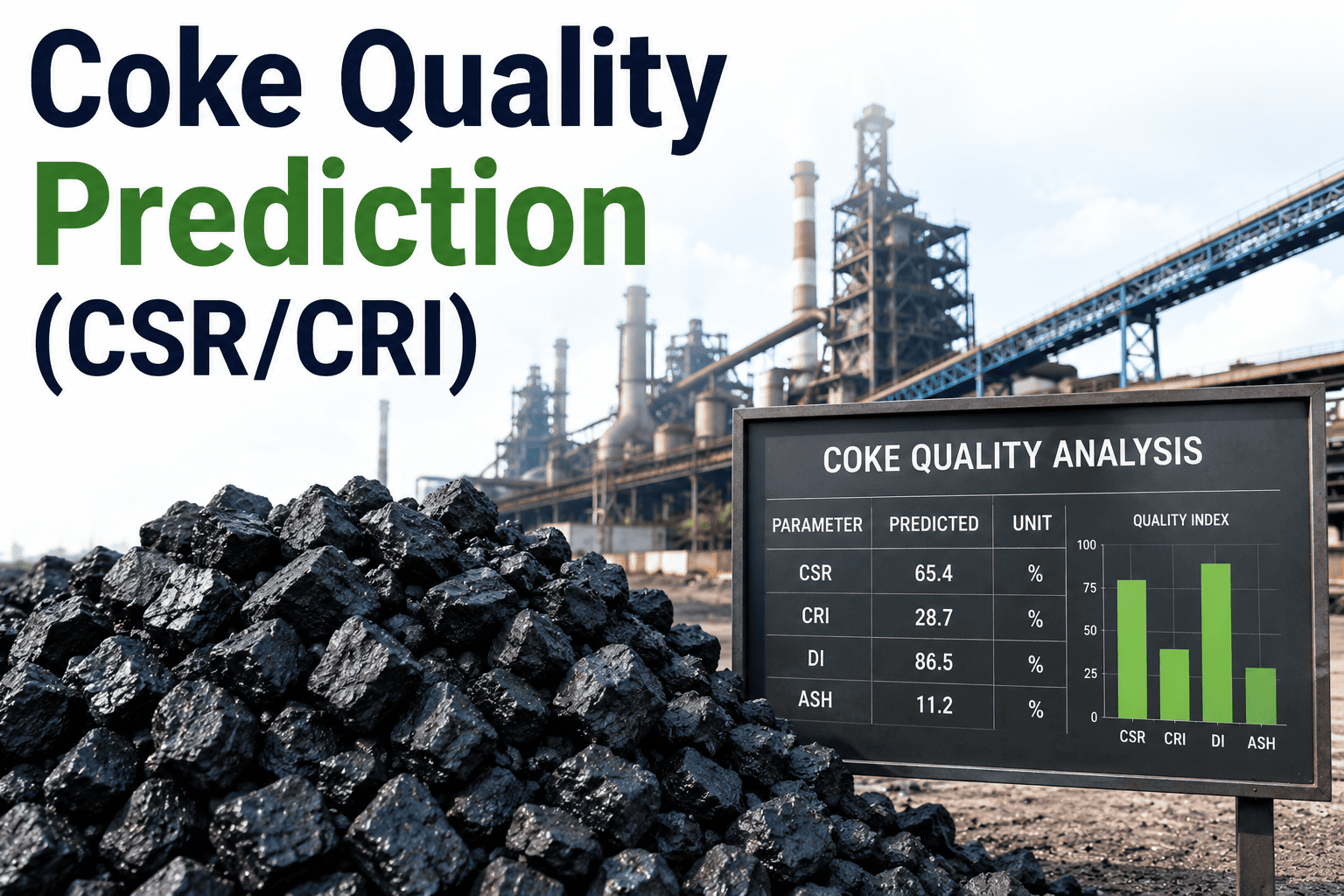
Coke quality lab results always arrive after the coke that produced them has already gone into the blast furnace. By the time CSR and CRI numbers come back, that batch is deep in the stack, quietly affecting permeability and fuel rate for hours or days before anyone can react. Coke quality leads spend their careers managing a process where the feedback loop is structurally too slow. iFactory's AI predicts CSR and CRI from coal blend chemistry and coking conditions while the coke is still in the oven, giving the ironmaking side real advance warning. Book a CSR/CRI prediction demo to see this modeled against your own coal blend history.
Coke Quality That Predicts the Furnace's Next Few Hours
AI models trained on coal blend chemistry and coking conditions predict CSR and CRI before the lab result ever comes back, giving both coke and ironmaking teams real lead time.
Why CSR and CRI Matter More Than Any Other Coke Number
CSR, coke strength after reaction, and CRI, coke reactivity index, together describe how coke will physically hold up and chemically behave deep inside a blast furnace — properties no other coke test captures as directly.
- Coke degrades into fines deep in the furnace shaft
- Gas permeability drops in the lower stack
- Fuel rate rises to compensate for lost structural support
- Furnace stability becomes harder to hold at high productivity
- Coke retains structural strength through the lower stack
- Gas permeability stays consistent at high productivity
- Fuel rate can be pushed lower without stability risk
- Furnace campaign wear from burden imbalance is reduced
How the Model Predicts CSR and CRI Before the Lab Does
CSR and CRI are outcomes of coal blend chemistry and coking process conditions working together. The model learns that relationship from your own historical lab results, then predicts forward from live data.
Coal blend chemistry input
Vitrinite reflectance, fluidity, ash, and sulfur content of the actual blend charged are fed into the model as the primary predictive input.
Coking condition tracking
Flue temperature, coking time, and heating uniformity for the specific oven and cycle are added as secondary predictive inputs.
Historical lab correlation
Past CSR and CRI lab results are used to train the model on your specific blend-to-quality relationship rather than a generic industry curve.
Pre-push quality prediction
A predicted CSR and CRI range is available before the batch is even pushed, letting both coke and ironmaking teams plan around it in advance.
Continuous accuracy refinement
Each new lab result feeds back into the model, tightening prediction accuracy over time as blend sources and coking practice evolve.
See CSR/CRI Predicted Against Your Own Blend History
iFactory validates the prediction model against your last twelve months of coal blend and lab quality data before any live deployment begins.
CSR and CRI Targets by Furnace Productivity Level
Required coke quality rises with furnace productivity ambition. These ranges reflect what integrated mills typically target for each operating regime.
What Changes With Predictive Coke Quality
Figures reported by coke and ironmaking teams after adopting pre-push CSR/CRI prediction as a shared planning tool.
A Coke Quality Lead's View on Predictive Modeling
For years our job was explaining after the fact why CSR came in low on a given batch. Now we get a heads-up before the batch is even pushed, which means we can flag it to the ironmaking team while there is still time to adjust burden practice. That single change moved us from reactive to actually useful.
Four Reasons CSR and CRI Surprise Teams After the Fact
Coke quality surprises are rarely random. They usually trace back to a specific blend or process input that was not being tracked closely enough at the time.
Coal source substitution
A coal supplier swap changes vitrinite reflectance and fluidity in ways that are not always flagged before the blend goes into the ovens.
Coking time variability
Push schedule pressure occasionally shortens actual coking time below what the blend needs, degrading CSR without a corresponding blend change.
Blend homogeneity issues
Inconsistent blending before charging leaves pockets of coal with different reactivity, producing quality variation within a single push.
Lag between blend decision and lab result
By the time a lab result reveals a problem, several more batches using the same blend have often already been charged.
Frequently Asked Questions
How accurate is CSR/CRI prediction compared to lab results?
Once trained on twelve or more months of your own blend and lab data, prediction accuracy typically lands within one to two CSR points and a similar CRI margin, tight enough to be genuinely actionable for burden planning rather than just directional.
Does this replace the physical lab test?
No, the physical test remains the official quality record. The prediction gives an earlier signal for planning purposes, while lab results continue to validate and refine the model over time. Book a demo to see how the two work together.
Can this help with coal procurement decisions?
Yes. Because the model understands how specific coal chemistry properties translate into CSR and CRI, it can be used to evaluate a prospective new coal source's likely quality impact before it is ever purchased.
How is the model kept accurate as coal sources change?
Every new lab result is fed back into the model automatically, so prediction accuracy adapts as blend sources, seasons, and coking practice shift over time.
What data is needed to get started?
Historical coal blend composition data alongside matching CSR/CRI lab results, typically twelve months or more, gives the strongest starting point. Talk to a specialist about what your plant's records already include.
Know Your Coke Quality Before the Lab Does
Book a 30-minute scoping call and bring twelve months of coal blend and CSR/CRI lab data. iFactory shows how accurately your quality can be predicted before push.