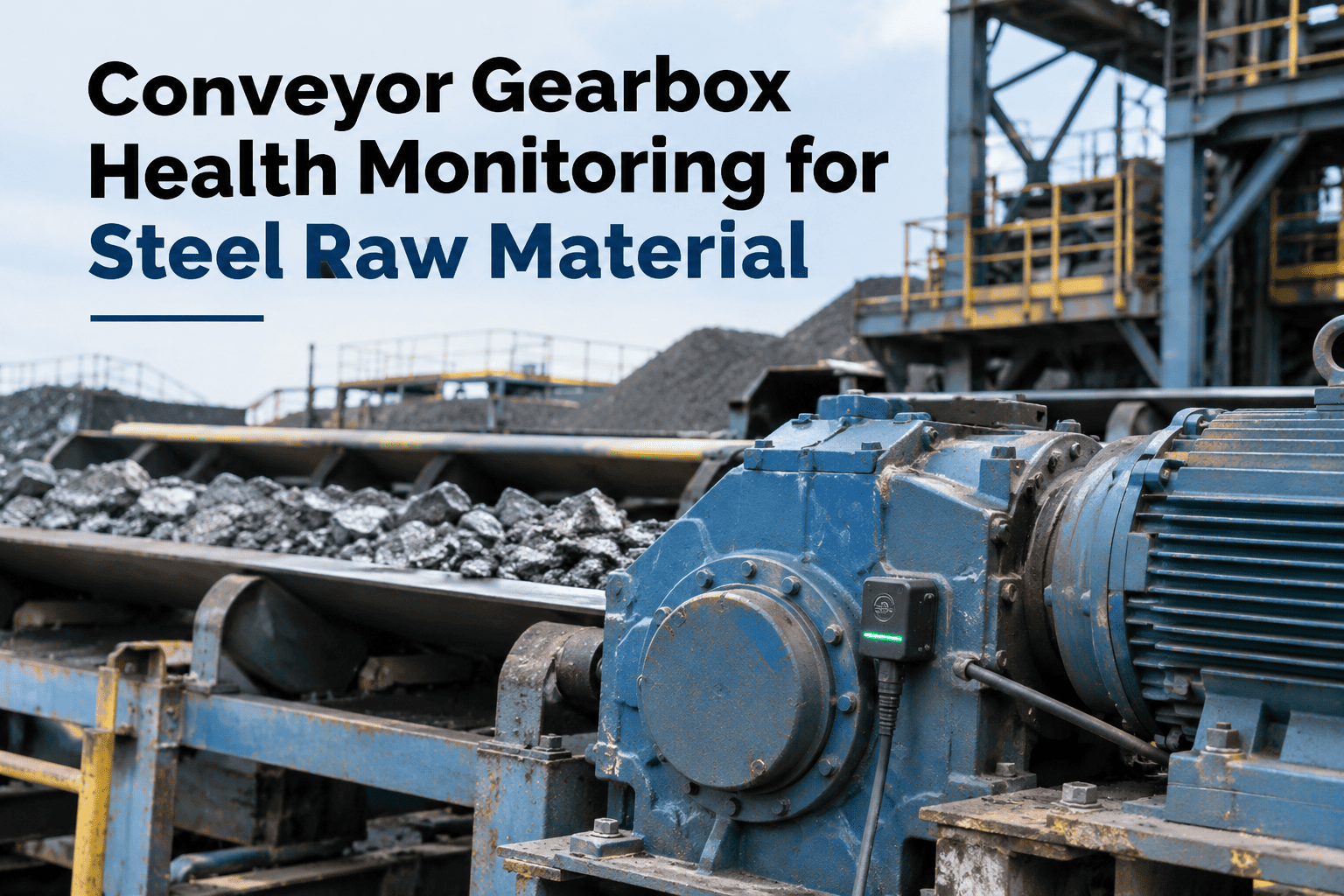
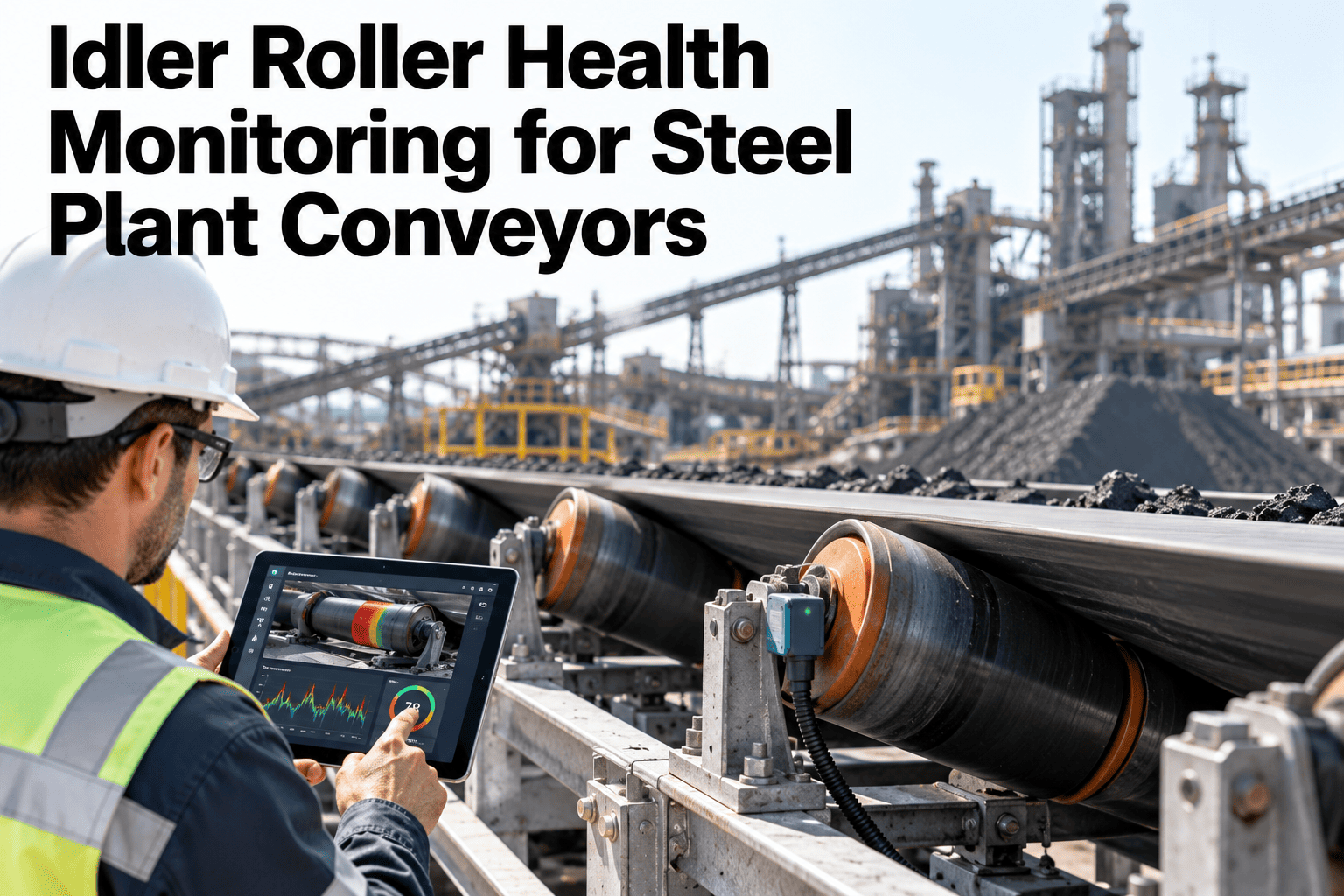
A conveyor gearbox carrying raw material into a steel plant runs continuously under heavy, dusty load — and when it fails, it doesn't just stop one component, it can stop the material flow the whole plant depends on. iFactory, an on-premise AI platform with predictive maintenance built in, tracks gearbox oil analysis, vibration spectrum, and temperature trending together to catch degradation months before failure. Steel plant reliability teams who want this on their own conveyor gearboxes can discuss their plant data and use case with our team.
Conveyor Gearbox Health Monitoring · Steel Raw Material, 2026
A Gearbox Failure Doesn't Just Stop a Component. It Stops the Material Flow.
iFactory AI tracks oil analysis, vibration spectrum, and temperature trending on conveyor drive gearboxes, catching degradation months ahead of a flow-stopping failure.
Months out
Oil particle count rising
Weeks out
Vibration sideband energy appears
Days out
Temperature begins rising
Why conveyor gearboxes are high consequence
Raw Material Handling Doesn't Tolerate an Unplanned Stop
Unlike a single process machine, a main conveyor carrying ore, coke, or scrap into a steel plant is often the only path material takes to reach the furnace — an unplanned gearbox failure here can idle downstream production entirely, not just one line. That consequence is exactly why conveyor gearboxes deserve the same condition monitoring rigor as the furnace or mill equipment they feed.
What each signal catches
Three Data Streams, Three Different Warning Windows
| Signal | What it reveals | Typical lead time |
|---|
| Oil particle count and elemental analysis | Wear debris generation rate, identifying which internal component is shedding material | Months |
| Vibration spectrum | Gear mesh faults, bearing defects, developing misalignment | Weeks to months |
| Temperature trending | Confirms a fault already progressing, accelerating toward failure | Days to weeks |
What makes conveyor environments harder
Dust and Continuous Operation Complicate Monitoring
Continuous duty cycle
Unlike batch equipment, a conveyor gearbox rarely gets a natural idle period to inspect.
Dust ingress risk
Raw material handling environments are abrasive, accelerating wear if seals are compromised.
Variable load
Material flow rate changes shift the baseline vibration and temperature signature.
See What Your Conveyor Gearbox Data Already Shows
Share your current oil analysis and vibration monitoring data for your conveyor fleet, and iFactory AI will show what a connected condition picture would reveal.
Accounting for load variation
Why a Fixed Baseline Doesn't Work on a Variable-Load Conveyor
A conveyor running at full material load produces a different vibration and temperature signature than the same conveyor running near empty — a static threshold designed around one load condition will either miss developing faults at low load or generate false alarms at high load. Thresholds tied to actual load condition, not a single fixed number, are what make conveyor gearbox monitoring reliable.
From signal to scheduled repair
Four Steps From a Developing Trend to a Planned Swap
1
Oil trend flags first
Rising particle count or a specific wear metal signals the earliest warning.
2
Vibration confirms location
Spectrum analysis narrows the developing fault to gear mesh or bearing.
3
Temperature confirms urgency
A rising temperature trend indicates how much time remains before action is needed.
4
Repair scheduled around flow
The swap is planned for a window that minimizes material flow disruption.
Expert review
What a Reliability Engineer Checks First
Conveyor gearbox monitoring earns its place when thresholds account for the conveyor's actual load condition, not a single static number applied regardless of how much material is moving.
Verdict
Strong when oil, vibration, and temperature are triaged together rather than treated as three separate alarm streams.
Watch for
A fixed vibration threshold that doesn't adjust for the conveyor's load condition at the time of the reading.
Do next
Identify your conveyor gearboxes feeding the highest-consequence material flow and confirm they're getting the same monitoring rigor as your furnace or mill equipment.
Frequently asked questions
What Steel Plants Ask About Conveyor Gearbox Monitoring
Why does a conveyor gearbox need the same rigor as furnace equipment?
Because conveyor gearboxes often serve as the sole raw material path into the plant, an unplanned failure can idle downstream production entirely, giving it a consequence comparable to or greater than many process machines.
Discuss the criticality of your conveyor fleet.
How does variable material load affect monitoring accuracy?
A conveyor's vibration and temperature signature genuinely differs between full and near-empty load, so thresholds tied to actual load condition at the time of the reading avoid both missed faults and false alarms.
Ask support about load-adjusted thresholds.
How often should oil samples be taken on a continuously running conveyor gearbox?
Does dust ingress require different sensor protection than other industrial environments?
Can a repair be scheduled without stopping the whole conveyor system?
Where redundancy or a parallel material path exists, a repair can sometimes be scheduled around it — but for a single-path conveyor, the repair window is planned to minimize disruption to downstream production as much as possible.
Talk through repair scheduling for your layout.
Protect the material flow, not just the gearbox
Track Conveyor Gearbox Condition Months Before Failure
Book a session with iFactory AI to see how connected gearbox monitoring would work on your raw material conveyors.