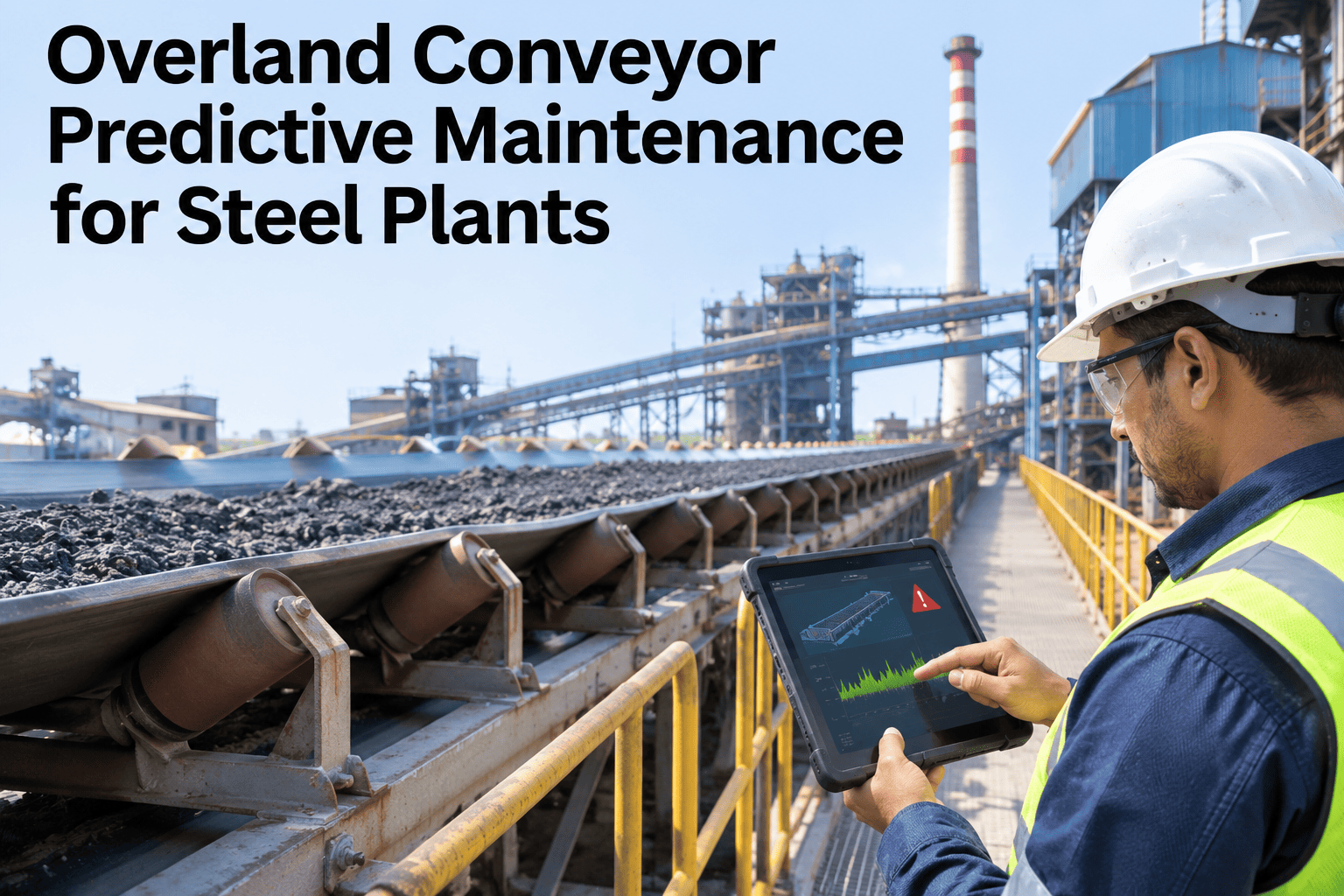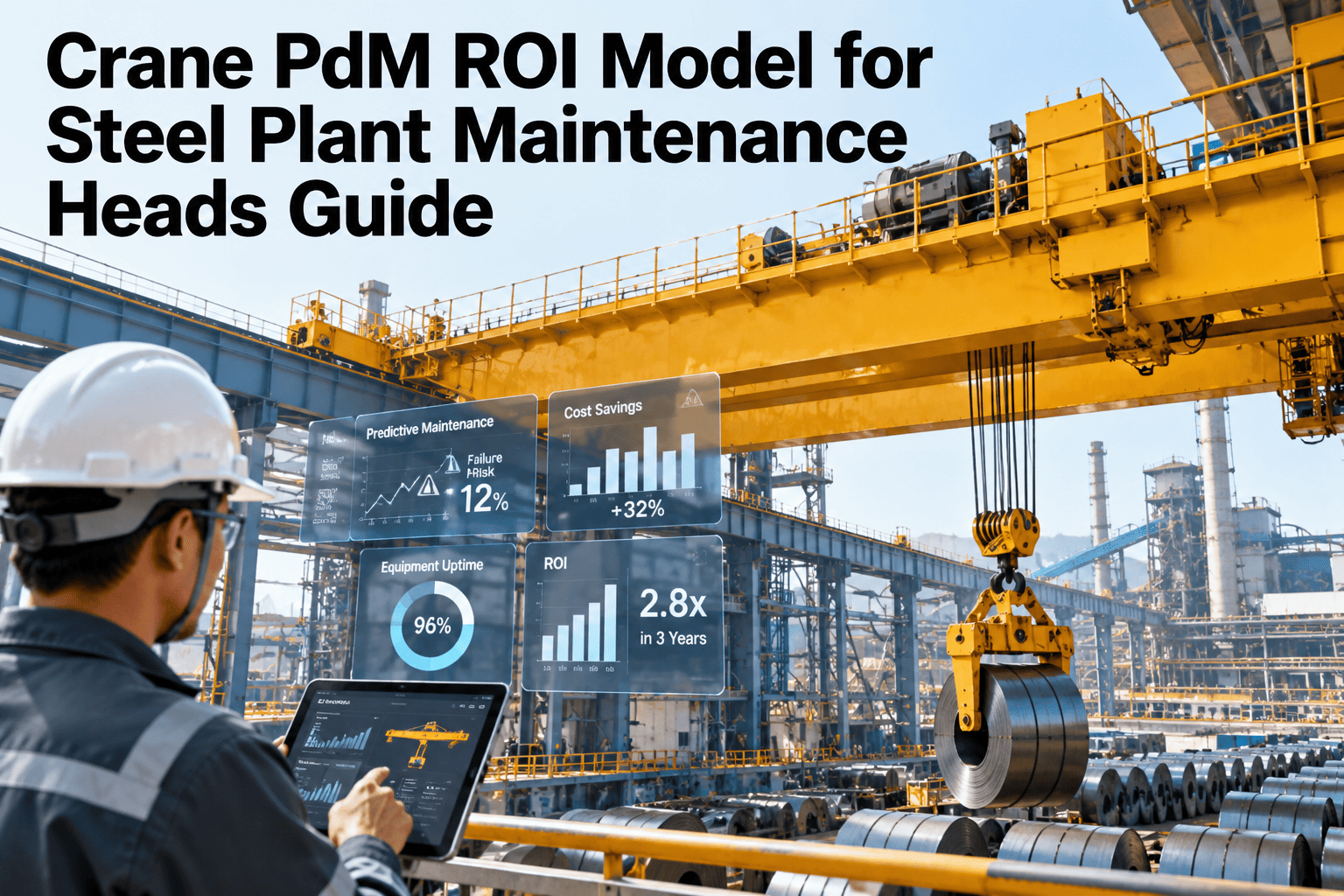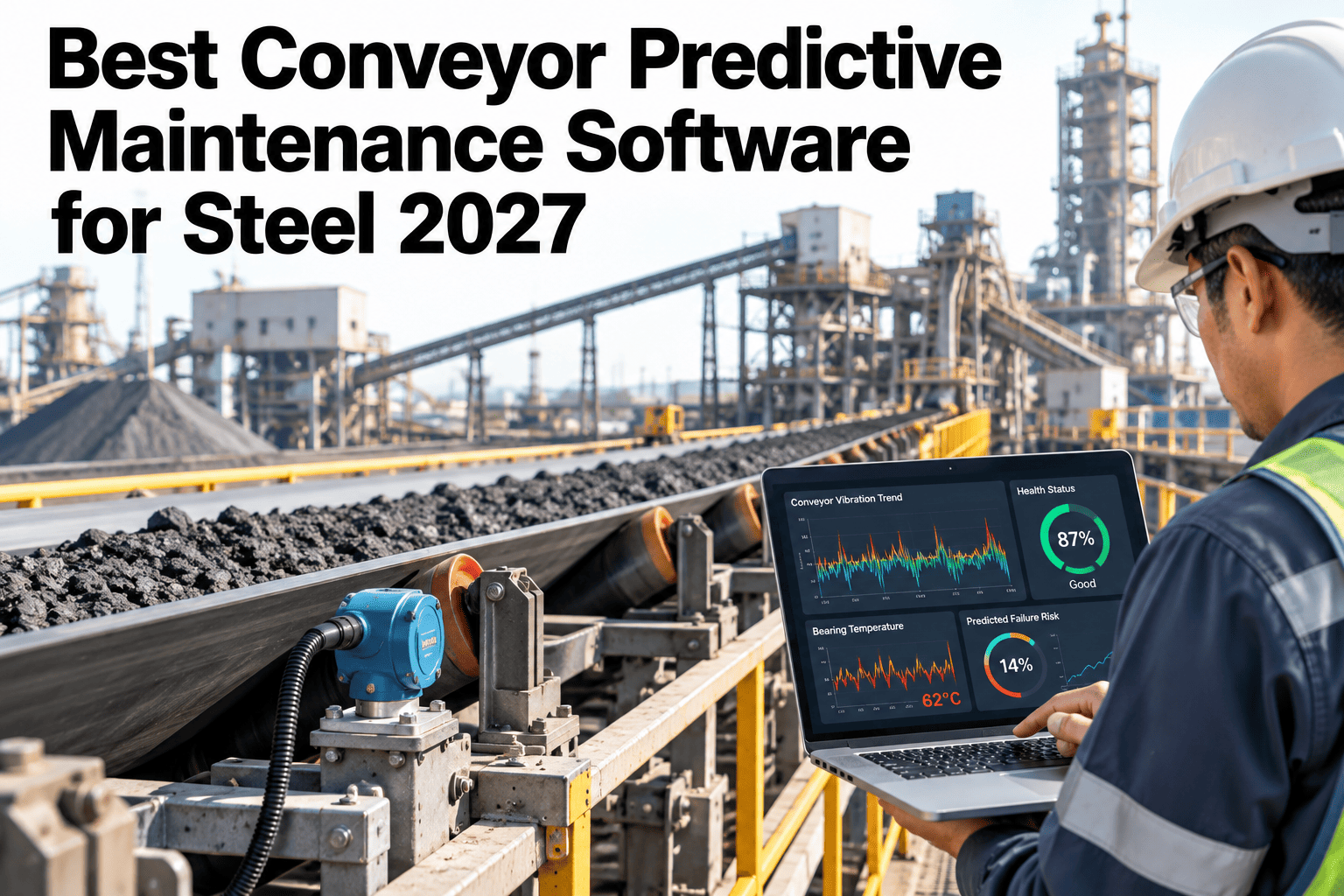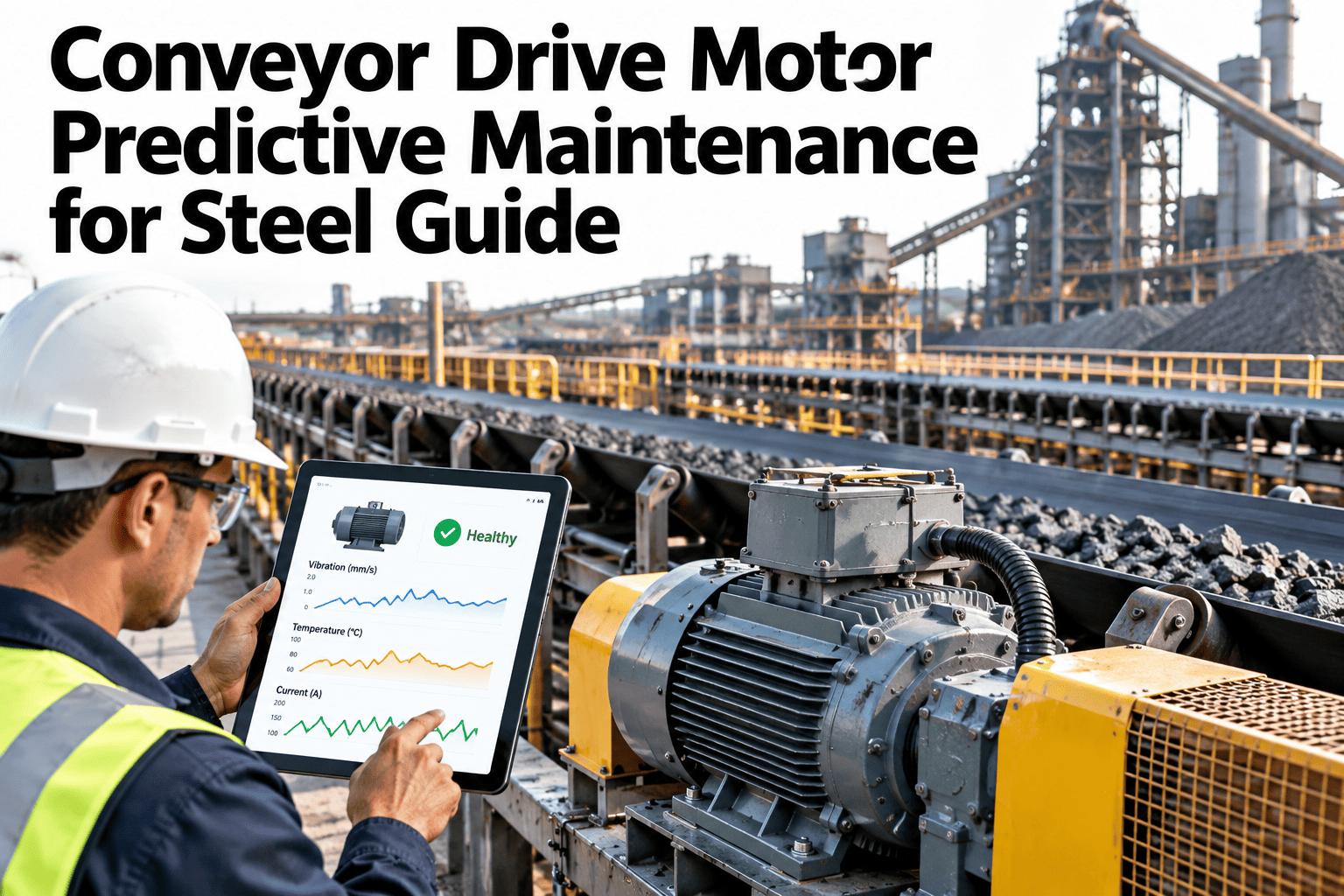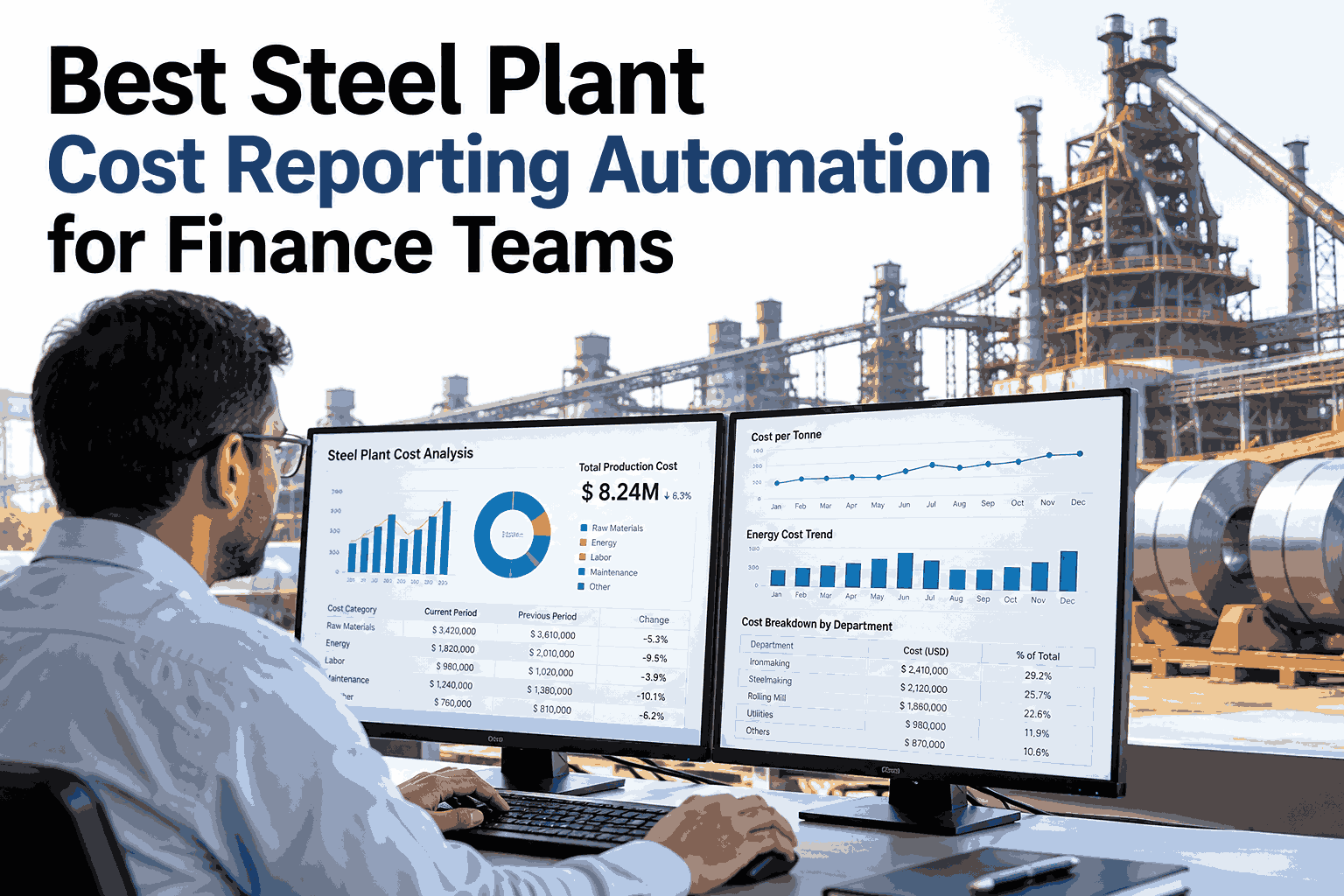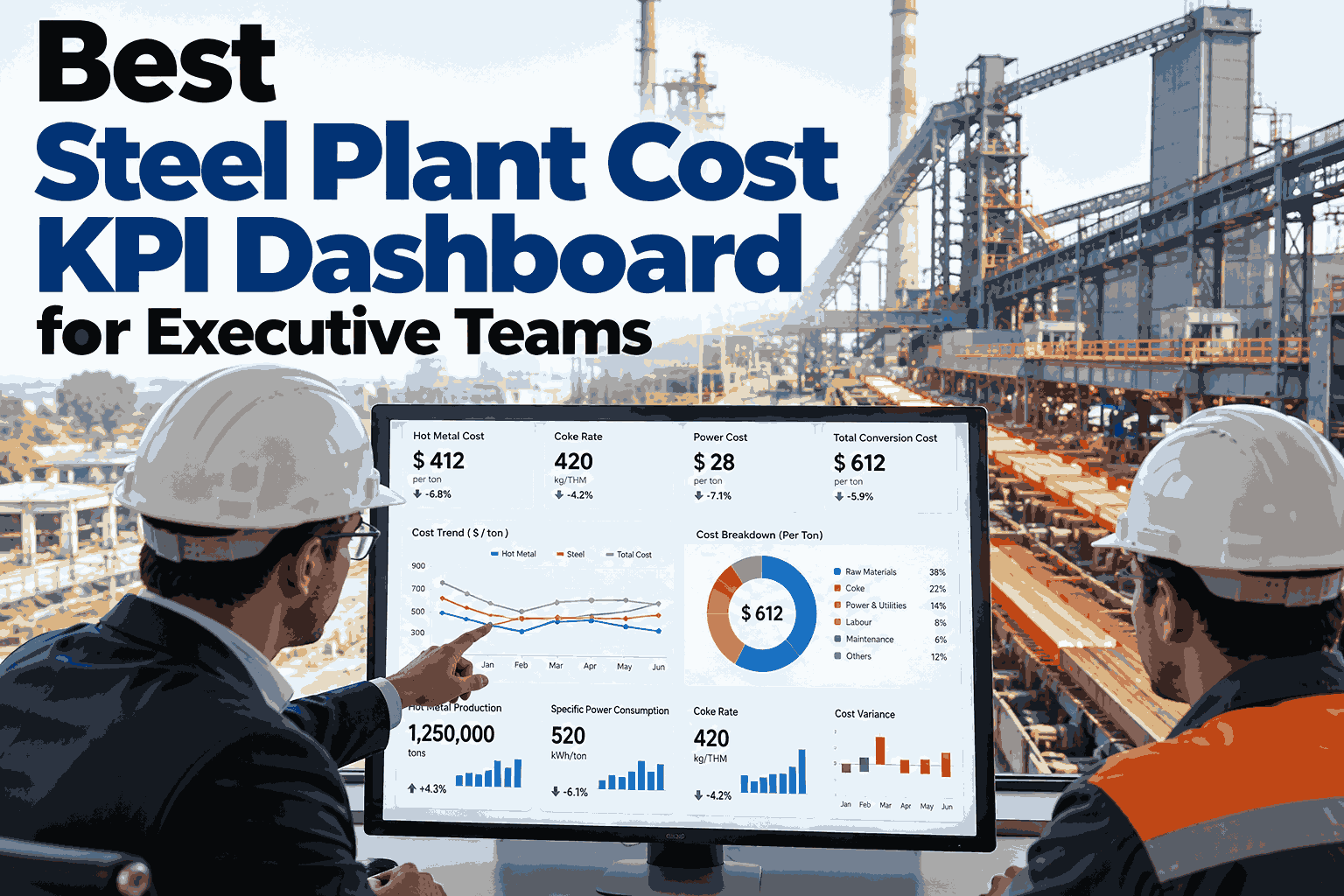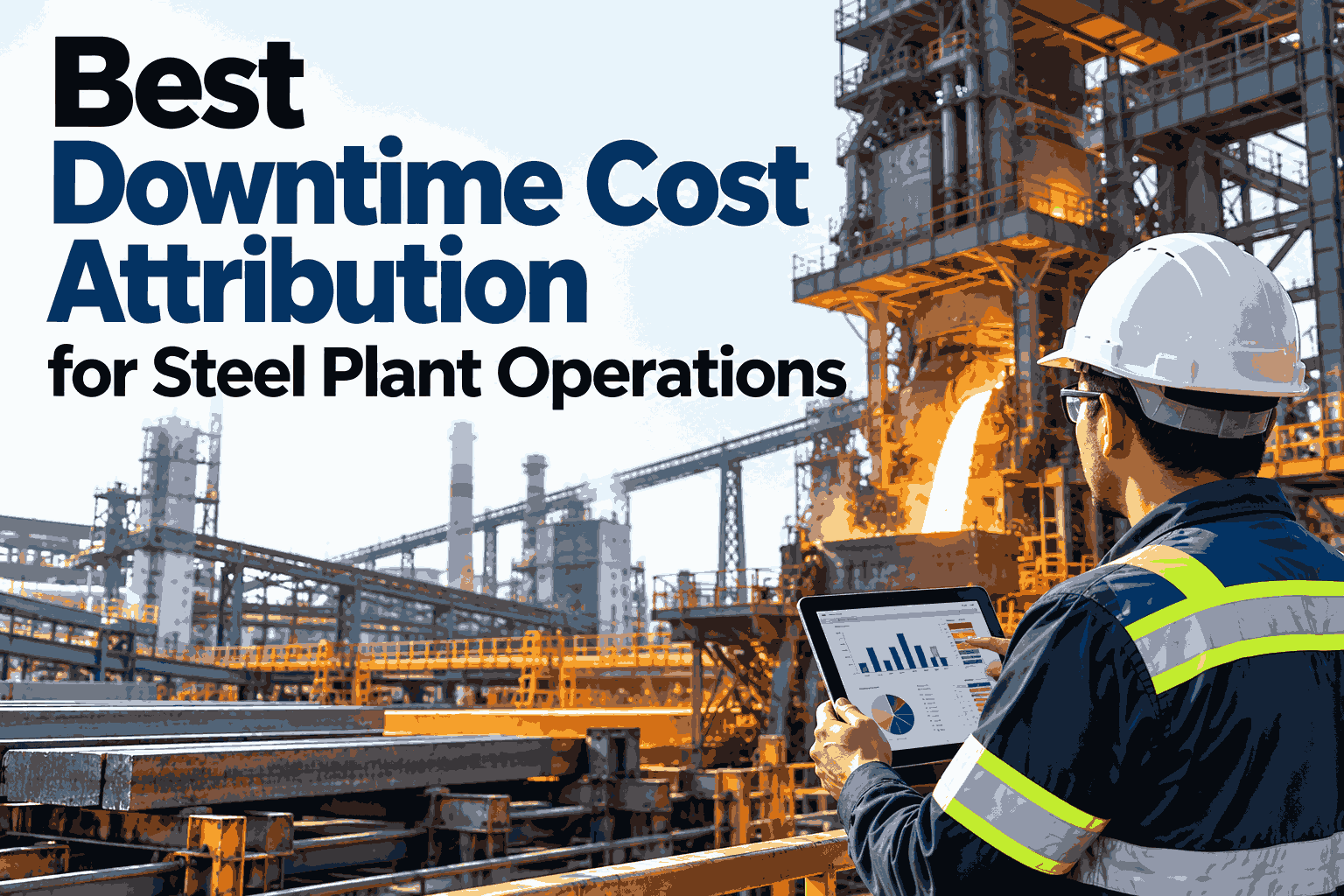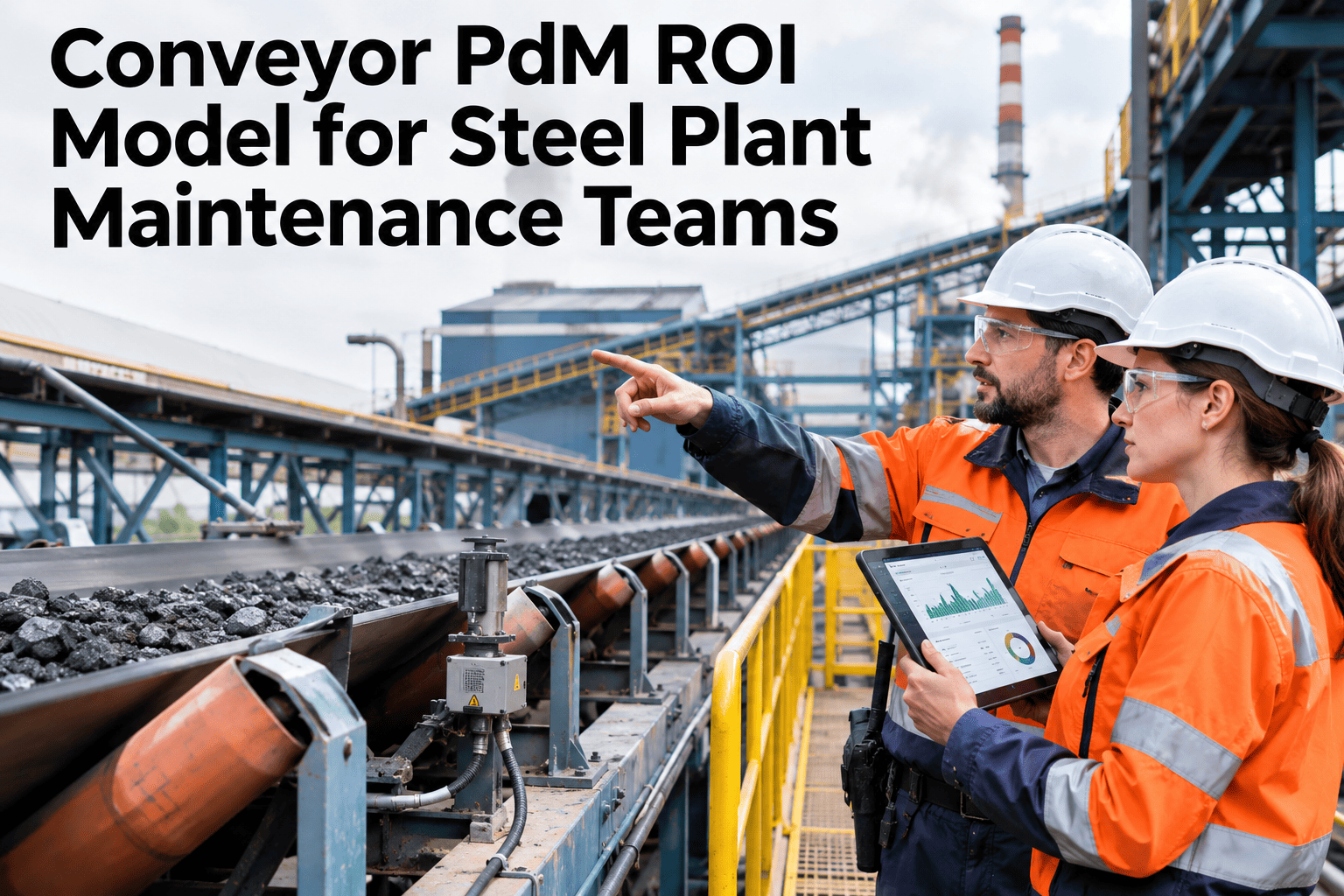
A conveyor predictive maintenance (PdM) ROI model adds three kinds of benefit against one clear cost: avoided downtime, lower spare-parts spend and fewer safety incidents. It is defensible when each line comes from the plant's own records and is shown as a low, base and high case. The stakes are high, because ABB's 2023 survey put typical industrial downtime near $125,000 per hour, and Siemens reported heavy industry hourly costs about four times higher than in 2019. Finance teams can work through a conveyor ROI sheet using their own downtime records in a short session.
Turn Conveyor Monitoring Into a Business Case Finance Can Sign
iFactory AI, an on-premise industrial AI platform, keeps the failure history, stop logs and work order costs that every ROI line depends on.
What Is a Conveyor PdM ROI Model?
It is a short calculation that compares what monitoring prevents with what the program costs. Keep it to the two lines below so every number can be traced to a record.
ROI is net benefit divided by program cost. A model that shows only a total hides the assumptions finance will test first.
What Does Unplanned Downtime Cost in Heavy Industry?
Published figures give context, but they are averages. Siemens did not publish a clean hourly figure for steel, so use your own margin and labour data for the base case.
How Do You Model Avoided Downtime?
Multiply the stops monitoring can prevent by their length and hourly cost. Stay conservative on the share you can predict. Defective idlers alone are linked to about 30 percent of operating faults on large belts (Continental, via Drives and Controls), which helps size the addressable share.
| Input | Where to Find It | Conservative Rule |
|---|---|---|
| Conveyor stops per year | Work order and stop history | Count only unplanned stops |
| Hours per stop | Downtime log | Use the median, not the worst case |
| Cost per hour | Finance: margin, labour and restart cost | Use contribution margin, not revenue |
| Share monitoring can prevent | Failure codes on past stops | Count only wear-driven failures |
How Do You Model Spare-Parts Savings?
A failed idler can slice a belt along its length or take chunks from its surface (Hawk, 2025), so one emergency can cost far more than the idler. Plants can ask for a spares cost worksheet built from past failures.
Test the Case on Your Own Stop History
Bring twelve months of conveyor stops and costs. iFactory AI's team will fill the ledger with you and show a low, base and high case.
How Do You Put a Value on Safety?
Count only costs your records already show. Fewer route walks and earlier fire warning reduce exposure, but a model should not guess at harm that never happened.
What Does a Defensible Low, Base and High Case Look Like?
Change one assumption only, the share of stops monitoring can prevent. The bars show example assumptions, not results.
When Does the Investment Pay Back?
The shape is the same for most programs: cost comes first, then baselines, then the first avoided stops.
Which Costs Belong on the Program Side?
Finance trusts a model that lists every cost, including the dull ones. Leave nothing out, then let the benefit lines carry the argument.
| Cost Line | What It Covers | Your Value |
|---|---|---|
| Sensors and cameras | Hardware and mounting along the belt | Fill in |
| Platform and server | Software, on-premise server and support | Fill in |
| Integration and training | Data links, setup and team training | Fill in |
| Internal time | Staff hours for review and follow-up | Fill in |
What Will the CFO Ask?
Where Does iFactory AI Fit in the ROI Case?
iFactory, an on-premise AI platform for manufacturing, holds the records a ROI model needs and keeps them in the plant.
Failure History
Failure codes and stop logs per conveyor, ready for the downtime inputs.
Avoided-Stop Log
Each alert that led to a planned fix is recorded with its work order.
Work Order Costs
Parts, labour and downtime hours stay on the same record.
Quarterly Verification
A report compares predictions with outcomes, so the case stays honest.
Expert Review: Stress-Testing a Conveyor ROI Model
Frequently Asked Questions
How do you calculate ROI for conveyor predictive maintenance?
Add avoided downtime, spare-parts savings and safety savings, subtract program cost, then divide by program cost. Use plant records for every input. Fill the ledger with our team using your own stop history.
What does an hour of unplanned downtime cost a steel plant?
There is no single figure. ABB reported about $125,000 per hour for typical industrial businesses in 2023, and Siemens found heavy industry costs roughly four times higher than in 2019. Work out your own hourly cost with finance and our team.
Which conveyor failures are worth including in the model?
Include wear-driven failures that show warning signs, such as idlers, bearings and gearboxes. Defective idlers are linked to about 30 percent of operating faults on large belts (Continental). Ask us to sort your failure codes into addressable and not addressable.
How do you prove the savings afterwards?
Log each avoided stop with its alert, work order and cost, then compare predictions with outcomes every quarter. Savings that are not logged cannot be defended. See a verification report in a short walkthrough.
Does iFactory AI publish a fixed ROI for conveyors?
No. Returns depend on your downtime cost, failure history and belts, so the model is built from your data. iFactory AI supplies the records and the verification report. Build your case on a call with our team.
Bring Finance a Case That Survives Its Low Scenario
Book a session with iFactory AI to fill the conveyor ROI ledger with your own stop history and agree the assumptions before the budget meeting.