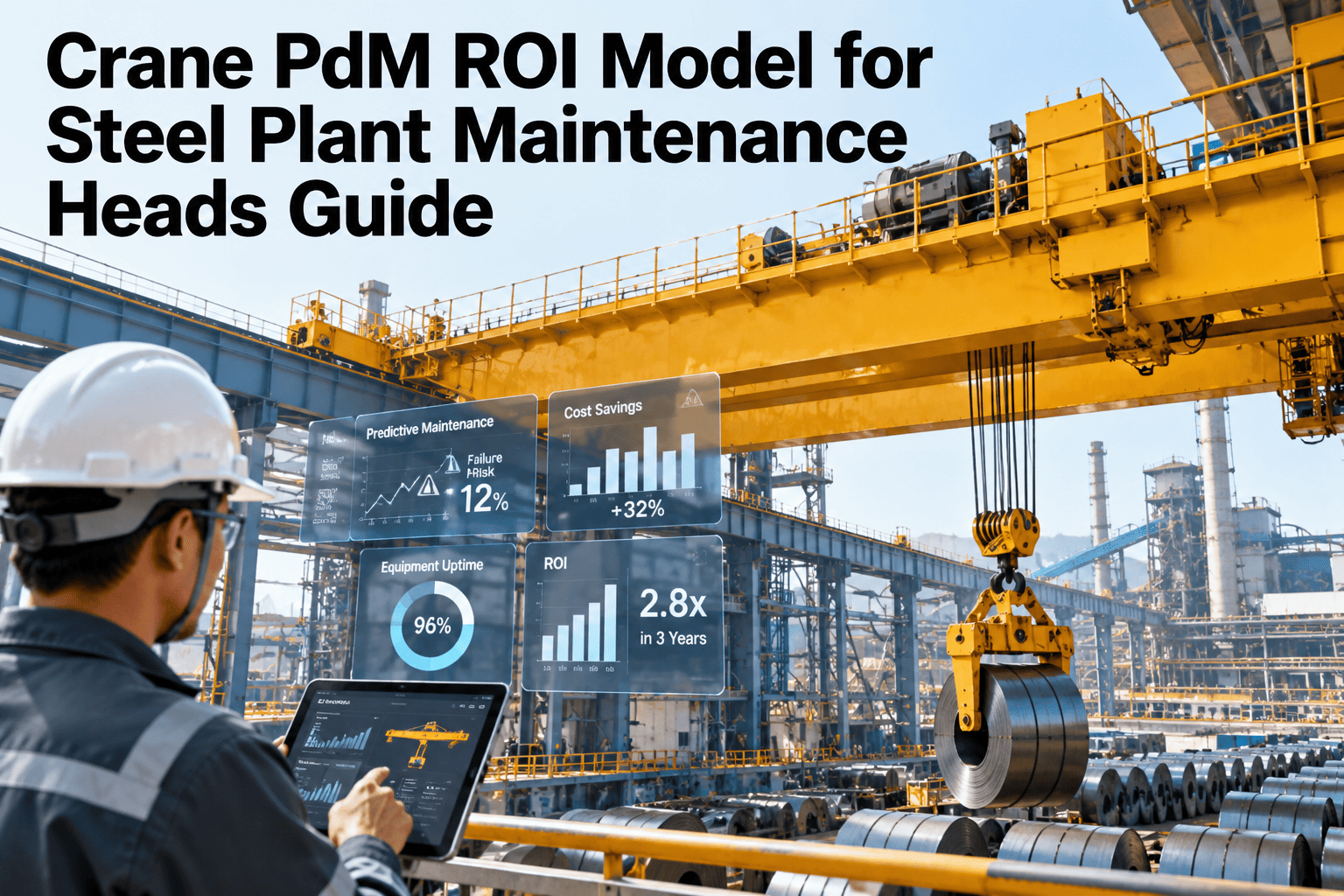
A maintenance head pitching crane predictive maintenance to a CFO usually leads with avoided downtime, and that number alone is rarely enough to clear a capital review, because it leaves out two other value streams a crane PdM program actually delivers: fewer safety incidents and a longer useful life on equipment that is expensive and slow to replace. Stacking all three into one defensible business case is what turns a maintenance nice-to-have into a capital request a CFO can approve with confidence. Build a stacked ROI model for your own crane fleet.
Three Value Streams, One Defensible Number
iFactory AI stacks avoided crane downtime, safety-incident reduction, and crane-life extension into one ROI model your CFO can actually review.
Avoided Downtime Alone Is an Incomplete Case
Avoided downtime is the easiest value stream to quantify, which is exactly why most crane PdM proposals lead with it and stop there, but a capital committee weighing a crane program against other requests is comparing total value, not just the easiest number to calculate, and leaving safety-incident reduction and crane-life extension out of the model means leaving real value out of the case entirely.
Avoided Downtime
Production hours preserved by catching crane faults before they cause an unplanned stop.
Safety-Incident Reduction
Lower incident rate translating into reduced cost from injury, investigation, and liability.
Crane-Life Extension
Condition-based maintenance extending useful crane life beyond a fixed replacement schedule.
Stack the Full Case for Your Own Fleet
Book a 30-minute session and build a stacked ROI model across all three value streams for your own crane fleet.
How Each Value Stream Is Quantified
Each component of the stacked model draws from a different data source and requires its own calculation approach.
| Value Stream | Calculated From | Typical Confidence |
|---|---|---|
| Avoided downtime | Historical unplanned stoppage hours and production value per hour | High, direct historical comparison |
| Safety-incident reduction | Historical incident rate and average incident cost | Moderate, depends on incident history depth |
| Crane-life extension | Condition-based versus fixed-schedule replacement timeline | Moderate, improves with longer program history |
Building the Stacked Model
The model is built from your own plant's historical data rather than industry-wide averages.
Three Scenarios for the Committee
A cautious, expected, and stretch scenario gives a capital committee a realistic range rather than a single optimistic figure.
Rolling Out the ROI Model
iFactory AI pulls historical downtime, incident, and crane condition data directly from your plant systems to build the model.
Expert Review
Maintenance heads who stack all three value streams into one case report fewer rounds of committee questioning than those leading with downtime alone, since the additional value streams preempt the most common follow-up question: what else does this actually get us beyond fewer stoppages.
Frequently Asked Questions
What data do we need to build this model?
Historical downtime logs, incident reports, and crane age or condition records are the core inputs, pulled from systems most plants already maintain. Support can confirm what data your plant already has.
How is safety-incident cost estimated?
Incident cost is estimated from your own historical incident data where available, including direct costs and typical downstream costs like investigation time, rather than a generic industry average.
How confident can we be in the crane-life extension figure?
Confidence improves as the PdM program accumulates its own history; the initial model uses a cautious estimate based on comparable programs until your own data matures. Discuss confidence levels on a call.
Can this model support a multi-crane or fleet-wide request?
Yes, the same model structure can scale from a single crane to a full fleet-wide business case, with value streams calculated at whichever scope the capital request covers.
What happens if actual results differ from the model after rollout?
Actual results are tracked against the model's scenarios, and the gap is explained by which input differed from the original estimate, refining future business cases. Ask support how post-rollout tracking works.
Build a Case the Committee Can't Easily Dismiss
iFactory AI stacks avoided downtime, safety reduction, and crane-life extension into one defensible ROI model. Book a session to build your own.