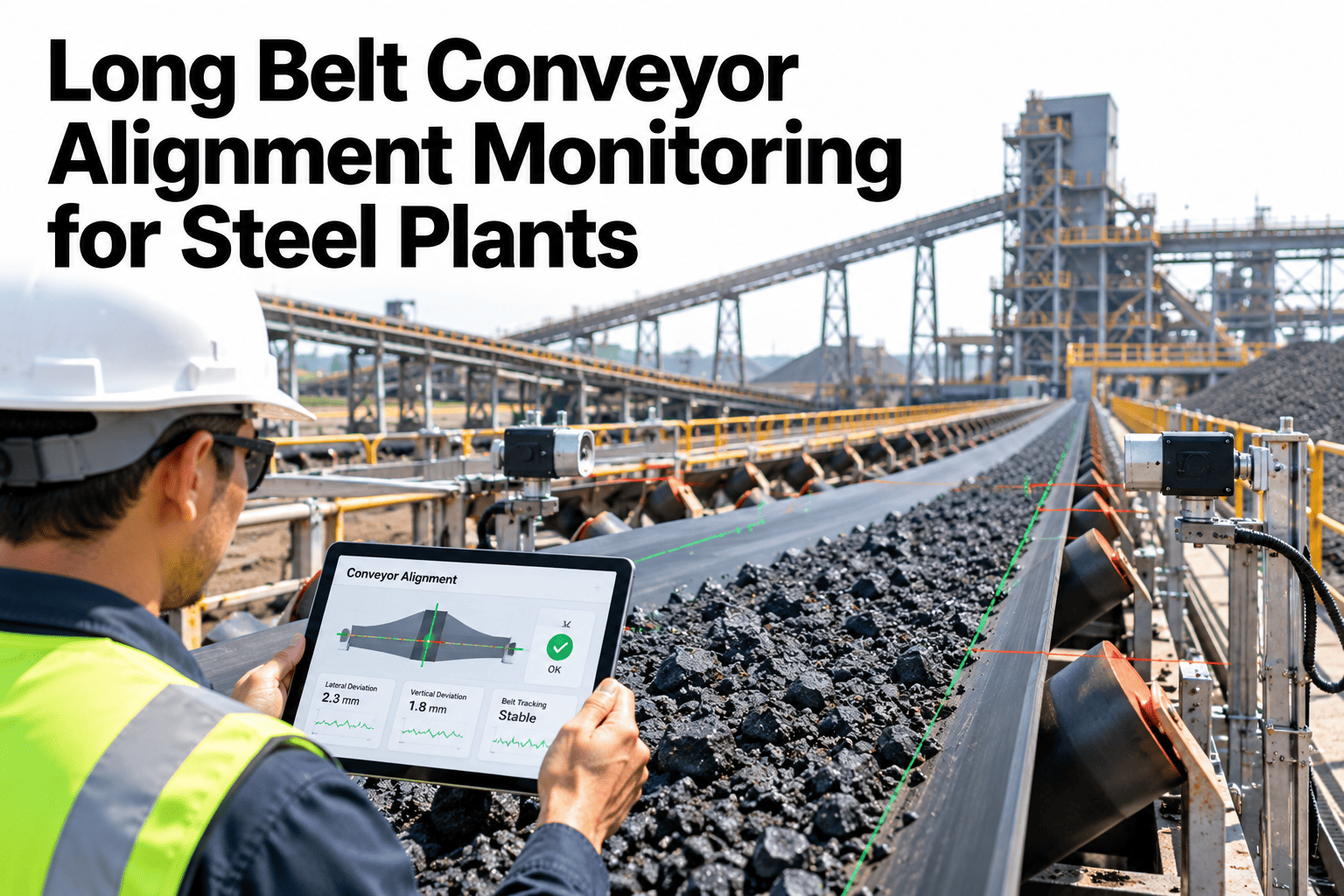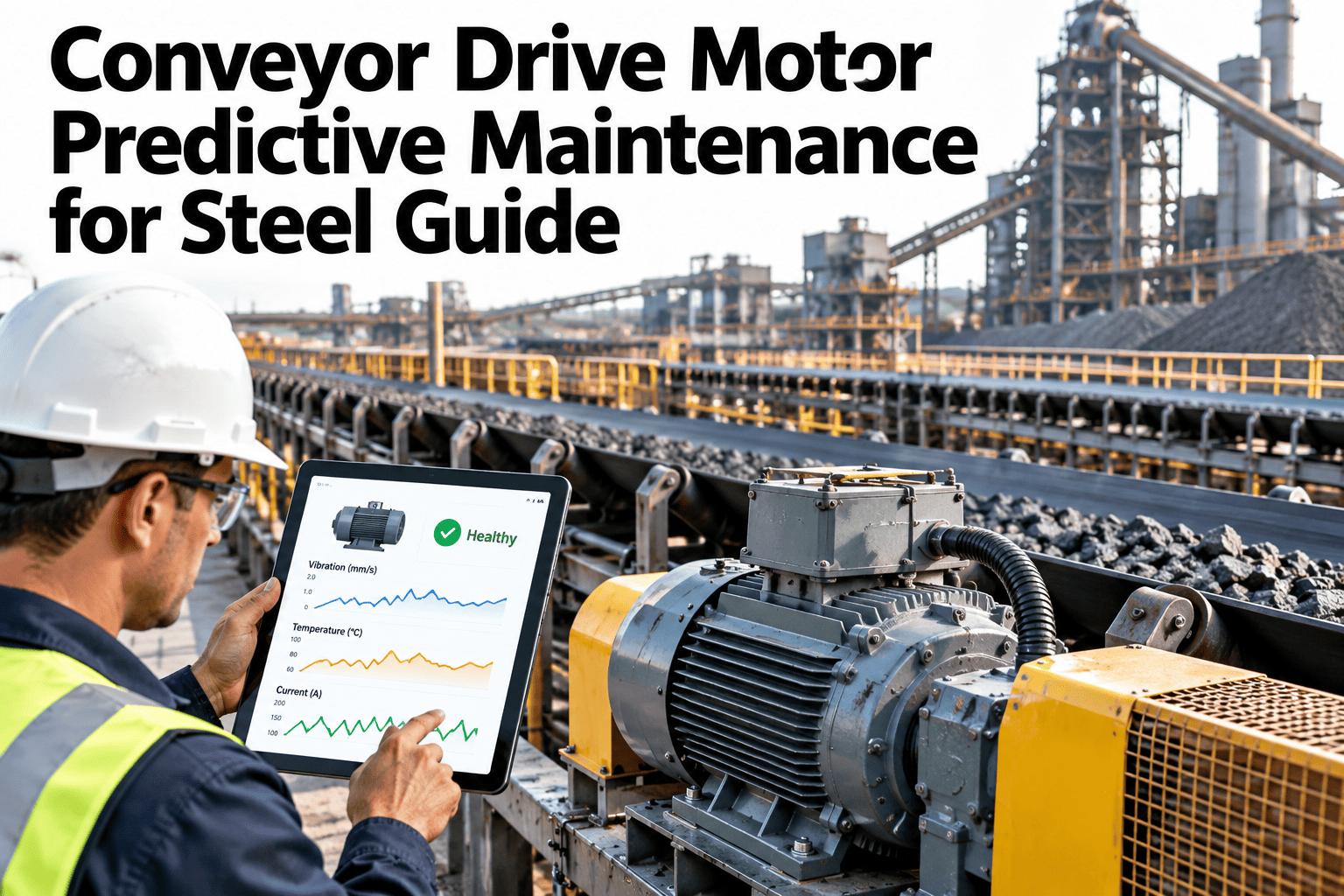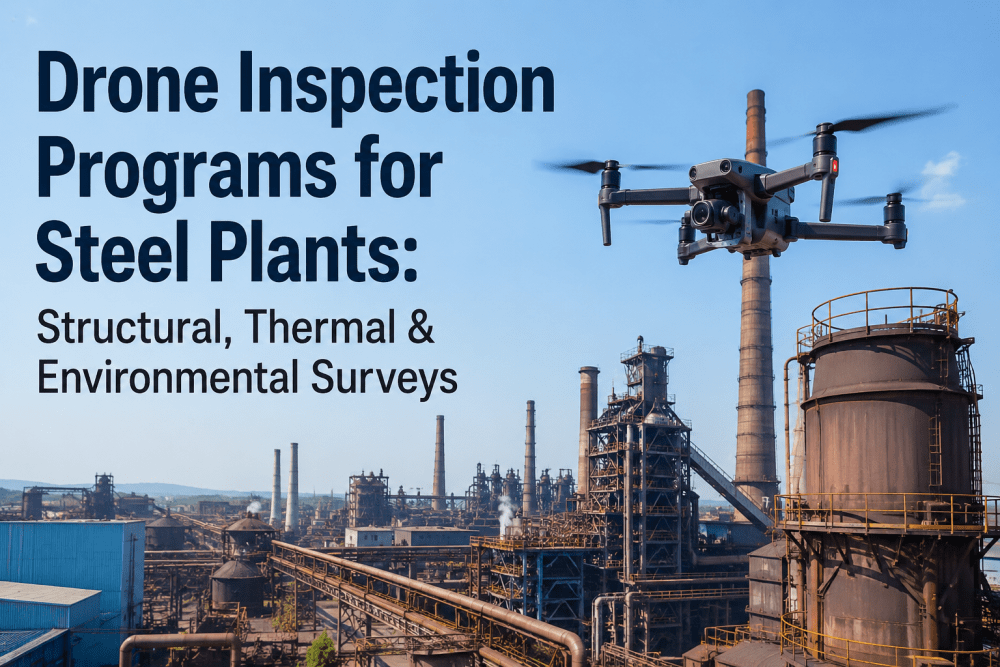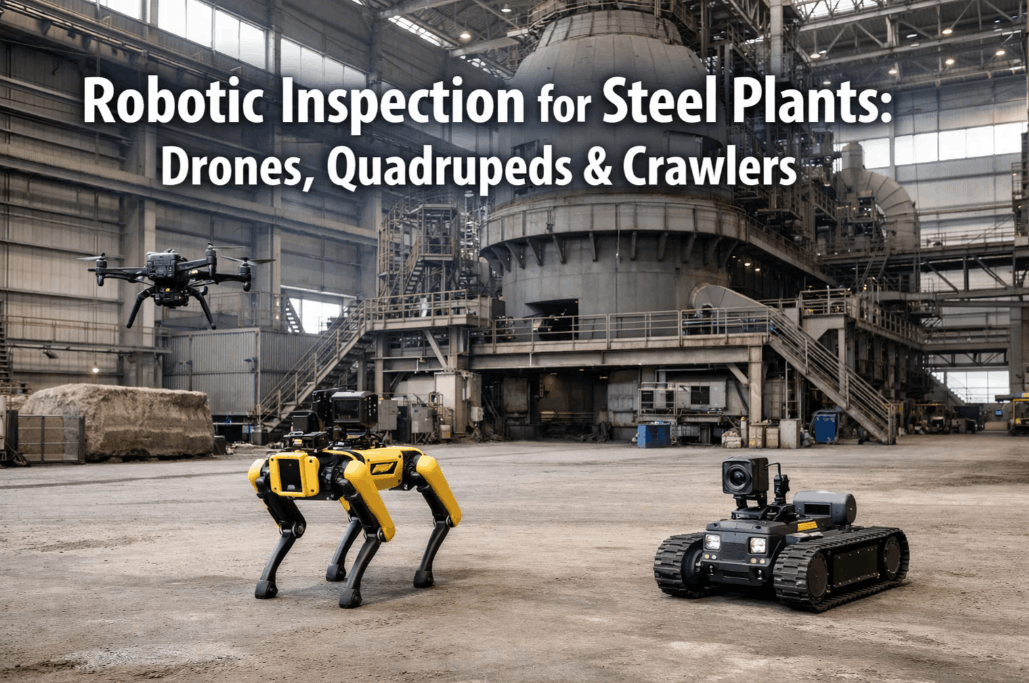
Overland conveyor predictive maintenance for a steel plant means watching kilometres of belt with sensors, drones and AI instead of walking the line. Idlers are the weak point, because a 10 km conveyor can carry up to 26,500 of them and defective idlers are estimated to cause about 30 percent of operating faults on large belts. Remote monitoring finds a failing roller before it seizes, overheats or damages the belt. Reliability teams can see a route-wide monitoring plan built on their own conveyor in a short session.
One Route, Four Ways to Watch It, and Nobody Walking Kilometres to Find a Bad Roller
iFactory AI, an on-premise industrial AI platform, brings drone imagery, acoustic and vibration sensing and work orders into one view of the whole conveyor route.
What Is Overland Conveyor Predictive Maintenance?
It is condition-based care for long belts. Sensors and imagery track roller, belt and drive health, and AI flags the units that need attention before they stop the line. The numbers below show why idlers dominate the plan.
Why Do Kilometre-Scale Belts Need a Different Approach?
Manual inspection is slow, imprecise and sometimes dangerous over long or enclosed routes, and fixed intervals miss problems that need quick action (Continental). Teams can ask how remote monitoring replaces route walks on their own conveyor.
Which Monitoring Method Fits Which Stretch?
No single method suits every metre of route. The matrix pairs each stretch with a method described in published sources.
| Stretch | Method | What It Reads | Source |
|---|---|---|---|
| Open outdoor sections | Drone with camera and infrared | Idler defects, found by AI image analysis | Continental |
| Covered or enclosed sections | Microphones every 20–25 m | Changes in idler sound signature, recorded twice daily | Continental |
| Whole stringer | Fibre optic sensing | Idler vibration up to 10 km, flame heat up to 75 km | Hawk, 2025 |
| Drive and gearbox | Vibration and temperature | Bearing and gear condition | Condition monitoring practice |
Count the Idlers You Cannot See
Share your route length, terrain and idler spacing. iFactory AI's team will show which stretches need which method and where blind spots remain.
How Should a Drone Inspection Routine Run?
A drone flies a section, then returns to a charging station and uploads its data while it recharges (Continental). The routine below is an example cadence to adapt to your plant.
How Do You Run a Severe-Weather Health Check?
Outdoor routes take the weather first. A simple three-stage check keeps crews off the route and finds damage fast.
What Should a Route Dashboard Show?
A good view answers one question fast: which stretch needs a crew today. A failed idler can slice a belt along its length or tear chunks from its surface (Hawk, 2025), so the dashboard should make the worst units impossible to miss.
How Should Idler Alarms Be Triaged?
A shift-start list with simple traffic-light levels gives inspectors the location and condition of each faulty idler (Hawk, 2025). Three levels keep it quick.
How Does a Failed Idler Become a Fire?
A seized idler rubs the moving belt and can turn red hot. Stopping the belt on a hot roller can open a flame, and the first warning on a remote section is often smoke on the horizon (Hawk, 2025). Plants can link idler alerts to fire response plans with iFactory AI.
Where Does iFactory AI Fit on a Long Conveyor?
iFactory, an on-premise AI platform for manufacturing, pulls route data into one plant-side server, so nothing depends on a cloud link.
Expert Review: Judging an Overland Monitoring Plan
Frequently Asked Questions
Why are idlers the main target of overland conveyor monitoring?
Rotating parts such as idlers are the main cause of unplanned stops on long conveyors, and a 10 km belt can have up to 26,500 of them (technology review, ANID). Defective idlers are also linked to about 30 percent of operating faults (Continental). See an idler-first monitoring plan for your route.
Can drones replace walking inspections on a steel plant conveyor?
On open sections, drones with infrared cameras and AI analysis can cover long stretches without a crew (Continental). Covered and enclosed sections need other methods, such as microphones or fibre sensing. Ask which stretches suit drones on your layout.
How do microphones find a bad idler?
Microphones placed every 20–25 m record the sound of the idlers, and AI looks for changes in each acoustic signature (Continental). Recordings are taken twice a day in the published design. Discuss acoustic coverage for covered sections with our team.
How should a plant monitor an overland belt in severe weather?
Check sensors and baselines before the event, watch alarms remotely during it, and fly a drone pass afterwards to compare idler sound and heat with baseline. Keep crews off the route during the event. Build a weather check plan with us.
Does iFactory AI need a cloud connection for remote belts?
No. iFactory AI runs on an on-premise server in the plant, and edge devices along the route send data to it over the site network. This keeps conveyor data inside the plant. See the on-premise setup in a short walkthrough.
Watch the Whole Route From One Screen
See iFactory AI turn drone, acoustic and vibration data into a ranked idler list and work orders. Book a walkthrough built on your own conveyor route.