A crane's braking system gets almost no attention until the moment it has to work perfectly, because a brake that's holding a load doesn't announce that it's wearing thin the way a noisy bearing or a leaking seal does. Disc brakes, shoe brakes, and hydraulic brakes each fail in different ways and on different timelines, and a maintenance program built around one generic "check the brakes" line item on a monthly checklist misses the specific wear patterns that actually predict failure for each type. The cost of getting this wrong isn't abstract, a crane that can't stop a load where it needs to stop it is one of the most direct safety risks on an industrial floor. Getting ahead of it starts with treating each brake type on its own terms, and booking a demo shows how that tracking works in practice.
CRANE RELIABILITY · BRAKING SYSTEMS · INSPECTION & MAINTENANCE
The Brake You Never Think About Is the One That Has to Work Every Time
iFactory tracks disc, shoe, and hydraulic brake condition across your crane fleet with inspection scheduling, wear trend data, and replacement alerts built around how each brake type actually fails.
THREE BRAKE TYPES, THREE FAILURE PATTERNS
Why One Inspection Checklist Doesn't Cover All Three
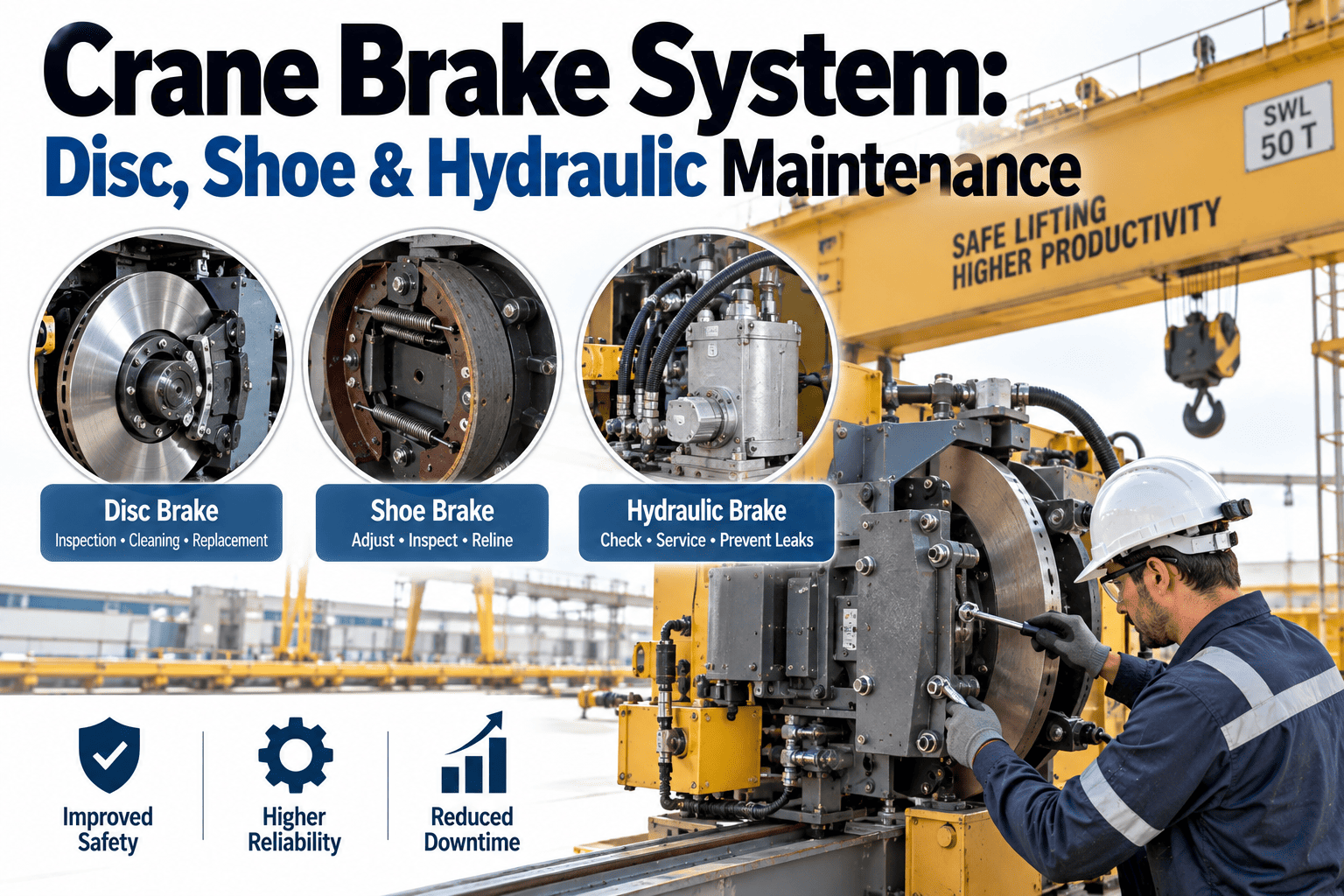
Disc, shoe, and hydraulic brakes rely on completely different mechanisms to stop a load, which means the specific measurement that predicts failure for one type tells you almost nothing about the condition of another.
Disc Brakes
Wear is concentrated at the friction pad and rotor surface, where thickness loss and glazing from heat buildup are the primary predictors of reduced stopping torque over time.
Shoe Brakes
Lining wear against the drum surface, spring tension loss, and drum surface scoring all degrade holding force gradually, often without an obvious external symptom until the margin is already thin.
Hydraulic Brakes
Fluid condition, seal integrity, and system pressure hold are the leading indicators, since a slow internal leak can maintain apparent function right up until pressure drops below the holding threshold.
INSPECTION SEQUENCE
What a Thorough Brake Inspection Actually Checks
A brake inspection that only confirms the crane stops when tested misses the wear data that would have predicted the failure before it happened. A complete inspection walks through the same sequence every time, regardless of which brake type is being checked.
1
Visual Wear Check
Pad, lining, or seal condition assessed against manufacturer wear limits before any functional test begins.
2
Adjustment Verification
Clearance, spring tension, or pressure setpoint checked against specification, since drift here often precedes a functional failure.
3
Holding Force Test
Actual stopping and holding performance measured under a representative load, not just an empty-hook functional check.
4
Trend Comparison
Results compared against the last several inspections to catch a gradual decline before it crosses the failure threshold.
Get a baseline read on your crane fleet's brake condition
iFactory can run an initial brake condition assessment across your fleet to show where the wear margin is thinnest today.
ADJUSTMENT VS REPLACEMENT
Knowing When to Adjust and When to Replace
Every brake type has an adjustment window where tightening clearance, resetting spring tension, or bleeding a hydraulic line restores performance, and a replacement threshold beyond which adjustment no longer solves the underlying wear.
| Brake Type |
Adjustment Indicator |
Replacement Indicator |
| Disc Brake |
Minor clearance drift within pad thickness tolerance |
Pad thickness below minimum or rotor glazing present |
| Shoe Brake |
Spring tension slightly reduced but within range |
Lining below minimum thickness or drum scoring visible |
| Hydraulic Brake |
Minor pressure drift correctable by bleeding or topping fluid |
Seal leak confirmed or pressure hold fails under load test |
WHY THIS MATTERS
The Real Cost of a Missed Brake Inspection
A brake that fails during a lift doesn't just risk the load, it risks the operator, anyone working beneath the crane's path, and the downtime that follows an incident investigation, which is a categorically different cost than a delayed inspection line item.
1
missed inspection is often enough for a gradually wearing brake to cross its failure threshold unnoticed
3
brake types, each requiring its own wear indicators tracked on its own schedule, not a single generic checklist
24×7
condition tracking possible once inspection data feeds a trend model instead of sitting in a paper log
TURNKEY DELIVERY
How iFactory Builds Brake Monitoring Into Your Maintenance Program
iFactory digitizes your existing brake inspection process, builds trend tracking specific to disc, shoe, and hydraulic brake types, and alerts your maintenance team before a wear pattern crosses the replacement threshold.
What Gets Built
Digitized inspection checklists specific to each brake type on your fleet
Trend tracking across inspection cycles to catch gradual wear early
Replacement alerts tied to manufacturer-specified wear thresholds
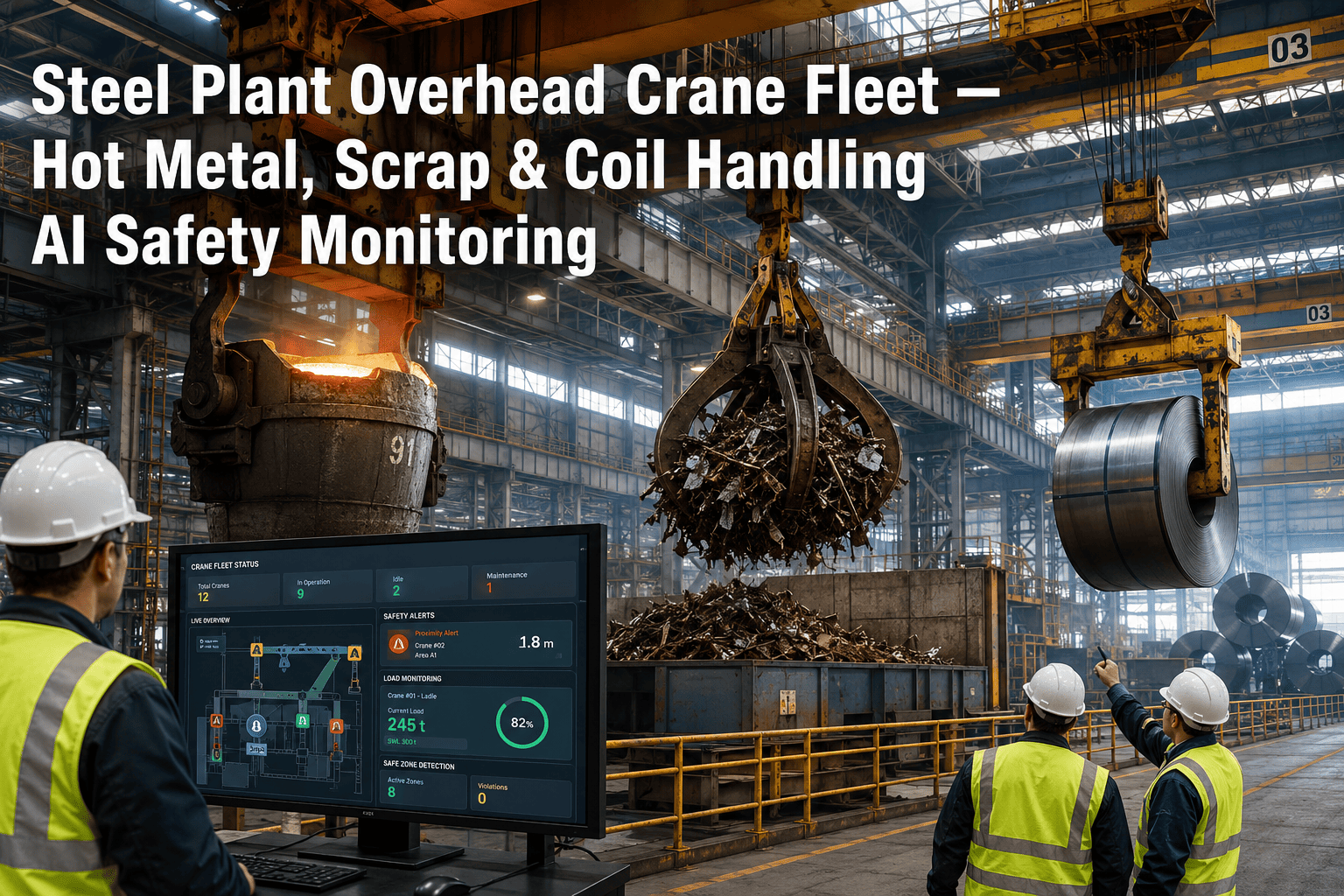
Fleet-wide dashboard showing brake condition across every crane
Deployment Timeline
Weeks 1-2: Fleet audit and inspection checklist digitization
Weeks 3-5: Trend model build against historical inspection records
Weeks 6-7: Dashboard go-live and maintenance team training
FREQUENTLY ASKED QUESTIONS
What Maintenance Teams Ask About Brake Monitoring
Can this work with cranes that have different brake types across the same fleet?
Yes, the system tracks each brake type according to its own specific wear indicators and inspection sequence, so a fleet with a mix of disc, shoe, and hydraulic brakes gets appropriate tracking logic for each one rather than a single generic checklist applied uniformly across every crane. This is particularly important for fleets that have grown over time through different equipment purchases, where brake type consistency across the fleet is rare.
Book a demo to see how a mixed fleet gets configured.
Do we need new sensors installed, or does this work with our existing inspection process?
The core value comes from digitizing and trending your existing manual inspection data, which requires no new sensors and can be running within weeks. Sensor-based monitoring, such as pressure transducers on hydraulic systems, can be added later to catch faster-developing issues between scheduled inspections, but it's an enhancement rather than a requirement to get started with trend-based wear tracking.
Contact our support team to discuss which approach fits your current inspection process.
How far in advance can a brake replacement actually be predicted?
Once several inspection cycles of trend data exist for a given brake, the wear rate becomes visible as a slope rather than a single point-in-time reading, which typically allows a replacement to be scheduled weeks or months ahead of the actual failure threshold rather than reacting to a sudden inspection failure. The exact lead time depends on usage intensity and how consistently inspections have been logged historically.
Book a demo to see a real wear trend example.
Does this replace the certified inspector requirement for crane brake systems?
No, certified inspection requirements remain exactly as they are under your applicable safety regulations, and this system is built to support and strengthen that process rather than replace it. What changes is that the certified inspector's findings get logged, trended, and compared against history automatically, so patterns that would be hard to spot by reviewing paper records manually become visible immediately.
Contact our support team to discuss how this integrates with your certified inspection schedule.
What happens when a brake's trend data crosses the replacement threshold?
The maintenance team responsible for that crane receives an alert identifying the specific brake, the wear indicator that triggered it, and the trend data supporting the recommendation, so the decision to schedule replacement is backed by evidence rather than a subjective judgment call made during a routine inspection. This also creates a documented record supporting the maintenance decision if it's ever reviewed as part of a safety audit.
Book a demo to see a sample replacement alert.
DISC, SHOE, HYDRAULIC, TRACKED ON THEIR OWN TERMS
Know a Brake Is Wearing Before It's the Reason a Crane Doesn't Stop
iFactory tracks disc, shoe, and hydraulic brake condition across your fleet with inspection scheduling, wear trend data, and replacement alerts built around how each type actually fails.