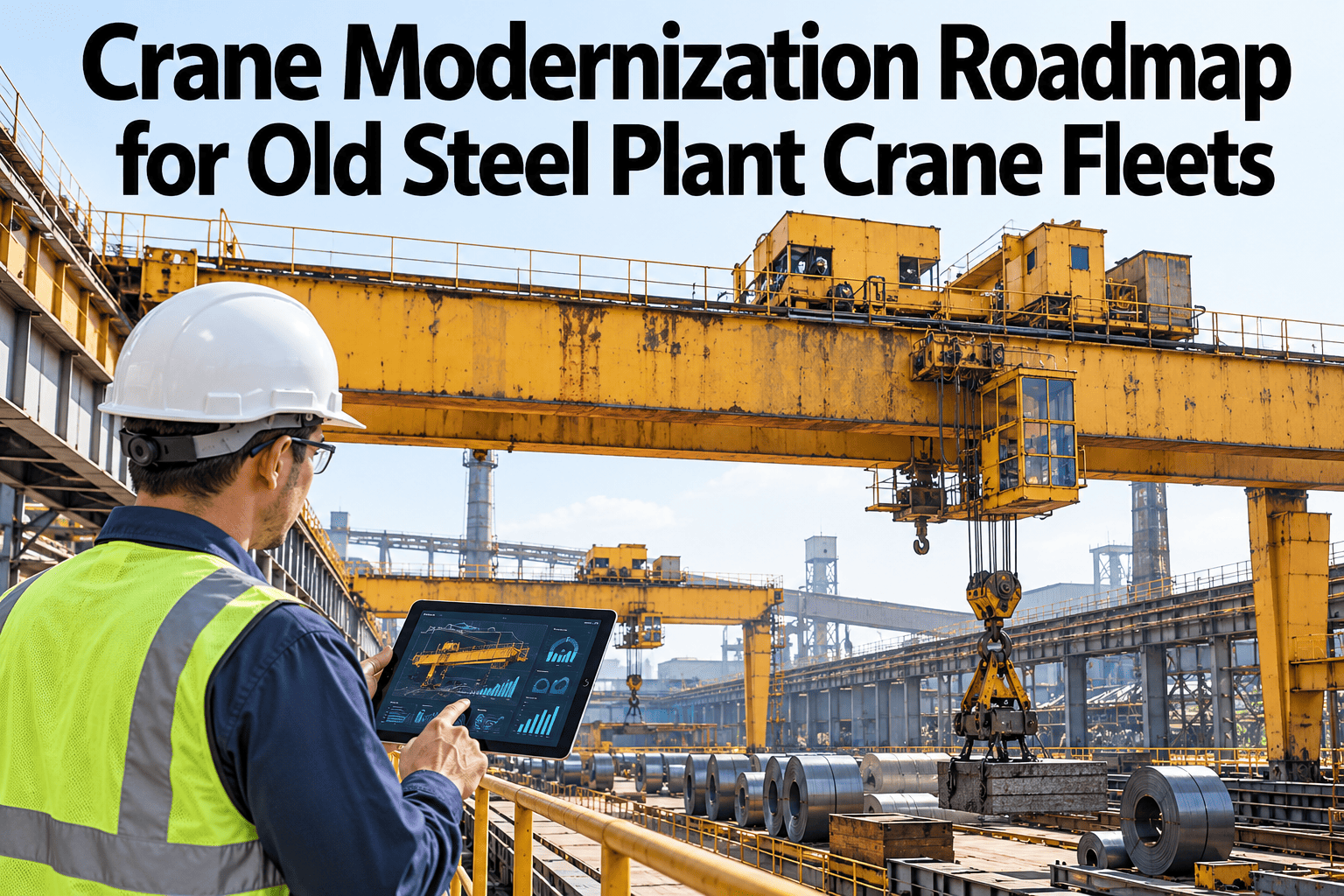
An aging crane fleet rarely fails all at once, it fails one obsolete control panel, one worn-out VFD, and one missing safety interlock at a time, and a maintenance team responding to each failure individually ends up spending capital reactively on a fleet that needed a coordinated upgrade plan years earlier. A CFO asked to approve a single crane's control upgrade in isolation has no way to see whether that spend fits into a larger fleet strategy or is just another one-off patch on equipment that needs a genuine modernization roadmap. Sequencing control upgrades, VFD retrofits, and safety-system phase-in across a defined multi-year timeline turns scattered spending into an actual plan. Build a modernization roadmap for your own crane fleet.
Stop Patching, Start Sequencing
iFactory AI sequences control upgrades, VFD retrofits, and safety-system phase-in across a 3-5 year roadmap your CFO can actually approve.
One-Off Fixes Don't Add Up to a Strategy
A maintenance team fixing each crane problem as it surfaces is making individually reasonable decisions that, taken together, produce no coherent modernization plan at all, and a CFO reviewing the fifth unplanned crane-related capital request of the year has every reason to ask why the plant doesn't have a roadmap instead of a pattern of reactive spending with no end in sight.
Control Upgrade
Replacing obsolete control systems with supportable, modern alternatives.
VFD Retrofit
Variable frequency drive upgrades improving control precision and reliability.
Safety-System Phase-In
Modern safety interlocks and overload protection added on a defined schedule.
Sequence Your Own Fleet's Modernization
Book a 30-minute session and build a sequenced, multi-year modernization roadmap for your own crane fleet.
Reactive Patching Versus a Sequenced Roadmap
The same total spend produces very different outcomes depending on whether it follows a plan or a sequence of emergencies.
A Sample 3-5 Year Sequence
The right sequence depends on fleet age and condition, but most roadmaps follow a similar overall shape.
| Phase | Focus | Typical Timing |
|---|---|---|
| Phase 1 | Highest-risk cranes: safety-system upgrades and critical control replacement | Year 1 |
| Phase 2 | VFD retrofits on cranes with the highest duty cycle | Years 2-3 |
| Phase 3 | Remaining control upgrades and fleet-wide safety standardization | Years 3-5 |
Building the Roadmap
A credible roadmap starts from actual fleet condition data, not an assumed replacement cycle.
Rolling Out the Roadmap Process
iFactory AI connects to existing crane condition and maintenance data to build the fleet assessment the roadmap is based on.
Expert Review
The roadmap's safety-system phase almost always belongs first, not because it is the cheapest or fastest phase, but because a documented, risk-ranked safety case is the single strongest argument for getting the rest of the multi-year plan approved in one sitting rather than piecemeal.
Frequently Asked Questions
How is fleet condition assessed to build the roadmap?
Condition is assessed from existing maintenance history, inspection records, and crane age and duty cycle, rather than requiring a separate full physical audit before the roadmap can begin. Support can confirm what condition data is already available.
Can the roadmap be adjusted if budget approval changes mid-plan?
Yes, the phased structure is designed to be re-sequenced if budget constraints shift, since each phase is defined independently rather than locked into a single all-or-nothing plan.
How is the highest-risk crane identified for Phase 1?
Risk ranking combines safety system condition, control system obsolescence, and duty cycle, so Phase 1 targets the cranes where the case for upgrading first is strongest. See risk ranking methodology on a call.
Does this cover cranes from multiple manufacturers?
Yes, the roadmap approach works across mixed-manufacturer fleets, since the assessment is based on condition and risk rather than being tied to one specific crane brand.
Can this roadmap support a formal capital approval presentation?
Yes, the roadmap is built to be presented as a single multi-year capital plan with phase-by-phase rationale, suitable for a CFO or capital committee review. Ask support about roadmap presentation formats.
Turn Reactive Spending Into a Real Plan
iFactory AI sequences your crane fleet's control, VFD, and safety upgrades into a 3-5 year roadmap. Book a demo to build your own.