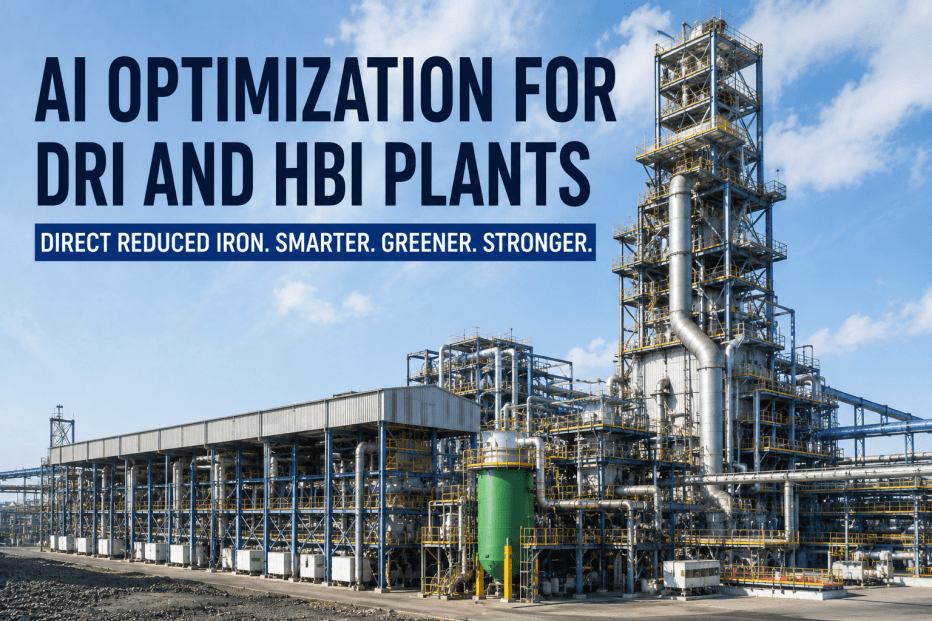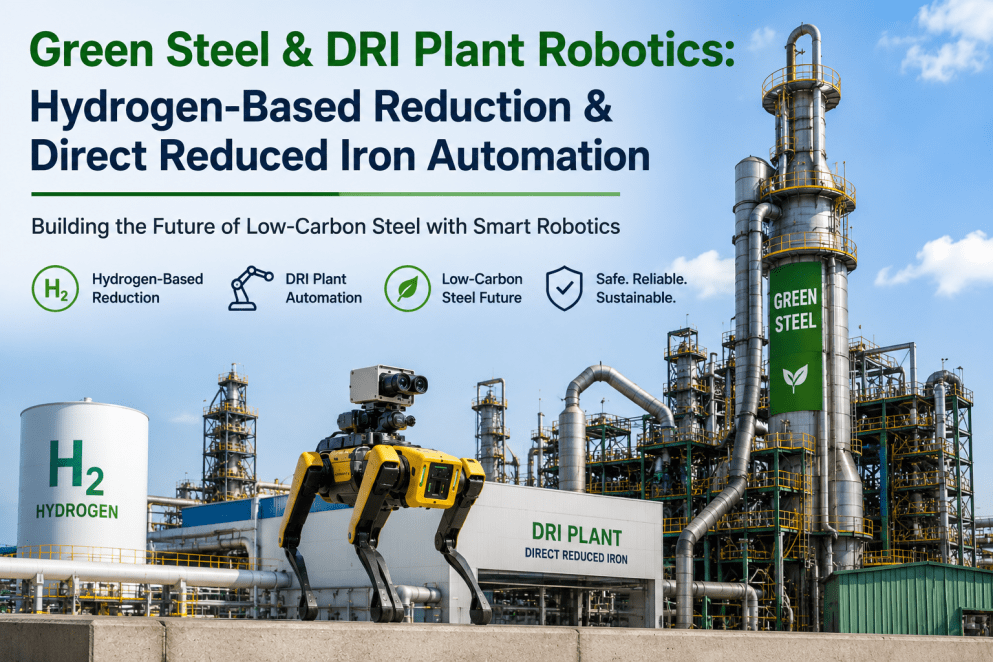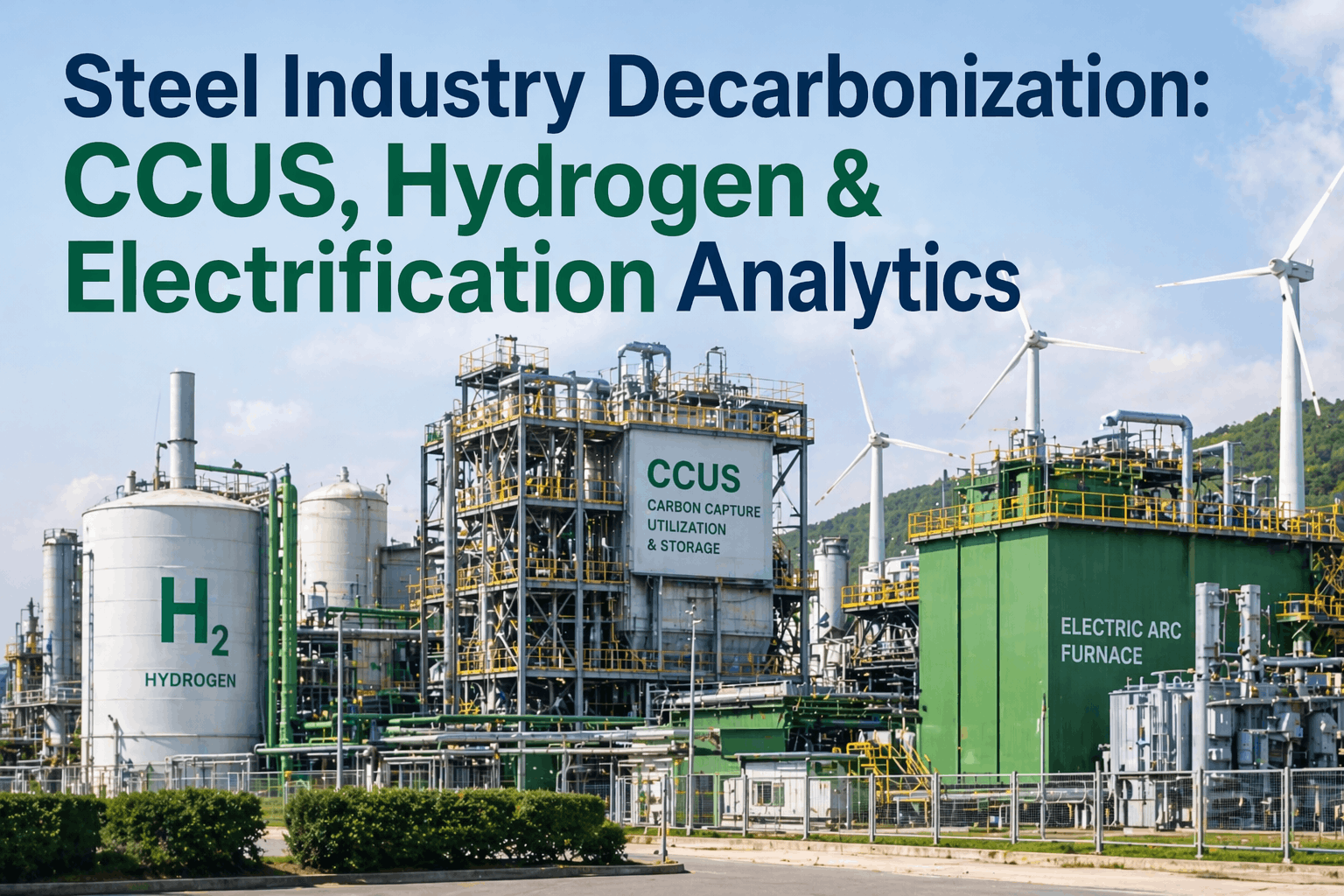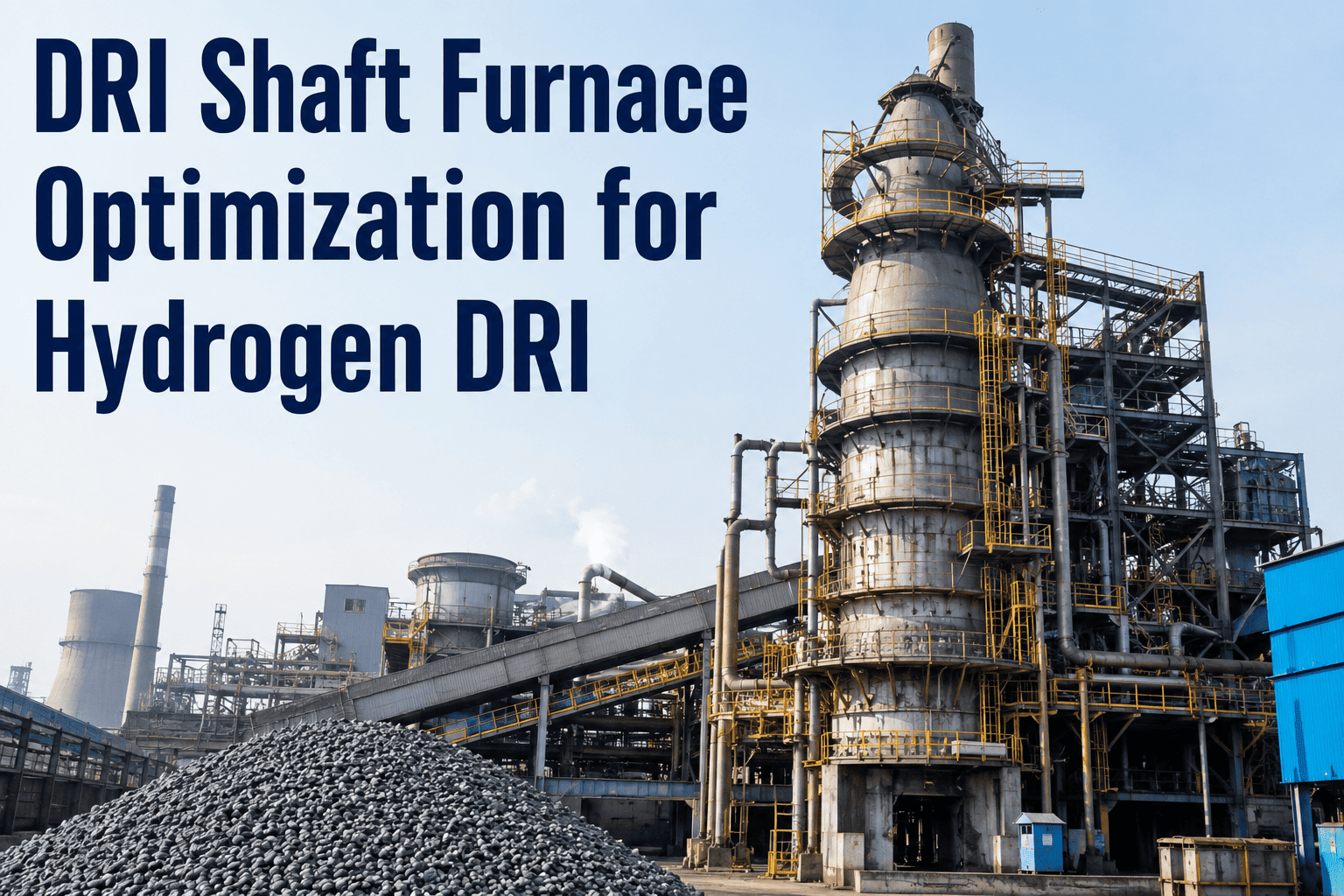
Direct reduced iron is supposed to be the bridge to lower-carbon steelmaking, but running a shaft furnace well is harder than the marketing material suggests. Metallization target, carbon content, and gas reformer efficiency all pull against each other, and small swings in reducing gas composition or burden distribution can knock productivity or product quality off target for hours before anyone notices. As more plants add hydrogen blending to existing Midrex or Energiron units, the control problem only gets harder, because the furnace behaves differently than it did on natural gas alone. iFactory's DRI optimization module gives shaft furnace operators the real-time visibility they need to keep pace with that shift.
Hold metallization and productivity steady while your gas mix keeps changing
iFactory reads shaft furnace process data in real time to optimize Midrex and Energiron operation, and prepares your control strategy for hydrogen-DRI as blending ratios increase.
Three variables, all moving, all interacting
A Midrex or Energiron shaft furnace is a counter-current reduction process where gas composition, burden movement, and temperature profile all interact continuously. Operators typically manage these with static setpoints and periodic manual adjustment, which works until conditions shift faster than the adjustment cycle.
Metallization drifts with gas quality
Reformer performance and natural gas composition change gas quality feeding the furnace, and metallization can drift out of spec before lab sampling catches it.
Carbon content is hard to hold steady
Carbon deposition depends on gas composition and residence time together, and getting both dials right simultaneously is difficult with manual control alone.
Burden distribution affects gas flow evenly
Uneven burden distribution creates gas channeling inside the shaft, reducing reduction efficiency in ways that aren't visible from outside the vessel.
Hydrogen blending changes the rules
Hydrogen reduces faster than CO but carries heat differently through the burden, meaning control strategies tuned for natural gas don't transfer directly as blend ratios rise.
Reformer efficiency is easy to lose track of
Reformer performance degrades gradually with catalyst age and fouling, and by the time it shows up as a productivity drop, the root cause is hard to isolate.
Product quality feedback lags production
DRI or HBI quality metrics are often measured downstream of the furnace, so by the time an issue is confirmed, hours of off-spec production have already occurred.
Most DRI plants are leaving 3–6% productivity on the table simply because burden and gas control can't react as fast as conditions change. Book a walkthrough to see the gap on your own furnace.
From static setpoints to continuous optimization
iFactory ingests reducing gas composition, top gas analysis, burden temperature profile, and reformer performance data in real time, modeling the interaction between them instead of managing each variable in isolation.
Read the full gas and burden profile
Continuous ingestion of reducing gas composition, temperature zones, and burden descent rate across the shaft.
Model metallization and carbon in real time
Predicts expected metallization and carbon content ahead of discharge, rather than waiting for periodic lab sampling.
Recommend gas and burden adjustments
Suggests reformer and burden distribution adjustments to hold target metallization as feed and gas conditions shift.
Track reformer health continuously
Flags gradual reformer efficiency decline before it becomes a production-limiting problem.
The green steel transition runs directly through the shaft furnace
DRI's role in steelmaking is shifting from a scrap-substitute niche to a central pathway for lower-carbon production, and that shift is putting real pressure on plants to run shaft furnaces at higher utilization and tighter quality specification than the original design basis assumed. EAF operators buying DRI or HBI as scrap substitute increasingly specify metallization and gangue content tolerances that are tighter than what many furnaces were tuned to hold reliably under manual control alone.
At the same time, the hydrogen blending timeline is moving faster in some regions than DRI plant control systems are ready for. Plants that built their control practice entirely around natural-gas reduction chemistry are finding that even modest hydrogen blend ratios change furnace behavior enough to require real retuning, not just a minor setpoint adjustment. Getting ahead of that transition with a control system that already accounts for hydrogen reduction kinetics avoids a scramble later when blend ratios increase faster than expected.
There's also a capital allocation angle worth considering. Many plants evaluating a green hydrogen transition are weighing the cost of new furnace capacity against getting more consistent output from existing shaft furnaces first. Since the productivity and consistency gains available through better real-time control often cost a fraction of new capacity investment, tightening existing furnace performance is frequently the more immediate lever available to plant managers under budget pressure.
Built for the shaft furnace control room
Real-time metallization prediction
Continuously modeled metallization estimate with confidence band, replacing reliance on periodic lab sampling for control decisions.
Carbon content optimization
Recommends gas composition and residence time adjustments to hold carbon content within target range for your product grade.
Burden distribution diagnostics
Detects gas channeling patterns from temperature profile asymmetry, flagging burden distribution issues before they affect yield.
Reformer performance tracking
Monitors reformer efficiency trend over time, flagging catalyst degradation or fouling before it limits gas production capacity.
Hydrogen blend transition modeling
Supports control strategy adjustment as hydrogen blend ratio increases, accounting for the different heat and reduction kinetics of H2 versus CO.
Productivity and yield reporting
Tracks productivity, metallization, and carbon consistency trends across shifts and campaigns for continuous improvement review.
What DRI plants see within one quarter
What a shaft furnace pilot includes
Connects existing instrumentation
Uses gas analyzers, thermocouples, and reformer sensors already installed on Midrex or Energiron lines.
On-premise deployment
Runs on plant-network hardware with no cloud dependency for process data.
8–12 week pilot
Includes historical data calibration and shadow-mode validation before live operator use.
H2-blend ready architecture
Model design accounts for hydrogen reduction kinetics, supporting current and future blend ratios.
Works with DRI and HBI lines
Deployed across cold DRI, hot DRI, and HBI briquetting configurations.
24x7 managed monitoring
iFactory's operations team maintains model performance so your process engineers stay focused on the furnace.
Shaft furnace AI, explained plainly
Get ahead of the hydrogen-DRI control problem
iFactory optimizes your shaft furnace today and prepares your control strategy for tomorrow's blend ratios. Book a demo and we'll walk through it on your process data.