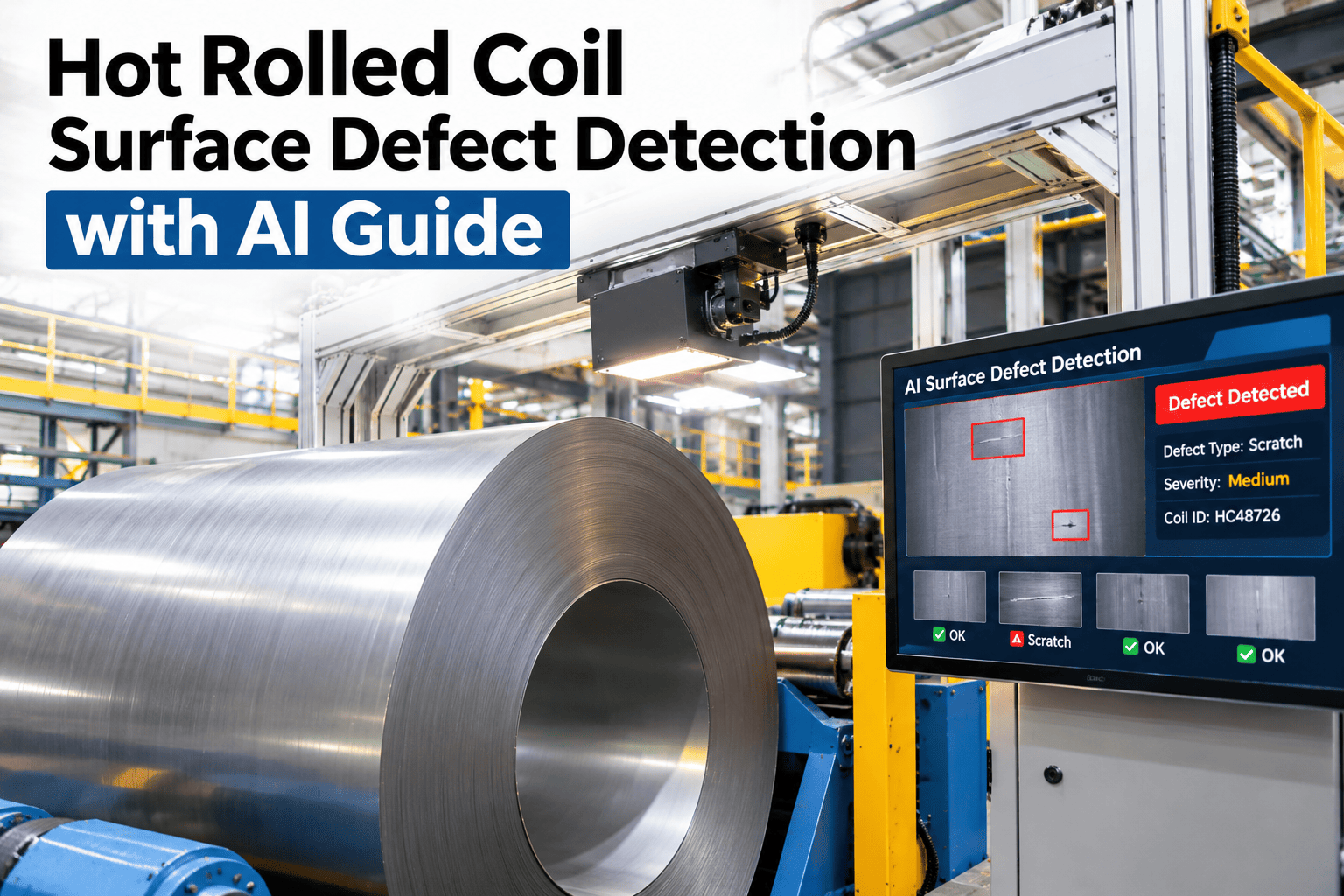
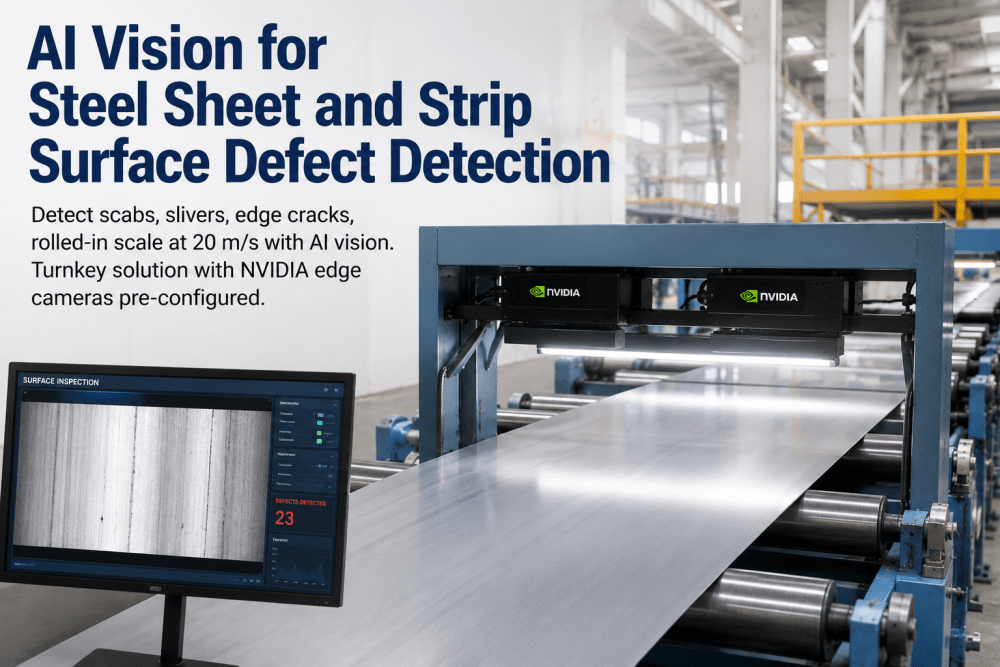
A hot rolled coil can carry roll marks, laps, seams or pit defects that are easy to miss on a fast-moving line under mill scale and steam. Some of these are cosmetic and can ship as-is, while others are functional defects that will fail a customer's forming or welding process. AI surface inspection tells the two apart at line speed instead of after the coil has already been shipped, and you can see how this classification works on your own coil images.
Hot strip mill, coil surface quality
Classify Roll Marks, Laps, Seams and Pit Defects as the Coil Comes Off the Line
iFactory AI inspects hot rolled coil surface in real time and separates cosmetic defects from functional ones, so grading decisions are fast and consistent across shifts.
The grading problem
Not Every Surface Mark Is the Same Defect
A light roll mark and a deep lap can look similar in a quick glance but mean very different things for the customer's process.
Cosmetic
Shallow roll marks
Minor scale pattern
Light surface discoloration
Functional
Deep laps and seams
Pit clusters at weld-critical zones
Defects that break through on forming
Getting this split right on every coil is what grading accuracy depends on, and it is exactly where manual inspection is least consistent.
Defect types
Four Surface Defects This Model Classifies
Roll marks
Repeating pattern from a damaged or worn work roll.
Laps
Metal folded over itself during rolling, a weak point under stress.
Seams
Longitudinal line from a casting or rolling defect carried forward.
Pit defects
Small surface cavities, often from scale or inclusion removal.
Check Your Current Grading Accuracy
Share a batch of recent coil images with mixed defect types and see how closely the model's classification matches your inspectors' calls.
Classification table
Defect Type, Cause and Typical Routing
| Defect | Likely cause | Typical routing |
|---|
| Roll marks | Worn or damaged work roll | Flag for roll change, grade by depth |
| Laps | Rolling schedule or edge control | Downgrade or scrap by location |
| Seams | Carried from casting or earlier pass | Downgrade, review upstream stage |
| Pit defects | Scale pit or inclusion site | Grade by cluster density |
Routing workflow
From Detection to a Grading Decision
1
Image capture
Line cameras capture the full coil surface at speed.
2
Defect classification
Each flagged area is labeled by defect type and depth estimate.
3
Cosmetic vs functional split
Severity and location decide which category the defect falls into.
4
Grade assignment
The coil is tagged with a grade and a defect map for downstream use.
Where defects cluster
Defect Density Across the Coil Length
Defects rarely spread evenly. Coil head and tail often carry more risk than the steady middle run.
Coil headElevated
Steady middle runLow
Coil tailHigh
Mapping defect density by coil position helps focus trim decisions and feeds back into mill setup review. To connect this defect map to your coiler data, ask our team about coil position tagging.
Common pitfalls
Three Problems That Weaken Manual Grading
1
Inconsistent calls between shifts
The same defect gets a different grade depending on who is inspecting.
2
Sampling instead of full coverage
A visual spot check misses defects outside the sampled section.
3
No link back to mill setup
Defect patterns are graded but not traced back to a roll or pass.
Expert review
Grading consistency matters as much as detection accuracy. A model that classifies the same way every shift gives your sales and quality teams a grade they can trust, which is often the bigger win over manual inspection.
Watch for
Grade disputes between shifts on visually similar coils.
Do next
Run a side-by-side grading comparison on one week of coils before full rollout.
— iFactory steel specialists
Frequently asked questions
What Mills Ask About Hot Rolled Coil Inspection AI
Can the model separate cosmetic from functional defects reliably?
Yes, by training on labeled examples from your own coils the model learns the depth, pattern and location cues that your inspectors already use to make that call, then applies them consistently across every coil.
See the classification approach.
Does it work at full hot strip mill line speed?
Yes, inspection is designed to keep pace with the line rather than slow it down, capturing and classifying the full coil surface as it runs rather than sampling sections.
Ask about your line speed.
How does a roll mark get traced back to a specific roll?
Roll marks carry a repeating pattern that the model can flag, and linking the defect timestamp to roll change records helps narrow down which roll is responsible.
Discuss roll tracking.
What happens to coils with a defect map?
The coil carries its defect map into downstream systems so cold rolling, slitting or coating decisions can account for known defect zones rather than rediscovering them later.
Ask about defect map handoff.
Can this reduce customer claims on surface quality?
Consistent grading that matches actual defect severity reduces both over-grading, which wastes good coil, and under-grading, which leads to claims, so most mills see improvement on both sides.
Talk through your claims history.
From roll mark to grade
Grade Hot Rolled Coil the Same Way Every Shift
Book a session with iFactory AI to review your current grading process and see how automated classification fits your hot strip mill.