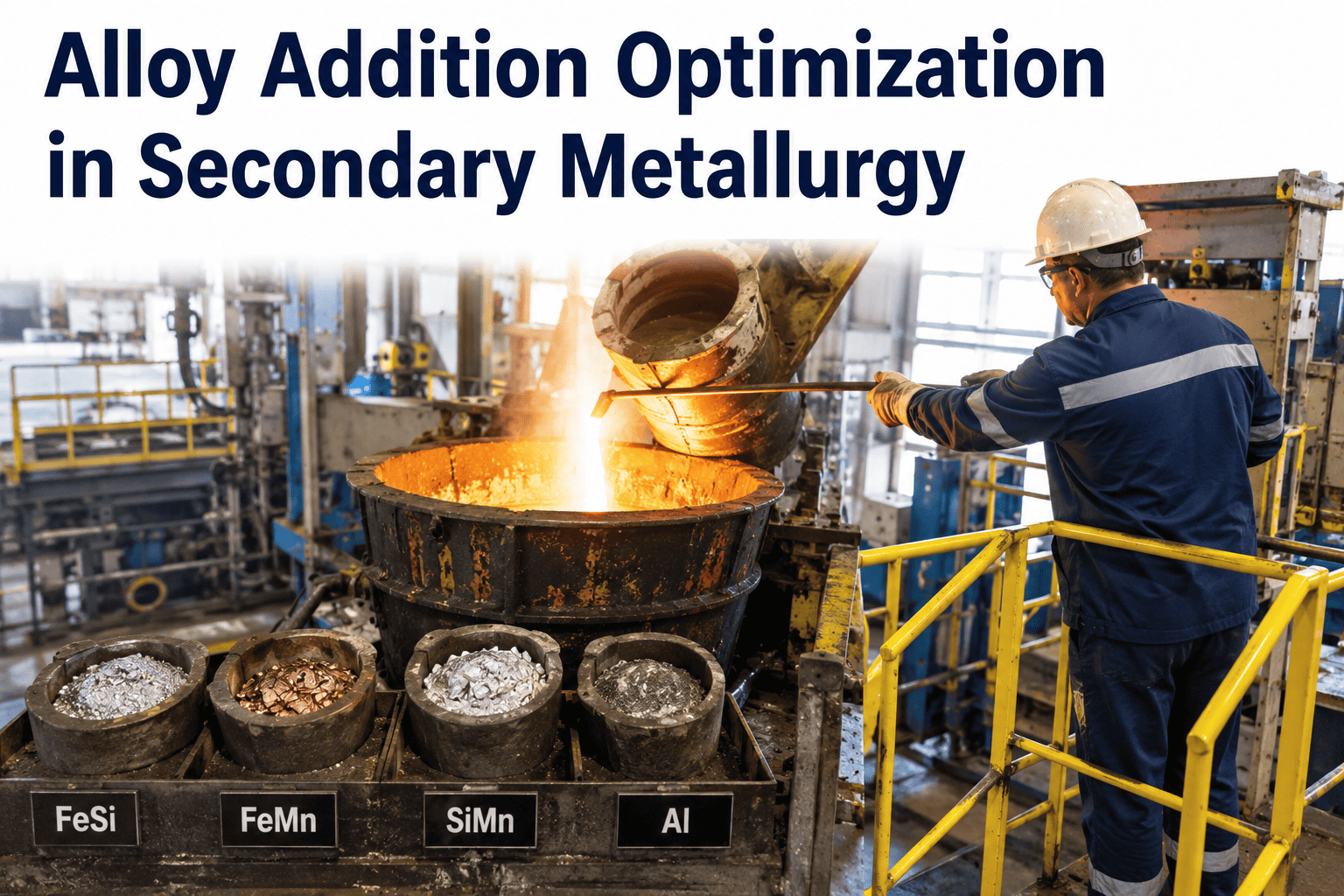
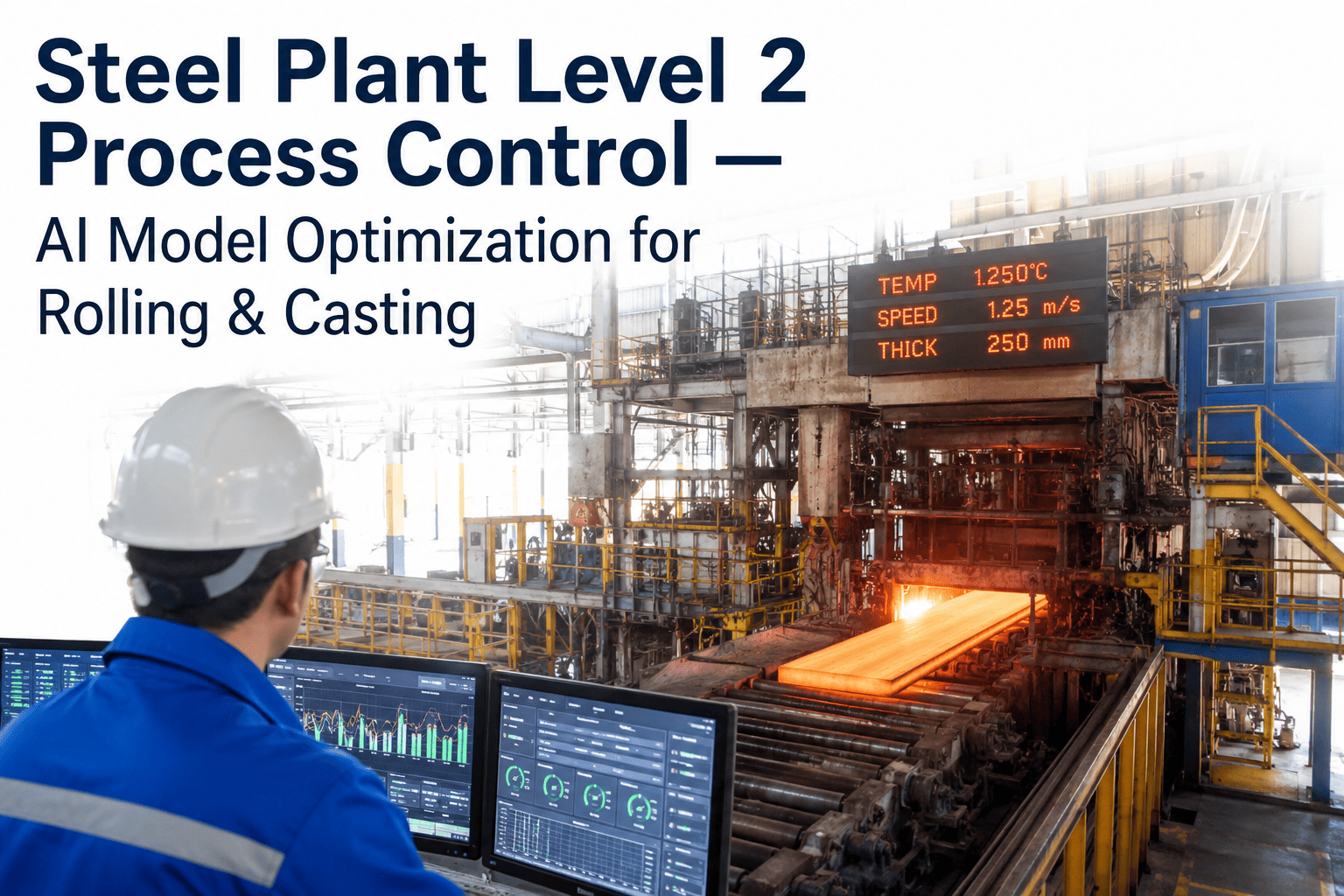
Every ladle metallurgy furnace operator makes the same trade-off dozens of times a shift: hold the heat a few extra minutes to be safe on temperature, or release it on schedule and risk a costly reheat. That judgment call, repeated across every treatment in a shift, is where most secondary steelmaking plants lose the most avoidable time and energy, not inside the furnace itself but in the guesswork wrapped around it. An AI process model replaces that guesswork with a calculated prediction built from melt chemistry, refractory condition, and treatment history, giving operators a number to check instead of an instinct to trust. Plants running this kind of model on their ladle furnace typically see the difference show up first in fewer reheats and tighter tap-to-tap consistency, which is worth comparing against your own furnace data — book a demo to walk through what a temperature prediction model would look like on your line.
Predict Temperature and Alloy Additions Before You Commit to Them
iFactory's ladle metallurgy process model calculates temperature drop, alloy addition quantities, and treatment time from your own furnace data, turning a skilled operator's estimate into a repeatable, plant-wide calculation that holds up across every shift.
Operator Experience Sets the Ceiling on Ladle Consistency Today
Most ladle metallurgy furnaces are run by operators who have built their temperature and alloy intuition over years of tap-to-tap experience, and on a stable shift with familiar scrap and a familiar crew, that intuition performs well. The gap shows up on the shifts where scrap chemistry, refractory wear, or crew experience departs even slightly from what an operator is used to, because intuition trained on the normal case tends to handle the edge case poorly.
None of this reflects a failure by the operators themselves, it reflects the limits of asking one person's mental model to solve a calculation with a dozen interacting variables in real time. A process model does not replace operator judgment, it gives that judgment a calculated number to check against before committing to a treatment decision that is expensive to undo once alloy is already in the ladle.
How Prediction Accuracy Changes Across Three Approaches
The gap between an experienced guess and a calculated prediction is easiest to see side by side, across the three ways plants typically arrive at a temperature and alloy decision today.
| Approach | Temperature Accuracy | Alloy Addition Accuracy | Consistency Across Shifts |
|---|---|---|---|
| Experienced operator estimate | Typically within 15–20°C | Typically within 5–8% of target | Varies meaningfully by individual |
| Static lookup table or spreadsheet | Typically within 20–25°C | Typically within 8–12% of target | Consistent, but consistently wrong on edge cases |
| AI process model | Typically within 5–8°C | Typically within 2–3% of target | Consistent across every shift and crew |
The lookup table row is worth noticing on its own, because it is consistent in the wrong way. A spreadsheet applies the same rule every time regardless of whether today's scrap, refractory condition, or stirring rate actually matches the assumptions it was built around, which is a different problem from an operator's variability but not a smaller one.
See what prediction accuracy looks like against your own heat data
iFactory can run a sample of your recent heats through the process model and show you the gap between what was predicted and what actually happened at tap-out.
What the Model Actually Tracks to Predict Tap-Out Temperature
Temperature drop during a ladle treatment is not one number, it is the combined result of several heat losses happening at once, each moving at its own rate depending on conditions that change heat to heat.
Individually, none of these factors is a secret to an experienced operator, but tracking all four at once, for every heat, with the same precision every time, is exactly the kind of continuous calculation a model handles more reliably than a person working from memory under time pressure.
Calculating the Exact Addition Instead of Rounding Up to Be Safe
Rounding an alloy addition up "to be safe" feels harmless on any single heat, but it is one of the more expensive habits in secondary steelmaking once it is repeated across a full year of production.
The difference between a calculated addition and a rounded-up one is rarely dramatic on a single heat, which is exactly why it is easy to overlook. Multiplied across thousands of heats a year, it becomes one of the more measurable cost lines a plant can address without touching the furnace itself.
Matching Treatment Time to What the Heat Actually Needs
A fixed treatment time protects against the worst-case heat, but it treats every heat as if it were the worst case, which adds unnecessary minutes to the majority of heats that never needed them.
This is where the temperature and alloy predictions actually compound into a schedule benefit, since a heat that is accurately treated the first time, in the time it genuinely needs, is one less variable for every process step downstream of the ladle furnace to absorb.
How iFactory Builds the Model Around Your Furnace
A ladle metallurgy process model is only useful if it is trained on your furnace's actual behavior, not a generic industry curve, which is why deployment starts with your own heat history rather than a template.
What Steelmakers Ask About Ladle Metallurgy Process Models
How much historical heat data do we need before the model can be trained?
Does the model replace the operator's role in running the ladle furnace?
How does the model handle a change in scrap mix or refractory condition partway through a campaign?
What happens during the shadow mode phase before the model goes live?
Can this integrate with our existing level 2 or scheduling system rather than running as a separate tool?
See a Ladle Metallurgy Process Model Trained on Your Own Furnace Data
iFactory builds the temperature and alloy prediction model from your plant's own heat history, validates it against real outcomes, and hands operators a number they can check before every treatment decision.