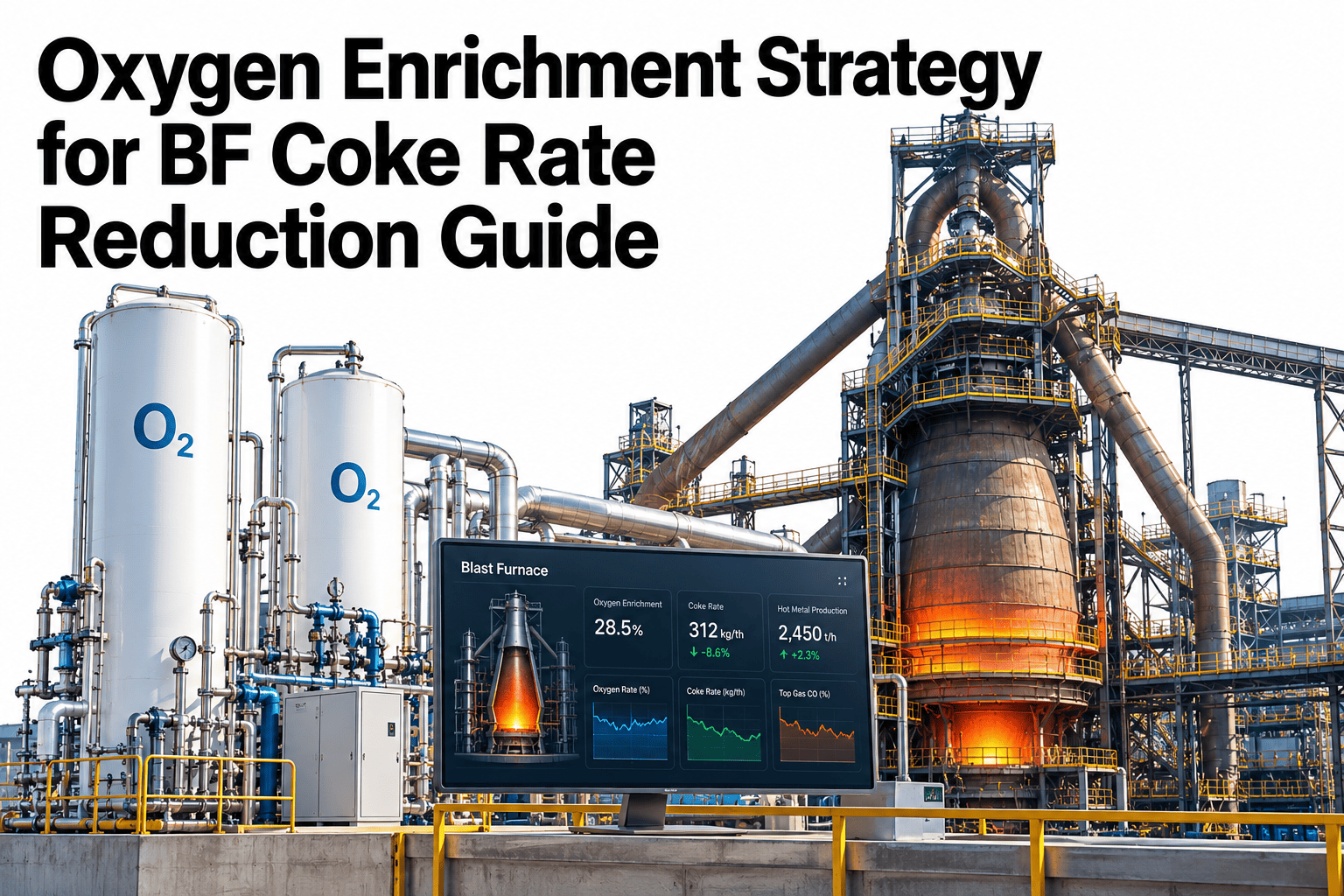
Adding oxygen to the blast is one of the few blast furnace levers that pays twice: it raises flame temperature in the raceway and it allows more pulverized coal to be injected without choking combustion, both of which bear directly on coke rate. The economics are not automatic, though. Enrichment costs money to generate, and beyond a certain level each additional percentage point buys less than the one before it. Finding where that curve bends, and coupling enrichment properly with PCI rate, is what separates oxygen as a genuine lever from oxygen as an expensive habit. Furnace teams can see how iFactory AI tracks enrichment level against coke rate and productivity on live furnace data before the next enrichment review.
Oxygen Enrichment Strategy for BF Coke Rate Reduction
Enrichment level, PCI coupling and productivity gains, sized against the real cost of generating oxygen.
Why Enrichment Moves Coke Rate
Oxygen does two jobs at once in the raceway, and both of them touch coke rate from a different direction.
Enriched blast burns hotter at the tuyeres, improving the thermal conditions the furnace needs.
Extra oxygen allows more pulverized coal to be injected without over-cooling the raceway, directly displacing coke.
Reduced nitrogen load in the blast can raise permissible blast volume, supporting higher throughput.
The combined effect on coke rate comes from how these three interact, not from oxygen level alone.
Where the 4-8% Range Comes From
Many integrated furnaces operate enrichment in roughly this band, though the right level for any specific furnace depends on its own design, burden and PCI system. Confirm the appropriate range for your furnace with your own process engineering team rather than treating this as a universal target.
| Enrichment Level | Typical Rationale | Watch Point |
|---|---|---|
| Low enrichment | Conservative raceway flame temperature management | Limited PCI headroom gained |
| Moderate enrichment | Meaningful PCI increase with manageable flame temperature | Requires matched PCI rate increase to realize benefit |
| High enrichment | Maximum PCI and productivity push | Oxygen generation cost rises faster than the marginal benefit |
Find Your Furnace's Own Enrichment Sweet Spot
Book a 30-minute session and iFactory AI will show where your enrichment versus coke rate curve actually bends, using your own furnace and PCI data.
Enrichment Without PCI Coupling Leaves Value on the Table
Raising oxygen alone, without raising PCI rate to use the extra flame temperature headroom, captures only part of the possible benefit.
The Economics in Four Steps
A sound enrichment decision works through these in sequence, not just the headline coke rate number.
Cost of oxygen
What it costs to generate the additional oxygen at the target enrichment level.
Coke rate benefit
The value of coke displaced through the matched PCI increase.
Productivity value
Any throughput gain from increased blast volume, valued at its own margin.
Net position
The combined benefit weighed against the oxygen cost, at that specific level.
Signs You're Past the Bend in the Curve
Diminishing returns show up as specific operating signals, not just a feeling that oxygen "isn't helping as much anymore."
Raceway flame temperature approaches its practical operating limit, capping further PCI increase.
Coal injection equipment reaches its own capacity, so added oxygen has nowhere to go.
Each additional percentage point of enrichment delivers less coke rate benefit than the one before.
The furnaces that get genuine value from oxygen enrichment treat it as one half of a paired decision with PCI rate, not a standalone dial to turn up. Raising enrichment without a matched increase in coal injection captures only part of the possible coke rate benefit while still paying the full oxygen cost, which is the single most common way enrichment programmes underdeliver against their business case. Model the two together, confirm where the marginal benefit starts shrinking on your own furnace, and treat any published industry range as a starting point for testing, not a target to hit regardless of what your own data shows.
Where iFactory AI Fits
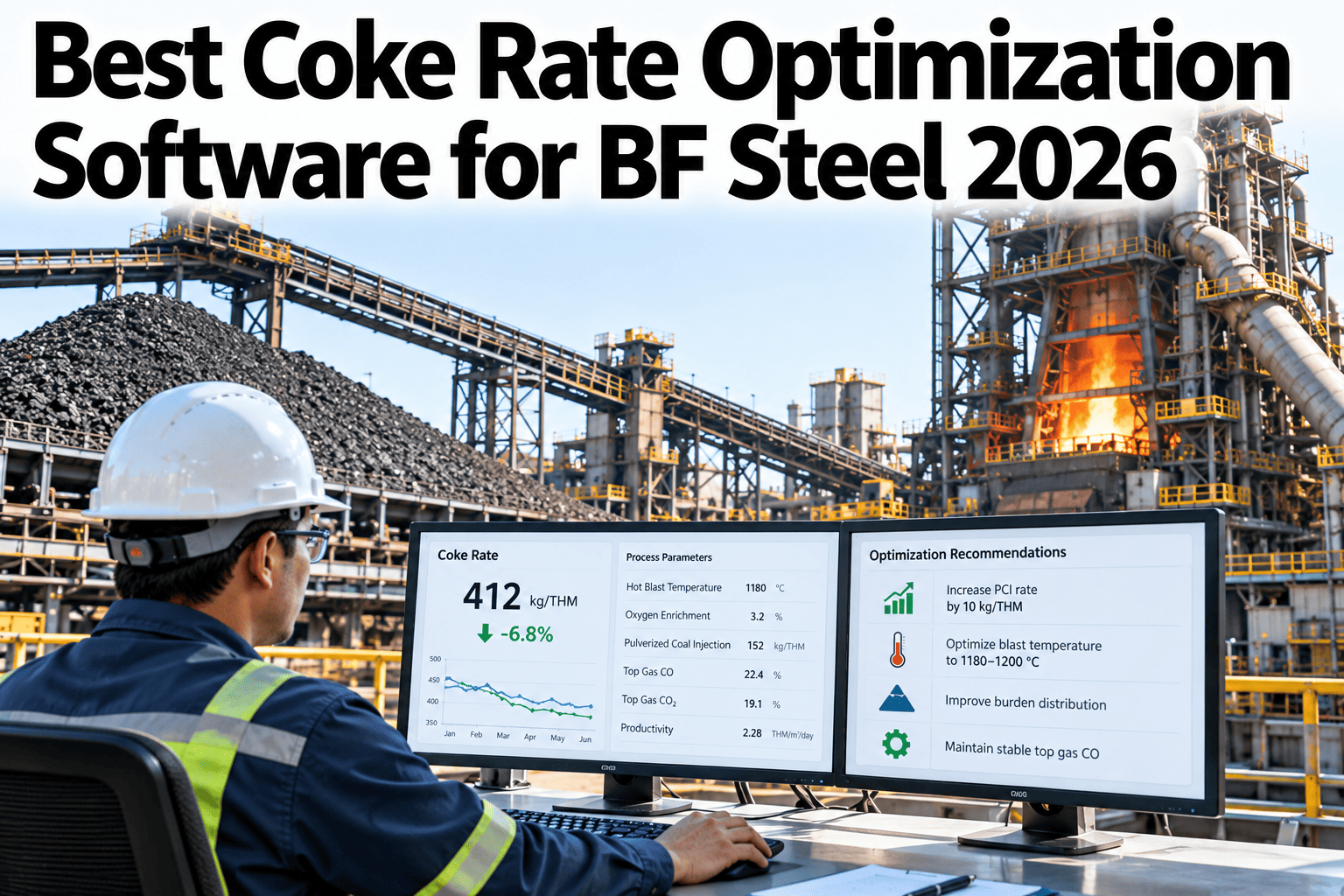
iFactory AI tracks enrichment level, PCI rate, flame temperature and coke rate together, so the economics of each step up in oxygen are visible before the budget is committed.
Enrichment-PCI coupling view
Oxygen level and coal injection rate are tracked together, flagging when one is moved without the other.
Marginal benefit tracking
The coke rate gain per additional percentage point of enrichment is tracked, showing where the curve bends.
Full economics view
Oxygen cost, coke rate benefit and productivity gain are compared together for a net position, not a single metric.
Ask in plain language
Ask whether your current enrichment level is still paying for itself and receive a direct answer.
Frequently Asked Questions
What oxygen enrichment level should our furnace target?
There is no single correct figure, since it depends on your furnace design, PCI system capacity and oxygen generation cost. Many integrated furnaces operate in a roughly 4 to 8 percent range, but the right level for your plant should be found by testing and modelling your own data, not copied from a general figure. You can watch an enrichment economics model built on sample furnace data in a live session.
Why does enrichment need to be coupled with PCI rate?
Enrichment on its own raises flame temperature, but the coke rate benefit is realized mainly when that headroom is used to inject more pulverized coal, directly displacing coke. Raising oxygen without raising PCI leaves part of the potential benefit uncaptured while still incurring the full oxygen cost. To review your own coupling, request an enrichment-PCI review with the iFactory AI team, or ask support what furnace data is needed.
How do we know when we've reached diminishing returns on enrichment?
Watch for the raceway flame temperature approaching its practical limit, the PCI system reaching its own capacity, or the marginal coke rate saving from each additional percentage point shrinking compared to earlier increases. A short product tour of marginal benefit tracking shows how this is identified.
Does higher enrichment always improve furnace productivity?
It can, through reduced nitrogen load allowing higher blast volume, but the gain depends on other constraints in the furnace and auxiliary systems, so it should be confirmed on your own operating data rather than assumed automatically. See how productivity effects are tracked alongside coke rate in a guided walkthrough.
How should the cost of generating oxygen be weighed against the coke rate benefit?
Compare the full cost of the additional oxygen against the combined value of coke displaced and any productivity gain at that specific enrichment level, since the net position can shift from favourable to unfavourable well before equipment limits are reached. Schedule a walkthrough of the full economics view to see how this is modelled for your furnace.
Find the Enrichment Level That Pays for Itself
iFactory AI tracks enrichment, PCI rate and coke rate together, so every step up in oxygen is a decision backed by evidence. Book a walkthrough to see it built around your own furnace.