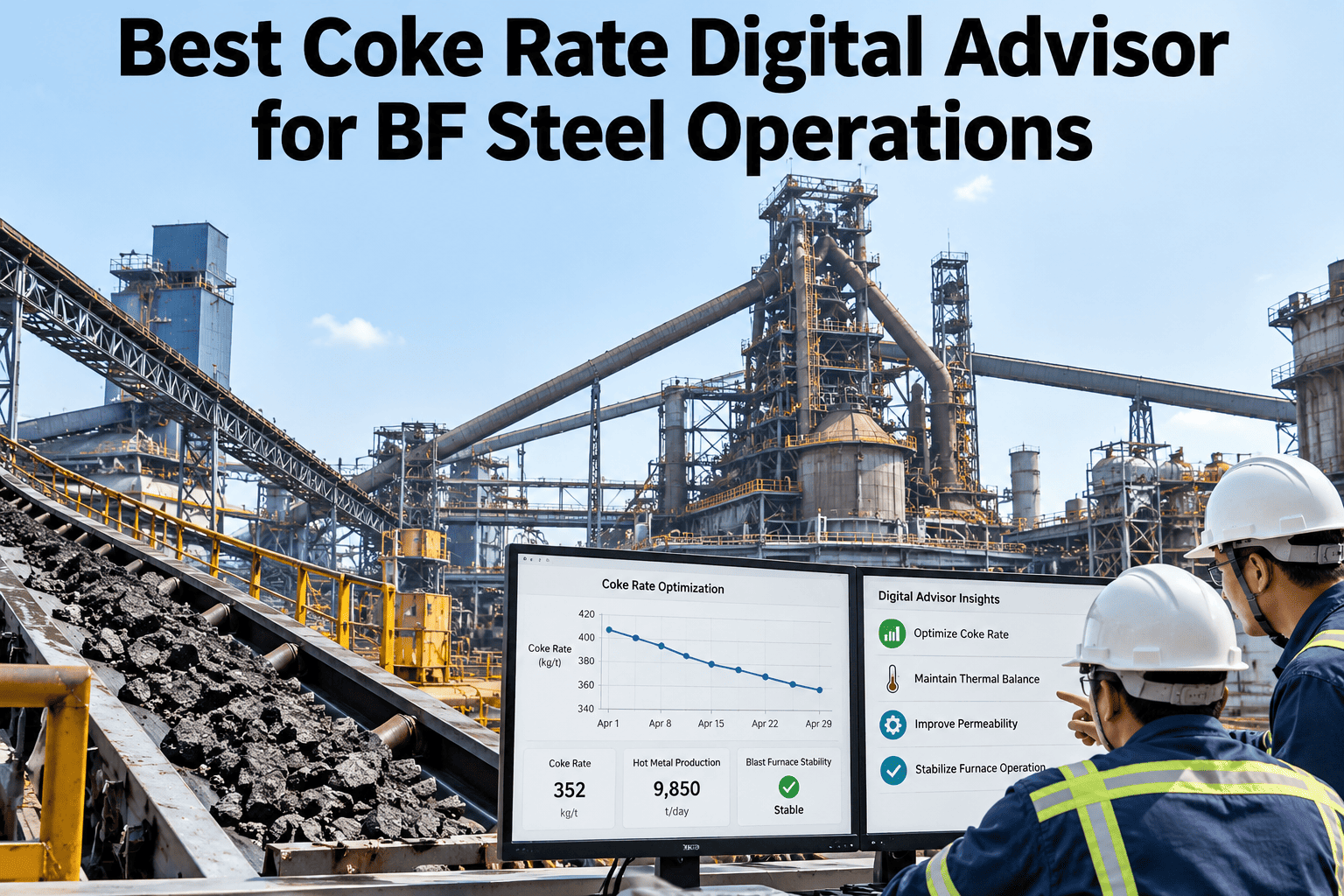
The coke a blast furnace burns is largely paying for what the burden does not give it for free. A well-prepared mix of sinter, pellet and lump ore reduces easily, holds together under the furnace's own weight, and lets gas flow evenly up through the stack. A poorly prepared one forces the furnace to burn extra coke just to compensate for weak reducibility and uneven gas flow. Burden preparation rarely gets the same attention as coke rate itself, yet it is often the lever with the most room left to pull. Blast furnace teams can see how iFactory AI tracks burden composition against coke rate on live furnace data before the next burden mix review.
Best Burden Preparation Optimization for Coke Rate Reduction
Sinter, pellet and lump ratios, screening effectiveness and reducibility, working together to earn a real coke rate reduction.
What the Burden Actually Controls
Burden preparation sets the conditions the furnace has to work within for the rest of the process. Three properties matter most.
How readily oxygen can be stripped from the iron oxide, which directly affects how much reducing gas and coke are needed.
How well the burden holds together under load, which affects gas flow and the formation of fines in the stack.
How well fines are removed before charging, since fines in the burden choke gas permeability.
A coke rate problem that looks like a combustion issue often traces back to one of these three, further up the process than most troubleshooting starts.
Sinter, Pellet and Lump: Different Roles, Not Interchangeable
Each burden component behaves differently in the stack, and the right ratio depends on what each one brings to the mix, not just availability or cost.
| Component | Typical Strength | Watch Point |
|---|---|---|
| Sinter | Good permeability contribution, flexible chemistry | Quality varies with sintering process control |
| Pellet | High and consistent reducibility | Can soften early if not matched to furnace profile |
| Lump ore | No agglomeration cost, simple to handle | Often lower reducibility, more size variation |
See How Your Burden Ratio Compares on Reducibility
Book a 30-minute session and iFactory AI will show how your current sinter, pellet and lump ratio performs against reducibility and coke rate on your own furnace data.
Screening: The Step Most Likely to Be Underperforming
Fines that slip past screening do not disappear, they settle into the burden and restrict the gas flow the whole furnace depends on.
Reducibility Improvements That Actually Reach the Furnace
Reducibility gains made at the sinter or pellet plant only pay off if they survive handling and reach the furnace intact.
Process improvement
A sinter or pellet plant change raises reducibility at the source.
Handling and transfer
Material survives transport and stockpiling without excessive degradation.
Screening at charging
Fines generated along the way are removed before entering the burden.
Measured at the furnace
The improvement is confirmed in actual coke rate, not just at the source plant.
Translating Burden Quality Into Coke Rate
The link between burden preparation and coke rate is real, but it runs through several steps and should be measured, not assumed from a single quality figure.
Less reducing gas and heat needed to complete the chemical reactions in the stack.
More even gas distribution, reducing the coke needed to overcome channeling and dead zones.
The two together determine the actual coke rate response, which varies by furnace.
The furnaces that get real coke rate benefit from burden work are the ones that track reducibility and screening performance all the way from the sinter or pellet plant through to the furnace itself, rather than treating a quality improvement upstream as automatically delivered downstream. A reducibility gain measured at the sinter plant can be partly or fully lost to degradation during handling and stockpiling before it ever reaches the stock house, and without measuring at the furnace end, that loss goes unnoticed. Confirm every burden change in the actual coke rate trend over a meaningful number of tap cycles, not in the lab result alone.
Where iFactory AI Fits
iFactory AI connects burden composition, screening performance and reducibility data to actual coke rate outcomes at the furnace, closing the loop that usually breaks between upstream and downstream.
Burden-to-coke-rate tracking
Sinter, pellet and lump ratios are tracked against measured coke rate, not assumed from quality specs alone.
Screening performance monitoring
Fines carryover is tracked, flagging screening drift before it shows up as a permeability problem.
End-to-end quality linkage
Reducibility measured at the source is connected through handling to its actual effect at the furnace.
Ask in plain language
Ask whether a recent burden ratio change is actually showing up in coke rate and receive a direct answer.
Frequently Asked Questions
What is the ideal sinter, pellet and lump ratio for lowering coke rate?
There is no universal ratio, since it depends on the reducibility and strength of your specific sinter and pellet sources, your furnace profile, and cost and availability of each component. The right mix is found by testing and measuring at your own furnace rather than copying another plant's figure. You can watch burden ratios tracked against coke rate on sample furnace data in a live session.
How much coke rate reduction can better screening actually deliver?
It varies with how much fines carryover you currently have and how sensitive your furnace's permeability is to it, so the figure should be measured on your own data rather than taken from a general benchmark. To review your own screening performance, request a screening review with the iFactory AI team, or ask support what burden data is needed.
Why does a reducibility improvement at the sinter plant not always show up at the furnace?
Material can degrade during transfer and stockpiling between the sinter or pellet plant and the furnace, generating fines that erase part of the original improvement before it ever reaches the stock house. A short product tour of end-to-end quality tracking shows how this loss is identified.
Is lump ore always a cheaper option than sinter or pellet?
It avoids agglomeration cost, but it often brings lower and less consistent reducibility and size distribution, which can raise coke rate enough to offset the savings, so the comparison needs to be made on total cost, not raw material price alone. See how total burden cost is compared across components in a guided walkthrough.
How long should a burden ratio change be observed before confirming a coke rate benefit?
Long enough to cover several tap cycles and account for normal raw material variation, since a single good shift does not confirm a sustained improvement. Schedule a walkthrough of trend confirmation for burden changes to see how this is judged on your own furnace.
Make Burden Quality Pay Off at the Furnace
iFactory AI connects burden composition and screening performance to real coke rate outcomes. Book a walkthrough to see it built around your own furnace.