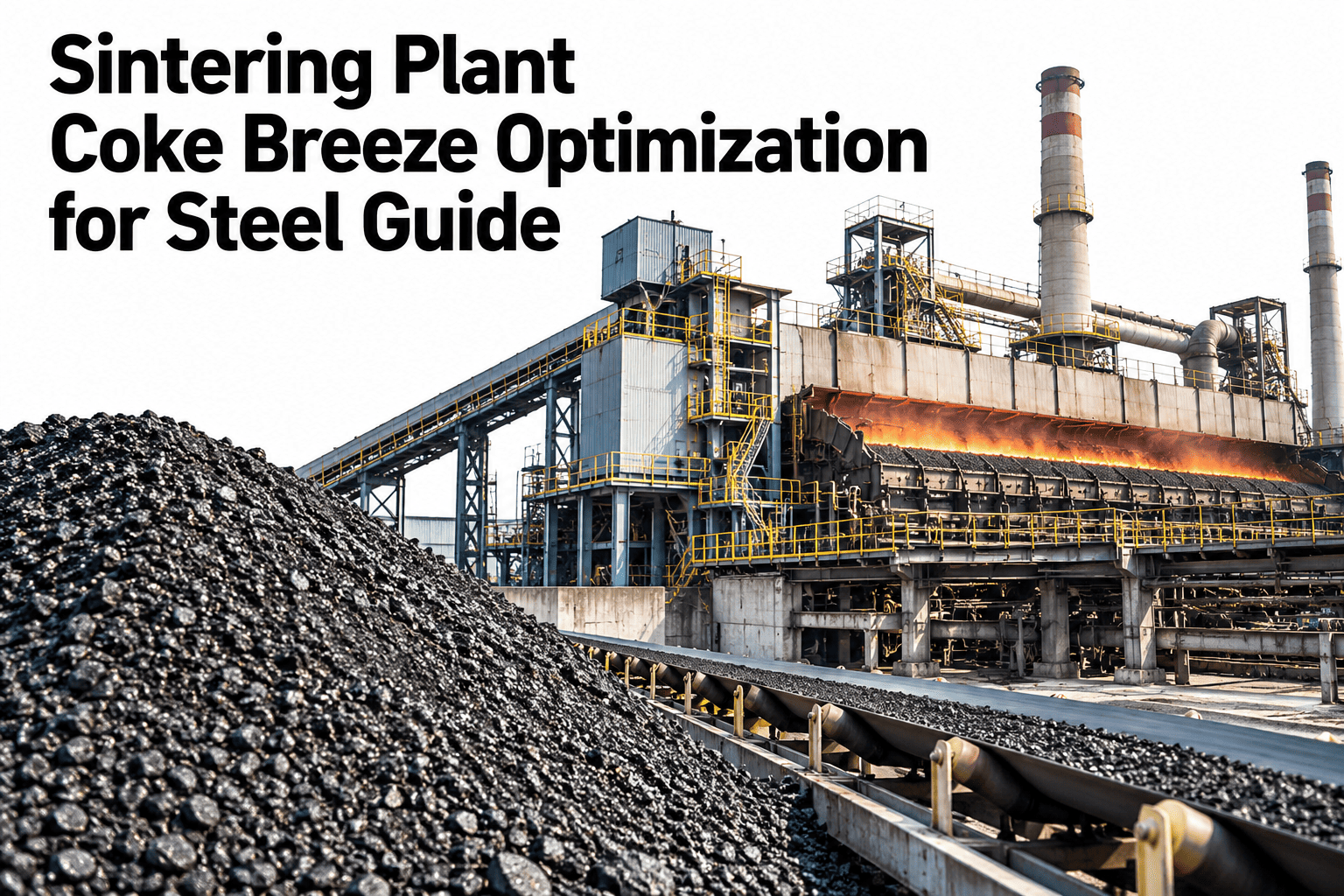
Coke breeze is the single largest controllable fuel cost on a sinter plant, and it is also the input most plants tune by feel rather than by data. Too fine a breeze and the bed packs tight, choking air flow and slowing the strand. Too coarse and combustion spreads unevenly, leaving weak sinter that breaks apart before it ever reaches the blast furnace. Getting breeze fineness, bed permeability and ignition intensity working together is what separates a sinter plant burning fuel efficiently from one quietly wasting it every shift. Plant engineers can see how iFactory AI tracks coke breeze consumption against sinter quality on live strand data before the next fuel review.
Sintering Plant Coke Breeze Optimization for Steel
Tune breeze fineness, bed permeability and ignition together, instead of treating coke breeze rate as a single dial.
Three Variables, One Combustion Front
Coke breeze does not burn in isolation. Its effect depends entirely on how the bed is built and lit, so changing one variable without the others usually just moves the problem.
How freely air can be drawn down through the charge, which sets how much oxygen reaches the fuel.
How strongly the surface layer is lit, which sets how the combustion front establishes and propagates.
Particle size distribution of the coke breeze itself, which affects both burn rate and bed packing.
A fuel rate that looks high in isolation can actually be compensating for poor permeability elsewhere in the bed. Treating the symptom without the cause rarely holds.
What Fineness Does to the Bed
Breeze that is too fine packs between the ore particles and restricts air flow. Breeze that is too coarse burns unevenly and leaves pockets of unreacted fuel. The right distribution sits between the two.
| Fineness Condition | Effect on Bed | Typical Symptom |
|---|---|---|
| Too fine | Reduced permeability, slower air draw | Slower strand speed, higher fuel for same output |
| Too coarse | Uneven combustion front, weak zones | Lower sinter strength, higher return fines |
| Well distributed | Even burn, stable permeability | Consistent strand speed and sinter quality |
See Your Breeze Fineness Against Bed Performance
Book a 30-minute session and iFactory AI will show how your coke breeze fineness distribution correlates with permeability and sinter quality on your own strand data.
Ignition Intensity: Enough, Not Maximum
More ignition is not automatically better. An overly intense ignition burns the top layer too fast, leaving less fuel to carry the front down through the bed.
Reading Permeability Through the Strand
Permeability is not constant through a single pass. It changes as the combustion front moves down the bed, and each stage tells a different story.
Permeability here is set mostly by charging and bed preparation before fuel even burns.
The burning layer itself changes structure as fuel converts and gases pass through.
Sintered material above the front, whose structure reflects how well combustion actually ran.
A Practical Tuning Sequence
Changing breeze rate, fineness and ignition all at once makes it impossible to tell what actually helped. Work through them in order.
Baseline the bed
Record current permeability, fineness distribution and sinter quality together.
Adjust fineness
Narrow the distribution toward the target range and hold ignition steady.
Tune ignition
Adjust ignition intensity once fineness is stable, watching the front's propagation.
Confirm and hold
Verify fuel rate and quality improvement over several heats before locking the setting.
The sinter plants that genuinely cut coke breeze rate are the ones that stop treating it as a single number on a trend chart and start tracking it against fineness distribution and permeability together. A fuel rate reduction pushed through without checking what it does to bed structure often shows up later as higher return fines or a slower strand, quietly erasing the saving it appeared to deliver. Make any breeze change in one variable at a time, hold it over enough heats to separate a real trend from normal shift-to-shift variation, and confirm sinter quality before calling a lower fuel rate a win.
Where iFactory AI Fits
iFactory AI joins breeze consumption, fineness data and strand performance, so fuel reduction decisions are made with the full picture, not fuel rate alone.
Fuel rate against quality
Coke breeze consumption is tracked alongside sinter strength and return fines, not in isolation.
Permeability trending
Bed permeability signals are tracked through the strand, flagging drift before it shows up as a quality problem.
Change tracking
Each tuning change is logged against its outcome, building an evidence base for what actually works on your plant.
Ask in plain language
Ask whether a recent fuel reduction held sinter quality and receive a direct answer.
Frequently Asked Questions
What is the ideal coke breeze fineness for a sinter plant?
There is no single ideal figure, because it depends on your ore mix, bed depth and strand speed. The right distribution is the one that gives even combustion and stable permeability on your own plant, found by testing in small steps rather than copying another plant's setting. You can watch fineness tracked against permeability on sample strand data in a live session.
How do we know if a fuel rate reduction is actually sustainable?
Check sinter strength and return fines alongside the fuel rate over enough heats to rule out normal variation, since a reduction that raises return fines often costs more than it saves once that material is recycled. To review your own trend, request a fuel rate review with the iFactory AI team, or ask support what strand data is needed.
Can more ignition intensity compensate for poor bed permeability?
Not reliably. Over-igniting a poorly permeable bed tends to burn the top layer too fast without fixing the underlying air flow problem, which usually shows up later in the strand as an uneven front. A short product tour of combustion front tracking shows how this is monitored through the strand.
Why should fineness, ignition and fuel rate be changed one at a time?
Changing all three together makes it impossible to tell which adjustment actually caused a change in sinter quality or fuel consumption, so any real improvement cannot be confirmed or repeated. See how a staged tuning sequence is tracked in a guided walkthrough.
How long should a new breeze setting be held before judging it?
Long enough to cover normal shift and raw material variation, since a single good or bad heat does not confirm a trend. The exact number of heats depends on how variable your incoming ore and coke quality already are. Schedule a walkthrough of trend confirmation methods to see how this is judged on your own data.
Cut Coke Breeze Without Losing Sinter Quality
iFactory AI tracks breeze rate, fineness and sinter quality together, so a lower fuel rate is a real saving, not a hidden cost moved downstream. Book a walkthrough to see it built around your own sinter plant.