Plate Mill Optimization — AI Thickness Control, Flatness & Accelerated Cooling for Heavy Plate
By James Smith on July 27, 2026
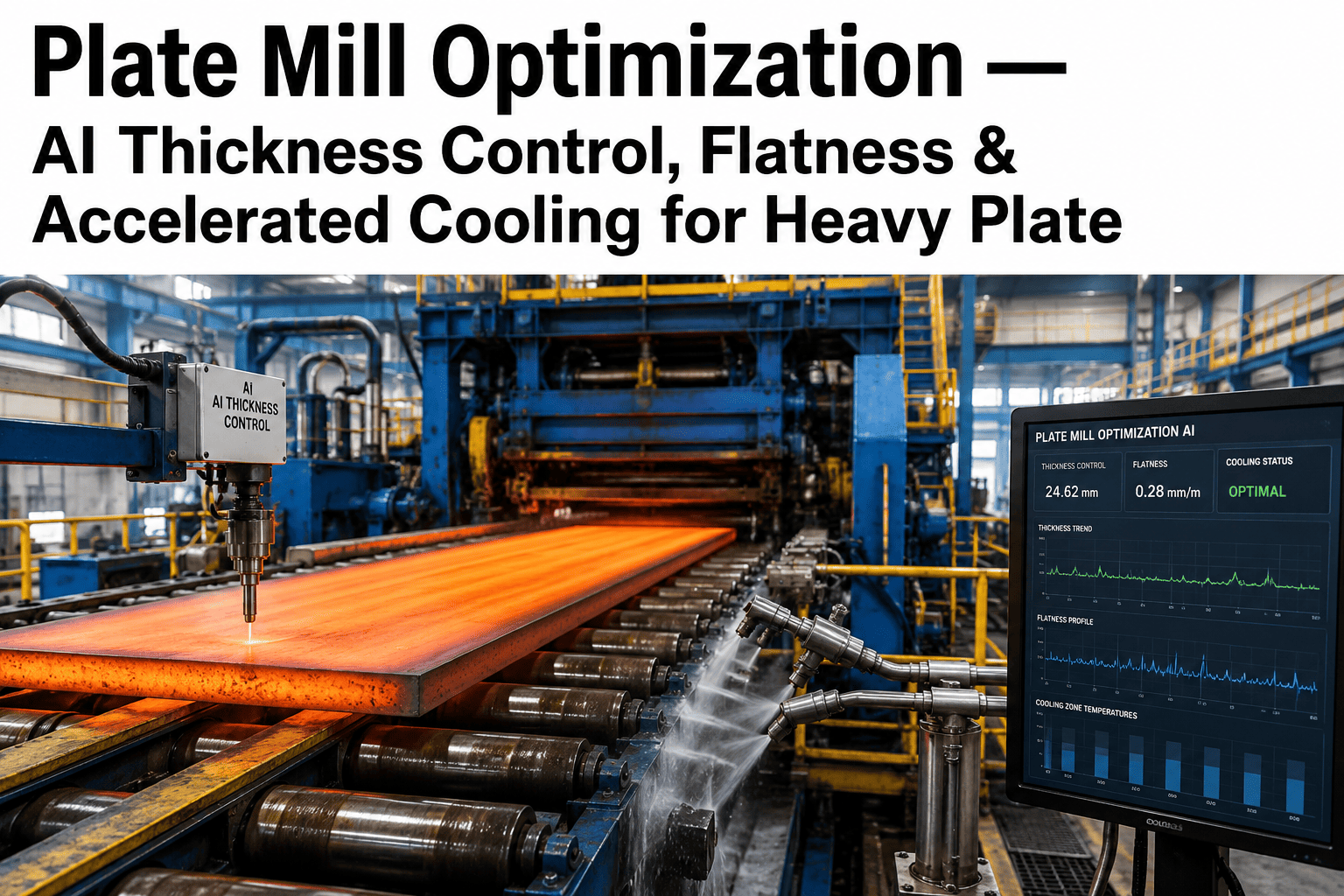
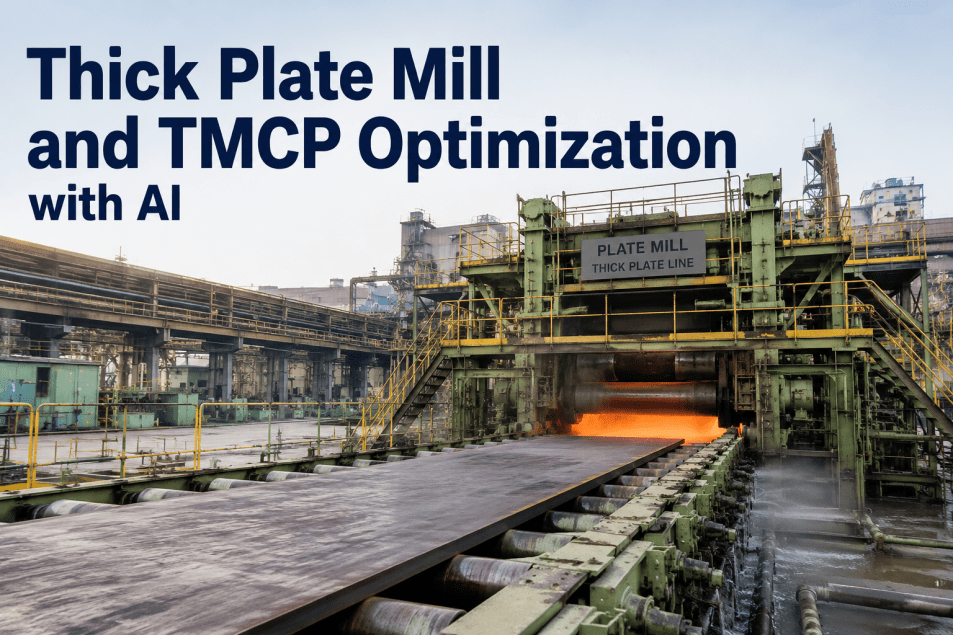
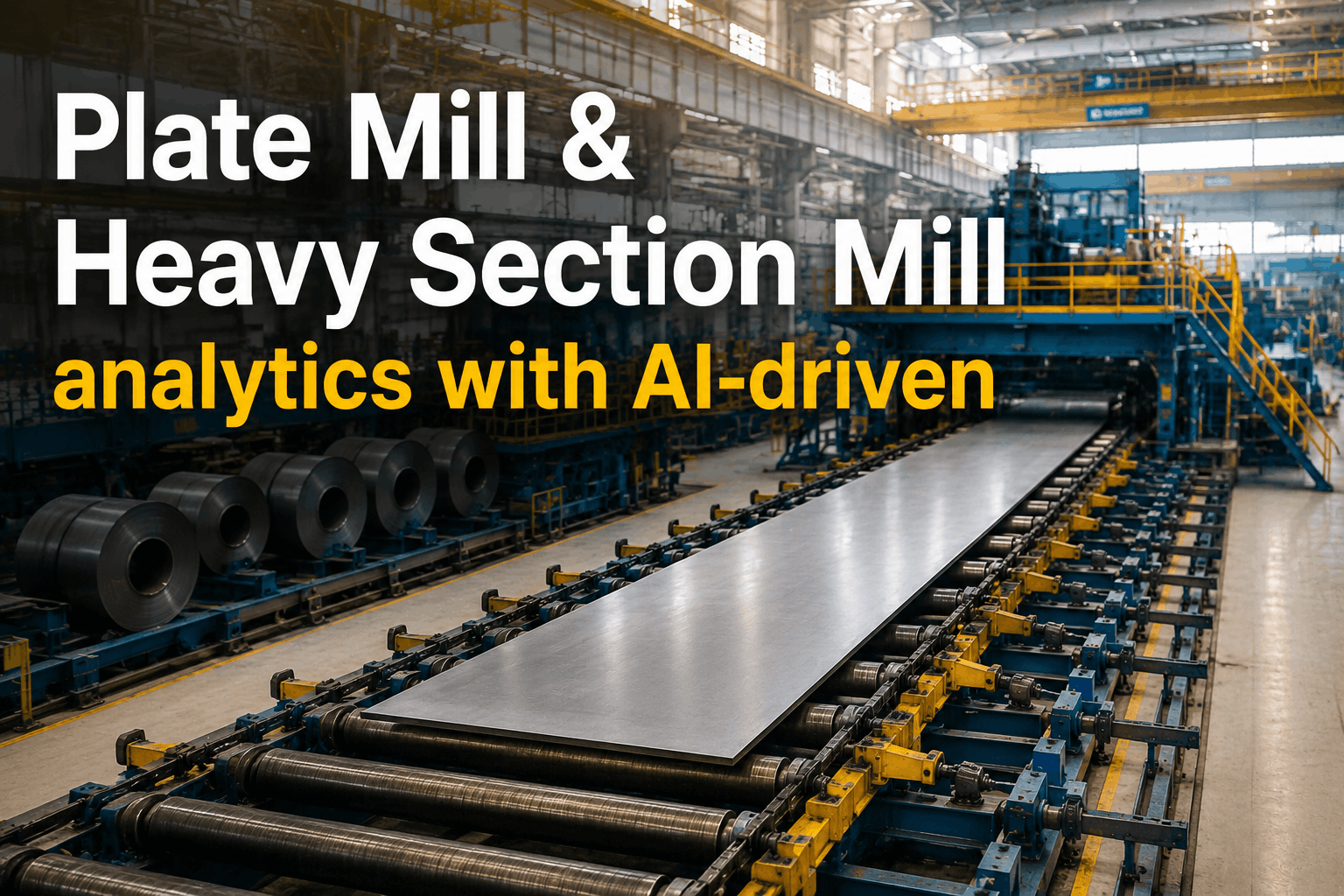
A heavy plate that is a fraction of a millimeter thin at one edge, or that carries a flatness wave invisible to the eye until it hits the customer's shop floor, can fail an entire order — pipeline plate rejected for wall-thickness tolerance, structural plate rejected for camber, pressure vessel plate rejected for a flatness deviation that only shows up once the plate is laid flat and measured properly. Plate mills operate at the tightest tolerance end of the rolling business, and the process that gets them there — reduction schedule, thickness control, and the accelerated cooling that sets the final microstructure — has very little room for drift before a plate becomes a downgrade. AI-based process optimization narrows that drift by controlling thickness, flatness, and cooling in real time against the specification rather than relying on a fixed schedule and after-the-fact inspection. iFactory's plate mill optimization is built around exactly this thermomechanical control problem.
iFactory Plate Mill Process AI
Hold Thickness, Flatness & Cooling to Spec, Plate After Plate
Control thickness accuracy, flatness, and accelerated cooling in real time with AI process models tuned for pipeline, structural, and pressure vessel plate — and cut the downgrades that come from drift nobody caught in time.
Plate quality problems concentrate around three parameters, and each one is controlled by a different part of the process — the reduction schedule for thickness, roll and pass balance for flatness, and the water-cooling program for the mechanical properties that come from accelerated cooling. AI models watch all three continuously instead of relying on spot checks that only catch a problem once it has already produced scrap.
Plate Cross-Section — Where Thickness and Flatness Deviations Hide
Thickness Control — Closing the Loop in Real Time
Thickness accuracy is set stand by stand as the plate passes through reduction, and gauge deviation compounds if roll gap and speed are not adjusted continuously against actual measured thickness rather than a fixed setpoint. AI-based gauge control models predict how the plate will respond to a given reduction and adjust roll gap in real time, holding the plate tighter to nominal thickness across its full length and width than a static schedule can.
Automatic Gauge Control
Predictive models adjust roll gap continuously against measured thickness feedback, tightening tolerance across the plate length.
Cross-Width Profiling
Full-width thickness scanning catches edge-to-edge deviation that a single center-line gauge would miss entirely.
Pass Schedule Optimization
AI recommends reduction per pass based on incoming slab condition, reducing the variability that a fixed schedule carries forward.
Want to see gauge control run against your own reduction schedule? Book a 30-minute walkthrough with our plate process team.
Flatness — Catching Camber and Wave Before the Plate Cools
Flatness defects are notoriously hard to fix after the fact — once a plate has cooled with a camber or edge wave built in, leveling can only correct so much before the plate is downgraded. AI flatness models predict how roll crown, thermal profile, and pass balance will produce a wave pattern, adjusting the process before the defect is set rather than trying to correct it afterward.
Camber Prediction
Models the asymmetric cooling and rolling conditions that cause a plate to curve along its length, flagging risk before rolling.
Edge Wave Detection
Full-width flatness scanning identifies wave patterns forming in real time, before the plate exits the mill.
Roll Crown Optimization
Recommends crown adjustments based on the specific product mix and thickness range being rolled that shift, reducing recurring flatness issues.
Accelerated Cooling — Where Properties Are Set
Thermomechanical controlled processing depends on the accelerated cooling stage to deliver the strength and toughness the specification demands, and that means cooling rate and uniformity across the plate matter as much as the rolling itself. Uneven cooling produces property variation within a single plate that can fail a mechanical test even when thickness and flatness are both within tolerance — which is why cooling control gets its own AI layer rather than being treated as an afterthought to rolling.
From Rolling to Certified Properties
1
Roll
Thickness and flatness controlled in real time through reduction
2
Cool
Accelerated cooling rate mapped across the full plate surface
3
Predict
AI estimates resulting strength and toughness before testing
4
Certify
Plate ships with properties matched to spec on the first pass
What Optimization Delivers Across the Mill
These are the outcomes plate mills typically report once thickness, flatness, and cooling are all being controlled against the specification in real time rather than checked after the fact.
Fewer
Downgrades
thickness and flatness deviations caught before they set
Tighter
Gauge tolerance
real-time roll gap control across full plate length
Consistent
Mechanical properties
cooling uniformity mapped across the plate surface
First-Pass
Spec compliance
fewer plates needing rework or re-testing
See how this maps to your pipeline, structural, or pressure vessel plate specs. Talk to our process engineers about your mill.
Frequently Asked Questions
How does AI gauge control differ from the automatic gauge control we already have on the mill?
Most existing AGC systems react to a deviation once it is measured, adjusting the roll gap after the fact based on a relatively simple feedback loop. The AI layer adds a predictive element, estimating how the plate will respond to a given reduction based on incoming slab condition and prior pass behavior, which allows the system to correct proactively rather than only reactively. That combination typically tightens tolerance further than reactive control alone, particularly across plate length where deviation tends to accumulate.
Can flatness really be predicted before the plate is even rolled?
Not with certainty, but with enough accuracy to meaningfully reduce risk. The models draw on roll crown condition, thermal profile of the incoming slab, and the specific pass schedule to estimate the likelihood of camber or edge wave forming, which lets operators adjust crown or pass balance before rolling rather than discovering the defect on the finished plate. Full-width flatness scanning during rolling then confirms or corrects that prediction in real time.
Does this work for the full range of grades we run, including pressure vessel plate?
Yes — the cooling and property prediction models are built to account for grade-specific chemistry and target mechanical properties, since pressure vessel, pipeline, and structural plate all carry different combinations of strength and toughness requirements. The system is tuned to the target specification for each grade rather than applying one generic cooling curve across your full product mix.
How much does uneven accelerated cooling actually affect our mechanical test results?
Cooling uniformity is one of the more underappreciated sources of property variation within a single plate, because two locations on the same plate can see meaningfully different cooling rates if the water delivery is not uniform across the surface. That variation can push a mechanical test sample below spec even when the plate looks acceptable by thickness and flatness measures, which is why mapping cooling rate across the full plate surface is treated as its own monitoring layer rather than folded into the rolling process alone.
What would it take to get this running on our existing mill instrumentation?
Most plate mills already have thickness gauges, flatness scanners, and cooling bed instrumentation in place, and the AI layer is typically built to ingest data from that existing instrumentation rather than requiring a full sensor replacement. The rollout usually starts with whichever parameter is causing the most downgrades today, whether that's thickness, flatness, or property variation, and expands to the other two once the first is delivering results.
Fewer Downgrades. Tighter Spec. Every Plate.
See Thickness, Flatness & Cooling Control on Your Own Plate Data
Bring gauge, flatness, or cooling data from a recent campaign. We'll show how AI holds your plate closer to spec across thickness, flatness, and accelerated cooling, in real time.