Real-Time Crane Monitoring: IoT Sensor Platform for Steel
By James Smith on August 5, 2026
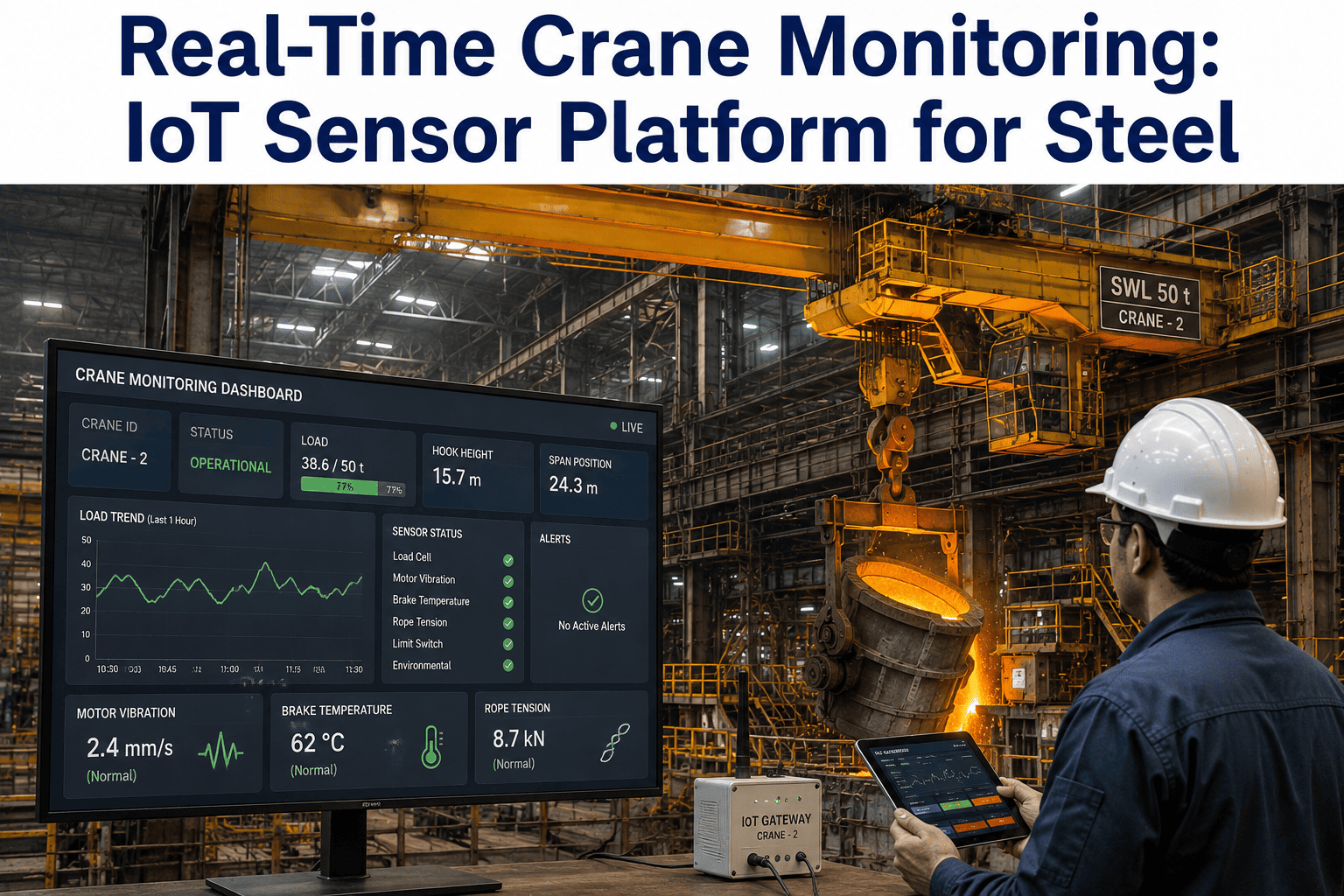
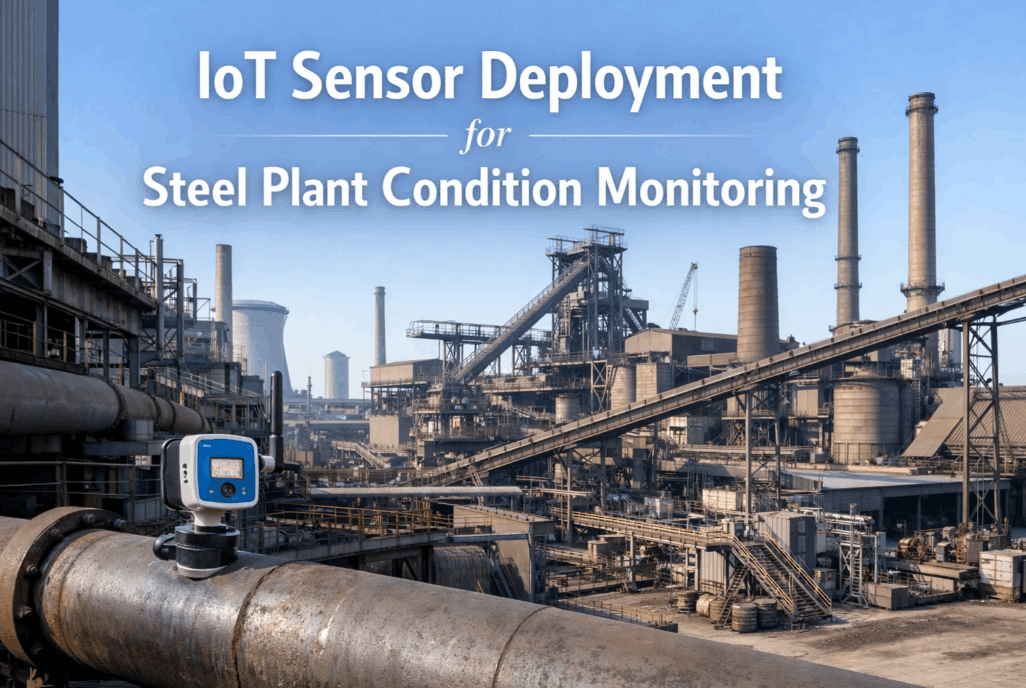
Most overhead cranes in steel plants today are inspected the same way they were thirty years ago — a technician walks the structure on a fixed schedule, listens for unusual sounds, checks a few grease points, and signs off until the next scheduled walk. That approach catches obvious problems but misses the slow, gradual drift in vibration, temperature, and motor current that precedes most bearing and gearbox failures by weeks, sometimes months. A continuous IoT sensor platform closes that gap by watching the crane every second it operates rather than during a brief scheduled window, and the difference in how early a failure gets caught is not incremental — it is the difference between a planned repair and an unplanned production stoppage. See how iFactory deploys real-time IoT monitoring platforms for overhead crane fleets that turn continuous sensor data into an early warning system rather than a historical record nobody reviews until something breaks.
VibrationTemperatureMotor CurrentLoad
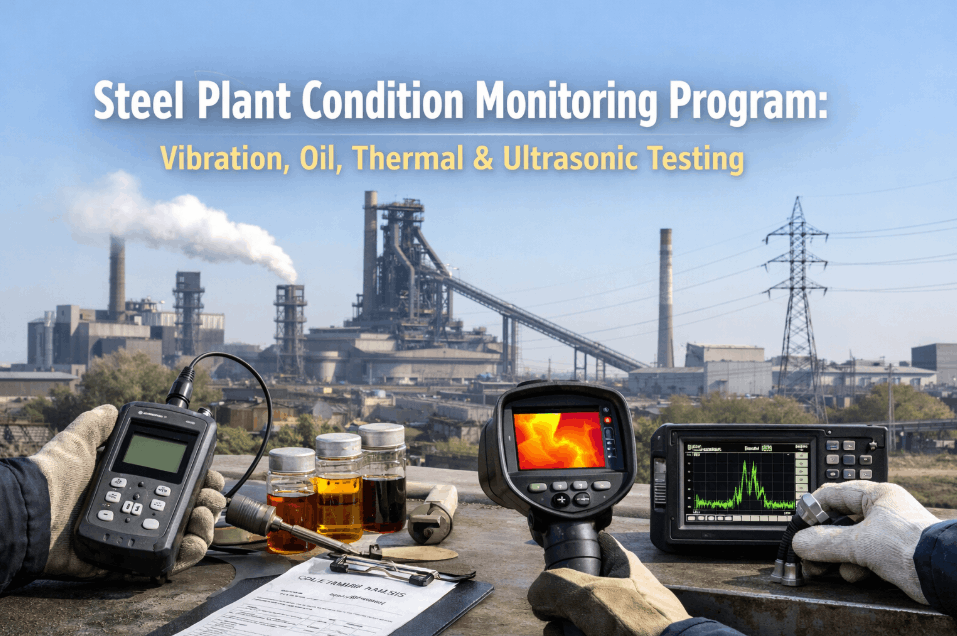
Real-Time Crane Condition Monitoring With an IoT Sensor Platform
Continuous vibration, temperature, motor current, and load sensing for overhead cranes in steel plants — built for predictive maintenance, not just historical logging.
A Weekly Inspection Only Sees the Crane's Condition Once a Week
A periodic inspection is a snapshot, and a snapshot only tells the truth at the exact moment it's taken. A bearing that starts showing early vibration signatures the day after a weekly inspection has an entire week to progress toward failure before the next scheduled check even has a chance of catching it, and by the time a degrading component produces a symptom obvious enough for a walk-through inspection to notice, it has often already progressed well past the point where a planned, low-cost repair was still possible. This isn't a criticism of the technicians performing the inspections — a human walking a crane structure with a flashlight and a clipboard is doing exactly what that method is capable of doing. The gap is structural, not a matter of diligence: no inspection schedule, however well executed, can see what happens between visits.
Periodic Inspection
Snapshot in time, once per interval
Catches only symptoms visible to a technician
Failure often found near end-stage
Reactive repair, higher downtime risk
Continuous IoT Monitoring
Every second the crane operates
Catches early trend shifts before symptoms appear
Failure caught weeks ahead of end-stage
Planned repair, minimal downtime
Sensor Layer
Four Sensor Types That Cover the Crane's Most Common Failure Points
A useful crane monitoring platform doesn't need dozens of exotic sensor types — four well-placed sensor categories cover the overwhelming majority of failure modes that lead to unplanned crane downtime in a typical steel plant. The goal in sensor selection isn't maximum coverage, it's coverage matched to where failures actually originate, since an over-instrumented crane generates more data than any team can meaningfully review while a well-targeted sensor set produces a manageable, high-signal data stream that a maintenance team can actually act on consistently.
Vibration Sensors
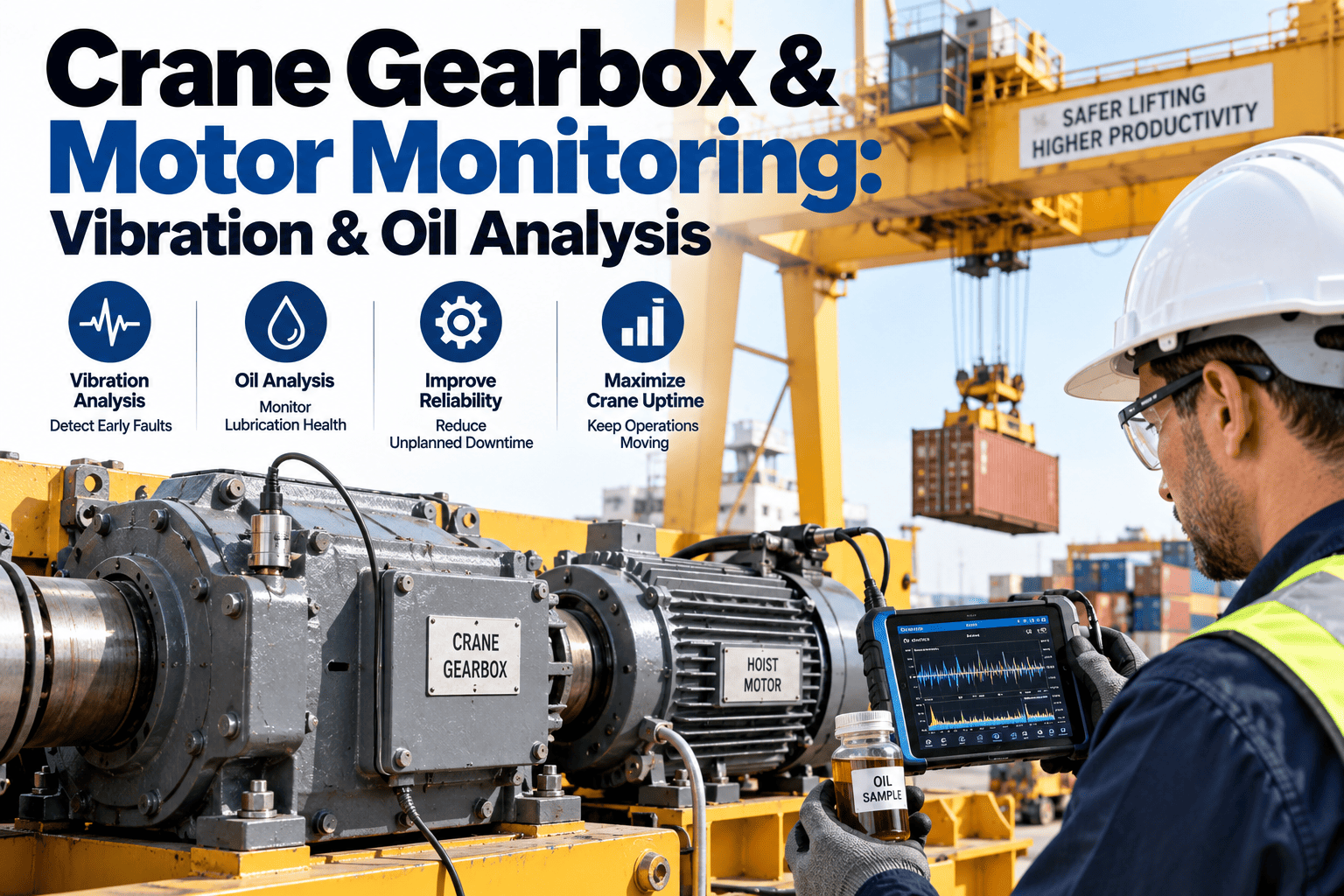
Mounted on gearboxes, motors, and bearing housings, vibration sensors catch the earliest mechanical wear signatures — misalignment, bearing degradation, gear wear — often weeks before the vibration becomes audible or noticeable to a technician during a routine walk. The frequency spectrum of the vibration signal, not just its overall amplitude, is what distinguishes early bearing wear from normal operating noise.
Temperature Sensors
Placed at motor windings, gearbox housings, and brake assemblies, temperature sensors flag abnormal heat buildup from friction, lubrication breakdown, or electrical resistance issues before the component reaches a failure threshold. Trending temperature against duty cycle, rather than watching for a single fixed number, catches gradual drift that a static alarm setpoint would miss.
Motor Current Sensors
Monitoring the electrical current drawn by hoist and travel motors reveals mechanical load abnormalities, developing motor winding faults, and drivetrain resistance changes that wouldn't otherwise be visible without disassembly. A gradual rise in current draw for the same nominal load is often the earliest measurable sign of increasing mechanical resistance somewhere in the drivetrain.
Load Sensors
Continuous load data builds an accurate picture of actual duty cycle and cumulative stress on the crane's structure and rope, feeding directly into fatigue life estimates that a generic assumed duty classification cannot match for accuracy. This same data also supports more precise rope replacement scheduling based on real cumulative load rather than a calendar estimate.
Visual Reference
How Sensor Data Becomes an Early Warning
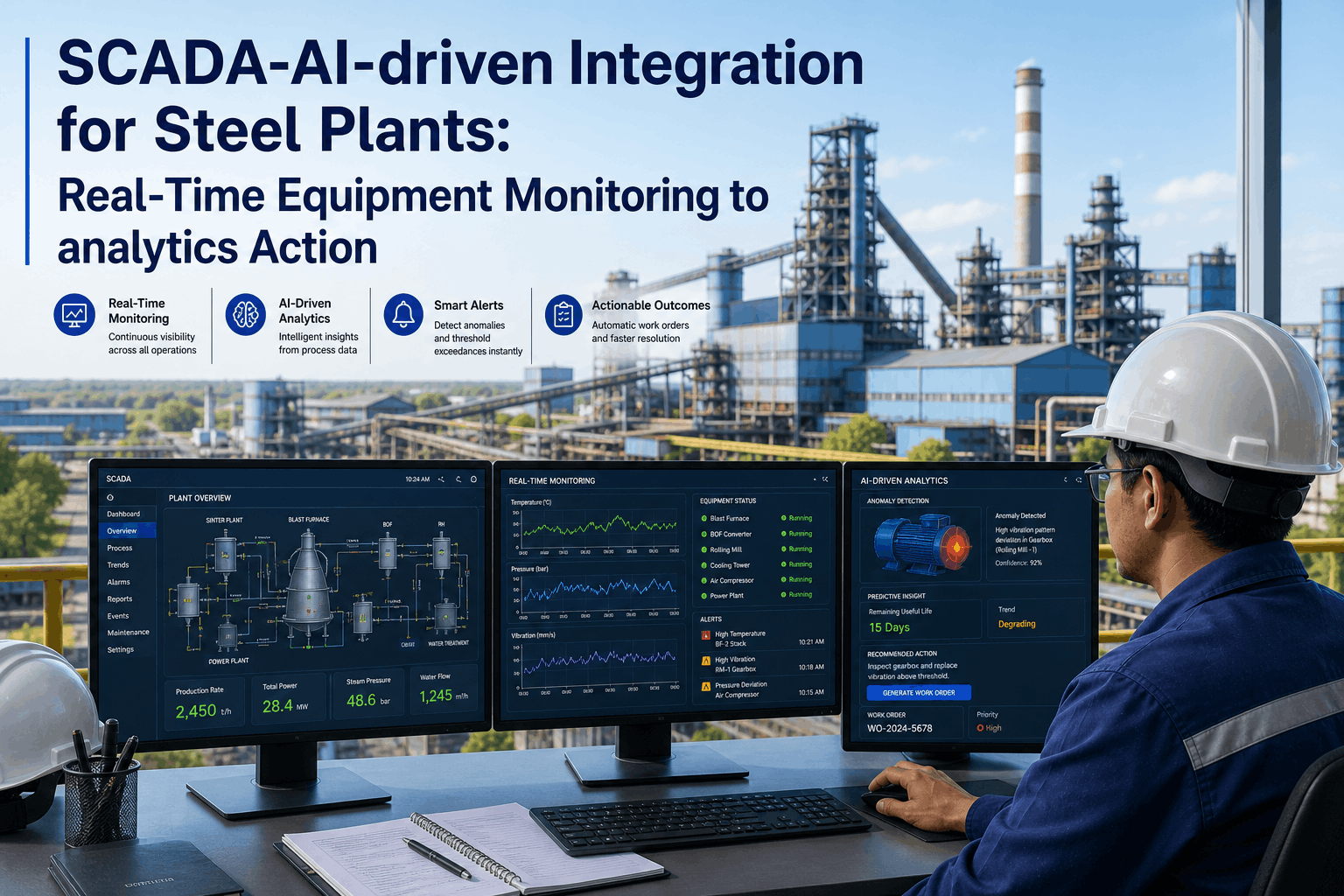
The value of an IoT sensor platform isn't the raw data stream itself — it's the pipeline that turns that stream into a decision a maintenance planner can act on before a failure occurs. The diagram below traces that path from sensor to alert.
See Degradation Before It Becomes Downtime
Turn Continuous Sensor Data Into an Early Warning System
iFactory deploys vibration, temperature, motor current, and load sensing across your crane fleet, with analytics tuned to catch early trend shifts before they become unplanned stops.
Setting Thresholds That Catch Real Problems Without Alert Fatigue
A monitoring platform that alerts on every minor fluctuation trains the maintenance team to ignore it within weeks, which defeats the purpose of continuous monitoring just as thoroughly as not monitoring at all. This is one of the more counterintuitive lessons from real deployments — the platforms that deliver the most value are often not the ones with the most sensitive alerting, but the ones with the most carefully calibrated alerting, tuned so that every notification the team receives genuinely warrants their attention. The table below shows a practical three-tier threshold structure that balances early warning against alert fatigue.
Alert Tier
Trigger Condition
Response Expected
Informational
Minor deviation from established baseline
Logged for trend review, no immediate action
Watch
Sustained trend shift over multiple readings
Scheduled inspection added to next maintenance window
Critical
Reading approaches known failure threshold
Immediate inspection, potential planned shutdown
The tiering only works if the baseline behind it is specific to each individual crane and even each individual component, rather than a single generic threshold applied fleet-wide. A hoist motor running at the top of its duty cycle on a heavily used crane has a different normal operating temperature than the same motor model on a lightly used crane elsewhere in the plant, and a threshold that doesn't account for that difference will either under-alert on the busy crane or over-alert on the quiet one.
Why the Investment Pays Back Fast
The Return on Catching a Failure Three Weeks Early Instead of Same-Day
The financial case for continuous monitoring is easiest to see by comparing two versions of the same failure — one caught early through sensor trending, and one caught the traditional way, when a symptom finally becomes obvious enough to notice during a routine walk. The underlying mechanical failure is identical in both cases; what changes is how much runway the maintenance team has to respond to it.
Caught Early via Sensor Trend
Repair scheduled during a planned maintenance window, replacement parts ordered with normal lead time, no production line stoppage, and the failing component replaced before it damages adjacent parts.
Caught Late via Symptom
Crane stops mid-shift, production halts until the crane is repaired or a backup is found, parts often need expedited shipping, and secondary damage to adjacent components is more likely by the time a symptom is obvious enough to notice.
Multiplying this comparison across even a modest number of prevented unplanned stops per year is usually enough to justify the sensor and platform investment on its own, without needing to factor in the additional benefits of better fatigue tracking, more accurate spare parts planning, and a documented condition history that supports insurance and compliance conversations. Plants that track this comparison explicitly, rather than treating monitoring as a general reliability improvement with no specific payback calculation, consistently find the return arrives faster than the initial deployment timeline suggested it would.
Getting It Into the Workflow
Sensor Data Only Helps If It Reaches the Right Person at the Right Time
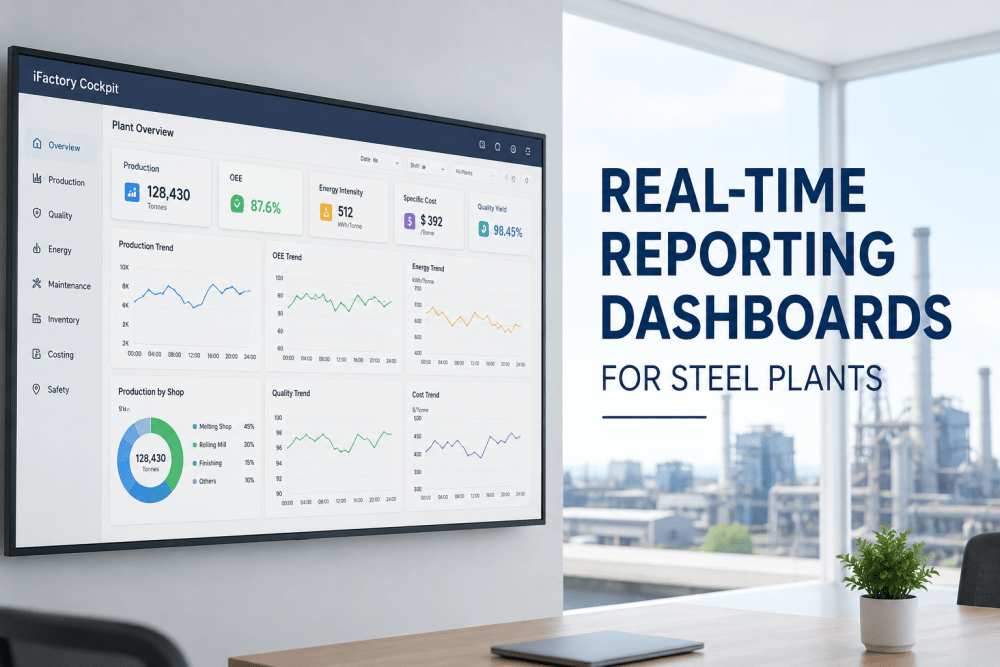
The most common reason IoT monitoring platforms fail to deliver value isn't sensor accuracy — it's a data pipeline that dead-ends in a dashboard nobody checks. A watch-tier alert that sits unread in a monitoring portal for three days delivers the same outcome as no monitoring at all, which is why integration with the maintenance team's existing workflow matters as much as the sensor hardware itself. This is the part of a monitoring rollout that gets the least attention during vendor selection, since sensor specifications and analytics capabilities are easy to compare on a datasheet while workflow integration only becomes visible once the system is live and the first real alert needs a response.
Route to the Right Team
Alerts should reach the maintenance planner or technician responsible for that specific crane, not a general inbox that gets triaged whenever someone has time, since ownership diffused across a whole department tends to mean nobody feels personally accountable for a specific alert.
Tie Into the CMMS
A watch-tier alert should be able to generate a work order directly in the plant's existing maintenance management system, rather than requiring manual re-entry that introduces delay and lost alerts, so the sensor platform becomes part of the existing maintenance process instead of a separate parallel system.
Prioritize by Consequence
An alert on a Class A crane that would stop production should visibly outrank an alert on a secondary crane, so the team's attention goes to the highest-consequence issue first rather than being processed strictly in the order the alerts happened to arrive.
Deployment Checklist
What to Confirm Before Rolling Out Fleet-Wide
01
Establish a baseline for each crane and each monitored component before setting alert thresholds, since a generic fleet-wide threshold will misfire on cranes with genuinely different duty cycles.
02
Confirm alert routing reaches a specific accountable person for each crane, not a shared inbox or dashboard that depends on someone remembering to check it.
03
Integrate watch and critical tier alerts with the existing CMMS so a flagged issue becomes a work order automatically rather than a manual re-entry step.
04
Pilot the platform on the highest-criticality cranes first, where the value of early detection is highest, before expanding sensor coverage across the full fleet.
Field Perspective
Sensor hardware and dashboards are the easy part of a monitoring rollout. The harder part is building the habit and workflow discipline that turns continuous data into consistent action, which is the theme of the perspective below.
“
I've seen plants install excellent sensor hardware and still miss a preventable failure because the alert sat in a dashboard nobody was assigned to check that week. The technology solves the detection problem, but detection without a clear, accountable response path is just a more expensive version of the same reactive maintenance the plant was already doing. The rollouts that actually reduce downtime are the ones where someone owns each alert tier by name, not by department.
Renata Kowalski-Vance
Predictive Maintenance Program Lead · 11 years implementing condition monitoring programs across steel and metals manufacturing
Common Questions
Frequently Asked Questions
How many sensors does a typical crane need for effective monitoring?
Most cranes get meaningful coverage from a focused sensor set rather than blanket instrumentation — typically vibration and temperature sensors at the hoist motor, gearbox, and primary bearing locations, a current sensor on the hoist and travel motors, and a load sensor if fatigue life tracking is also a goal. Adding more sensors beyond these core points usually produces diminishing returns relative to the added cost and data volume, since these locations cover the failure modes responsible for the large majority of unplanned crane downtime, and a smaller, well-placed sensor set is also easier for a team to fully understand and trust than a sprawling instrumentation package nobody has time to interpret. Book a demo to get a sensor placement plan specific to your crane fleet.
How far in advance can vibration monitoring typically catch a bearing failure?
Early-stage bearing degradation often shows up in vibration data weeks before it produces an audible or visible symptom a technician could catch during a routine walk-through, though the exact lead time varies with bearing type, load, and how aggressively the degradation is progressing. The consistent pattern across most deployments is that vibration trending gives a meaningfully longer planning window than waiting for a symptom to become noticeable, which is what allows a repair to be scheduled during planned downtime rather than forced during production.
Does continuous monitoring replace scheduled physical inspections entirely?
No — continuous sensor monitoring and scheduled physical inspection serve complementary roles rather than one replacing the other. Sensors excel at catching gradual trend-based degradation in the specific parameters they monitor, but a physical inspection catches issues sensors aren't positioned to detect, such as visible rope wear, loose fasteners, or structural cracking that doesn't show up as a vibration or temperature anomaly. The strongest programs use continuous monitoring to prioritize where physical inspection attention goes, focusing technician time on the components a sensor has already flagged as trending abnormally, rather than treating the two approaches as competing investments. Talk to support about integrating sensor data with your existing inspection program.
How is a normal baseline established for a specific crane before alert thresholds can be set?
A baseline is typically built by collecting several weeks of sensor data during normal operation, capturing the natural range of variation across different load conditions, ambient temperatures, and duty cycles that crane experiences. Alert thresholds are then set relative to that crane-specific baseline rather than a generic fleet-wide number, which is what allows the system to flag a genuine trend shift on a specific crane without either drowning the team in false alerts or missing a real deviation because the threshold was calibrated for a different crane's typical behavior.
What's the biggest risk of rolling out sensor monitoring without addressing the alert workflow first?
The platform generates accurate, timely alerts that nobody is clearly accountable for acting on, which produces the appearance of a predictive maintenance program without the actual downtime reduction it's meant to deliver. This is consistently the gap between plants that see a measurable drop in unplanned crane downtime after deployment and plants that see the sensor investment quietly become a dashboard nobody opens after the first few months.
Move From Reactive to Predictive
Watch Your Crane Fleet Continuously, Not Once a Week
iFactory deploys and integrates real-time crane condition monitoring — sensors, analytics, and workflow — so your team catches degradation weeks before it becomes an unplanned stop.