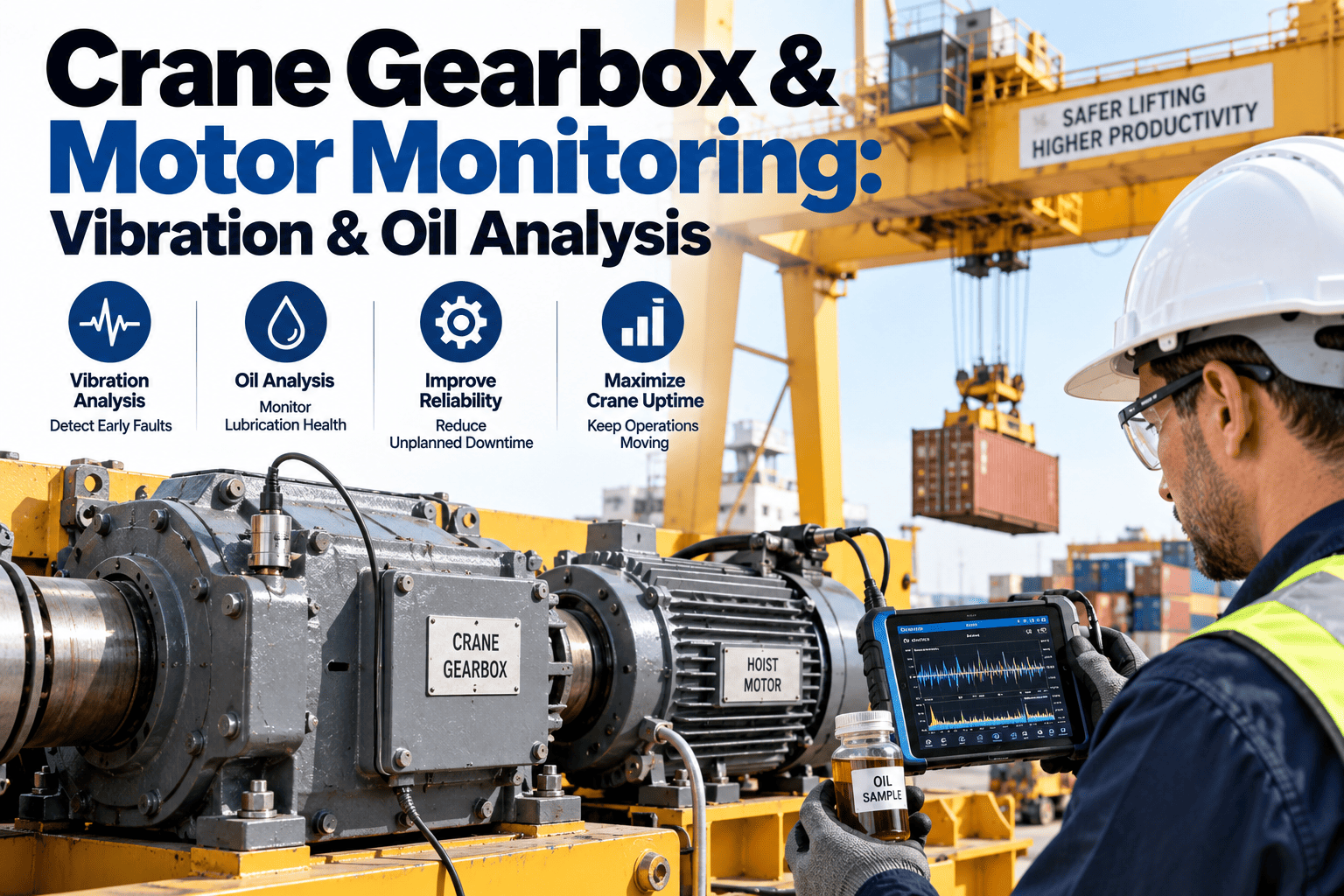
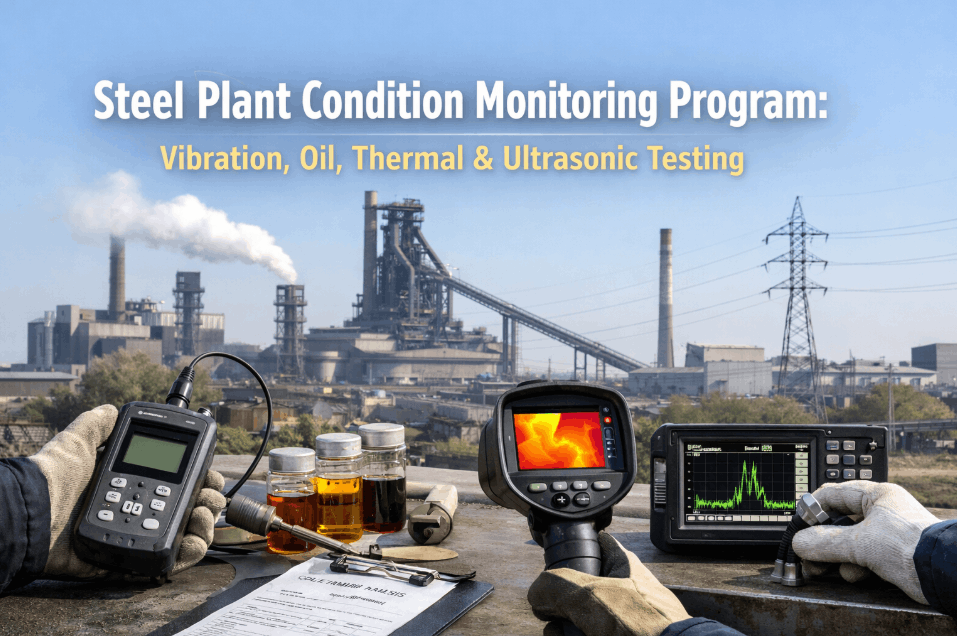
A crane's gearbox and drive motor sit inside a housing, running for years without anyone opening them up to look at the gear teeth or bearing surfaces directly, which means the only real signals available are the ones a machine gives off from the outside, vibration patterns, oil condition, and temperature. Most maintenance programs still catch gear and bearing wear the same way they always have, by ear, when a grinding or whining noise finally becomes obvious enough for an operator to report it, at which point the damage has usually progressed well past the point where a simple repair would have worked. Vibration and oil analysis catch that same wear months earlier, while it's still a data trend instead of an audible symptom. Booking a demo is the fastest way to see this running against your own crane fleet.
CRANE RELIABILITY · GEARBOX & MOTOR · CONDITION MONITORING
Catch Gear Wear and Bearing Fatigue Before You Can Hear It
iFactory monitors crane gearbox and motor condition through vibration signatures and oil analysis, surfacing gear wear, bearing degradation, and drive system issues months before they become an audible or functional failure.
TWO DATA SOURCES
What Vibration and Oil Analysis Each Reveal
Vibration and oil analysis aren't redundant checks on the same problem, they surface different failure mechanisms and catch different stages of the same wear process, which is why an effective program uses both together rather than relying on either alone.
Vibration Analysis
Captures the mechanical signature of gear mesh, bearing rotation, and shaft alignment, surfacing frequency patterns specific to gear tooth wear, bearing race damage, or imbalance long before they produce an audible sound.
Oil Analysis
Measures wear metal particles, contamination, and lubricant degradation suspended in the gearbox oil, providing direct physical evidence of what's actually being worn away inside the housing.
Vibration data typically shows a developing problem first, since it detects the mechanical motion of wear as it happens, while oil analysis confirms and quantifies what that wear actually consists of, together giving a maintenance team both an early warning and a diagnosis.
FAILURE PROGRESSION
How a Gear or Bearing Failure Actually Develops
Gear and bearing failures rarely happen suddenly, they progress through recognizable stages, and the earlier a maintenance program can detect that progression, the more of the repair cost and downtime it avoids.
1
Early Wear
Microscopic wear begins at the gear tooth surface or bearing race, invisible externally but detectable as a subtle shift in vibration frequency and early wear particles in the oil.
2
Developing Damage
Vibration amplitude increases at specific frequencies tied to the damaged component, and oil analysis shows a measurable rise in wear metal concentration.
3
Audible Symptom
A grinding, whining, or knocking sound becomes noticeable, meaning the damage has already progressed well past the point where early intervention would have been simplest.
4
Functional Failure
The component fails outright, causing unplanned downtime and often collateral damage to adjacent parts inside the same gearbox or motor housing.
Find out what stage your gearboxes and motors are actually in
iFactory can run a baseline vibration and oil condition scan across your fleet to show where wear is developing today.
WHAT GETS DETECTED
Specific Conditions Vibration and Oil Data Catch
Each condition below has a distinct signature that a trained monitoring model is built to recognize, rather than a generic "abnormal vibration" alert that leaves the diagnosis up to guesswork.
Gear Tooth Wear
Specific frequency patterns tied to gear mesh reveal wear on individual teeth well before it affects overall gear function.
Bearing Race Damage
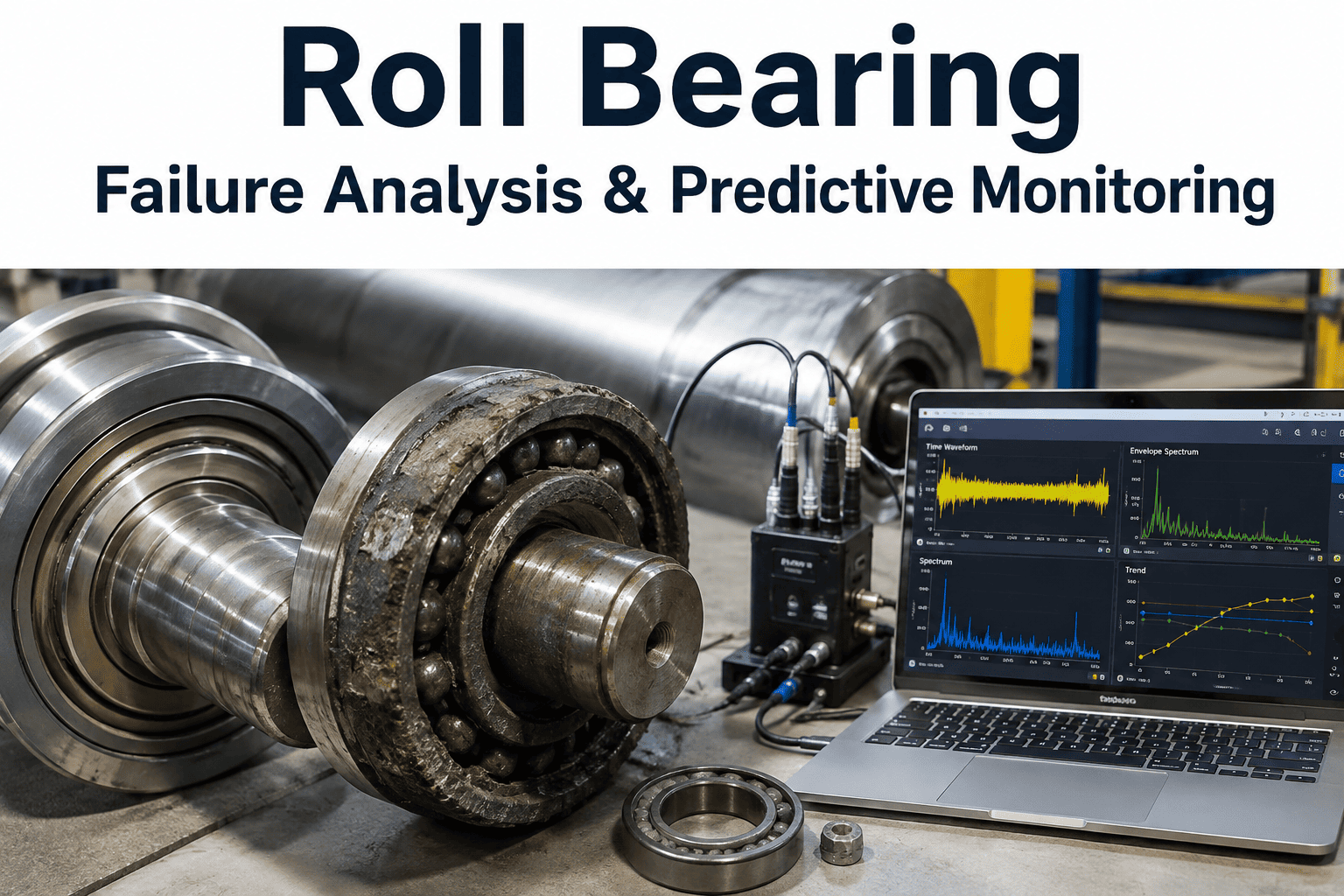
Characteristic frequency signatures identify inner race, outer race, or rolling element damage separately, each with a different repair urgency.
Shaft Misalignment
A distinct vibration pattern separate from gear or bearing wear, often correctable through realignment rather than a parts replacement.
Lubricant Breakdown
Oil viscosity and additive depletion tracked over time to catch lubricant degradation before it accelerates wear on otherwise healthy components.
MANUAL VS CONTINUOUS MONITORING
Periodic Sampling vs Continuous Condition Tracking
Traditional oil sampling and vibration checks happen on a fixed schedule, often quarterly, which means a failure developing between sample dates can progress significantly before the next scheduled check catches it.
| Factor |
Periodic Sampling |
Continuous Monitoring |
| Detection Timing |
Limited to the next scheduled sample date |
Detected as soon as the trend crosses threshold |
| Trend Resolution |
Coarse, quarterly or monthly data points |
Fine-grained trend visible in near real time |
| Fast-Developing Failures |
Can progress to failure between sample dates |
Caught while still in early or developing stage |
| Maintenance Planning |
Reactive scheduling once a sample flags an issue |
Proactive scheduling based on trend projection |
TURNKEY DELIVERY
How iFactory Deploys Drive System Monitoring
iFactory installs vibration sensors on critical gearbox and motor points, integrates with your existing oil sampling program or introduces continuous oil condition sensing, and delivers trend data your maintenance team can act on directly.
What Gets Built
Vibration sensors positioned at gearbox and motor bearing points
Oil condition tracking integrated with existing or new sampling data
Failure signature models trained to distinguish gear, bearing, and alignment issues
Trend dashboard with maintenance alerts as thresholds are approached
Deployment Timeline
Weeks 1-3: Sensor installation and data pipeline setup across the fleet
Weeks 4-6: Baseline establishment and failure signature calibration
Weeks 7-8: Dashboard go-live and maintenance team training
FREQUENTLY ASKED QUESTIONS
What Maintenance Teams Ask About Drive System Monitoring
Do we need to shut down the crane to install vibration sensors?
No, vibration sensors are typically installed externally at bearing housing points during a scheduled maintenance window rather than requiring the gearbox or motor to be opened, so installation doesn't add unplanned downtime beyond a normal maintenance stop. Most fleets have sensors installed across their critical cranes within a matter of days once the installation team is on site.
Book a demo to see the installation process for your specific crane models.
How is this different from the vibration checks our technicians already do with handheld meters?
Handheld vibration checks capture a snapshot at a single point in time, useful but limited by how often a technician physically visits each crane with the meter, while continuous monitoring captures the same data constantly and builds a trend line automatically rather than relying on someone remembering to take and log a reading. The underlying vibration analysis principles are the same, what changes is the frequency and consistency of data collection.
Contact our support team to discuss how this complements your existing handheld program.
Can this tell the difference between a gear problem and a bearing problem?
Yes, gear mesh wear and bearing race damage each produce distinct frequency signatures in the vibration data, and the monitoring model is built to distinguish between them rather than issuing a generic abnormal vibration alert. This matters because the repair approach, parts required, and urgency differ significantly between a gear issue and a bearing issue, so an accurate diagnosis upfront saves time in the maintenance response.
Book a demo to see example signatures for each failure type.
What if we don't currently have an oil sampling program in place at all?
That's a common starting point, and the program can be built from scratch as part of the deployment, establishing a sampling schedule and baseline oil condition data for each gearbox even if none exists today. Vibration monitoring can begin generating value immediately in that scenario while the oil analysis baseline is being established over the first few sampling cycles.
Contact our support team to discuss building an oil sampling program alongside vibration monitoring.
How much advance warning does this typically give before a component actually fails?
Advance warning varies by failure type and how fast the underlying wear mechanism progresses, but early-stage gear and bearing wear are typically detectable weeks to months before they would otherwise become an audible symptom, giving the maintenance team enough lead time to plan a repair during scheduled downtime rather than reacting to an unplanned failure. Faster-developing issues, like a sudden lubricant contamination event, are caught much closer to real time.
Book a demo to discuss realistic warning windows for your equipment.
VIBRATION AND OIL DATA, TOGETHER
Stop Waiting for the Sound That Means It's Already Too Late
iFactory monitors crane gearbox and motor condition through vibration signatures and oil analysis, catching gear wear and bearing fatigue months before they become an audible or functional failure.