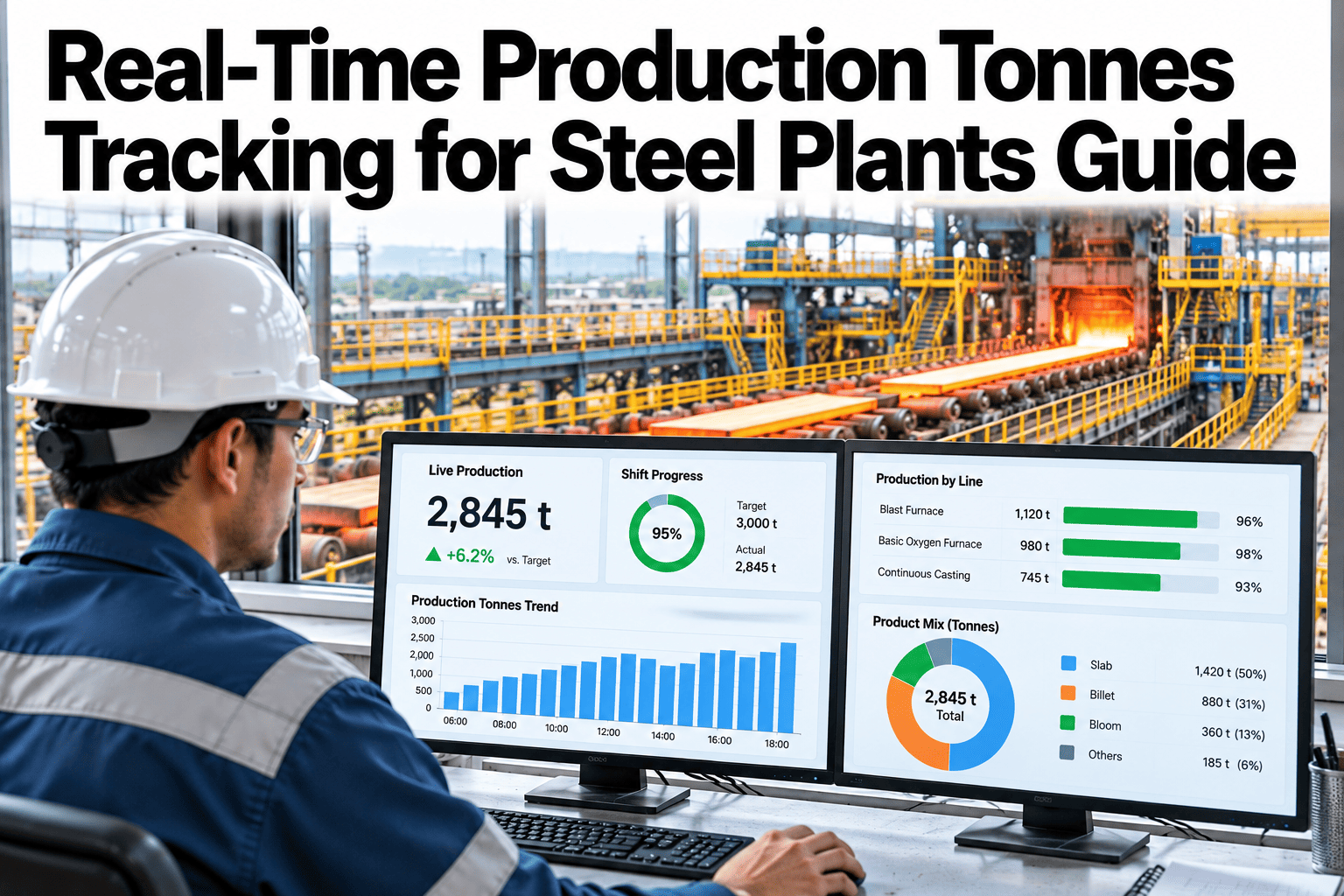
Most steel plants only find out their true production number at month end, once the weighbridge totals are reconciled against the mill's own cast records and the gap between the two gets argued over in a meeting. By then the number is historical, not actionable. Real-time tonnes tracking rolls up production from the heat level, to the cast, to the shift, reconciling against weighbridge data continuously instead of once a month. This guide covers how that roll-up is built and what it eliminates. Plants ready to see their own tonnes tracked this way can book a demo with the iFactory AI team.
Real-Time Production Tonnes Tracking for Steel Plants Guide
Heat-level, cast-level and shift-level roll-up with continuous reconciliation to weighbridge data.
Why Month-End Reconciliation Is Too Late
Finding a tonnes discrepancy thirty days after it happened means the root cause is long gone. Nobody remembers which heat ran short or which scale drifted out of calibration that week.
Continuous reconciliation catches the same gap within hours instead of weeks, while the context needed to explain it is still available.
Three Levels of Roll-Up
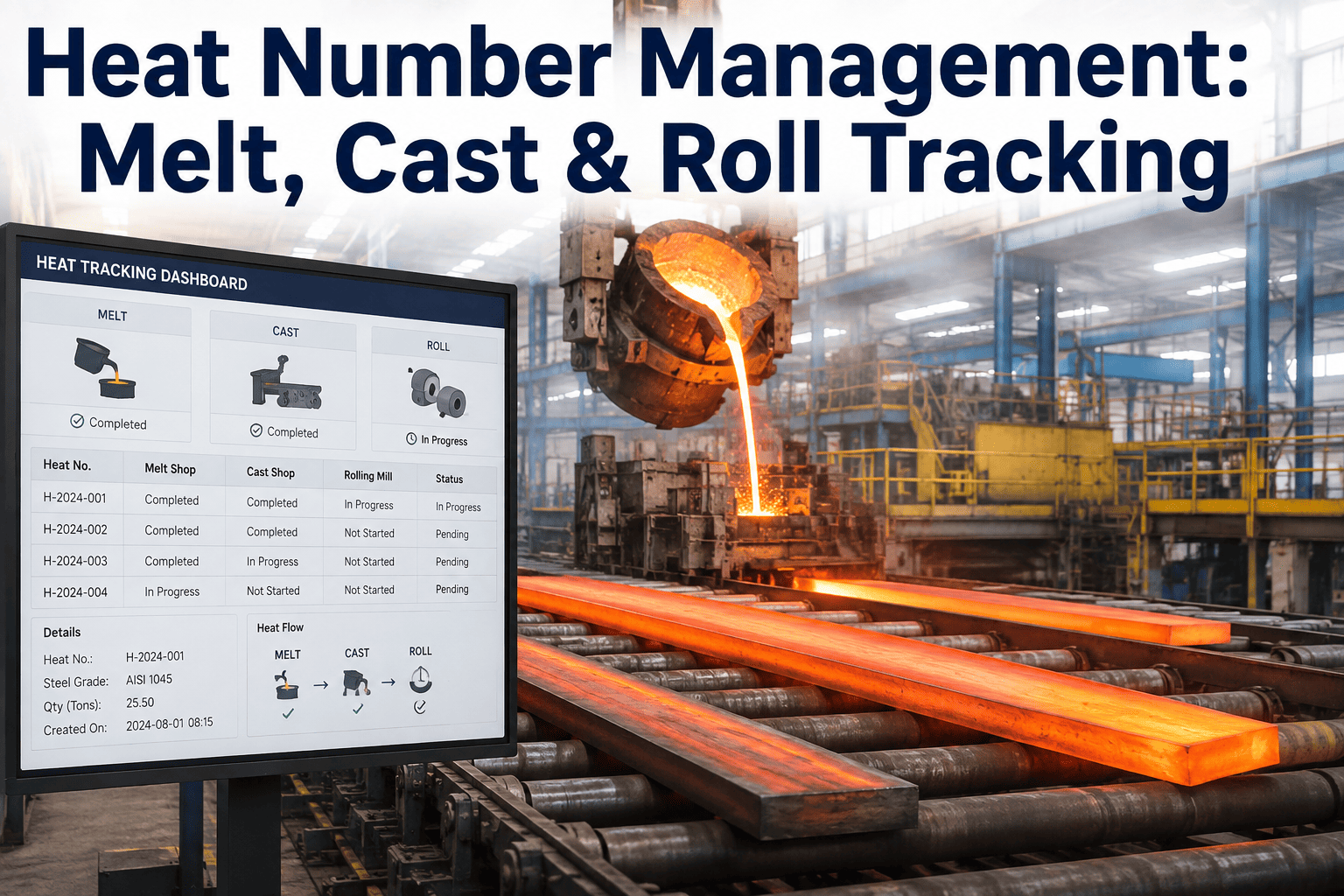
Tonnes accumulate through three natural checkpoints before they ever reach a weighbridge, and each one offers a chance to catch a discrepancy early.
| Level | Source | Typical Check |
|---|---|---|
| Heat | Furnace tap weight or calculated charge yield | Against expected yield for the charge |
| Cast | Sum of heats poured in a continuous cast sequence | Against caster throughput records |
| Shift | Sum of casts completed during the shift | Against the shift's weighbridge total |
How the Reconciliation Runs
The reconciliation compares the mill's own roll-up against the independent weighbridge measurement, flagging any gap beyond a normal tolerance.
Catch a Tonnes Gap the Same Shift It Happens
Book a 30-minute walkthrough and see your own heat-to-weighbridge reconciliation running continuously.
A Sample Reconciliation, Illustrative
The figures below are invented to show the pattern, not to benchmark your plant.
Common Tonnes Tracking Mistakes
The same patterns repeat across plants still reconciling tonnes only at month end.
What Changes Once Reconciliation Is Continuous
Once tonnes are tracked and reconciled every shift, the number stops being a month-end argument and becomes a daily operating fact.
Production planning can trust the current shift's tonnes when scheduling the next cast. Commercial teams can quote delivery with more confidence, since the production number they are working from was confirmed hours ago, not weeks ago.
Frequently Asked Questions
What counts as a normal gap between internal and weighbridge totals?
A small percentage gap is normal and expected, driven by measurement precision and minor process losses. The right tolerance depends on your specific process and scale accuracy, which is worth confirming during setup. Book a demo to set a tolerance for your plant.
Do we need new sensors at the heat level?
In most cases, no. Tap weight and charge data already exist in furnace controls, so the roll-up typically reads from systems already in place rather than requiring new instrumentation.
How does this handle scrap, remelt or off-grade material?
These are tracked as separate categories within the roll-up, so the reconciliation compares like against like rather than mixing saleable tonnes with material headed back into the process.
Can this connect to our existing ERP for commercial reporting?
In most cases, yes. iFactory AI reads production and weighbridge data and can feed reconciled tonnes figures into ERP for commercial and financial reporting. Ask support which ERP systems connect.
Know Your True Tonnes Before the Shift Ends
iFactory AI rolls up heat, cast and shift data and reconciles it against weighbridge totals continuously. Book a walkthrough built around your plant.