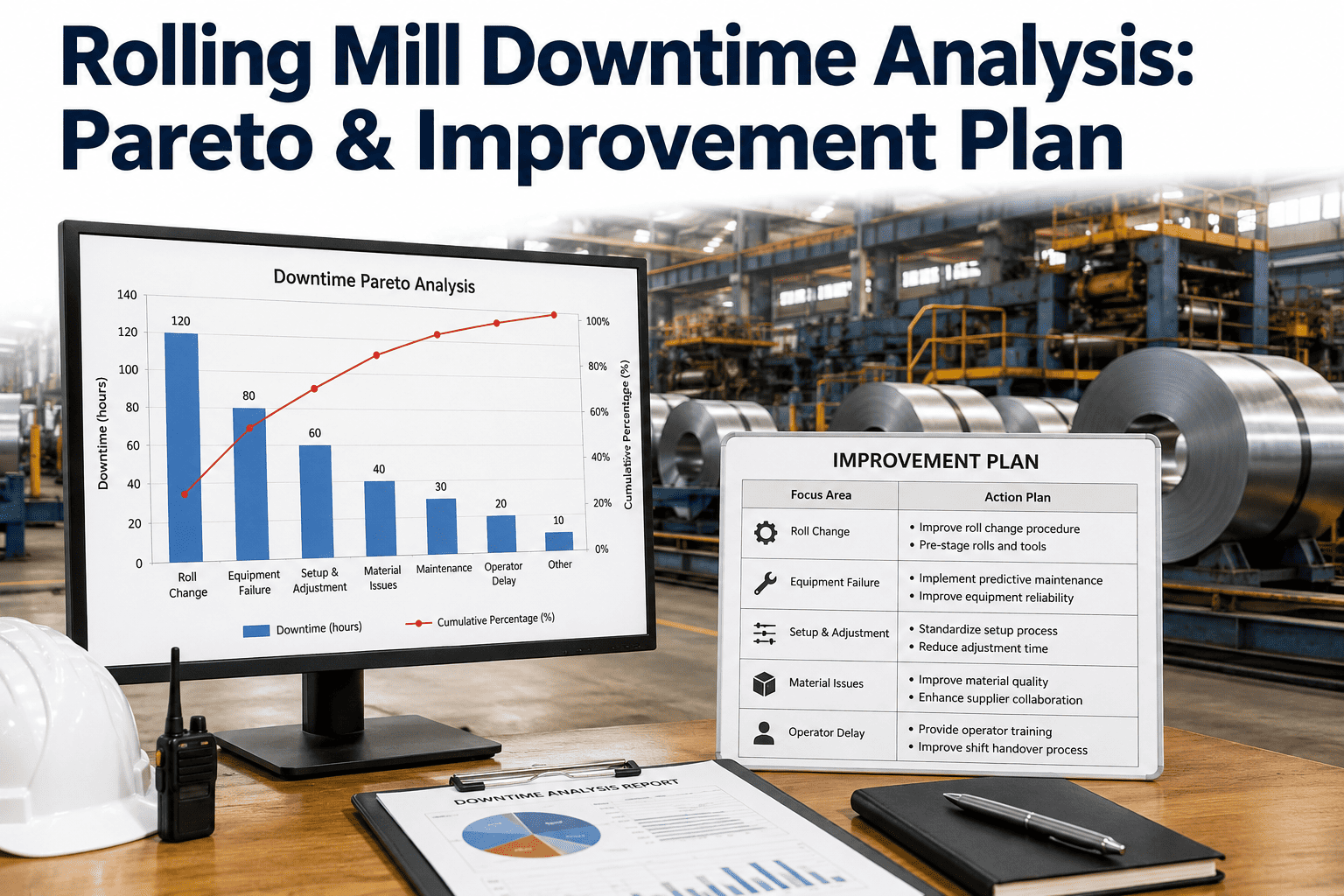
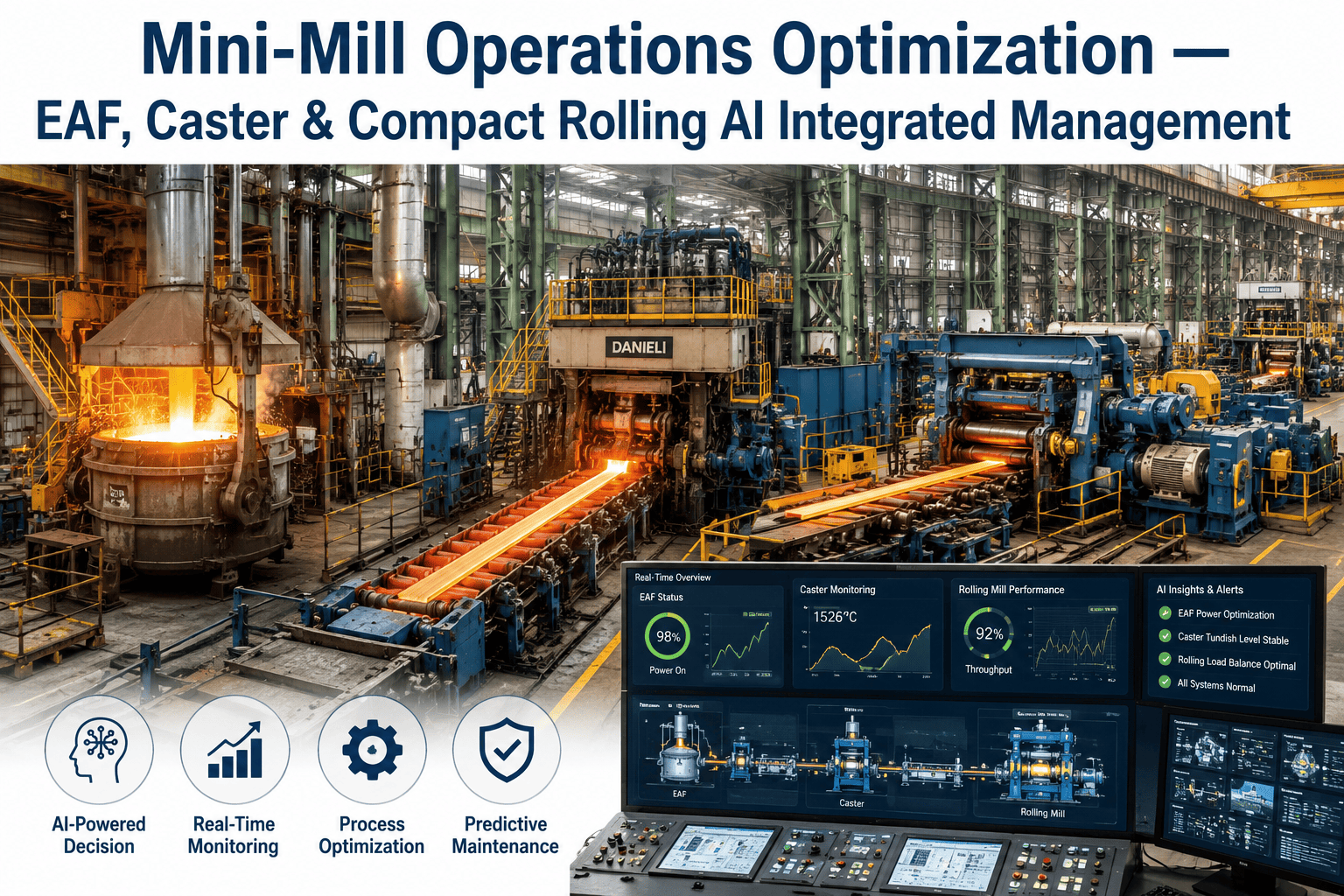
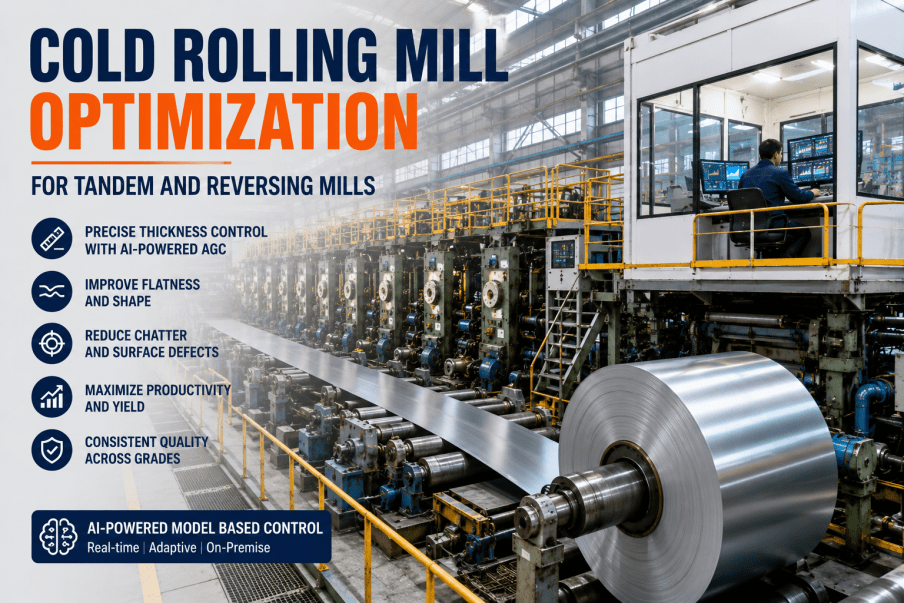
Single-Minute Exchange of Die, better known as SMED, was developed for stamping presses decades ago, but the core insight translates almost perfectly to roll assembly changeover on a rolling mill: the mill does not care how long the changeover takes as long as it is not the one waiting, and most of what makes a changeover slow has nothing to do with the physical roll swap itself. It is walking to find a tool, waiting for a crane that could have been staged earlier, or discovering a chock does not fit until the roll is already halfway into position. Mills that apply SMED discipline to roll assembly typically cut changeover time by 40 to 60 percent without buying a single piece of new equipment, and teams ready to see that in practice can Book a Demo today.
Internal vs. External Time: The Foundation of Every SMED Gain
SMED methodology rests on one distinction that changes everything once a team internalizes it: every changeover task is either internal, meaning it can only happen while the mill is stopped, or external, meaning it could happen while the mill is still running if it were planned that way. Most roll shops that have never formally applied SMED are running a changeover process where 60 to 70 percent of the tasks classified as "must happen while stopped" are actually external tasks that simply were not staged in advance — tool retrieval, chock inspection, crane positioning, and documentation are the classic offenders.
The entire SMED gain comes from converting internal tasks to external ones wherever physically possible, and only after that conversion is exhausted does the methodology move to genuinely shortening the internal tasks that remain. Skipping straight to "make the swap faster" without first doing the internal-external audit is the most common reason SMED implementations underperform their potential — teams optimize a task that should have been eliminated from the stopped-mill window entirely.
Pre-Staging Discipline: What Should Never Be Discovered Mid-Changeover
Pre-staging is the single highest-leverage SMED conversion for roll assembly, because nearly every element of a roll change can be prepared, verified, and positioned before the mill stops if the discipline exists to do it. The categories below cover what a mature pre-staging checklist typically includes — and each one represents time that used to be spent with the mill down and is now spent while production is still running.
Quick-Lock Chock Design: Shortening the Internal Task That Remains
Once external conversion is exhausted, the remaining internal work is the physical roll swap itself — and chock design is where most of the further time reduction lives. Traditional bolted chock connections require multiple fasteners to be removed and reinstalled, each one a discrete task that adds up across a full roll set. Quick-lock chock systems replace multi-bolt connections with a single actuation mechanism — hydraulic clamping, cam-lock, or quarter-turn fastening — that secures or releases the chock in one motion instead of many.
The time savings compound across a full changeover: a mill swapping four to six roll positions per change multiplies whatever is saved per chock by every position involved, which is why chock hardware upgrades often pay back faster than almost any other reliability capital investment a roll shop makes. The secondary benefit is consistency — a single-actuation lock mechanism is far less prone to the human variability of "was that bolt actually torqued correctly" that multi-fastener connections introduce, reducing both changeover time variance and the risk of an under-secured chock making it back into service.
Parallel Operations: Doing Multiple Tasks in the Same Stopped Window
The final SMED lever is running tasks in parallel rather than sequentially during the stopped window itself. A changeover process where one crew member does everything in sequence — remove old roll, install new roll, verify, document — wastes the stopped-mill window on tasks that do not actually depend on each other. Splitting the crew so that roll removal and replacement roll final-prep happen on adjacent positions simultaneously, or so that documentation and post-change measurement happen while the crane repositions for the next roll, compresses the same task list into meaningfully less stopped time without changing a single task itself.
Measuring Changeover Performance: What to Track Beyond Total Time
Total changeover time is the headline number, but tracking only that metric hides where the remaining opportunity actually lives. A shop that measures the breakdown between internal and external time, and tracks variance across changeovers rather than just the average, gets a far clearer picture of whether the SMED program is holding its gains or slowly drifting back toward old habits as crews rotate and pressure to skip pre-staging steps builds up during busy periods.
Sustaining the Gain: Why SMED Programs Regress Without Reinforcement
The most common trajectory for a SMED implementation is a strong initial improvement in the first several weeks, followed by gradual erosion back toward old habits over the following months, unless the shop actively builds reinforcement into its routine. The erosion happens quietly — a busy shift skips a pre-staging step under time pressure, it works out fine that one time, and the shortcut becomes the new normal until the next changeover runs long and nobody quite remembers why the process used to prevent that.
Sustaining the gain requires two things most shops underinvest in relative to the initial implementation effort: visible, regularly reviewed performance data that makes drift obvious before it becomes the new baseline, and a standard pre-staging checklist that is treated as non-negotiable rather than optional guidance. Shops that build both into their regular routine, rather than treating SMED as a one-time project with a defined end date, are the ones that keep the majority of their initial time reduction a year or more after the original implementation rather than watching it erode back toward the pre-SMED baseline.