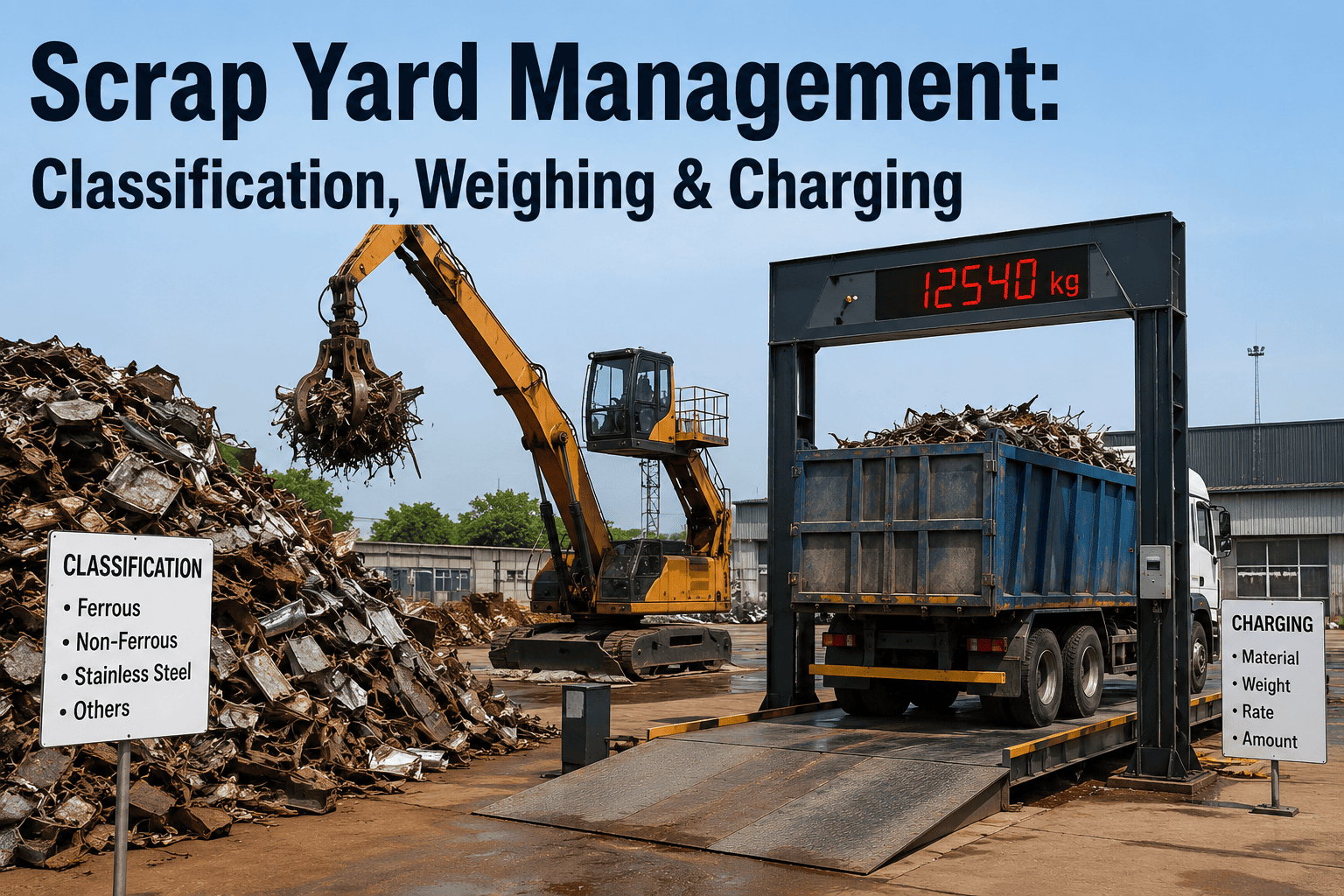
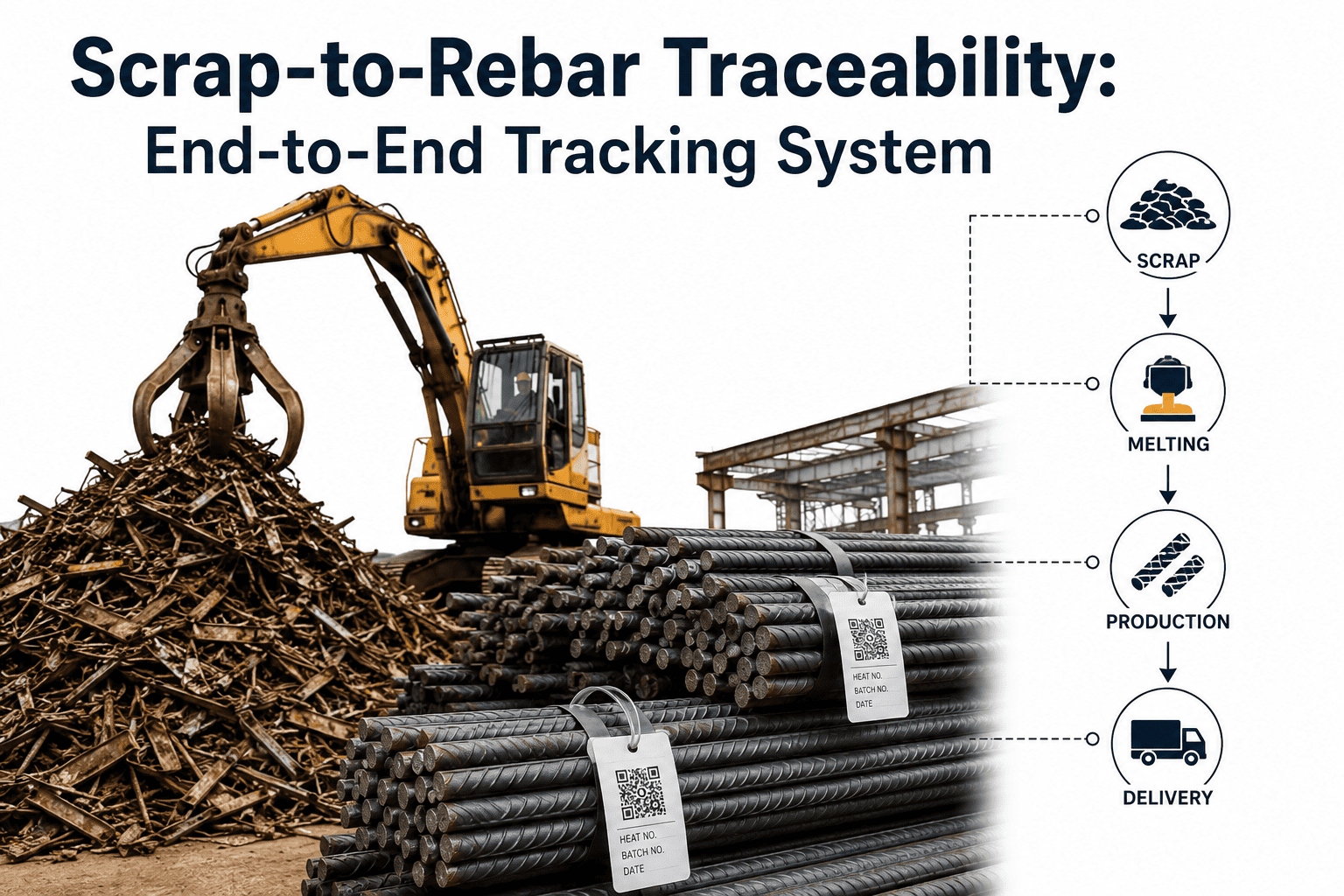
The heat genealogy record that traces a finished coil back to its originating heat is only as trustworthy as the record of what actually went into that heat in the first place — and that record starts not at the furnace, but in the scrap yard, hours or days earlier, when a crane operator selected specific grades from specific storage bays to build a charge. A scrap yard with informal grade segregation, uncalibrated scales, and charging documentation that records "mixed HMS" without lot-level detail cannot support genuine chemistry traceability no matter how sophisticated the downstream heat tracking system becomes — because the input data was never captured with enough precision to trace in the first place. Scrap yard management is the discipline of classification, weighing, and charging documentation that makes everything downstream — chemistry prediction, cost allocation, and traceability — actually reliable. Book a session with the iFactory yard operations team to see how structured scrap yard management connects to your melt shop traceability chain.
Traceability · Scrap Yard Management
Scrap Yard Management: Classification, Weighing, and Charging Documentation That Traceability Depends On
The upstream discipline that determines whether heat genealogy and chemistry traceability are actually reliable — grade classification standards, weighing accuracy, and charging documentation that links every scrap lot to the heat it feeds.
Yard-to-Furnace Flow
↓
↓
↓
4
Charging Bucket → Furnace
Each checkpoint is a documentation point — a gap at any one breaks the lot-to-heat link.
Classification Standards
Consistent Grade Identification — The Foundation Everything Else Depends On
Scrap classification inconsistency is one of the most common and most consequential quality gaps in a melt shop's supply chain, because incorrect or inconsistent grade classification propagates directly into chemistry prediction errors, blend mix optimization errors, and ultimately genealogy records that misrepresent what actually went into a heat.
Visual Grade Standards
A documented visual reference standard — photographs and written criteria for each grade classification — used consistently by every yard inspector, rather than relying on individual experience and memory that varies between shifts and between personnel.
Incoming Inspection Protocol
A defined inspection procedure applied to every incoming load — checking for grade consistency within the load, contamination, and any material that does not match the delivery documentation — before the load is accepted into yard inventory under a specific grade classification.
Residual Element Risk Tagging
Beyond basic grade classification, tagging incoming lots with known or estimated residual element risk (copper, tin, and other tramp elements) based on source and grade — critical information for blend mix decisions that basic grade classification alone does not capture.
Weighing Accuracy & Calibration
Why Scale Accuracy Is a Chemistry Problem, Not Just a Cost Problem
Weighing accuracy is often treated purely as a cost and inventory control issue, but in a melt shop context, weighing errors directly translate into charge mix errors — if the actual weight of a specific grade charged differs from the recorded weight, every downstream chemistry prediction and blend cost calculation inherits that error, and the genealogy record itself becomes inaccurate.
| Weighing Point |
Accuracy Requirement |
Calibration Frequency |
Common Failure Mode |
| Incoming truck/rail scale |
±0.1% of load weight |
Certified calibration quarterly minimum |
Drift undetected between certification cycles |
| Crane/magnet load weighing |
±1–2% per lift |
Verified weekly against known reference weight |
Load cell wear affecting accuracy under full capacity |
| Charging bucket scale |
±0.5% of bucket capacity |
Daily zero-check, formal calibration monthly |
Bucket wear or buildup affecting tare weight accuracy |
A charging bucket scale reading consistently 2% high on every charge, uncorrected over months, compounds into a significant chemistry prediction error trend that is easy to misdiagnose as a scrap grade quality issue rather than the actual root cause of instrument drift.
Find Out Where Your Yard-to-Furnace Chain Has Gaps
iFactory Reviews Classification, Weighing, and Charging Documentation Against Your Melt Shop Traceability Requirements
Most scrap yard operations have informal practices that work adequately day-to-day but cannot support genuine lot-level traceability when a customer investigation demands it. iFactory's yard assessment identifies exactly where documentation gaps exist between scrap receipt and charge record.
Charging Documentation
Capturing the Charge Record With Enough Detail to Support Real Traceability
A charging record that simply states "60 tons HMS, 30 tons busheling" for a heat is not sufficient for genuine traceability — it must capture which specific incoming lots contributed to that charge, since different lots of the same nominal grade can carry meaningfully different chemistry, particularly for residual elements.
01
Lot-Level Consumption Tracking
Recording which specific incoming delivery lots were drawn from during charge buildup, not just the grade classification — enabling a genuine traceback from a heat's chemistry result to the specific scrap deliveries that contributed to it.
02
Real-Time Weight Capture at Charge
Automated weight capture from the charging bucket scale linked directly to the specific heat number, rather than manual weight entry that introduces both delay and transcription error risk into the charge record.
03
Alternative Iron Unit Documentation
Where DRI, HBI, or pig iron supplement the scrap charge, capturing the same lot-level detail for these materials as for scrap grades — since alternative iron units carry their own chemistry variation between supplier lots that matters for the same traceability reasons.
Quality Feedback Loop
Connecting Actual Heat Chemistry Back to Yard Classification Decisions
The value of detailed charging documentation is fully realized only when actual heat chemistry results are connected back to the specific scrap lots and grades that contributed to that heat — creating a feedback loop that validates or corrects the yard's classification assumptions over time, rather than treating classification as a one-time judgment never checked against actual downstream results.
Grade Chemistry Validation
Comparing actual heat chemistry contribution attributable to a specific grade against the assumed chemistry used in blend mix planning — identifying when a supplier's material is systematically running higher or lower in a specific element than the standard assumption for that grade.
Supplier Performance Tracking
Aggregating chemistry outcomes by specific scrap supplier over time, building an evidence-based supplier quality record that goes beyond simple delivery reliability to actual material chemistry consistency — informing future sourcing and blend planning decisions.
Yard Operations KPIs
Six Metrics That Define Scrap Yard Traceability Readiness
Classification Consistency Rate
Target: >95% inter-inspector agreement
Agreement rate between different yard inspectors classifying the same reference material — validates whether classification standards are genuinely consistent across shifts and personnel.
Scale Calibration Compliance
Target: 100% on schedule
Percentage of yard and charging scales with calibration verification completed on the required schedule — any lapse directly risks chemistry prediction accuracy.
Lot-Level Traceability Coverage
Target: 100% of charges
Percentage of heat charges with complete lot-level documentation linking to specific incoming scrap deliveries, rather than grade-level aggregation alone.
Chemistry Prediction Accuracy
Target: within ±10% of actual
Accuracy of blend mix chemistry predictions against actual tap chemistry results — the ultimate validation metric for whether yard classification and documentation are supporting reliable downstream planning.
Residual Element Surprise Rate
Target: <3% of heats
Percentage of heats where actual residual element levels significantly exceeded blend mix predictions — a high rate indicates classification or lot tracking gaps in the yard.
Documentation Completion Time
Target: real-time, <5 min lag
Time lag between physical charging activity and complete digital documentation of the charge — long lag increases the risk of transcription error and incomplete records.
From the Yard Floor
“
Every melt shop I have worked with takes heat genealogy and chemistry traceability seriously once the material is inside the furnace, but the yard upstream of that furnace is where the actual traceability chain most often quietly breaks down first. I have seen operations with genuinely sophisticated heat tracking systems downstream, feeding off a scrap yard where grade classification depends entirely on which crane operator happens to be working that shift and their personal judgment about what counts as HMS versus obsolete grade, with no documented reference standard either of them is actually checking against. The genealogy system downstream is only as trustworthy as the classification and weighing decisions made in the yard, and those decisions happen fast, under time pressure, often by people who have never been shown a formal grade standard, just told to match what the previous operator was doing. Fixing this is not a technology problem primarily — it starts with a documented, photograph-based classification standard that every yard inspector is actually trained against and periodically re-tested on, the same discipline any quality-serious operation would apply to any other inspection function.
Wilhelmina Osagie-Thorvaldsen
Scrap Yard Operations Manager · Melt Shop Materials Specialist · 18 years managing scrap yard operations and materials traceability for electric arc furnace steelmaking · Former Yard Operations Director, mid-size EAF producer · Specialist in scrap classification standards and yard-to-furnace documentation systems
Yard Operations Team Questions
Scrap Yard Management — Frequently Asked
How do we build a visual grade classification standard if we don't currently have one documented?
Start by photographing representative examples of each grade currently in use, with input from your most experienced inspectors, then formalize written criteria alongside the images.
Book a demo to see a structured approach to building your classification standard.
How often should crane and charging bucket scales actually be checked between formal calibrations?
Weekly reference-weight verification between formal calibration cycles catches drift early, before it compounds into a significant chemistry prediction error trend.
Book a demo to discuss a verification schedule for your specific scale types.
Can lot-level charging documentation be captured without slowing down the charging process?
Yes — automated capture linked to existing yard inventory and crane systems can record lot-level detail without adding manual steps to the charging workflow itself.
Book a demo to see how automated capture integrates with your current process.
How do we connect chemistry results back to specific scrap suppliers if we've never tracked this before?
Once lot-level charging documentation is in place going forward, supplier chemistry tracking builds naturally from that data over subsequent heats — it does not require historical reconstruction to start.
Book a demo to discuss building this feedback loop for your operation.
Is this level of yard documentation necessary for mills that don't have strict customer traceability requirements?
Even without formal customer traceability requirements, accurate yard documentation directly improves chemistry prediction accuracy and reduces costly residual element surprises.
Book a demo to discuss the practical value beyond compliance requirements.
Traceability Starts in the Yard, Not at the Furnace
Build Classification, Weighing, and Charging Documentation That Your Genealogy System Can Actually Trust
iFactory helps scrap-yard-dependent melt shops build the documented classification standards, calibrated weighing discipline, and lot-level charging records that make heat genealogy and chemistry traceability genuinely reliable — closing the gap between what the yard actually did and what the downstream system records.