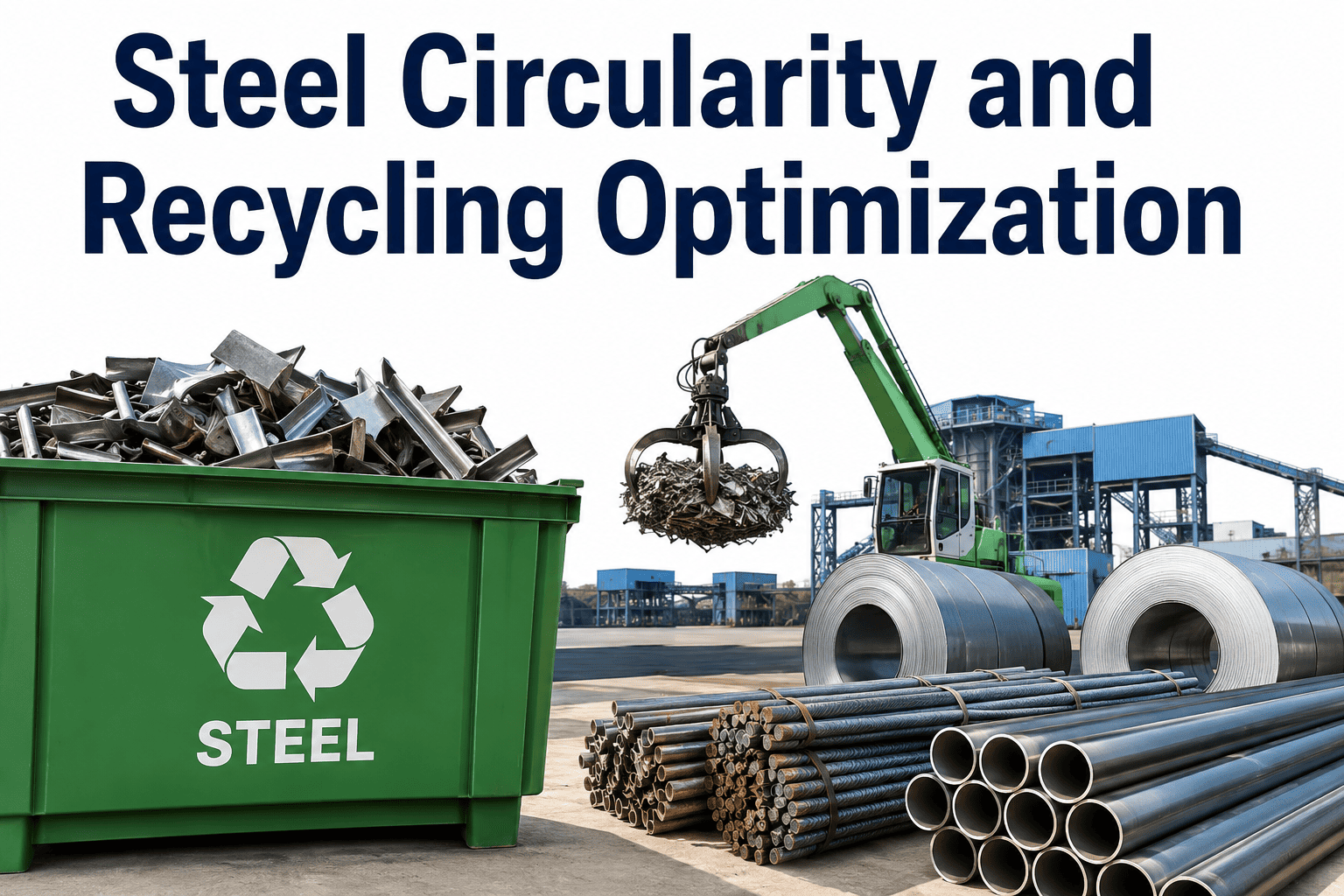
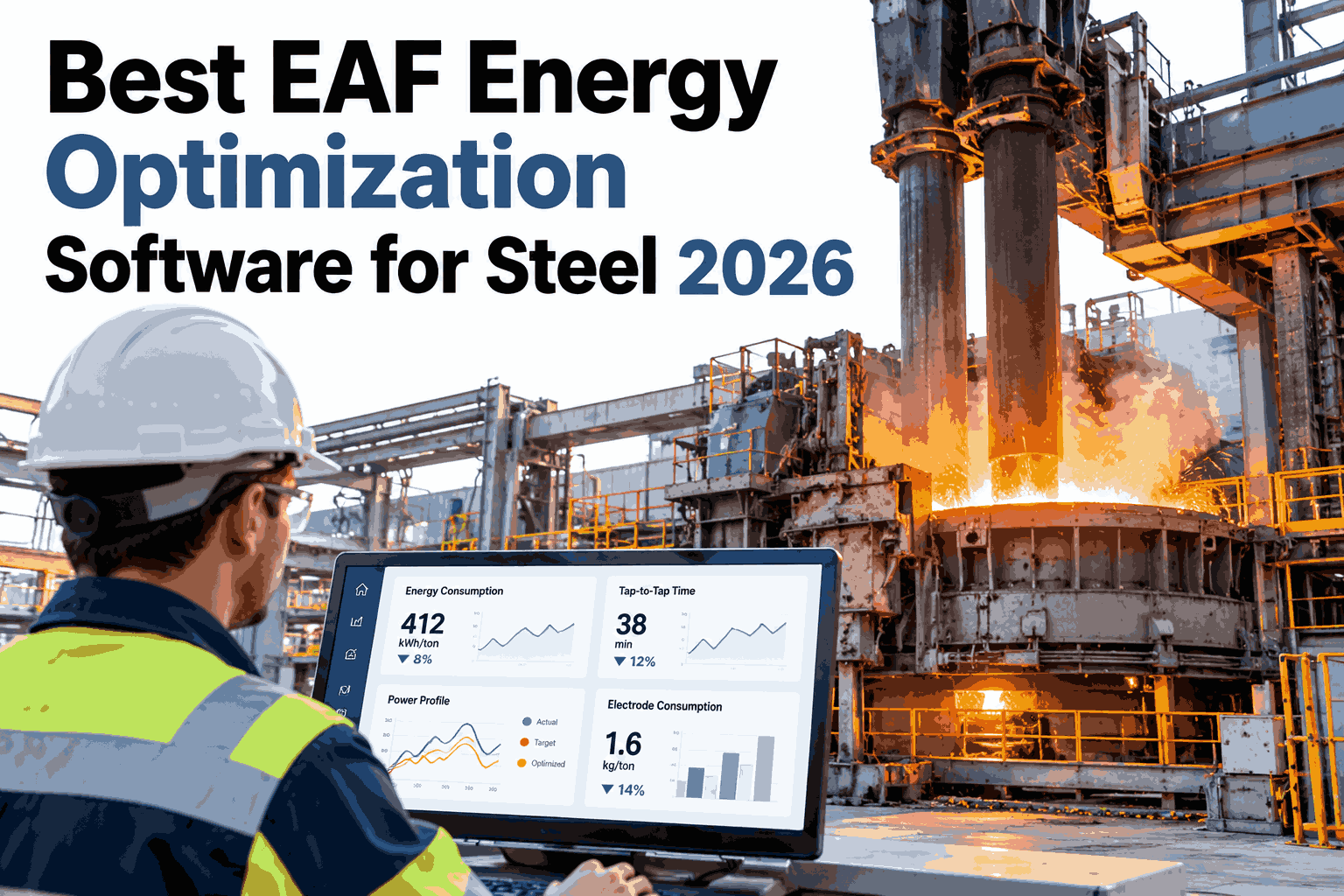
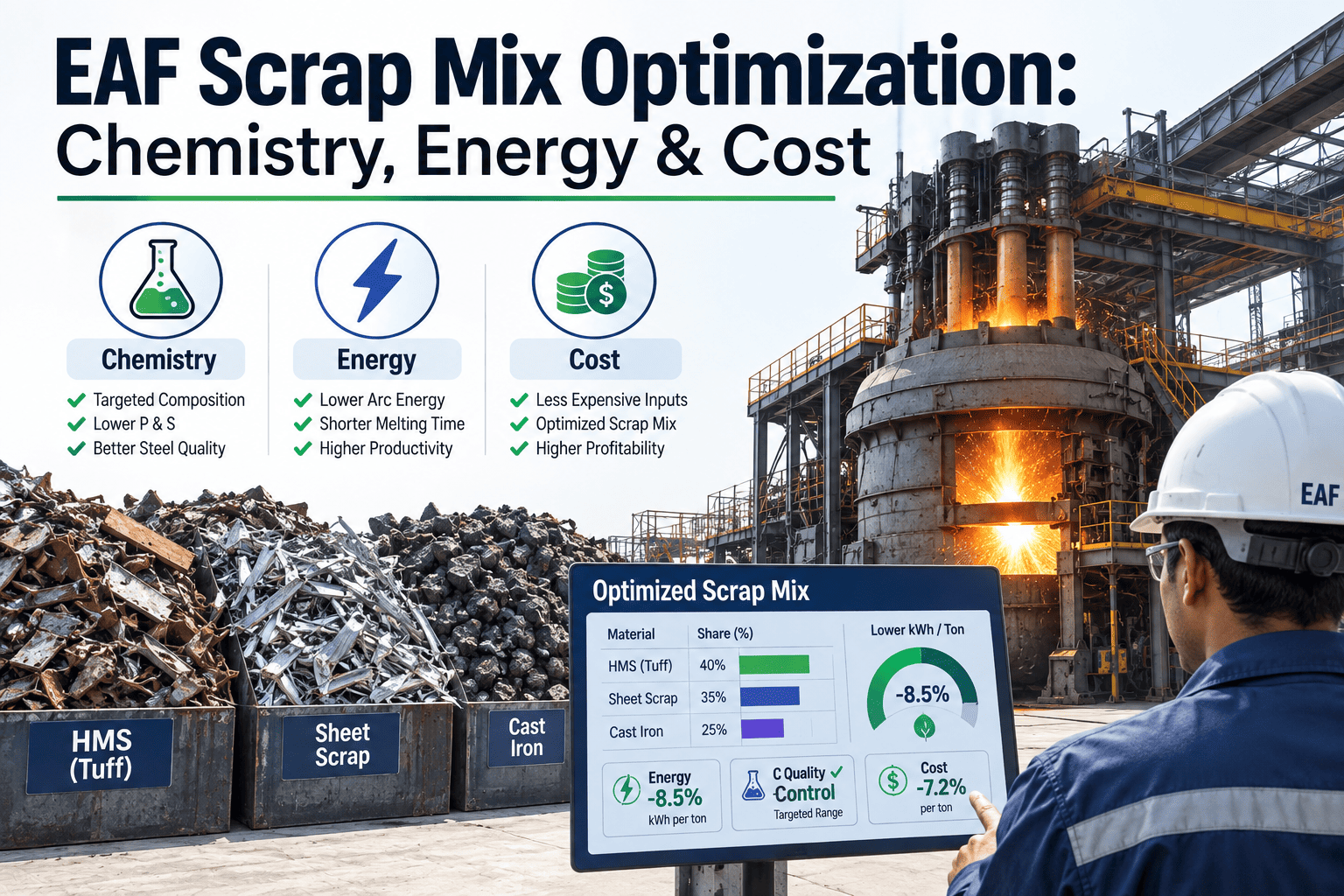
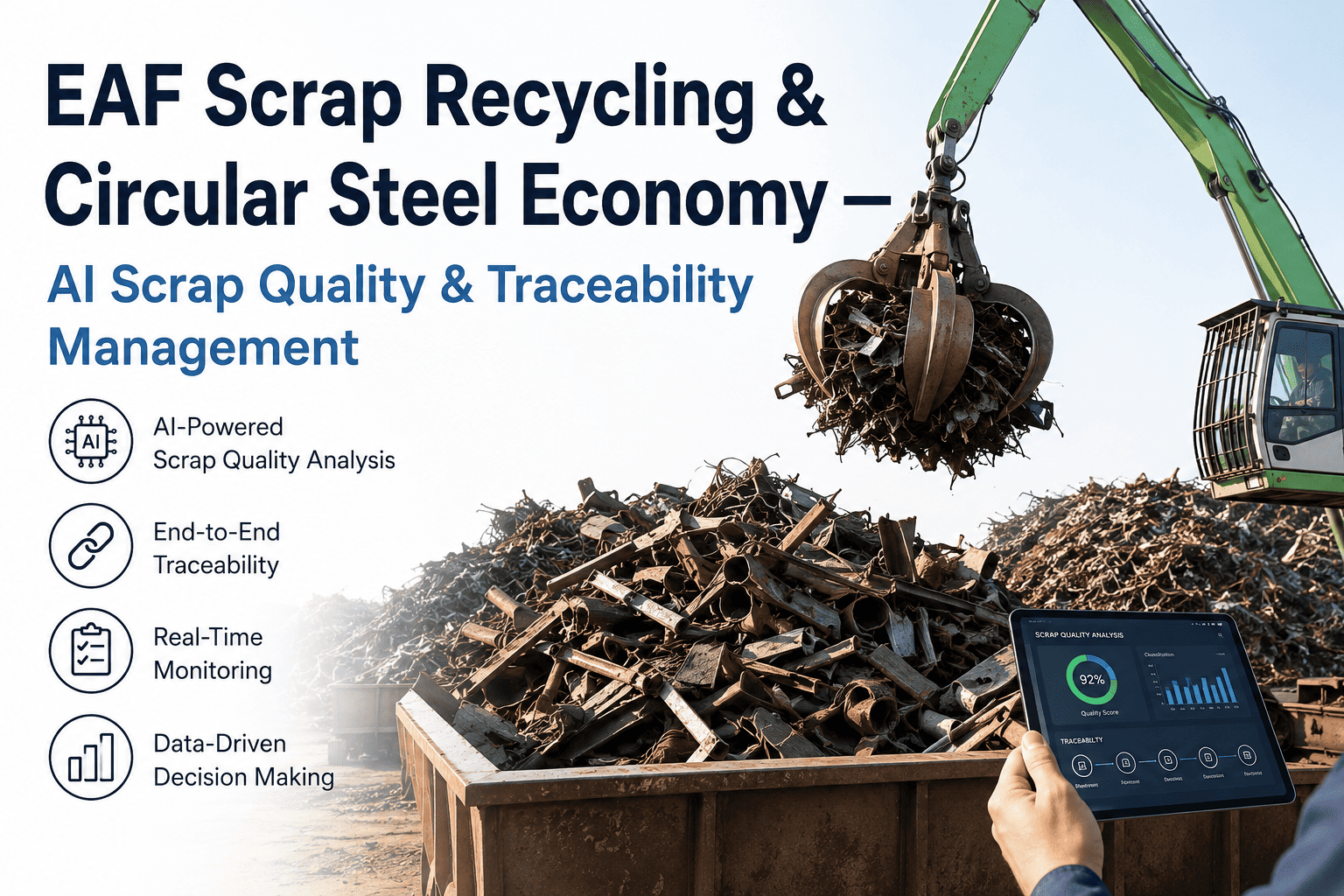
Scrap steel is the highest-leverage cost variable in any electric arc furnace shop, often accounting for up to 77% of total production cost per heat, yet most melt shops still choose their scrap mix on availability and operator experience rather than data. Wrong grades arrive at the wrong time, copper and tin residuals accumulate undetected until they compromise a heat's chemistry, and energy profiles are built from recipes that assume a consistent charge when every basket is different. Steel is already the most recycled material on earth, but the economics of doing that recycling well — without letting tramp elements erode quality — are getting tighter every year. AI-based scrap flow analytics is how leading melt shops are closing that gap, and you can book a scrap strategy session to see what it would mean for your furnace.
Circular Steel Intelligence
Scrap Is 77% of Your Heat Cost. Is It Also Your Biggest Blind Spot?
AI-driven scrap mix optimization tracks grade chemistry, tramp elements, and pricing in real time — turning your highest-cost input into your most predictable one.
Scrap: up to 77% of EAF heat cost
12-15% smelting cost cut from AI mix optimization
7% energy reduction per heat with optimized charge design
The Tramp Elements That Quietly Cap Your Recycled Content
| Residual Element | Effect on Steel | Typical Constraint |
|---|
| Copper (Cu) | Surface cracking, cannot be removed during melting | Limits closed-loop recycling to roughly 20% by weight |
| Chromium (Cr) | Alters mechanical properties outside spec | Combined with copper, caps recycled content near 8% |
| Tin (Sn) | Embrittlement in flat and automotive grades | Requires dilution with premium DRI or HBI |
Where the Old Way Breaks Down — and What AI Changes
Manual Process
Scrap buyers set mix ratios weekly from spreadsheets, reacting to price and availability rather than furnace-specific chemistry targets.
AI-Optimized
Real-time pricing, yard inventory, and steel grade schedules feed a live model that recalculates the lowest-cost, spec-compliant charge for every heat.
Manual Process
Copper and tin contamination is caught only after a heat fails chemistry, forcing costly rework or grade downgrades.
AI-Optimized
Machine-vision sorting and lot-by-lot chemistry correlation flag contaminated scrap before it's charged into the furnace.
Manual Process
Energy profiles assume a standard charge, so every basket that deviates from the norm quietly wastes electricity.
AI-Optimized
Melting energy is predicted per grade combination, adjusting power input basket by basket instead of heat by heat.
Turn Your Scrap Yard Into a Data-Driven Supply Chain
iFactory tracks material flow from scrap yard to tap, correlating grade chemistry with bath results across consecutive heats so tramp elements never sneak past your specification limits.
What Optimized Scrap Flow Delivers
12-15%
Lower smelting cost per tonne
7%
Energy reduction per heat
2+ min
Faster tap-to-tap cycle per heat
95%
Recycling rate possible once tramp elements are segregated
Why Scrap Strategy Can't Stay an Afterthought
Domestic scrap supply is under growing strain in several major steel-producing regions, with quality sub-committees warning that without better sorting and processing infrastructure, mills risk being unable to secure the high-grade scrap their EAF transition depends on. That makes precise mix optimization less of a cost play and more of a supply security strategy — the mills that can safely use a wider range of scrap grades without violating chemistry limits have more sourcing flexibility than those locked into a narrow set of premium suppliers.
Frequently Asked Questions
Why does copper contamination matter so much if it's such a small percentage of the scrap?
Copper cannot be removed once it's melted into steel, unlike many other impurities that can be managed through slag chemistry or refining. Even small concentrations cause surface cracking and brittleness, which is why closed-loop recycling using post-consumer scrap is generally capped around 20% by weight unless copper is actively sorted out beforehand. AI-based machine vision sorting is increasingly used specifically to detect and remove copper particles before scrap ever reaches the furnace.
How does AI scrap mix optimization actually reduce cost per heat?
The model ingests real-time scrap pricing, yard inventory levels, and the steel grade schedule to calculate the lowest-cost charge design that still meets chemistry specifications for that specific heat. This replaces static weekly spreadsheet models with a recalculation for every basket, which is where most of the documented 12-15% smelting cost reduction and 7% energy savings come from. You can see the methodology in more detail through
our support resources.
Can AI help us use lower-grade or more variable scrap safely?
Yes, this is one of the more valuable applications. By correlating incoming lot chemistry with bath results across consecutive heats, the system can identify accumulation trends in tramp elements before they approach the specification limit, allowing operators to blend in lower-grade scrap with confidence rather than defaulting to expensive premium grades out of caution.
Does scrap optimization software require new sensors on the furnace?
Most deployments start by connecting to data a plant already generates — scrap yard inventory systems, furnace operating data, and existing chemistry lab results — rather than requiring new instrumentation. Additional sensing, such as machine-vision sorting at the scrap yard, is typically added afterward as a targeted upgrade once the initial data integration identifies where it would add the most value.
What's the fastest way to see if this applies to our melt shop?
Because scrap mix decisions are specific to furnace size, grade portfolio, and regional scrap availability, the most useful next step is a plant-specific review rather than a generic estimate.
Booking a scrap strategy session lets our team map your current scrap costs and chemistry constraints against what an optimized mix could realistically deliver.
Every Heat Without Optimized Scrap Data Is Cost You're Leaving on the Yard
See how iFactory turns scrap yard chemistry, pricing, and inventory into a live optimization engine — lowering cost per tonne while protecting every heat from tramp element surprises.