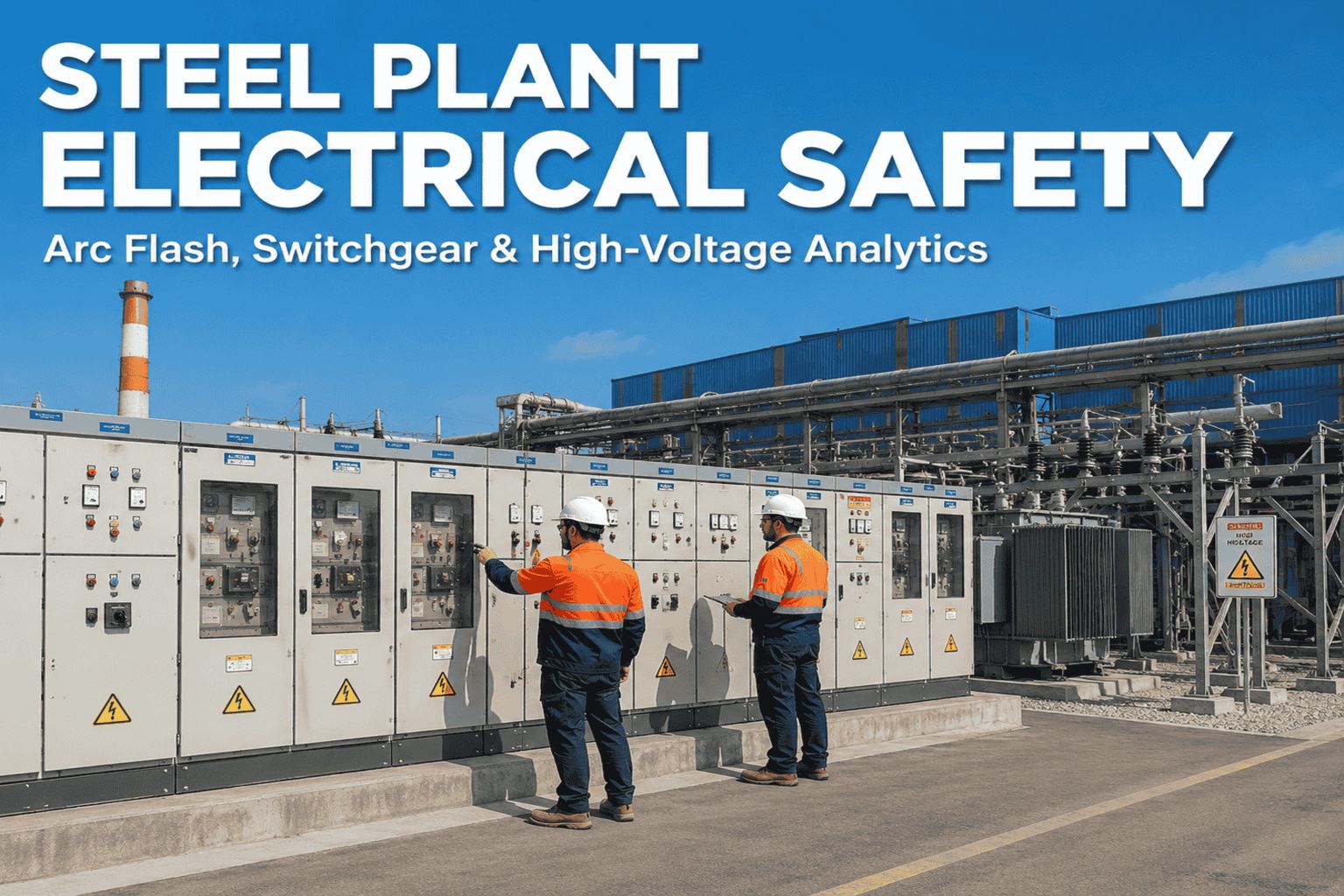
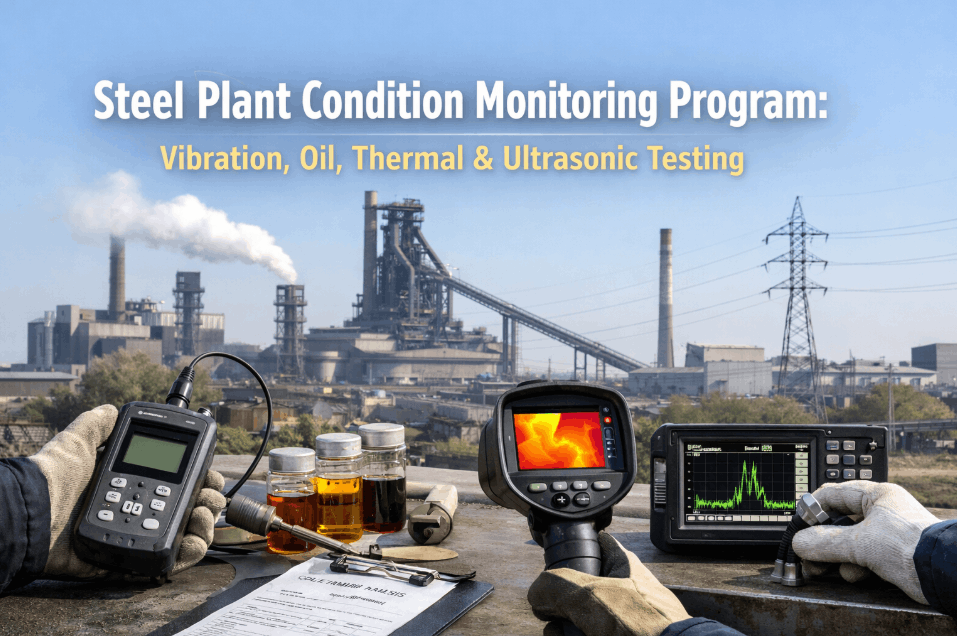
Steel Plant Transformer & Switchgear — Power Distribution AI Condition Analytics
By James Smith on July 27, 2026
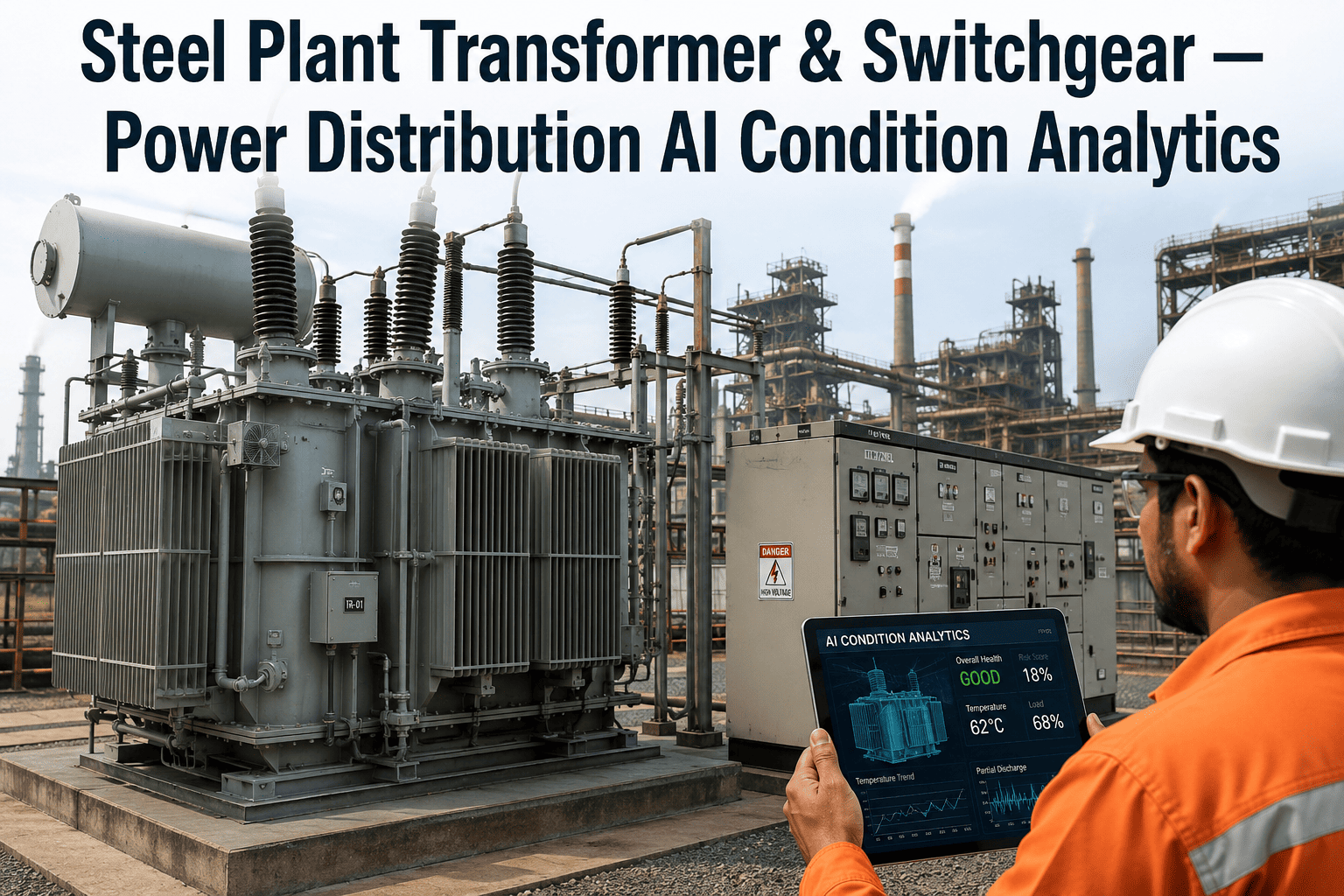
A steel plant pulling 200+ megawatts through its electrical infrastructure has no tolerance for surprises at the transformer or switchgear level — a single failed power transformer can black out an entire melt shop, and a switchgear contact that has been quietly overheating for months can trip a critical bus at the worst possible moment. Unlike a motor or a mill stand, these assets rarely give a loud mechanical warning before they fail; the evidence is chemical and thermal, buried in dissolved gas trends and infrared signatures that a manual inspection schedule checks too infrequently to catch a fault while it is still developing. AI condition analytics reads that evidence continuously instead of periodically, giving plants the lead time that periodic testing structurally cannot provide. iFactory's electrical infrastructure monitoring is built around exactly this continuous-read approach.
iFactory Electrical Infrastructure AI
Protect the Power Backbone Behind Your Whole Plant
Monitor power transformers and switchgear continuously with AI-based dissolved gas analysis, thermal imaging, and contact condition tracking, catching the developing faults that periodic inspection schedules are structurally too slow to see.
Every megawatt reaching an EAF, a rolling mill drive, or a compressor passes through a chain of transformers and switchgear that gets far less monitoring attention than the production equipment it feeds, even though a failure anywhere in that chain can stop production just as completely as a mechanical breakdown. The diagram below shows a simplified view of that chain and where continuous condition monitoring sits within it.
Simplified Power Distribution Chain — Where AI Watches
Transformers — Reading the Oil Instead of Waiting for Failure
Dissolved gas analysis has long been the gold standard for transformer health, but most plants still run it as a periodic lab test, sending oil samples out weeks apart while a developing fault continues to progress between samples. Continuous online DGA monitoring, paired with AI trend analysis, closes that gap by tracking the gas concentrations that indicate arcing, overheating, or insulation breakdown as they change, not just as a snapshot every few weeks.
Dissolved Gas Trending
Continuous tracking of key fault gases against established diagnostic ratios, flagging developing arcing or overheating faults early.
Thermal Imaging
Regular thermal scans of bushings, connections, and tank surfaces catch hotspots before they progress to insulation failure.
Load & Loss-of-Life Tracking
Correlates loading history with insulation aging models to estimate remaining transformer life more accurately than a fixed age assumption.
Want to see continuous DGA trending against your own transformer history? Book a 30-minute walkthrough with our electrical team.
Switchgear — Where Contact Condition Decides Reliability
Switchgear failures concentrate at the contact points, where resistance rises gradually as contacts wear or loosen, generating heat that a periodic inspection schedule may not catch until it has already progressed toward a fault. Thermal imaging and contact resistance trending give continuous visibility into exactly the failure mode that causes the majority of switchgear incidents, at the specific bus and breaker level rather than as a general assumption about the whole lineup.
Contact Resistance Trending
Tracks resistance drift at individual contact points, the leading indicator of a developing thermal fault before it becomes visible.
Partial Discharge Monitoring
Detects early insulation breakdown signals inside switchgear compartments well before a visible or audible fault develops.
Breaker Operation Tracking
Monitors operation counts and mechanism timing against manufacturer wear curves to plan maintenance ahead of failure.
What Continuous Monitoring Delivers
These outcomes reflect what steel plants typically report once transformer and switchgear condition is monitored continuously rather than checked on a fixed inspection calendar.
Weeks
Advance warning
on developing transformer and switchgear faults
Fewer
Unplanned outages
on the electrical infrastructure the whole plant depends on
Accurate
Remaining life estimates
based on actual loading and condition, not fixed age
We already send oil samples out for DGA testing periodically — what does continuous monitoring add?
Periodic lab testing gives an accurate snapshot at the moment the sample was taken, but a developing fault can progress meaningfully in the weeks between samples, meaning the fault may already be advanced by the time the next test flags it. Continuous online DGA monitoring tracks the same fault gases in real time, so a developing arcing or overheating condition is caught as it starts trending upward rather than discovered at the next scheduled sample, which is the gap that causes the most costly transformer failures.
How does thermal imaging catch a switchgear fault before it becomes visible or audible?
Contact resistance typically rises gradually as connections wear or loosen, generating heat well before the fault produces any visible arcing, discoloration, or audible sign a technician would notice during a routine walk-through. Regular or continuous thermal scans pick up that rising temperature at the specific contact point long before it reaches a stage where it would be caught by visual inspection alone, giving maintenance a much wider window to schedule a repair during planned downtime.
Can this actually tell us how much useful life is left in an aging transformer?
Rather than relying on a fixed age assumption, the system correlates the transformer's actual loading history and thermal stress against established insulation aging models, which typically produces a far more accurate estimate of remaining useful life than age alone. This is particularly useful for older transformers running near or above nameplate rating, where actual loss-of-life can be significantly higher or lower than a simple age-based estimate would suggest.
What's involved in getting this set up on our existing electrical infrastructure?
Most plants already have some combination of periodic DGA testing, thermal imaging surveys, and protection relay data available, and the AI layer is built to ingest that existing data as a starting point rather than requiring a full sensor replacement. Where continuous online monitoring is not yet in place for a specific transformer or switchgear lineup, it is typically recommended selectively for the highest-criticality assets first, with coverage expanded from there.
Does partial discharge monitoring require taking switchgear offline to install?
Many partial discharge sensors are designed to be installed without requiring the switchgear to be taken fully offline, particularly non-intrusive sensor types that attach externally rather than requiring internal access, though the specific installation approach depends on the switchgear design and manufacturer. This is typically planned around your existing outage schedule so installation adds minimal disruption to the coverage it is meant to improve.
Protect the Power Behind Every Furnace and Mill.
See Continuous Transformer & Switchgear Monitoring in Action
Bring DGA, thermal imaging, or contact resistance data from your electrical infrastructure. We'll show how AI trends condition continuously and flags a developing fault weeks before it threatens your power supply.