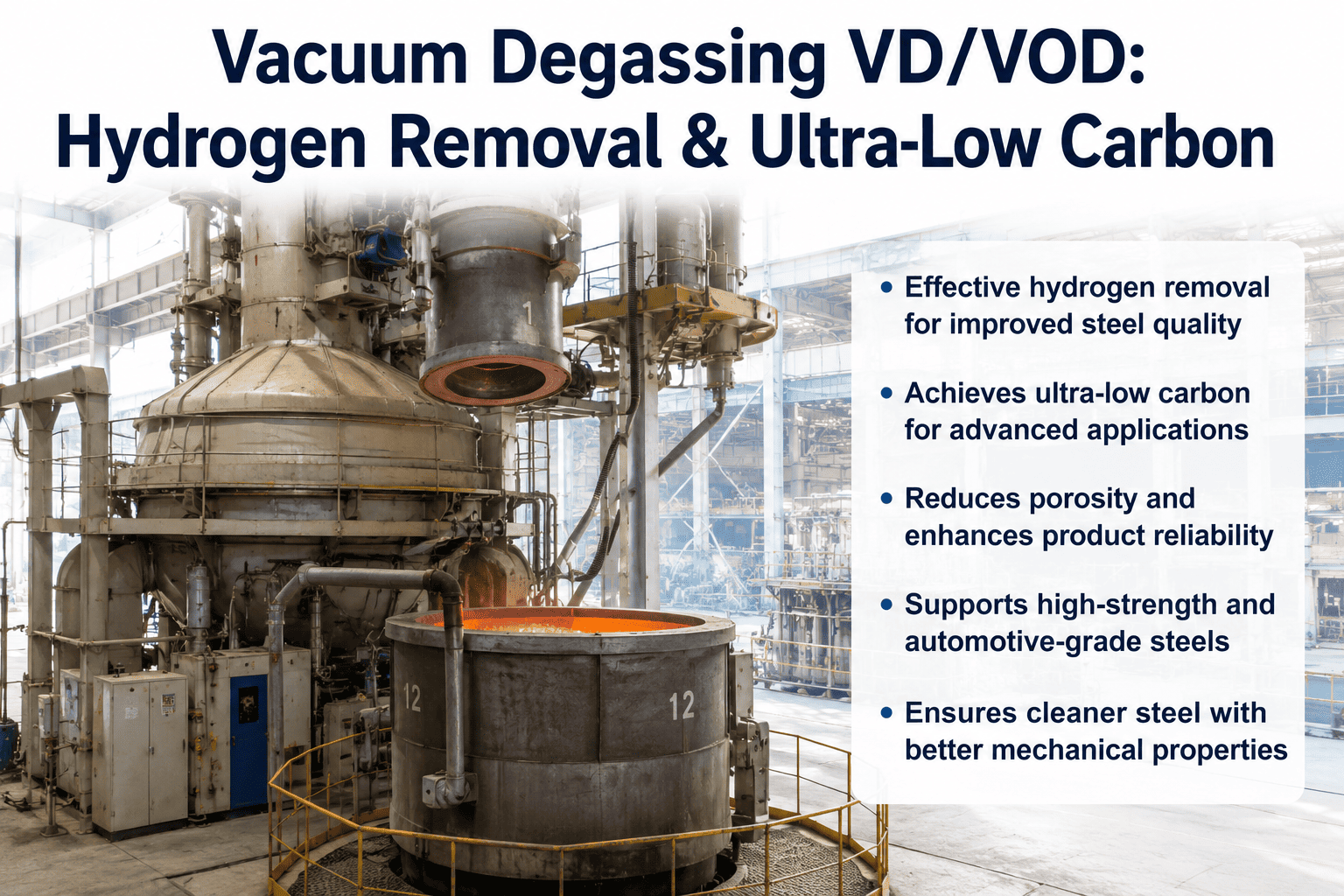
Ultra-low carbon and hydrogen-sensitive steel grades leave almost no room for error at the vacuum degassing station. A vacuum level that does not hold, stirring that falls short of what decarburization actually needs, or a treatment cycle cut a few minutes early can put an entire heat outside the specification a customer is paying a premium for. Vacuum degassing is one of the more precise steps in the whole steelmaking sequence, and giving operators clear, real-time visibility into how the treatment is actually progressing is where iFactory's process monitoring platform adds the most value.
SECONDARY METALLURGY · VACUUM DEGASSING
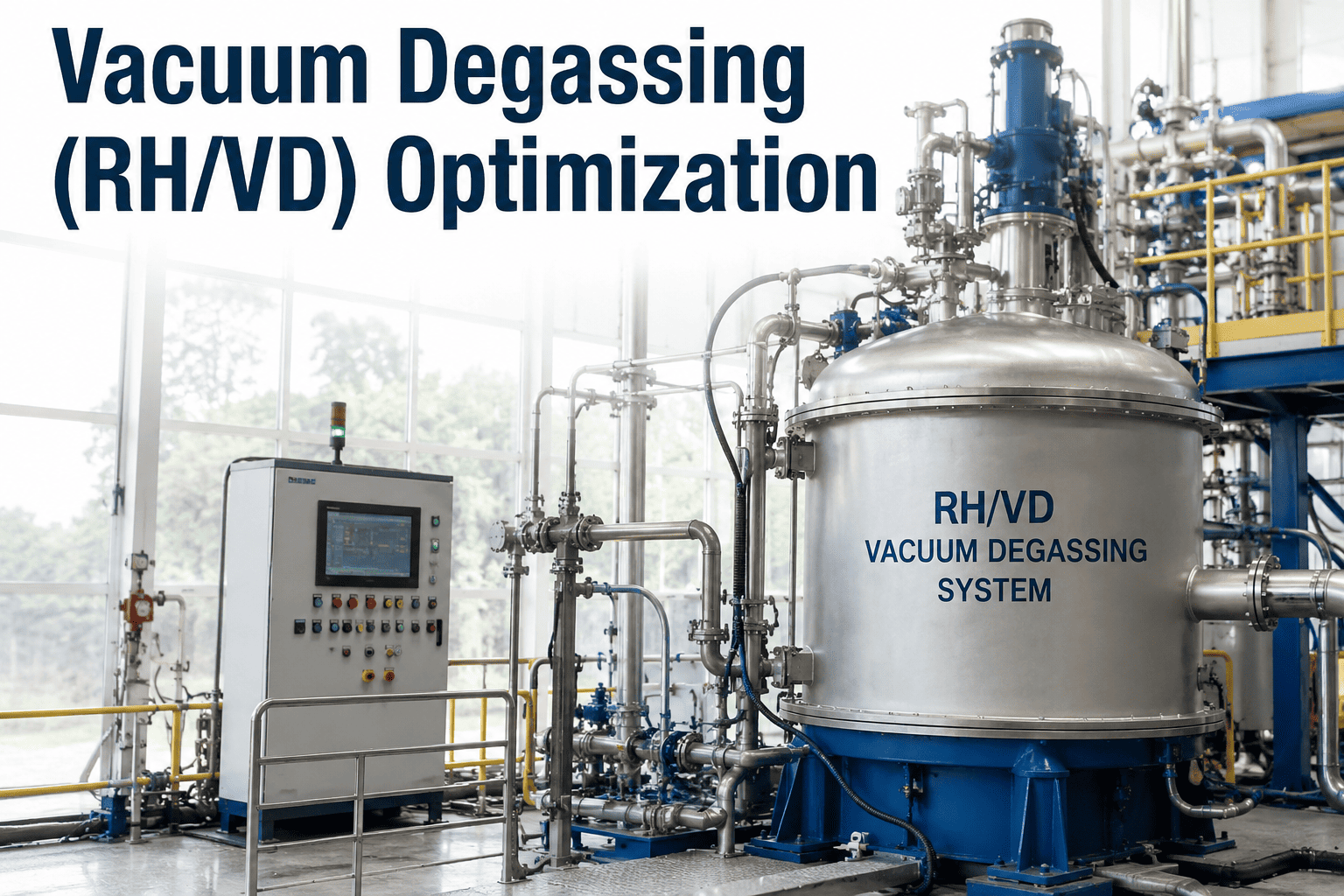
Vacuum Degassing VD/VOD: Hydrogen Removal and Ultra-Low Carbon Control
Vacuum level, stirring intensity, and decarburization progress tracked together to hit specialty steel specifications consistently, treatment after treatment.
The Precision Vacuum Treatment Demands
<2 ppm
is a typical hydrogen specification for critical applications like automotive and pressure vessel steel
<30 ppm
carbon target for ultra-low carbon grades, requiring sustained low vacuum pressure to achieve
Minutes matter
a treatment cycle cut short by even a few minutes can leave hydrogen or carbon above specification
High cost of retreat
a heat that misses specification often requires costly re-treatment or a grade downgrade
What Happens Through a Vacuum Degassing Cycle
1
Vacuum Draw-Down
Chamber pressure is reduced to the target vacuum level, with the rate of draw-down itself an early indicator of whether the vessel seal and pumping system are performing normally.
2
Decarburization Under Vacuum
Carbon and oxygen react and are removed as the vacuum level drops, with the reaction rate directly dependent on both vacuum level and stirring intensity working together.
3
Hydrogen Removal Under Sustained Vacuum
Extended time at deep vacuum drives dissolved hydrogen out of the melt, meaning any interruption or shallow vacuum period can undermine hours of prior treatment progress.
4
Final Composition Adjustment
Once carbon and hydrogen targets are confirmed, final alloy trim additions bring the heat to its exact target chemistry before vacuum break.
5
Vacuum Break and Verification Sample
A final sample confirms the heat meets specification before release to casting, the last checkpoint before the treatment result becomes irreversible.
See Vacuum Level, Stirring, and Decarburization Together, Live
iFactory gives VD/VOD operators one real-time view of the parameters that actually determine whether a heat hits its ultra-low carbon or hydrogen target.
What to Track During VD/VOD Treatment
Vacuum Degassing Monitoring Reference
| Parameter | What It Controls | Risk If Off-Target |
|---|---|---|
| Vacuum pressure level | Decarburization and hydrogen removal rate | Extended treatment time or missed spec |
| Argon stirring rate under vacuum | Reaction kinetics and bath homogenization | Uneven composition, slow degassing |
| Treatment cycle duration | Cumulative hydrogen removal at depth | Residual hydrogen above specification |
| Off-gas CO analysis | Real-time decarburization progress | Premature or delayed endpoint call |
| Vessel leak rate | Vacuum system integrity | Inability to reach or hold target vacuum |
Common Causes of Off-Specification Heats
Ending Treatment on the Clock, Not the Data
Treating cycle duration as fixed rather than confirming actual decarburization and hydrogen progress leads to heats released before they truly meet specification.
Vessel Leak Rate Drift
A slowly worsening seal or pump condition can prevent the vessel from reaching target vacuum, a problem that is often invisible until treatment results start slipping.
Stirring Too Weak for the Reaction Stage
Fixed stirring rates that do not adjust as decarburization progresses can leave the reaction diffusion-limited well before the vacuum level itself is the constraint.
Delayed Endpoint Confirmation
Waiting on lab sample turnaround to confirm endpoint extends vessel occupancy time unnecessarily when off-gas analysis could confirm progress in real time.
Improving Consistency in Vacuum Treatment
1Track vacuum draw-down rate against baseline to catch vessel seal degradation early
2Use off-gas analysis alongside sample results to confirm decarburization endpoint in real time
3Adjust stirring intensity by treatment stage rather than holding one rate throughout
4Review vessel leak rate trends on a fixed schedule, not only after a failed treatment
5Log full treatment history per heat to support root cause review of any off-specification result
Vacuum Degassing — Common Questions
What vacuum level is typically required for ultra-low carbon steel production?
Ultra-low carbon grades generally require sustained pressure below 1 torr to drive decarburization effectively, though the exact target depends on furnace design, heat size, and the specific carbon specification being targeted. Consistent achievement of that level, not just a momentary dip, is what actually determines final carbon content.
How is hydrogen removal endpoint determined during treatment?
Hydrogen removal is primarily time-and-vacuum-level dependent rather than having a directly measurable real-time indicator like decarburization's off-gas signal, which is why sustained treatment duration at target vacuum is closely tracked. Some operations also use hydrogen probes for direct verification before releasing a heat for hydrogen-sensitive applications.
Can off-gas analysis really replace waiting for a lab sample result?
Off-gas CO analysis provides a strong real-time proxy for decarburization progress and is widely used to guide treatment decisions during the cycle, but a final lab sample is still typically taken to formally verify the heat meets specification before release, particularly for the tightest carbon and hydrogen tolerances.
How does iFactory help reduce off-specification vacuum treatment results?
iFactory's platform brings vacuum level, stirring rate, and off-gas trend data into one live display so operators can confirm real progress before ending a cycle, rather than relying on a fixed clock time that may not reflect the actual state of the melt.
What causes a vessel to fail to reach its target vacuum level?
A degraded vessel seal, worn pumping system components, or an air leak at a fitting are the most common causes of a vessel struggling to reach target vacuum. Tracking draw-down rate over time against a healthy baseline is one of the earliest ways to catch this kind of gradual degradation before it affects treatment outcomes.
SECONDARY METALLURGY · VACUUM TREATMENT
Hit Ultra-Low Carbon and Hydrogen Targets Every Time
See how iFactory brings vacuum, stirring, and off-gas data into one real-time view for your VD/VOD station.