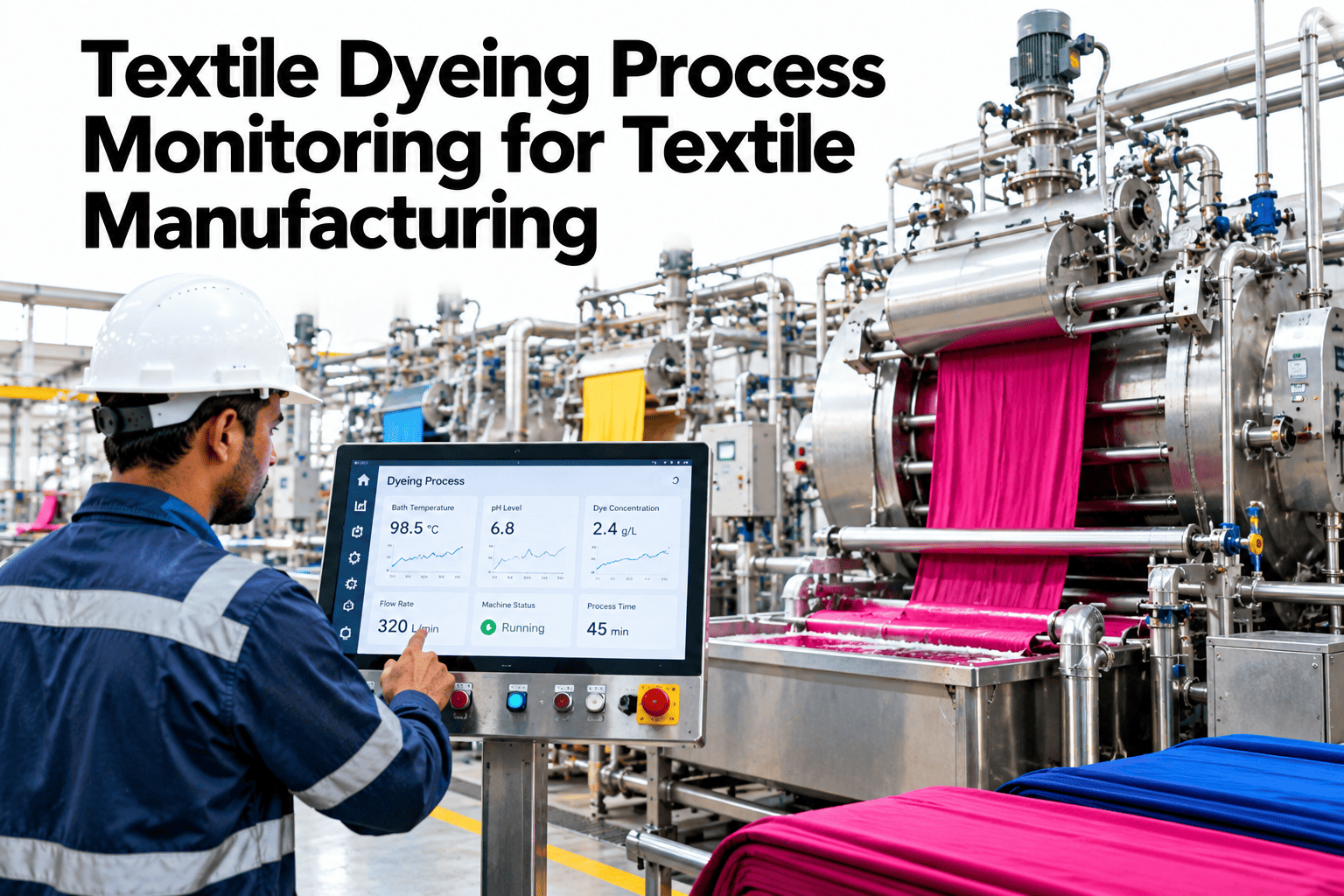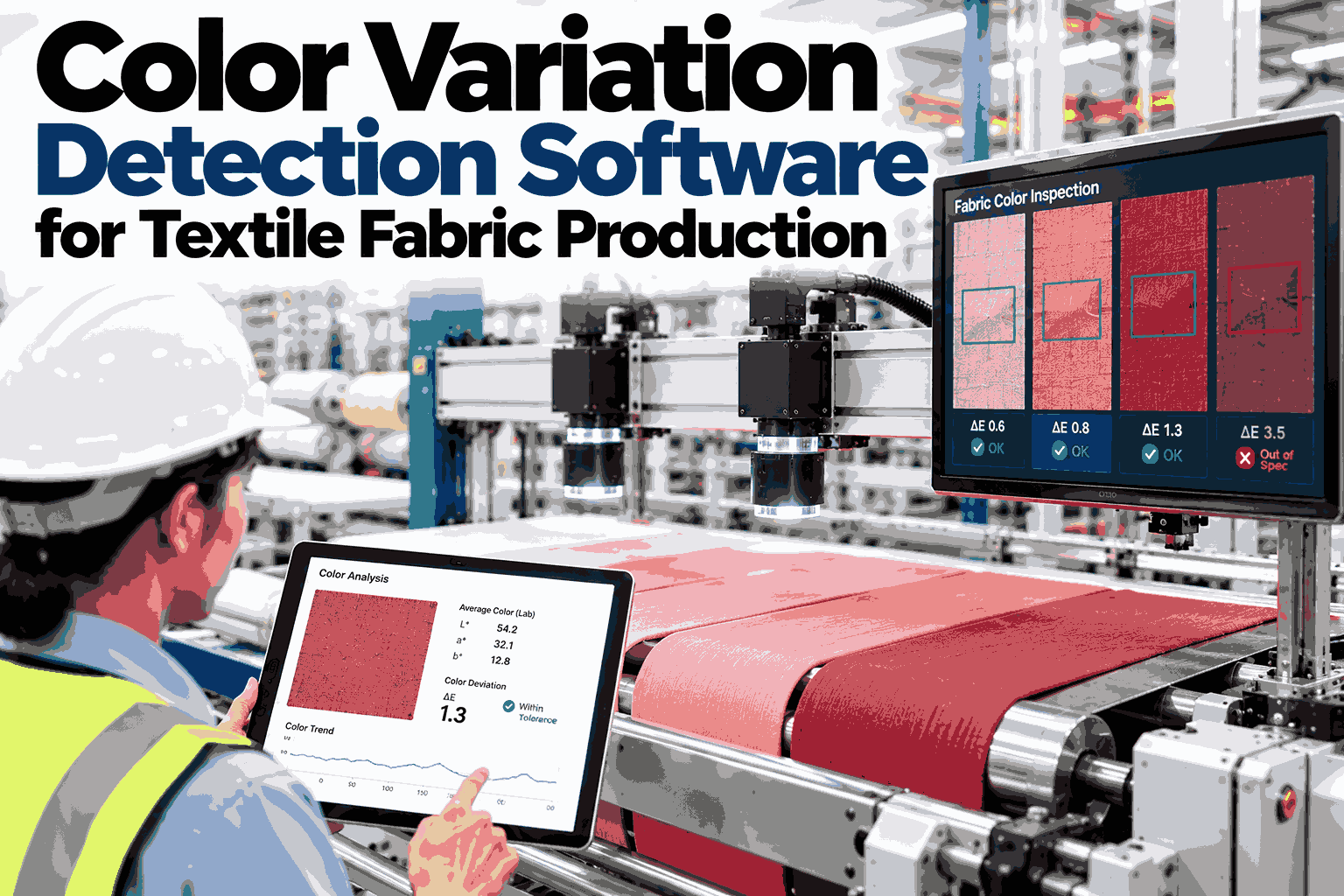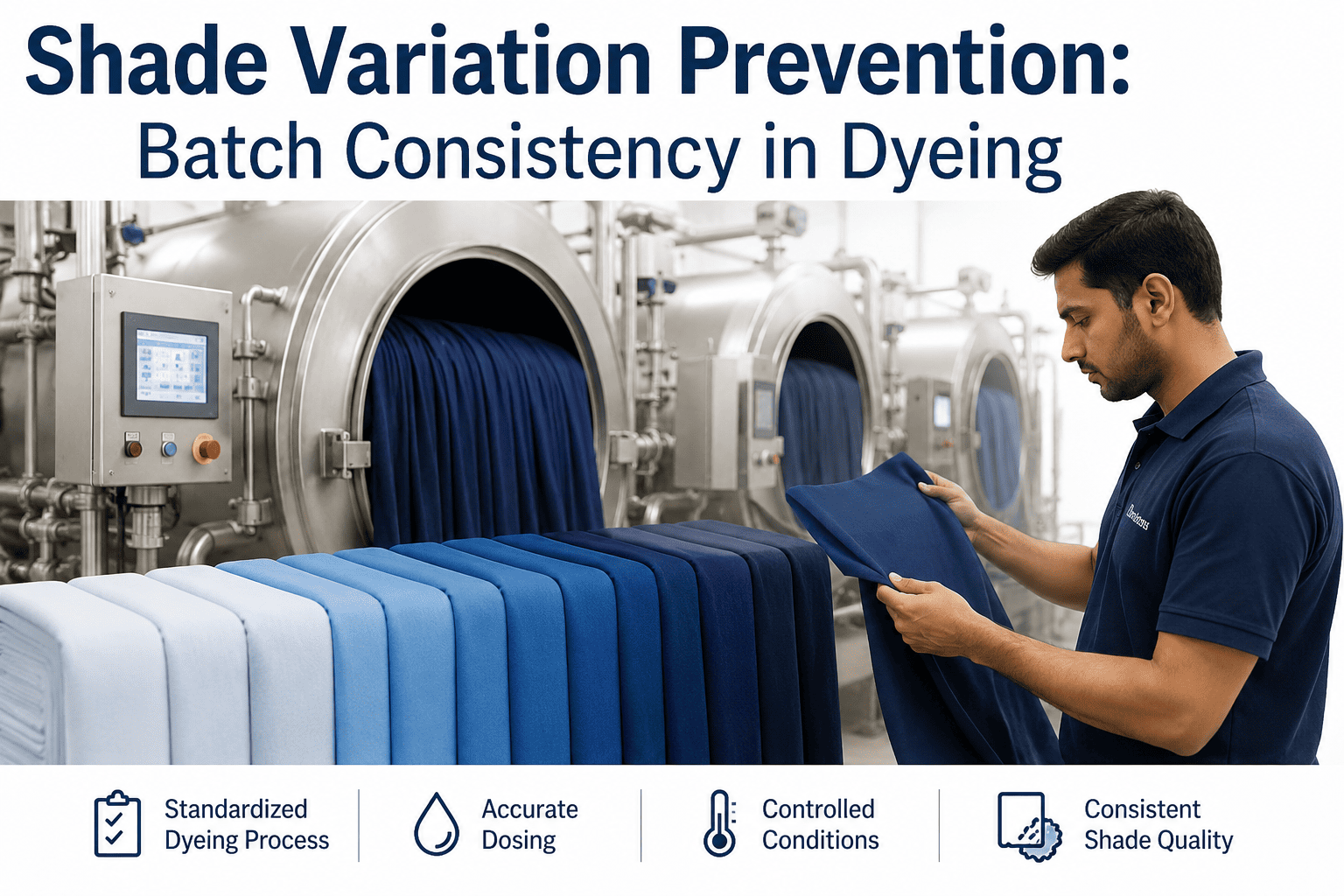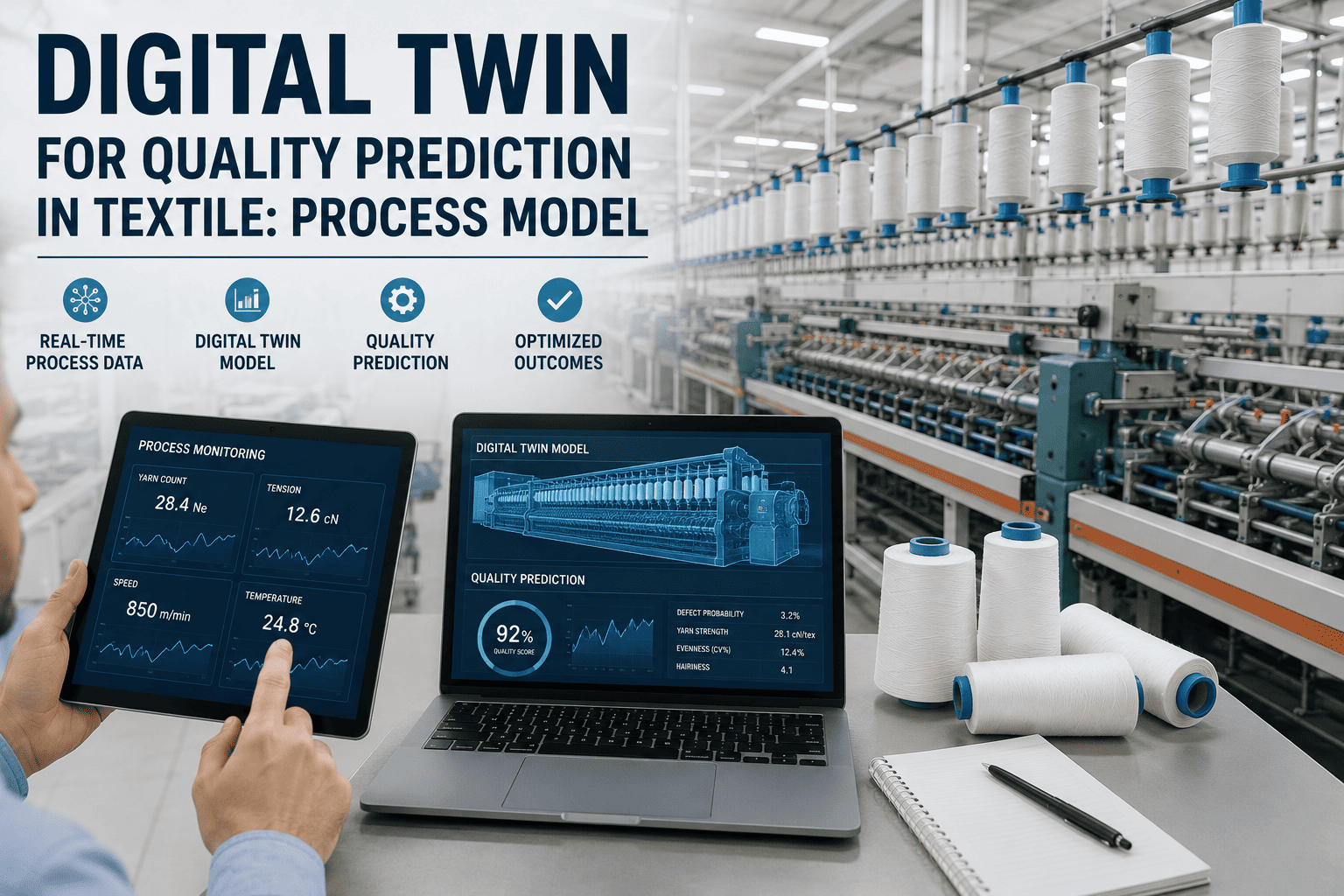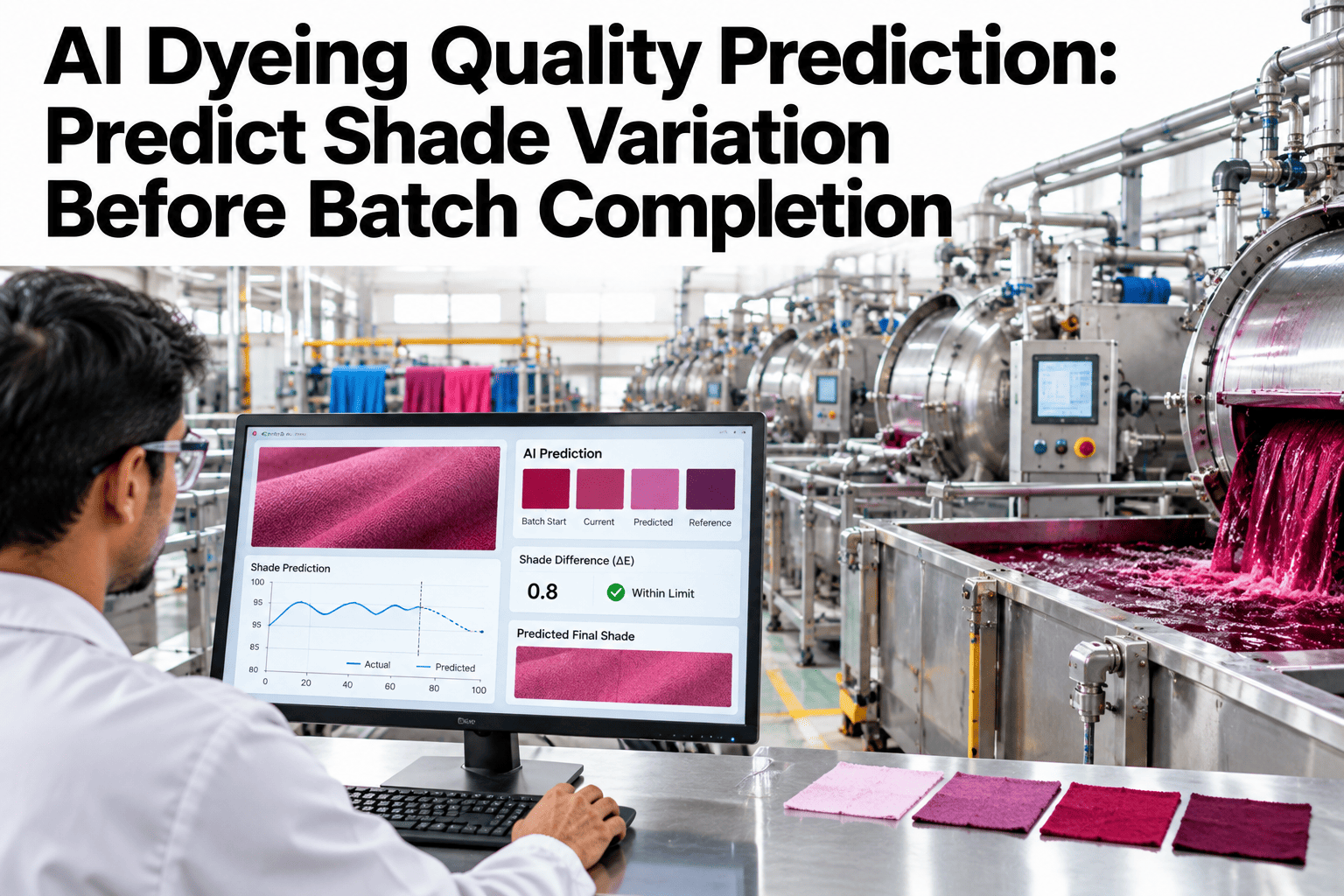
A shade miss is usually only confirmed after the batch comes out and a technician holds it up against the standard. By then the steam, the electricity and the hour the cycle ran are all spent, and the only option left is a full re-dye. Predicting shade risk while the batch is still running, using temperature, pH, liquor ratio and machine data together, gives a chance to correct course before completion instead of after. This guide covers how that prediction is built and what it takes to trust it. Dye houses ready to see their own batches risk-scored live can book a demo with the iFactory AI team.
AI Dyeing Quality Prediction: Predict Shade Variation Before Batch Completion
Use batch, recipe, temperature, pH, liquor ratio and machine data to identify shade-risk signals before dyeing is complete.
Risk: Low
Risk: Low
Risk: Elevated
Risk: Low
Why Shade Misses Are Usually Caught Too Late
A visual shade check happens after the batch finishes, by which point every input that caused the drift, a slow heat-up, a pH swing, an off liquor ratio, has already done its damage.
A prediction model watches those inputs while the cycle is still running, so a drifting signal can trigger a correction before the dye has fully taken.
The Signals the Model Watches
A handful of process variables, tracked together rather than individually, give the clearest early signal of shade risk.
| Signal | Why It Matters | Typical Source |
|---|---|---|
| Temperature profile | Deviation from the recipe's heating curve | Machine controller |
| pH | Shifts affect dye uptake and fixation | Inline or periodic sensor |
| Liquor ratio | Off-ratio dilutes or concentrates dye unevenly | Machine load data |
| Machine condition | A specific machine's known drift tendency | Historical batch outcomes |
From Signal to Correction
The prediction runs continuously through the cycle, so a flagged risk has time to be addressed before the batch finishes.
Catch a Shade Miss Before It Finishes
Book a 30-minute walkthrough and see shade-risk prediction running live on your own dyeing cycle.
A Sample Flagged Batch, Illustrative
The figures below are invented to show the shape of a flag, not to benchmark your dye house.
Common Prediction Mistakes
The same errors repeat across dye houses piloting shade prediction for the first time.
What Changes Once Prediction Is Trusted
Once operators trust the risk score, the way a dye house handles uncertain batches starts to shift.
Difficult shades that used to carry a built-in expectation of occasional rework get planned with tighter in-cycle monitoring instead, and quality teams use the historical flag data to refine recipes for problem fabric and color combinations.
Frequently Asked Questions
How accurate is shade-risk prediction?
Accuracy depends on how much historical batch and outcome data is available to train against, with accuracy generally improving as more seasons of batches are included. Early deployments are best treated as an added signal alongside existing quality checks. Book a demo to see accuracy on your own historical batches.
Does this replace our final shade inspection?
No, it works alongside final inspection as an early warning system, giving operators a chance to correct course mid-cycle rather than replacing the quality check that confirms the finished batch.
What happens if a flag turns out to be a false alarm?
A flagged batch that finishes within tolerance simply confirms the correction worked or the risk was lower than scored, and that outcome feeds back into the model to refine future predictions.
Does this connect to our existing dye machine controllers?
In most cases, yes. iFactory AI reads temperature, pH and machine data from existing controllers and sensors without requiring new process hardware. Ask support which controllers connect.
Catch Shade Risk While There Is Still Time to Fix It
iFactory AI scores shade risk mid-cycle from temperature, pH, liquor ratio and machine data. Book a walkthrough built around your dye house.