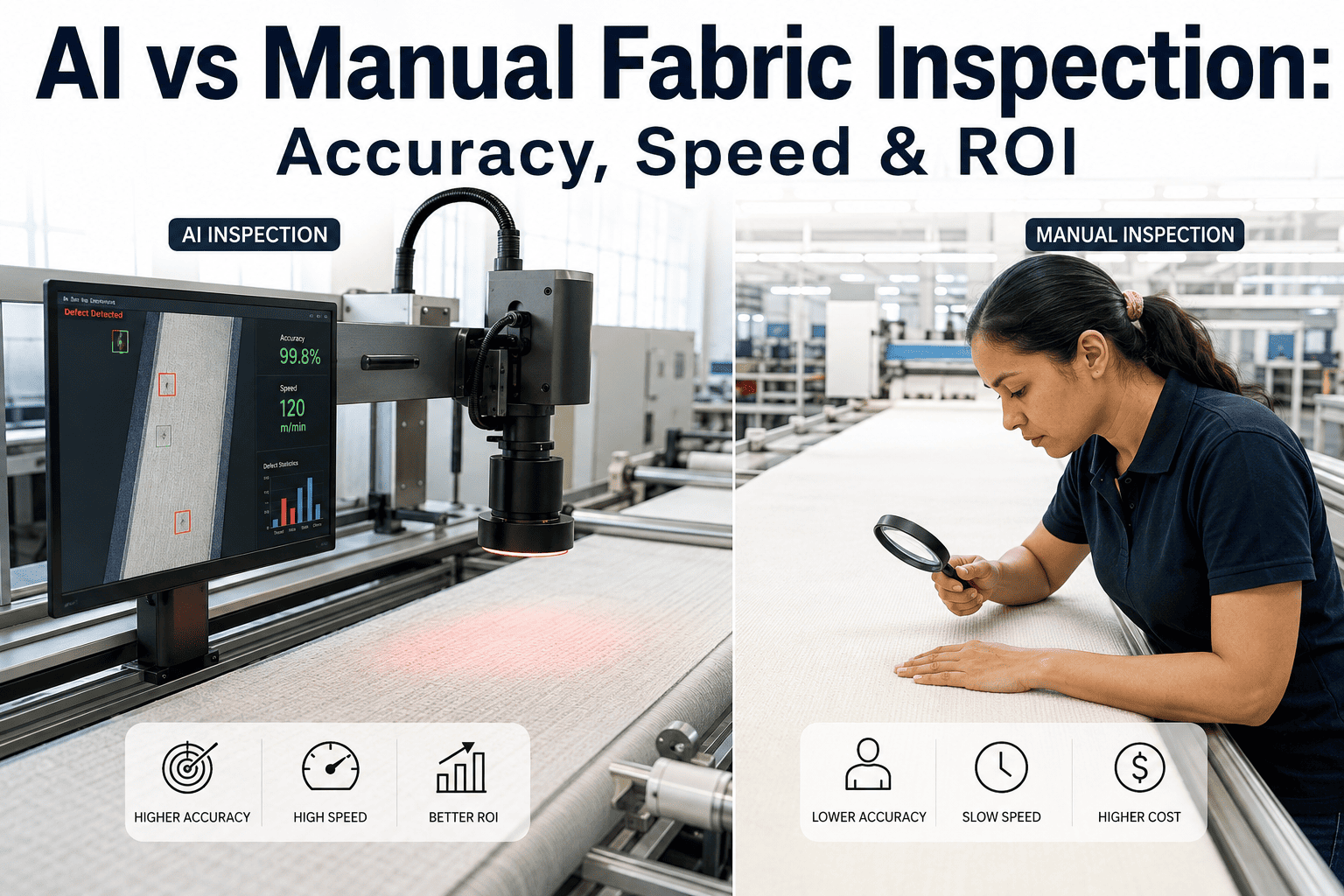
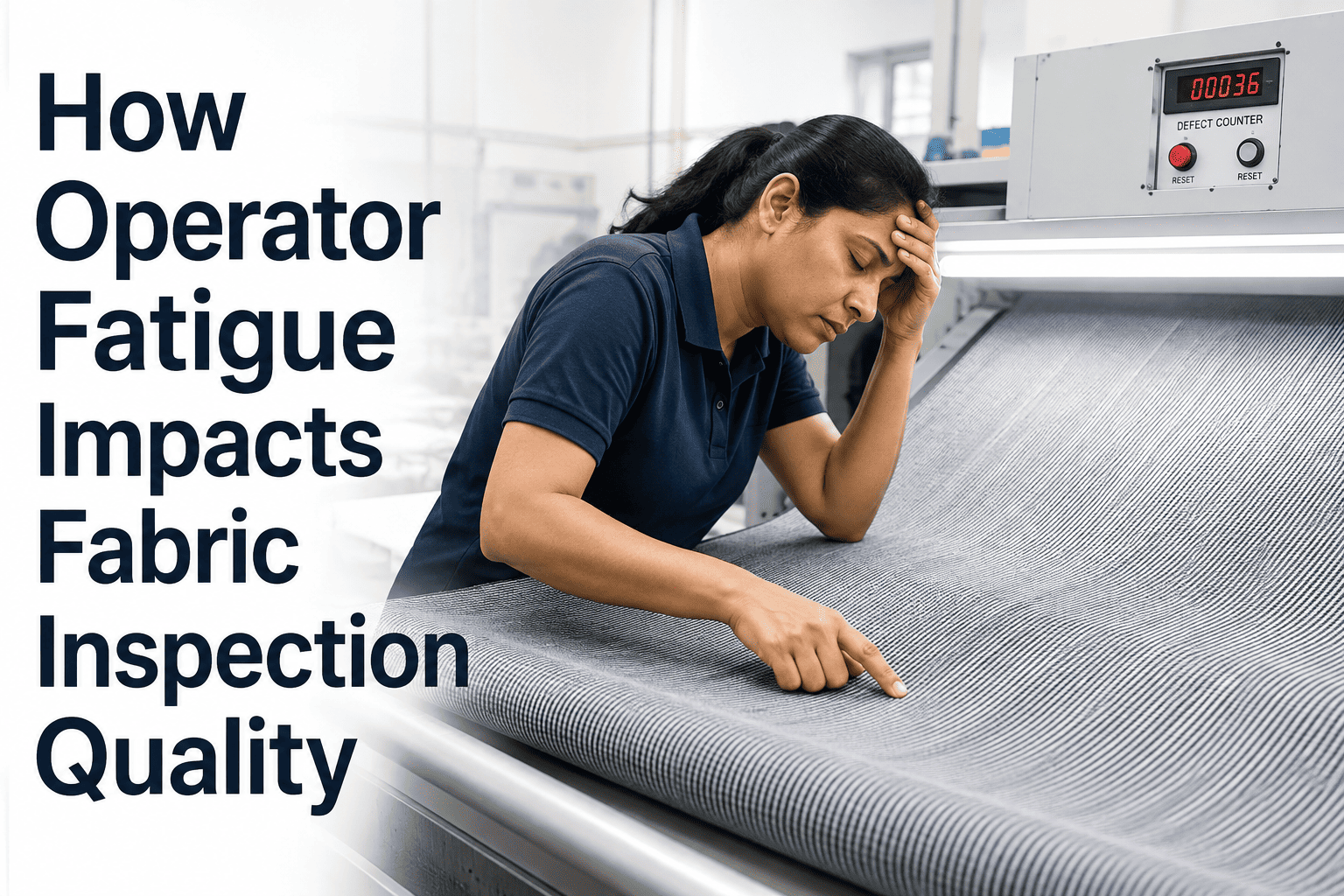
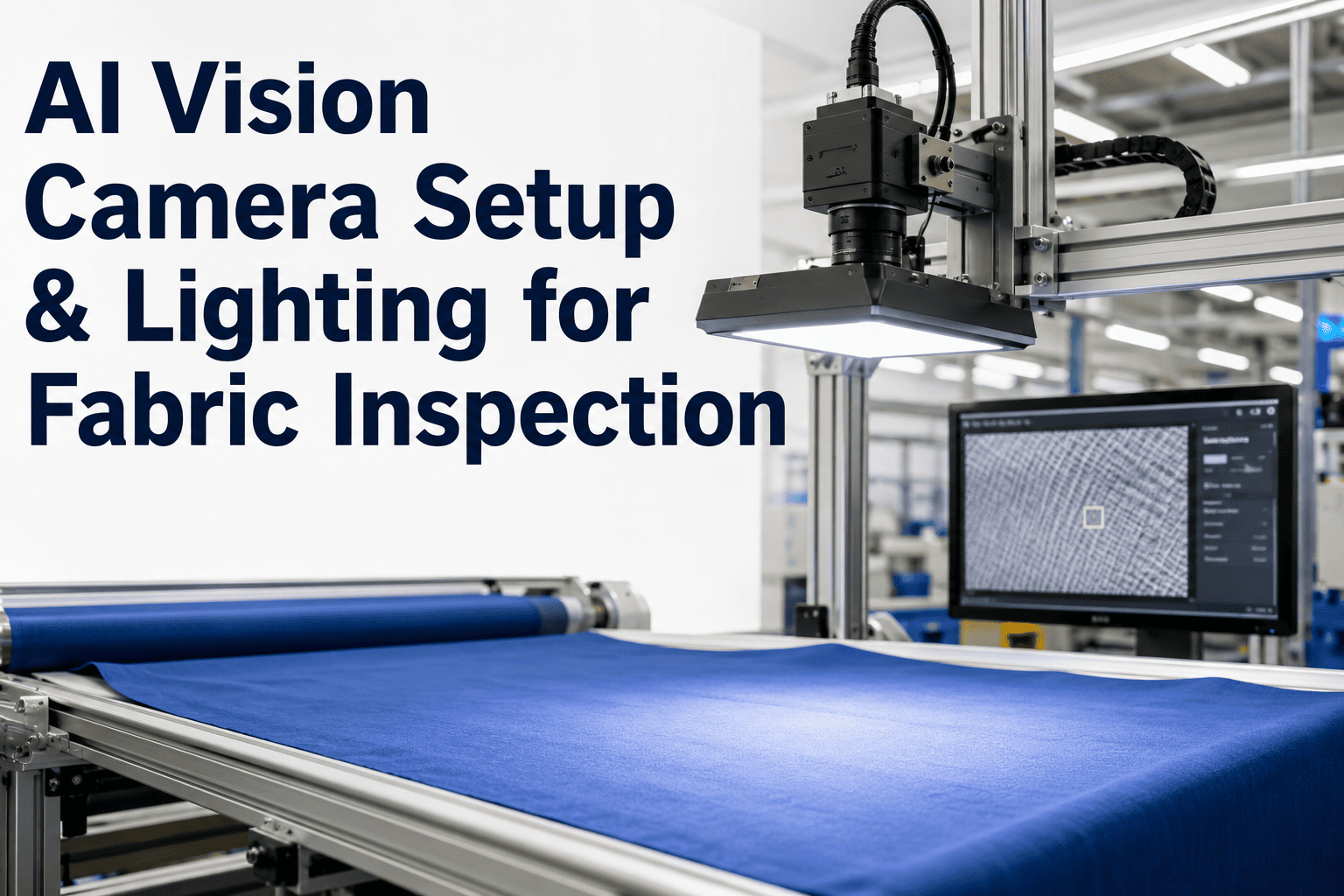
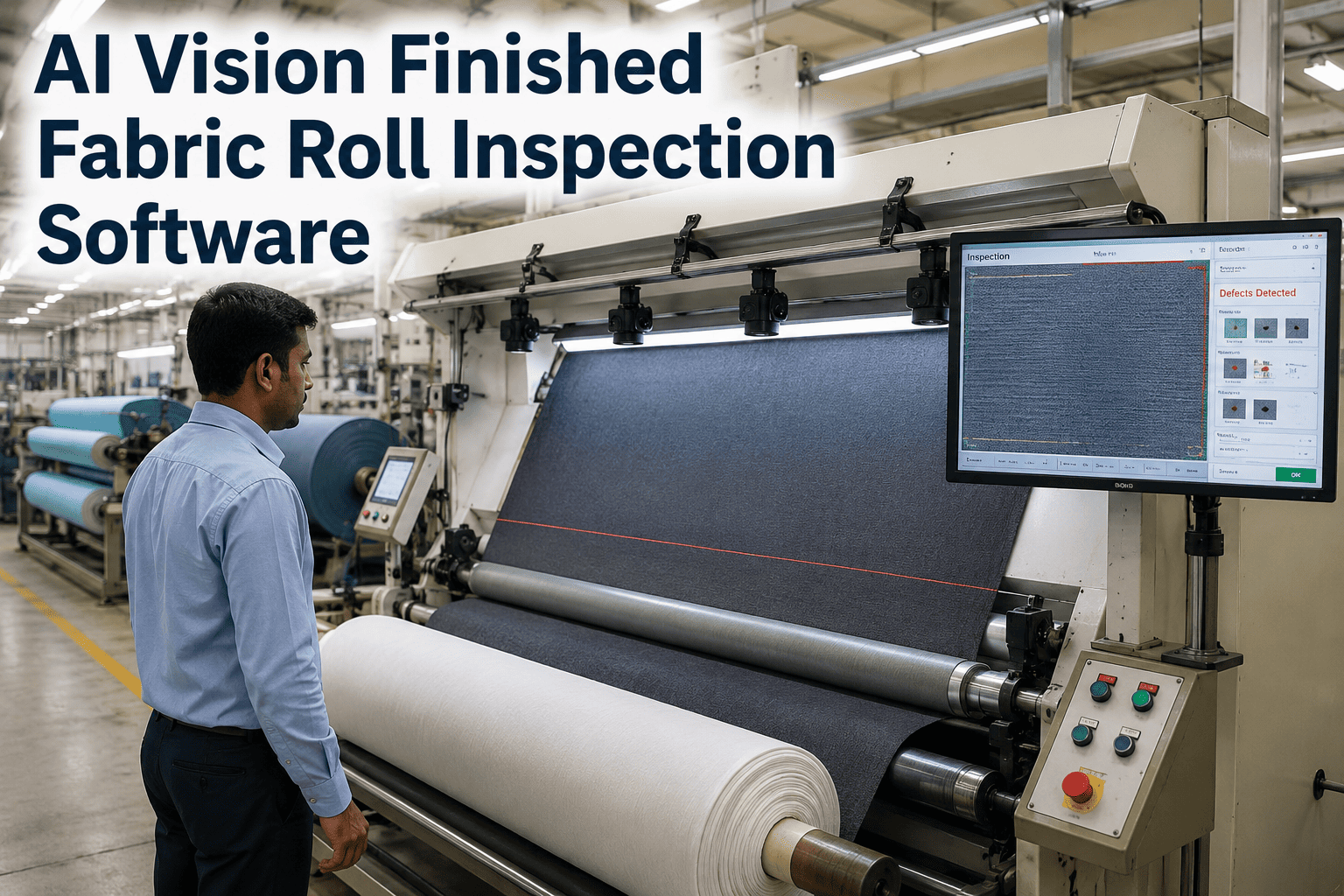
A trained fabric inspector examining cloth at standard line speed under good lighting catches roughly 60 to 70 percent of defects present on a first pass, and that number is not a criticism of the inspector — it is a documented limit of sustained human visual attention applied to a repetitive task for eight hours at a stretch. An AI vision inspection system examining the same fabric under the same conditions consistently detects 95 percent or more, not because the algorithm has better eyesight than a human, but because it does not fatigue, does not lose concentration in hour six of a shift, and applies identical detection criteria to the millionth meter as it did to the first. Mills weighing whether that accuracy gap justifies the investment can Book a Demo to see a side-by-side detection comparison run on their own fabric.
AI VS MANUAL INSPECTION · ACCURACY · SPEED · ROI
AI vs Manual Fabric Inspection: Accuracy, Speed, and the ROI Numbers
95%+ detection versus 60-70% manual accuracy. Three times the inspection speed. Payback inside 12-18 months. Here is the complete comparison mills actually need before deciding.
The Detection Gap: Why Manual Inspection Misses What It Misses
Manual fabric inspection accuracy is not a fixed number — it degrades measurably across a shift. Detection rates typically start strong in the first two hours of a shift, when an inspector is alert and freshly focused, then decline steadily as sustained visual attention on a repetitive, fast-moving surface produces genuine cognitive fatigue. Studies of sustained visual inspection tasks across manufacturing industries consistently show this decline pattern, and textile fabric inspection is a particularly demanding version of the task because the visual field is large, the fabric moves continuously, and defect signatures can be subtle — a shade variation of a few percent, a single dropped stitch, a hairline crack in coating.
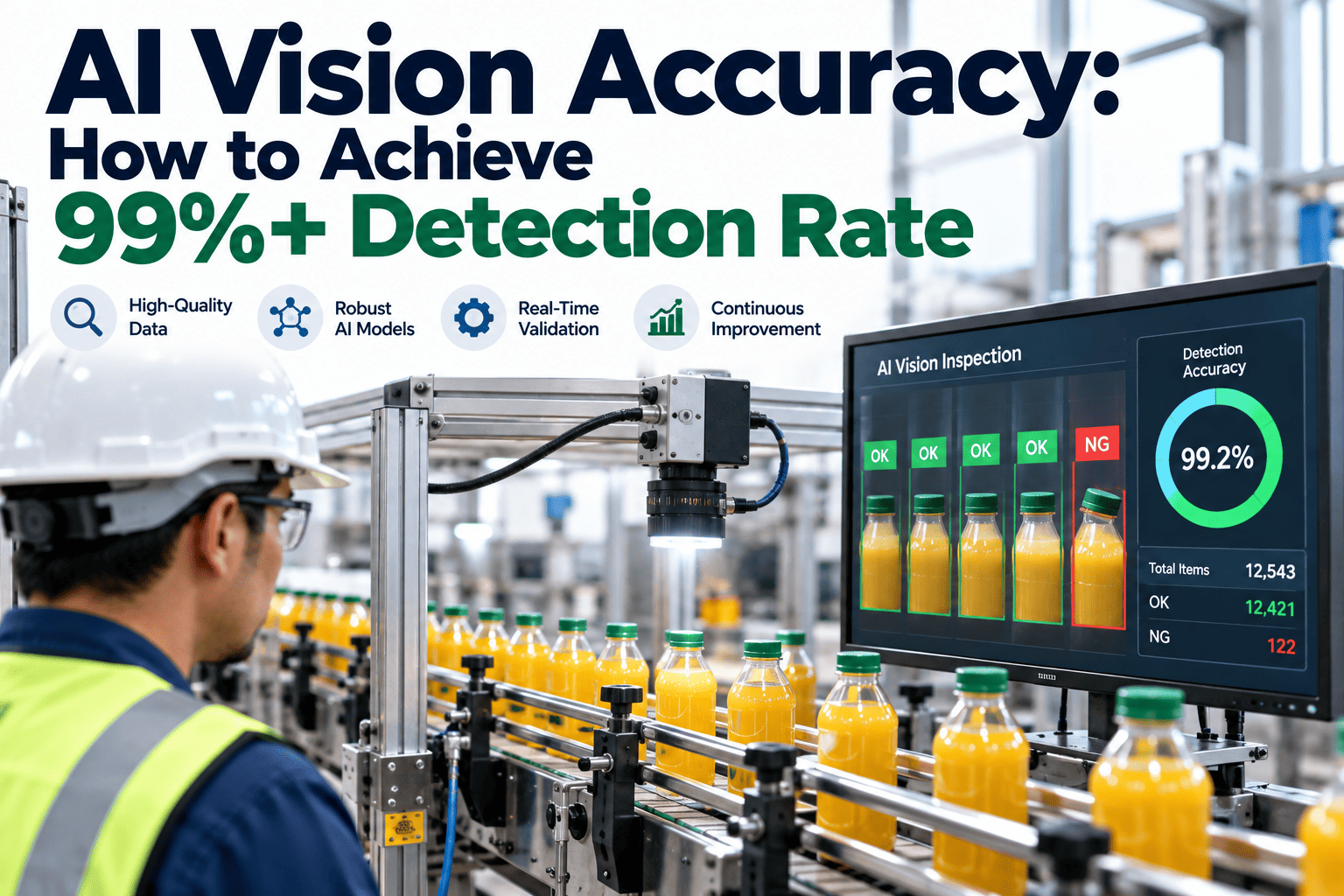
AI vision inspection does not experience this decline because it is not subject to attention fatigue in the way human visual cognition is. A model trained on a representative defect dataset applies the identical detection threshold to frame one and frame one million, which is the core reason AI systems consistently outperform manual inspection on aggregate accuracy even when a well-rested inspector in the first hour of a shift can, for a brief window, match or exceed AI detection on certain defect types. The comparison that matters for a full production run is not best-case human performance against AI — it is average sustained performance across an entire shift, and that comparison consistently favors automated detection.
Head-to-Head: The Full Comparison
Manual Fabric Inspection
Detection accuracy60-70% average across shift
Inspection speedLimited by human visual processing
Consistency across shiftDeclines with fatigue over hours
Consistency across inspectorsVaries by individual skill and training
Defect data captureManual logging, often summary-level
Labor requirementDedicated inspector per line, per shift
ScalabilityLinear — more lines need more inspectors
AI Vision Inspection
Detection accuracy95%+ consistent, no fatigue decline
Inspection speedMatches full production line speed
Consistency across shiftIdentical threshold, hour 1 or hour 8
Consistency across inspectorsSingle model, uniform criteria
Defect data captureAutomatic, defect-level, timestamped
Labor requirementOne system covers multiple lines
ScalabilityAdds lines without proportional headcount
SIDE-BY-SIDE DETECTION TEST · YOUR FABRIC, YOUR LINE
See the Accuracy Gap on Your Own Production Line
iFactory runs a direct comparison against your current manual inspection process, on your actual fabric, so the accuracy and speed numbers are not industry averages — they are yours.
Speed: Where the Multiplier Actually Comes From
The commonly cited three-times speed improvement from AI inspection is not primarily about the AI model processing images faster than a human can look at fabric, though that is part of it. The larger speed gain comes from removing inspection as a line-speed bottleneck entirely. Many mills currently run production lines below their mechanical maximum speed specifically because manual inspection accuracy degrades further at higher line speeds — the faster the fabric moves, the less time an inspector has to examine each section, and mills calibrate line speed to keep manual detection rates within an acceptable range. AI vision inspection processes fabric at full mechanical line speed without the same accuracy trade-off, which means the speed gain shows up twice: once in the inspection process itself, and again in the production line speed the mill can now safely run.
The practical effect is that AI inspection often unlocks a production capacity increase that was not the primary reason for adopting it. A mill running lines at 85 percent of mechanical maximum specifically to protect manual inspection accuracy can frequently increase to 95-100 percent of mechanical maximum once inspection is no longer the limiting factor, representing a throughput gain independent of and additional to the direct labor and rejection savings.
The ROI Calculation: What Actually Pays Back the Investment
AI inspection ROI comes from four distinct sources that stack rather than compete, and mills that only calculate one or two of them tend to underestimate the total return significantly.
95%+
AI detection accuracy vs 60-70% manual average
3x
Effective inspection throughput improvement
12-18 mo
Typical payback window for mid-scale deployment
20-35%
Reduction in customer-side quality complaints
10-15%
Line speed increase once inspection bottleneck lifts
100%
Fabric coverage vs sampled manual inspection
The four ROI sources are: reduced downstream rejection and customer returns from catching defects earlier and more completely; recovered production capacity from running lines closer to mechanical maximum speed; reduced direct inspection labor cost, particularly across multiple shifts and lines; and reduced cost of quality claims and chargebacks from customers who previously received defective fabric that manual inspection missed. Individually, several of these sources alone can justify the investment on mid-to-large scale operations; combined, they typically produce the 12 to 18 month payback window mills report in practice.
Where Manual Inspection Still Has a Role
AI vision inspection is not a wholesale replacement for every function human inspectors perform, and mills that plan a transition acknowledging this get a smoother rollout than those expecting complete automation on day one. Manual inspection retains clear value for final subjective quality judgment calls that depend on customer-specific aesthetic preference rather than measurable defect criteria, for handling unusual or one-off fabric constructions outside a trained model's coverage, and for physical hands-on verification of flagged sections where texture or hand-feel matters alongside visual appearance. The most effective deployments position AI inspection as the primary detection layer covering the full fabric surface at full line speed, with human inspectors focused on flagged-section verification and judgment calls the system escalates rather than scanning the entire fabric surface themselves.
Frequently Asked Questions: AI vs Manual Fabric Inspection
Does AI inspection accuracy stay consistent across different fabric types and colors?
Detection accuracy depends heavily on how well the model has been trained against the specific fabric types, colors, and defect patterns a mill actually produces, which is why a proper deployment includes a calibration phase using representative fabric samples rather than a generic off-the-shelf model applied without adjustment. Once calibrated against a mill's actual production mix, accuracy typically stays consistent across color and construction variation within that trained range, though genuinely novel fabric types outside the training data may need a brief recalibration period before reaching full accuracy.
How long does it take to deploy AI inspection on an existing production line?
Deployment timelines vary by line complexity and existing infrastructure, but most installations involving camera and lighting setup, model calibration against representative fabric samples, and integration with existing quality logging systems complete within four to eight weeks from initial assessment to full production use. Mills running a phased rollout — starting with a single line before expanding — often see faster time to first value even if full multi-line deployment takes longer overall. Teams wanting a specific timeline for their facility can
Book a Demo to walk through the assessment process.
What happens to existing inspection staff after AI inspection is deployed?
Most mills redeploy existing inspection staff toward higher-value tasks rather than eliminating the roles entirely — verifying AI-flagged sections, handling the subjective judgment calls the system escalates, managing new fabric type calibration, and covering physical hands-on quality checks that remain valuable alongside automated visual detection. The nature of the role shifts from continuous visual scanning toward targeted verification and exception handling, which many mills report as a meaningful improvement in job quality for staff previously performing a highly repetitive, fatiguing task.
Is the accuracy gap between AI and manual inspection really as large as reported, or does it depend on defect type?
The gap does vary by defect type. Large, high-contrast defects like major holes or significant shade blocks are caught reliably by both manual and AI inspection with a smaller accuracy gap between them. The gap widens substantially for subtle defects — fine hairline cracks, small shade gradients, early-stage pilling, minor slubs — where sustained human attention genuinely struggles to maintain detection consistency across a full shift, while AI models trained on these subtle patterns maintain detection rates without the fatigue-driven decline. Aggregate accuracy figures reflect the full mix of defect types a mill actually encounters, weighted toward whichever categories occur most frequently in that mill's production.
How does AI inspection ROI compare between small mills and large multi-line facilities?
Larger multi-line facilities generally see faster payback because the fixed cost of deployment — camera and lighting infrastructure, model calibration, integration work — is spread across more production volume, and the labor savings from covering multiple lines with fewer dedicated inspectors scale favorably with facility size. Smaller mills can still achieve solid ROI, particularly when quality claims and customer chargebacks are a significant cost driver, but the payback window tends to run toward the longer end of the typical 12-18 month range rather than the shorter end.
AI VISION INSPECTION · ACCURACY · SPEED · MEASURABLE ROI
Move From Sampled Manual Checks to Full-Coverage AI Detection
iFactory deploys AI vision inspection calibrated to your actual fabric mix, running at full production line speed with detection accuracy that does not decline across a shift the way manual inspection does.