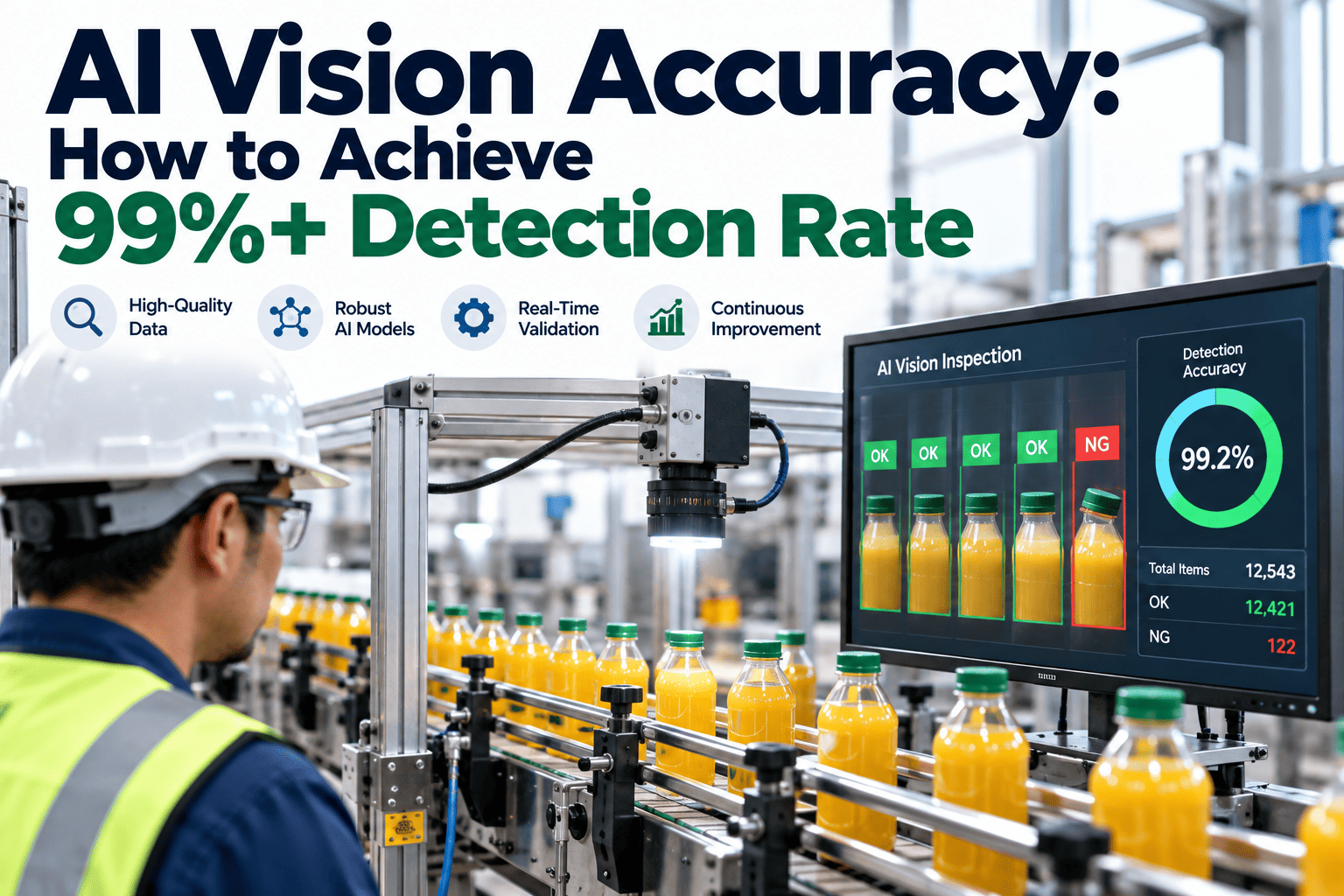
A vendor quoting "99% accuracy" in a sales deck and a mill actually achieving that number on its own fabric, its own lighting conditions, and its own defect types are two very different things, and the gap between them is almost always explained by training data quality rather than the underlying model architecture. A production-grade AI vision system reaches high detection accuracy through a specific combination of diverse, well-labeled training images, a model architecture matched to the actual defect types being detected, and a continuous improvement loop that keeps retraining the model as new defect patterns emerge. Mills that skip any one of these three elements tend to land well short of the accuracy their vendor promised, then wrongly conclude the technology itself doesn't work for their specific fabric. Mills wanting a realistic assessment of what accuracy is achievable on their own production line can start that conversation with iFactory's support team.
99% Accuracy Isn't a Feature You Buy. It's a Result You Build.
iFactory builds detection accuracy from training data quality, defect-matched model architecture, and continuous retraining, so the number in the demo is the number you actually see on your own production floor.
Why Two Mills Can Deploy the Same Vendor and Get Different Accuracy
The underlying algorithm rarely explains why one mill's accuracy lands near the vendor's quoted figure while another's falls noticeably short, since the model itself is usually the same. The difference almost always traces back to how well the training data reflects the specific fabric, lighting, and defect variety that mill actually runs.
Training Images Don't Cover Enough Defect Variety
A model trained mostly on one common defect type struggles to reliably catch rarer but still important defect categories it saw few examples of.
Lighting and Camera Setup Differs From the Training Environment
A model trained on images from one lighting condition can underperform significantly when deployed under a different setup than the one it learned from.
Labeling Quality Varies Across the Training Dataset
Inconsistent or inaccurate defect labeling during training teaches the model the wrong pattern, regardless of how much data volume exists.
The Model Never Gets Retrained as New Defects Appear
A static model deployed once and left unchanged gradually falls behind as new fabric types, suppliers, or defect patterns emerge that it never learned to recognize.
The Three Pillars of Production-Grade Accuracy
Reaching and sustaining high detection accuracy depends on three distinct factors working together, not any single one in isolation.
| Pillar | What It Requires | Common Failure Point |
|---|---|---|
| Training Data Quality | Diverse, accurately labeled images across all defect types | Insufficient examples of rare but important defects |
| Matched Model Architecture | A model structure suited to the specific defect detection task | Generic architecture not tuned to fabric-specific patterns |
| Continuous Improvement | Regular retraining as new defects and conditions emerge | Model deployed once and never updated |
Building Toward a Sustained 99% Detection Rate
Reaching a high accuracy figure at initial validation is only the first milestone; sustaining it in real production conditions requires an ongoing process.
Collect a Genuinely Representative Training Set
Images spanning every defect type, fabric variant, and lighting condition the system will actually encounter in production.
Validate Accuracy Against a Held-Out Test Set
Testing performance on images the model never saw during training, confirming the accuracy figure reflects genuine generalization.
Monitor Live Performance After Go-Live
Tracking real production accuracy against the validated baseline to catch any drift before it becomes a real quality gap.
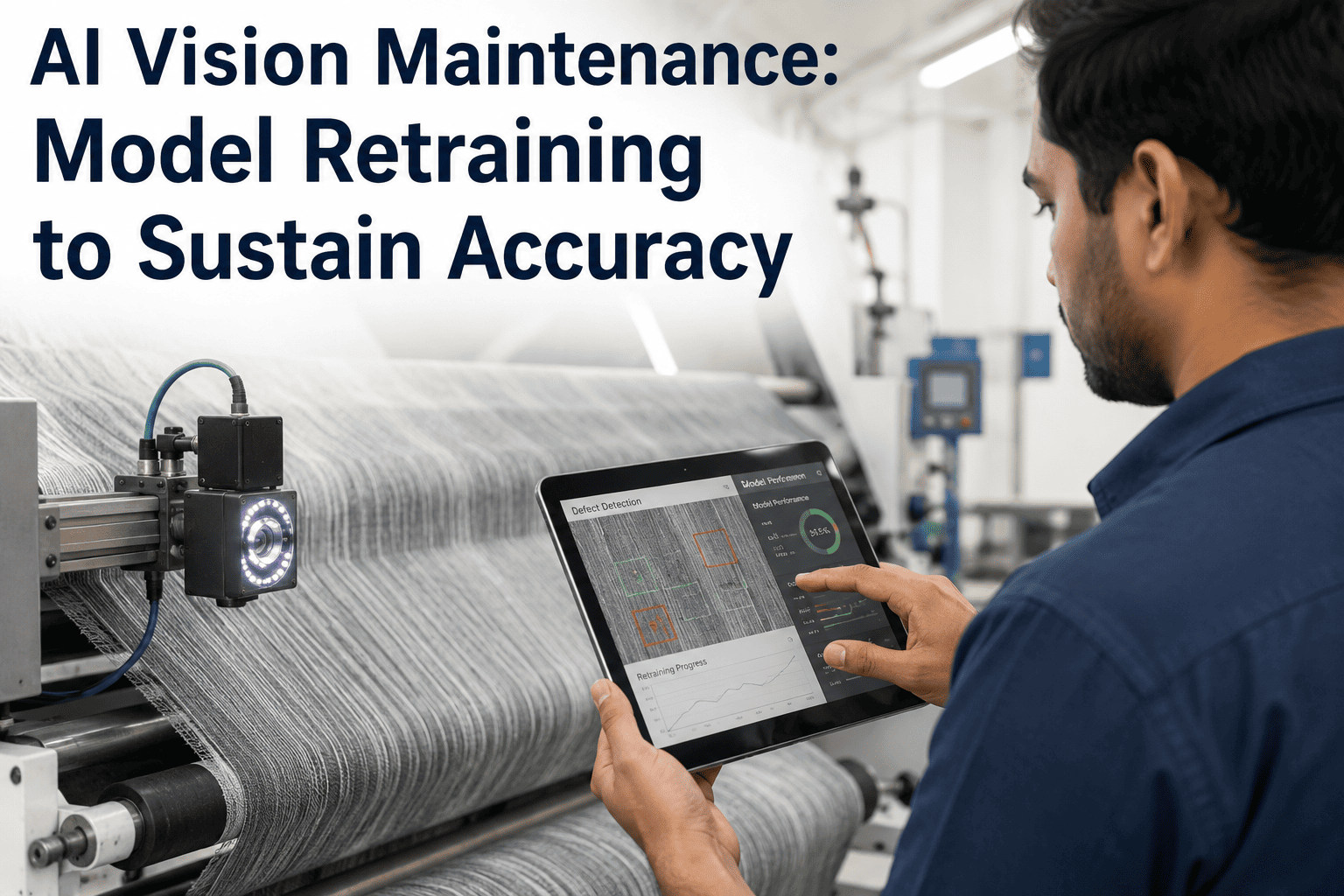
Retrain on a Defined Cadence
Incorporating new defect examples and conditions regularly rather than treating the initial model as a permanent, finished product.
Get the Accuracy the Demo Promised on Your Own Production Floor
iFactory builds detection accuracy from training data matched to your specific fabric and defect types, with continuous retraining to sustain it over time.
A Composite Scenario: The Accuracy Gap Traced to a Missing Defect Category
A composite denim mill's AI vision system performed well during initial validation, hitting the vendor's promised accuracy figure on the test dataset, but real production accuracy consistently ran several points lower once deployed, concentrated almost entirely around one specific weaving fault the mill saw only occasionally.
A review of the original training data confirmed the issue: that particular fault had appeared in only a handful of training images, far fewer than the mill's more common defect types, leaving the model under-trained for that specific pattern despite strong overall performance. The team collected an additional set of training images specifically for that fault type and retrained the model, closing the accuracy gap on that defect category within a few weeks and bringing overall production accuracy back in line with the original validated figure.
Common Mistakes in Chasing High Detection Accuracy
Trusting a Vendor's Quoted Accuracy Without Testing on Your Own Fabric
A general accuracy figure from another customer's deployment doesn't guarantee the same result on a different fabric type or defect mix.
Under-Representing Rare But Costly Defect Types in Training
A defect that occurs rarely but causes significant claims still needs enough training examples to be reliably detected.
Skipping Held-Out Validation Testing
Measuring accuracy only on training data, rather than a separate test set, produces an inflated figure that doesn't reflect real generalization.
Treating the Initial Model as Permanently Finished
Without ongoing retraining, accuracy on new defect patterns and material variations gradually degrades from the original validated figure.
Is Your Mill Ready to Build High-Accuracy AI Vision Detection
You can supply diverse, accurately labeled training images
A representative training set is the single largest driver of achievable accuracy.
You've documented your specific defect types and their frequency
Knowing which defects matter most and how often each occurs helps prioritize where training data effort should focus.
You're prepared to validate accuracy on held-out test data
Genuine validation, not just training performance, is what confirms the accuracy figure will hold in real production.
There's a plan for ongoing retraining after go-live
Sustained accuracy depends on treating the model as something that improves continuously, not a one-time deployment.
Frequently Asked Questions
Why might our mill not achieve the 99% accuracy a vendor demonstrated elsewhere?
Accuracy figures are specific to the training data, fabric type, lighting conditions, and defect mix used to build and validate the model, so a figure achieved on a different mill's fabric and defect profile doesn't automatically transfer. The most reliable way to know what's achievable on your own line is testing the system against your own representative fabric and defect samples rather than relying on a figure from someone else's deployment. Mills wanting a realistic assessment specific to their own production can talk to iFactory support.
How many training images do we need for each defect type?
There's no single universal number, since the required volume depends on how visually distinct and consistent a given defect type is, but rare or subtle defects generally need proportionally more examples than common, highly visible ones to reach reliable detection accuracy. Modern deep learning approaches can often work with fewer images per category than older rule-based systems required, but severely under-represented categories remain the most common cause of accuracy gaps.
How often should a deployed model be retrained?
A regular cadence, often quarterly, along with prompt retraining whenever a genuinely new defect category is identified, keeps a model's accuracy aligned with current production reality rather than the conditions it was originally trained under. New defect categories are commonly incorporated within a couple of weeks once enough example images have been collected, rather than waiting for the next scheduled retraining cycle.
Can accuracy be measured reliably before full production deployment?
Yes, validating against a held-out test set of images the model never saw during training gives a genuine estimate of real-world performance before committing to full production rollout, and this validation step is one of the most reliable ways to confirm a vendor's claims before go-live. Book a demo to see how validation testing gets structured around your specific fabric and defect types.
What happens if accuracy drifts downward after the system has been running for a while?
Ongoing monitoring of live production accuracy against the original validated baseline is what catches this kind of drift early, and it's most commonly caused by a new fabric supplier, a process change, or a genuinely new defect pattern the model hasn't seen before. Targeted retraining that incorporates examples of the new condition typically restores accuracy within a few weeks once the root cause of the drift is identified.
Build Accuracy That Holds Up on Your Actual Production Floor
iFactory builds detection accuracy from training data matched to your specific fabric, with continuous retraining that sustains it over time.