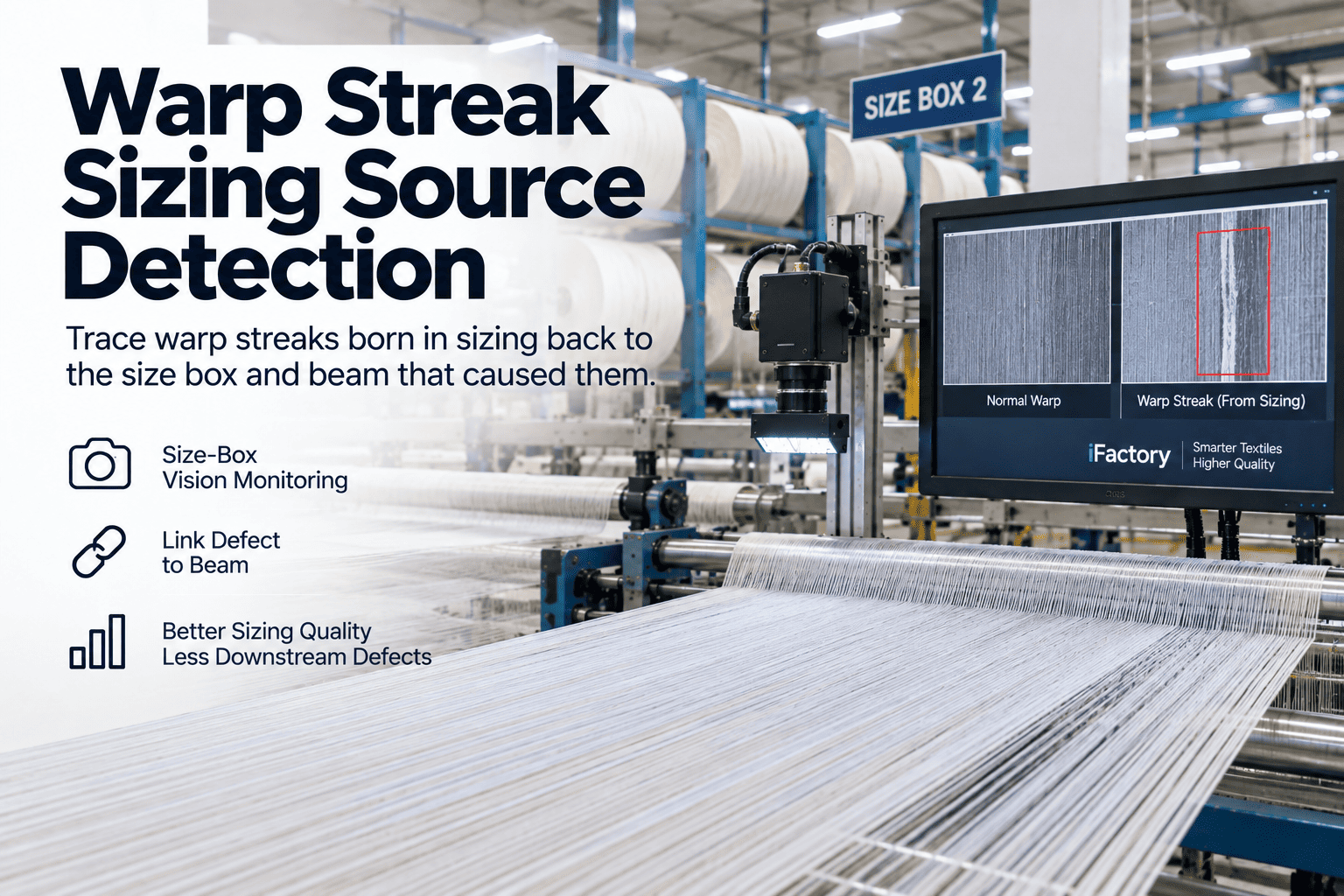
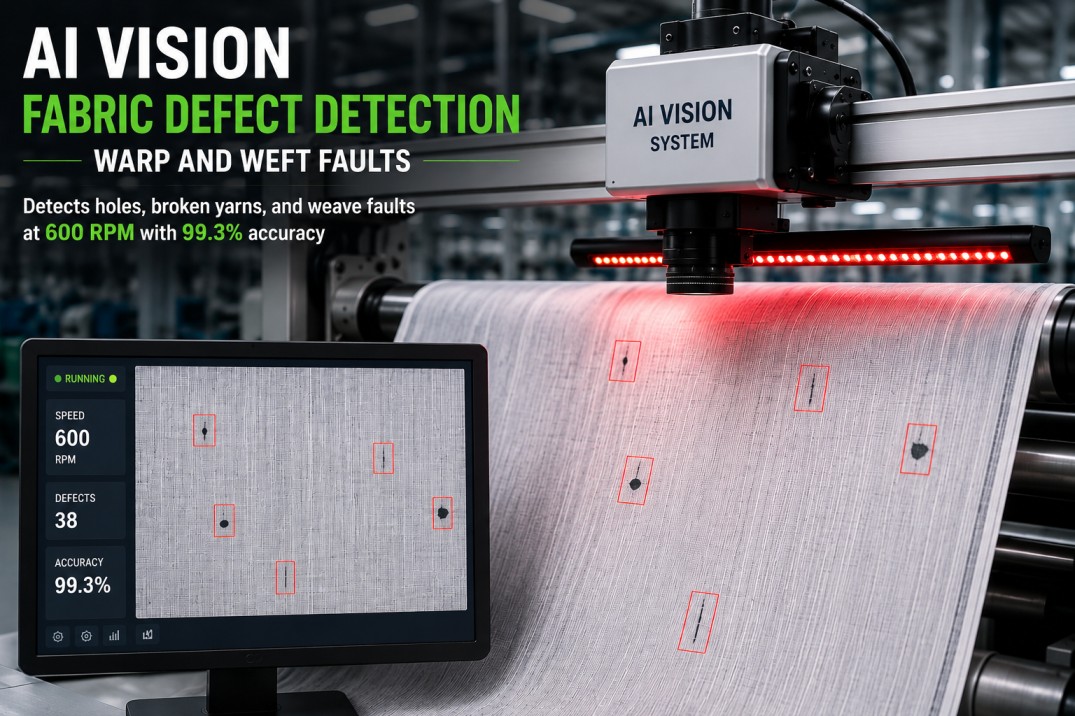
Warp streaks are the defect that finished-fabric inspection catches and nobody can trace back — a lengthwise stripe of subtly different colour or lustre that runs the length of the roll and shows only after finishing. The root cause is almost always upstream at sizing: a squeeze roller with a worn spot depositing more or less size, a size-box level fluctuation, a slasher stop-and-start that changed size film formation on one section. By the time the finishing inspector catches the streak, the sizing shift that caused it is days gone. Vision AI at the size box links finished streaks back to source.
iFactory / Warp streak & sizing vision
Trace Warp Streaks Back to the Size Box That Caused Them
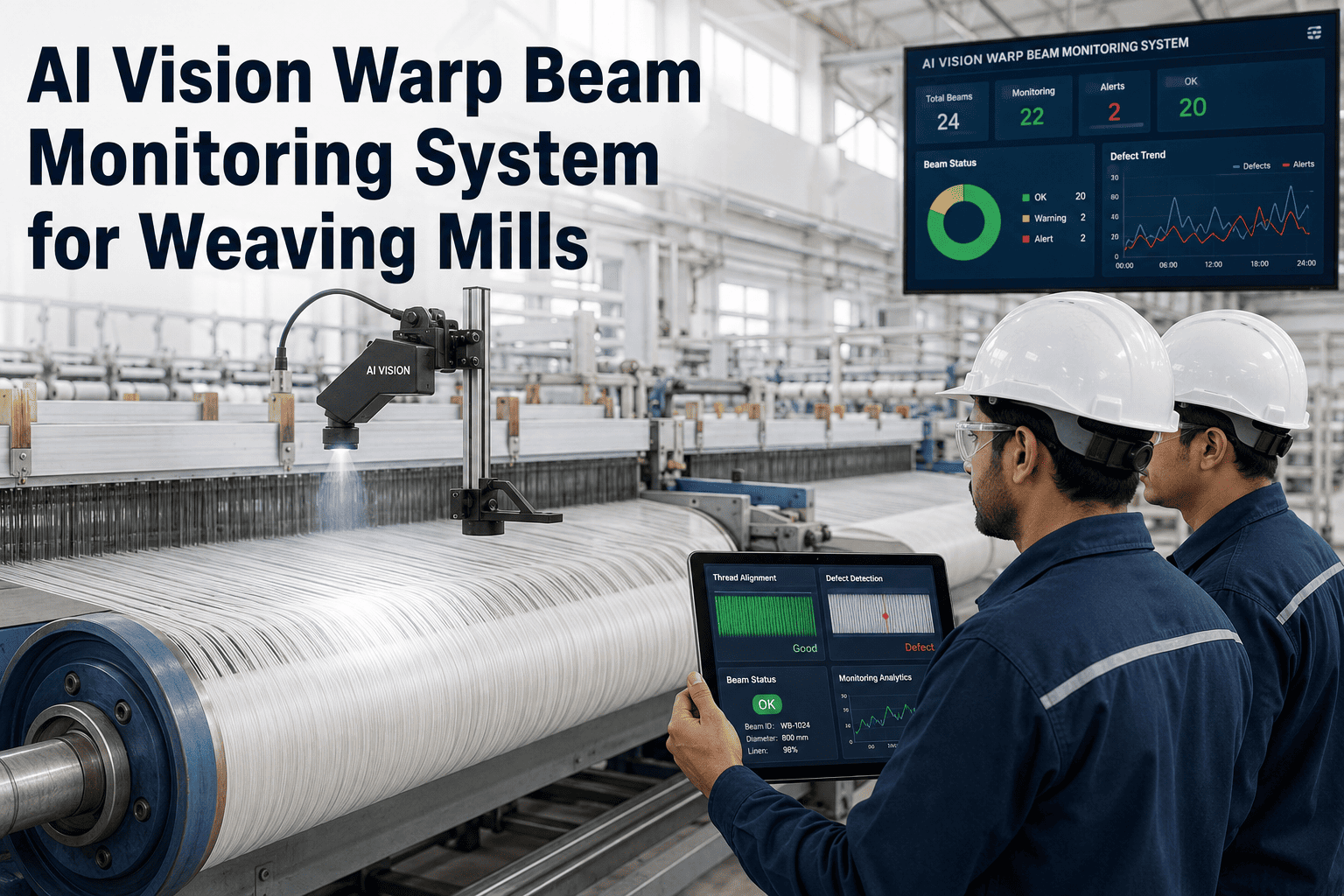
Vision at the size box capturing per-warp size pickup uniformity and linking finished-fabric warp streaks back to the specific size box, squeeze roller condition, and warp beam that caused them — root cause named, not guessed.
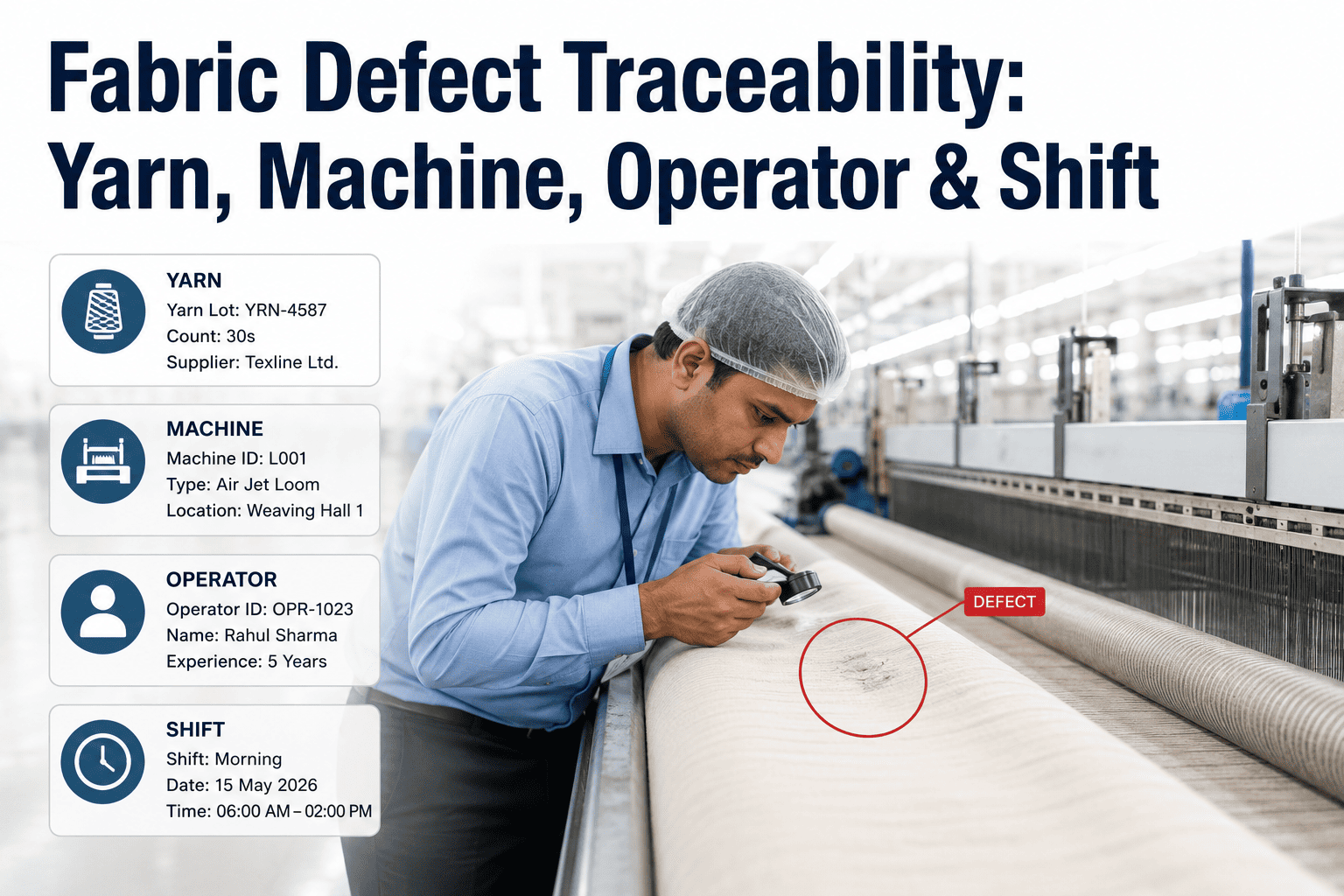
Finished roll
Warp streak at 380 mm
↓
Loom beam
B-2247 · warp 4,540
↓
Size box
SB-3 · squeeze roller worn
Size box vision
per-warp pickup
Streak → source
traceback chain
The Problem in Warp Streak Root Cause
A typical mill's warp streak problem plays out over weeks. Finishing catches a streak on a bedsheet or shirting roll. Loom is investigated — reed clean, temple clean, no obvious mechanical cause. Weaving supervisor suspects the yarn; yarn lab tests normal. Sizing supervisor suspects a beam-level issue; beam is out of the loom and back at storage. Days pass without root cause. Meanwhile the same size box has produced 20 more beams, some running the same streak, and the pattern becomes obvious only when three or four looms all show the same streak in the same week. By then the sizing shift is gone.
Where Warp Streak Attribution Actually Fails
Warp streak failure modes trace almost universally to size box conditions, but attribution fails in specific patterns.
Time separation
Streak caught at finishing days or weeks after sizing. Size box condition when the beam was made is unknown by then. Root cause forensic rather than diagnostic.
Squeeze roller wear
Worn spot on squeeze roller deposits uneven size at one warp position. Not visible on the beam; only shows after weaving and finishing. Wear pattern known only to the vision.
Beam-to-loom drift
Beam made on one size box runs on several looms. Loom-level investigation misleads because the issue isn't at any loom. Beam-level attribution needed.
Slasher stop pattern
Sizing slasher stops and restarts alter size film formation. Streak pattern correlates with stop-start events. Without size-box vision, correlation invisible.
What Good Looks Like in Sizing Vision
A working sizing vision system holds four disciplines together — per-warp size pickup capture at the size box, beam-level attribution, streak-to-source traceback, and squeeze roller condition monitoring.
Per-Warp Pickup
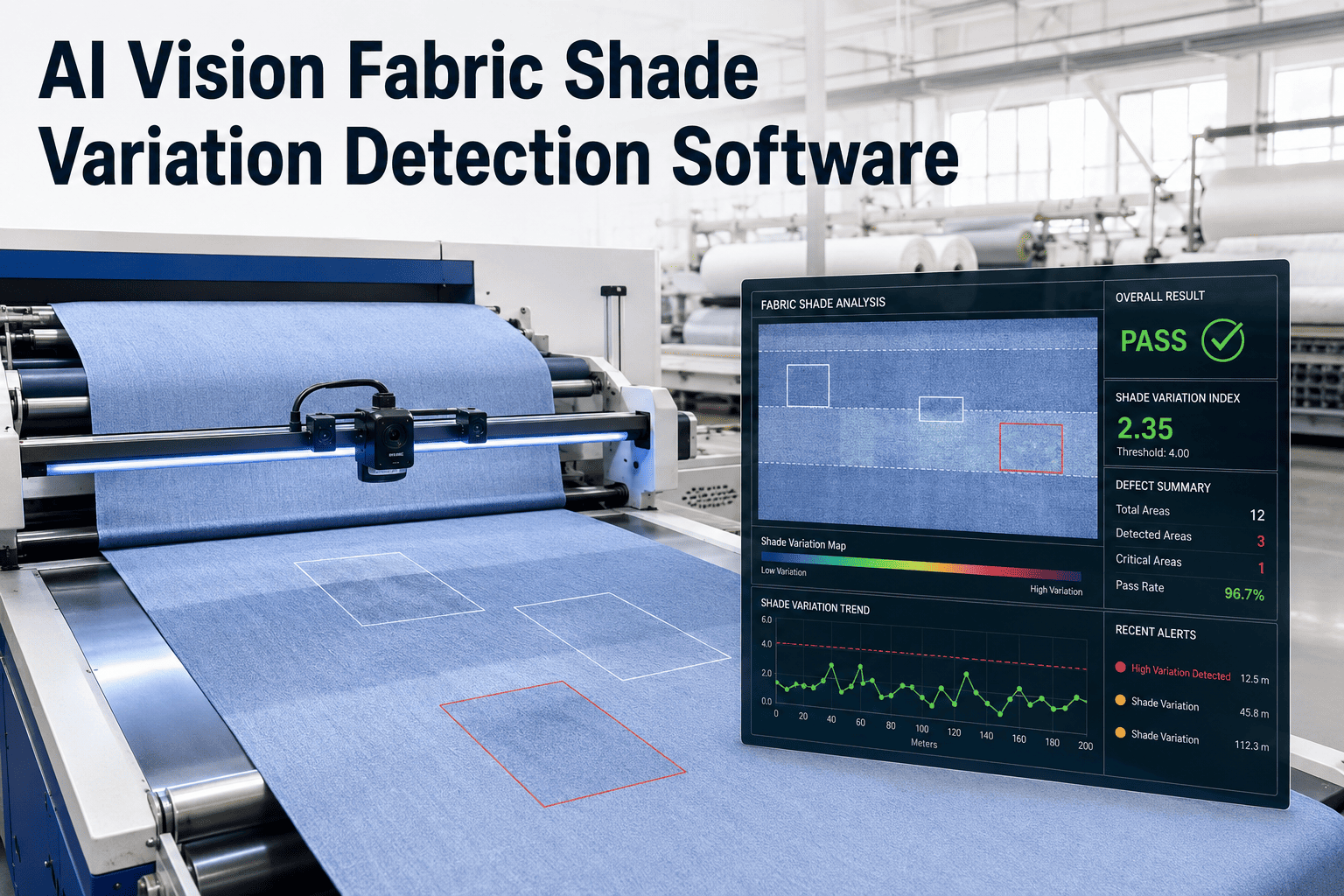
Vision at size box captures per-warp size pickup uniformity. Wet-fabric colour, opacity, or thermal signature indicates pickup variance across warp width. Not average — per-warp.
Per-warp, not average
Beam Attribution
Every beam produced carries a beam identifier with the size box, shift, squeeze roller condition, and per-warp pickup profile at time of production. Attribution ready for downstream trace.
Beam profile stored
Streak Traceback
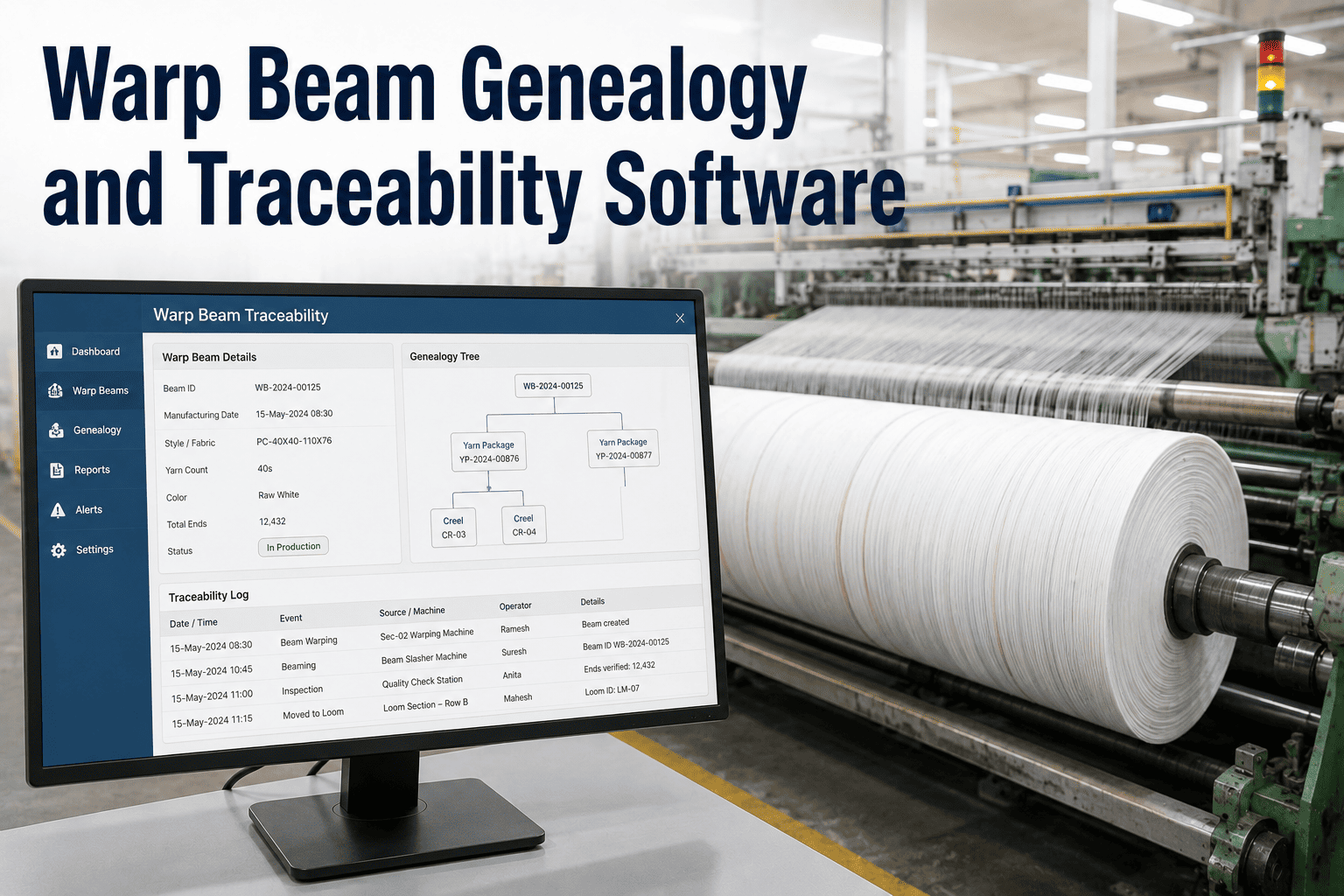
Finished-fabric warp streak from finishing inspection linked back to the beam and size box through the loom's beam mount record. Root cause named — size box SB-3, squeeze roller worn.
Named, not suspected
Roller Condition
Squeeze roller condition monitored via vision (wear pattern, surface uniformity) with scheduled replacement based on condition rather than calendar. Roller life aligned to actual wear.
Condition-based
How iFactory AI Fits
iFactory AI overlays your slashers (size boxes), warp beam tracking, loom beam mount records, and finishing inspection — providing the vision-based per-warp capture and the beam-level attribution chain that connects finished defects to source.
Size-Box Vision
Vision Layer
Vision at each size box capturing per-warp size pickup uniformity, squeeze roller condition, and slasher stop events. Every beam produced with per-warp pickup profile.
Beam Profile
Vision + Beam Tracking
Every beam tagged with size box, shift, squeeze roller condition, and per-warp pickup profile. Profile travels with beam through storage to loom mount.
Traceback Engine
Vision + QMS
Finished-fabric warp streak position matched to loom warp position, mapped to beam warp position, traced to size box warp position. Root cause chain named to the specific size box.
Roller Watch
Vision + CMMS
Squeeze roller condition trend surfaces wear pattern early. CMMS work order raised for condition-based replacement before roller causes streak.
Ask your sizing and warping head how many warp streak investigations last quarter concluded with certain root cause vs likely root cause. If the certain-cause share is low, the traceback discipline is missing — and the same size box keeps producing the same streak. Book a warp streak traceback review.
12-Week Sizing Vision Pilot on One Size Box
One size box, twelve weeks. The pilot mounts size-box vision, captures per-warp pickup on every beam, tests the traceback chain to finishing, and closes the first month of streak attribution to source.
Weeks 1–3
Vision + Baseline
Size-box vision mounted. Per-warp pickup capture live for every beam. Baseline current-state warp streak occurrence and root-cause-close rate.
Weeks 4–7
Beam Profiles
Every beam tagged with per-warp pickup profile. Profile travels with beam through storage to loom mount. Loom beam mount records updated with source profile.
Weeks 8–10
Traceback Live
Finishing inspection warp streaks traced back to size box and specific squeeze roller condition. First named root causes surface. Maintenance targets specific rollers.
Weeks 11–12
Attribution Baseline
Full month of warp streak root causes named. Roller condition-based replacement schedule live. Rollout to remaining size boxes scoped.
Who Owns the KPI
Sizing vision crosses sizing, warping, weaving, finishing, and maintenance. Each function owns a specific KPI or the streak stays a mystery.
Sizing & Warping Head
Warp streaks named to source
Owns the sizing outcome — the share of finishing-found warp streaks traced to specific size box condition. Rising = better attribution discipline.
Weaving Prep Supervisor
Beam mount profile use
Owns the mount discipline — loom beam mount records carrying source profile. Missing profile breaks the traceback chain.
Finishing QA
Downgrade metres from warp streaks
Owns the finishing outcome — downgrade metres attributed to warp streaks. Rising signals attribution or intervention lag at sizing.
Sizing Maintenance
Squeeze roller condition MTBF
Owns the maintenance outcome — condition-based squeeze roller replacement lifespan. Vision-attributed wear drives planned change vs run-to-streak.
FAQ
How does vision measure per-warp size pickup — that's a wet fabric measurement?
Vision at size box exit reads the wet-fabric appearance across warp width. Size pickup manifests as colour difference (size treatments alter fabric hue slightly), opacity difference (higher pickup = more opaque), and thermal signature difference (higher pickup = higher heat capacity, distinct thermal signature). Vision cameras with polarised illumination or NIR (near-infrared) sensitivity read these differences quantitatively across width. For applications requiring absolute pickup measurement (development trials), vision is combined with beta-gauge measurement; for standard production monitoring, vision alone catches variance patterns well enough to attribute streaks. The workflow adapts to what each mill requires.
What about the size formulation itself — do different sizes need different vision approaches?
Yes, and the vision models train per size chemistry. PVA-based sizes present differently than starch-based; blended sizes have their own signature; specialty sizes for polyester or blended yarns differ again. The workflow configures per size formulation used at the mill, with model training against samples of good and streaked fabric under each size. Where the same slasher runs multiple size formulations (common in mills with diverse product mix), each recipe has its own trained model that activates when the recipe is loaded. What doesn't change is the underlying discipline — per-warp uniformity capture that surfaces variance.
Book a demo to see multi-size-recipe handling.
How does this integrate with our warp beam tracking system?
Warp beam tracking systems (barcode-tagged beams, RFID-tagged beams, or manual beam registry) provide the beam identity chain the traceback depends on. Where beams are already tagged and tracked, the vision-generated per-warp pickup profile attaches to the beam record automatically. Where beams are not systematically tracked, the workflow provides beam tagging as part of implementation — RFID tags at sizing, RFID readers at beam storage and loom gaiting. Either way, the traceback chain requires that each beam carries the source-size-box identifier from its origin through its consumption. What the workflow doesn't do is invent tracking where none exists; what it does is provide the missing profile layer where tracking already exists or the tracking-plus-profile stack where neither exists.
Stop guessing at warp streak root cause.
Trace One Warp Streak Back to Its Size Box — Live
Bring one recent finished-fabric warp streak case, the beam that produced it, the size box records for that shift, and current investigation-to-root-cause cycle time. We'll walk what the traceback chain would have named, and demonstrate the size-box vision workflow.