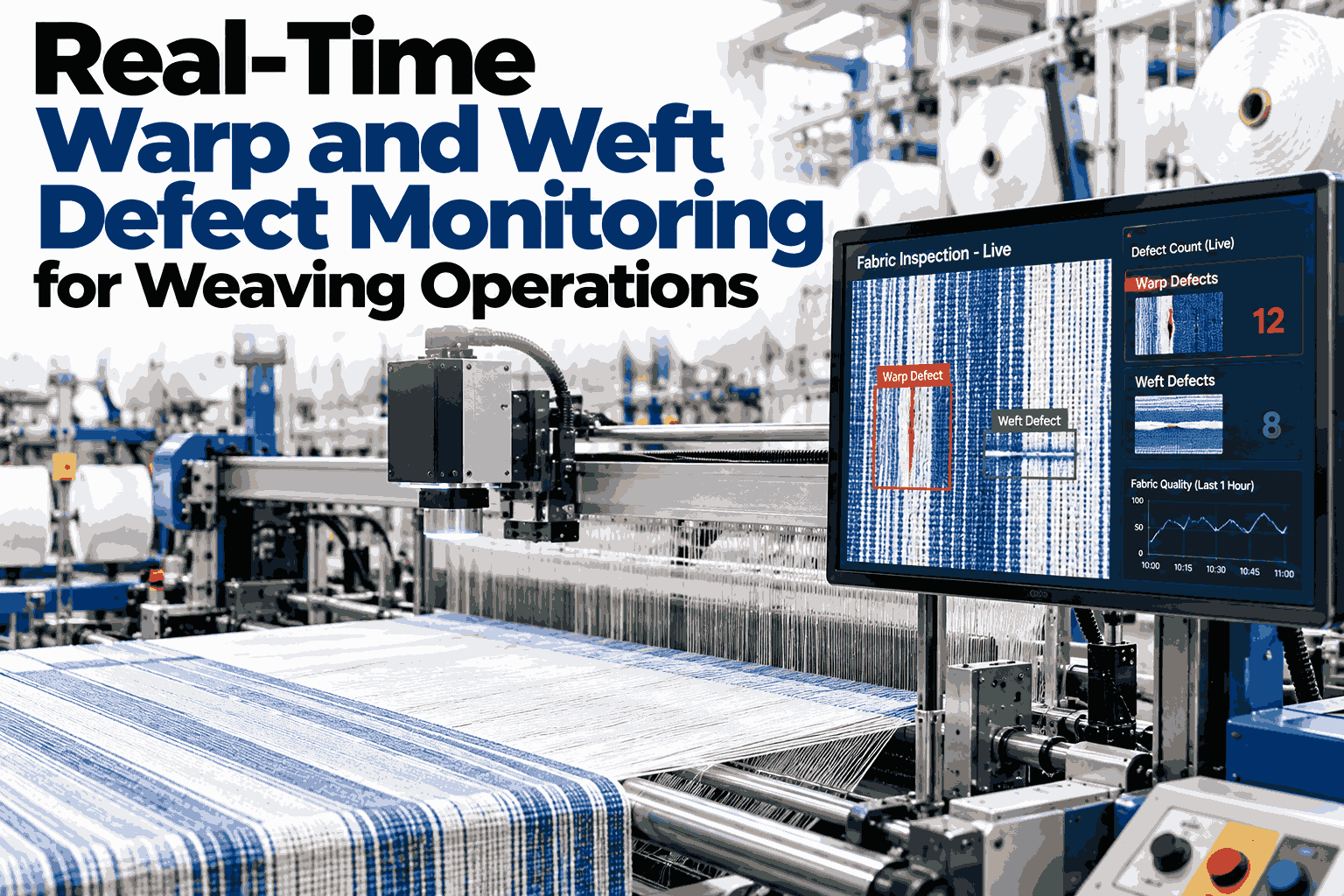
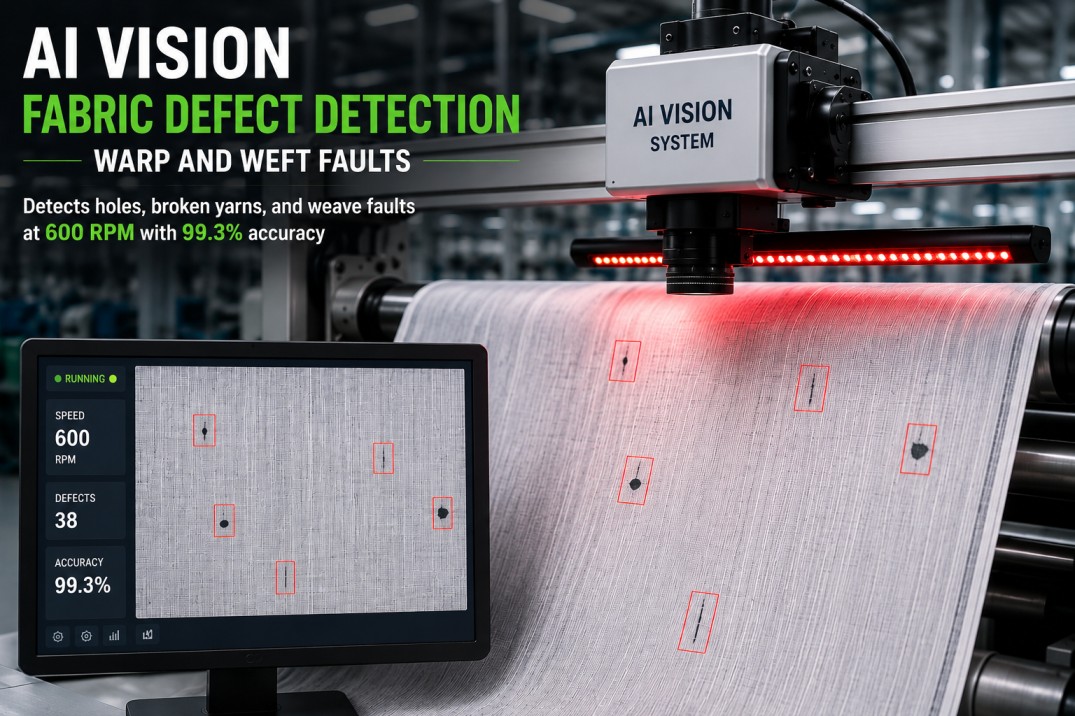
A single broken warp end can run for metres before anyone notices it on a busy weaving shed. Meanwhile a missing pick or a weft bar quietly turns good yarn into second-grade cloth. Weaving moves fast, and the flaws that cost the most are often the ones that appear gradually, shift after shift. Real-time monitoring of warp and weft changes that by watching the loom while it runs. Teams exploring this approach can review a loom monitoring walkthrough built around their own fabric styles.
AI VISION AND QUALITY FOR WEAVING
Watch Every Warp End and Weft Pick While the Loom Runs
iFactory AI turns loom-side vision into early alerts, so a broken end or missing pick becomes a quick fix instead of a roll of rework.
Vertical bar: broken warp end
Horizontal bar: missing weft pick
TWO DIRECTIONS, TWO FAILURE MODES
Warp and Weft Go Wrong in Different Ways
Warp runs lengthwise and is held under tension, while weft is inserted crosswise on every pick. Each fails differently and needs its own watch.
Warp problems
Broken or slack ends
Missing ends after drawing-in
Streaks from uneven yarn count
Reed marks and tension lines
Weft problems
Missing or broken picks
Double picks and weft kinks
Weft bars from yarn variation
Thick and thin places
WHY FLAWS HIDE
Three Blind Spots in a Busy Weaving Shed
These gaps explain why defects survive until the grey fabric inspection table.
Speed
Fast picking leaves little time to see a fine flaw forming.
Spread
One operator often covers many looms, so each gets short glances.
Delay
Cloth is inspected after it leaves the loom, long after the cause appeared.
Find out which loom flaws your shed is missing today
Walk through sample footage and see how warp and weft alerts would look on your own looms.
THE RESPONSE WINDOW
What Happens After a Warp End Breaks
The difference between manual watching and live monitoring shows up in the minutes after a fault.
Without monitoring
End breaks and the loom may keep weaving
Fault is spotted on a walk-through, if at all
Flawed metres are found at fabric inspection
With live monitoring
Vision flags the break within moments
Alert reaches the right weaver or supervisor
Loom is fixed and the defect length stays short
SIGNAL GUIDE
What the System Watches and What It Suggests
Each defect has a visual signature and a likely cause on the loom.
| Defect | Visual Signal | Common Cause | Suggested Action |
|---|
| Broken end | Gap or slack line running lengthwise | Weak yarn or tension spike | Repair the end, check tension |
| Missing pick | Thin crosswise line | Weft insertion failure | Check weft feeder and picking |
| Weft bar | Repeating shaded band | Yarn lot or count variation | Trace the yarn package |
| Reed mark | Fine vertical stripe | Worn or bent reed wire | Inspect and replace the reed |
PATTERN VIEW
Spotting Defect Patterns Across Shifts
Once defects are logged by loom and time, patterns appear that no single walk-through would reveal.
Illustrative example. Darker cells mean more defects. A steady dark band on one shift often points to a handling or setting issue rather than a machine fault.
GETTING STARTED
A Five-Step Playbook for Weaving Teams
1List the defects that cost you the most in rejections and rework.
2Pick a pilot group of looms running your most sensitive styles.
3Define who receives each alert and what they should do next.
4Run the system beside manual checks and compare findings.
5Extend to more looms once alerts prove trustworthy.
FREQUENTLY ASKED QUESTIONS
Questions Weaving Teams Ask First
Does it work with air-jet, rapier and projectile looms?
Monitoring is based on vision at the loom, so it can be adapted to different loom types and fabric widths. Mounting positions and lighting are planned per loom model during setup. A
live demo conversation can confirm fit for your shed.
Will it flag false alarms on dense or patterned weaves?
Models learn the normal look of each style before judging defects, which keeps false alerts low on dense and patterned fabrics. Alert sensitivity can be tuned as the pilot runs. Our
support specialists can help tune thresholds for tricky styles.
Can it stop a loom automatically?
Most teams begin with alerts to weavers and supervisors, then add loom stop signals once trust is built. The right level depends on your loom controls and safety practice.
Plan a demo session to discuss what integration suits your looms.
How does it connect to fabric inspection later on?
Defect data from the loom is carried forward with each roll, so inspectors see where flaws were flagged and how they were graded. This links cause at the loom to outcome on the inspection table.
Reach our support team to understand the data flow.
How many looms should a pilot cover?
A small group of looms running your most defect-prone styles is usually enough to prove value without disrupting the shed. Results from that group guide the wider rollout plan. You can
map out a pilot together in a short call.
SHORTER DEFECTS, LESS REWORK
Let Your Looms Tell You When Something Goes Wrong
iFactory AI brings real-time warp and weft monitoring, defect classification, and quality visibility into one connected view for your weaving operation.