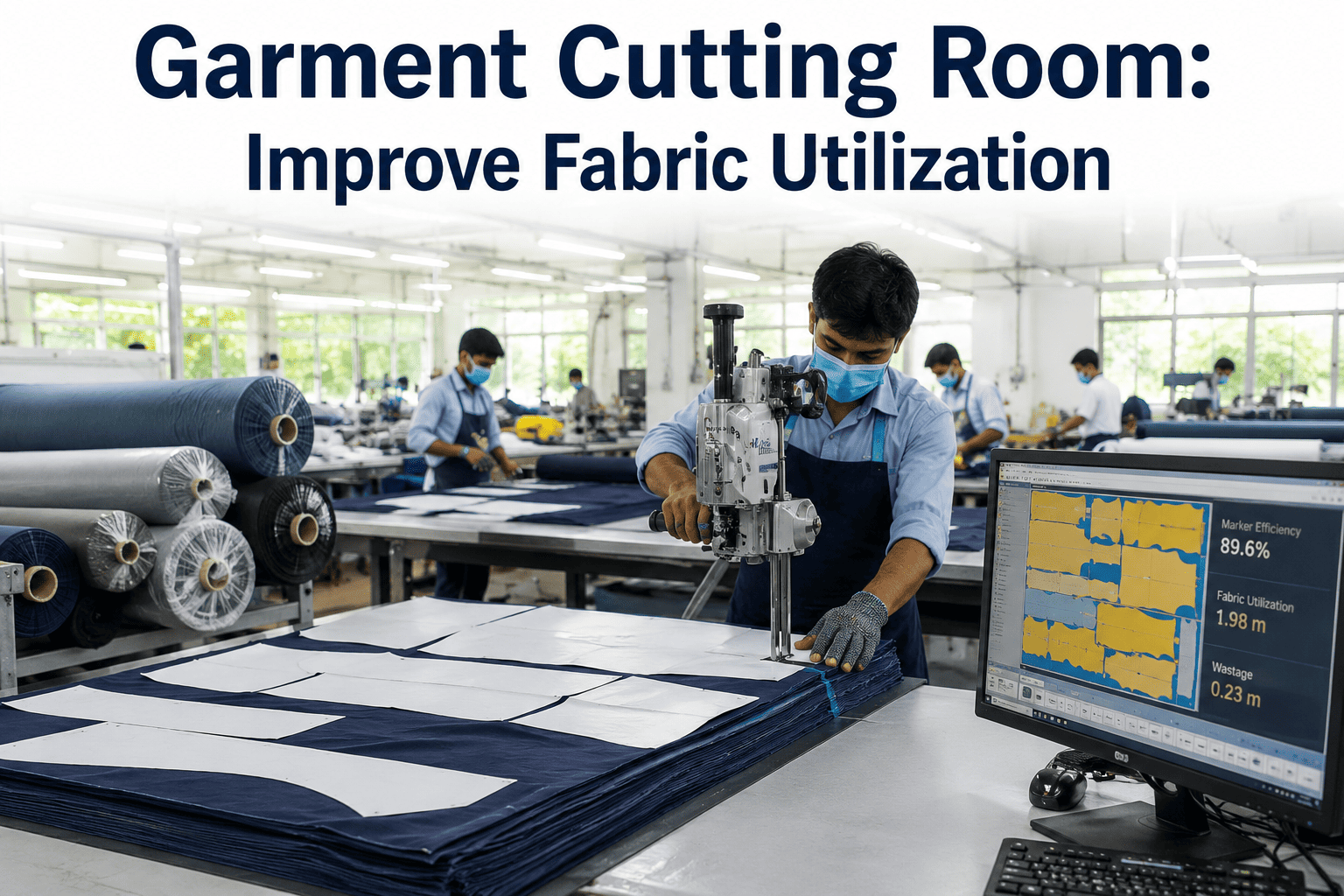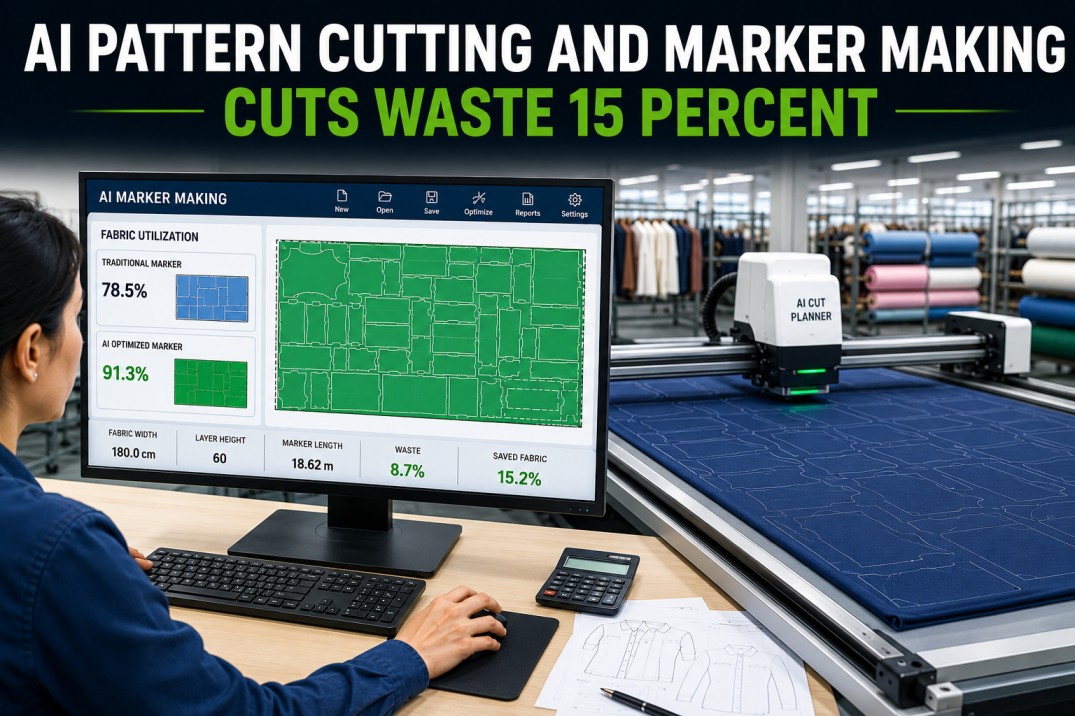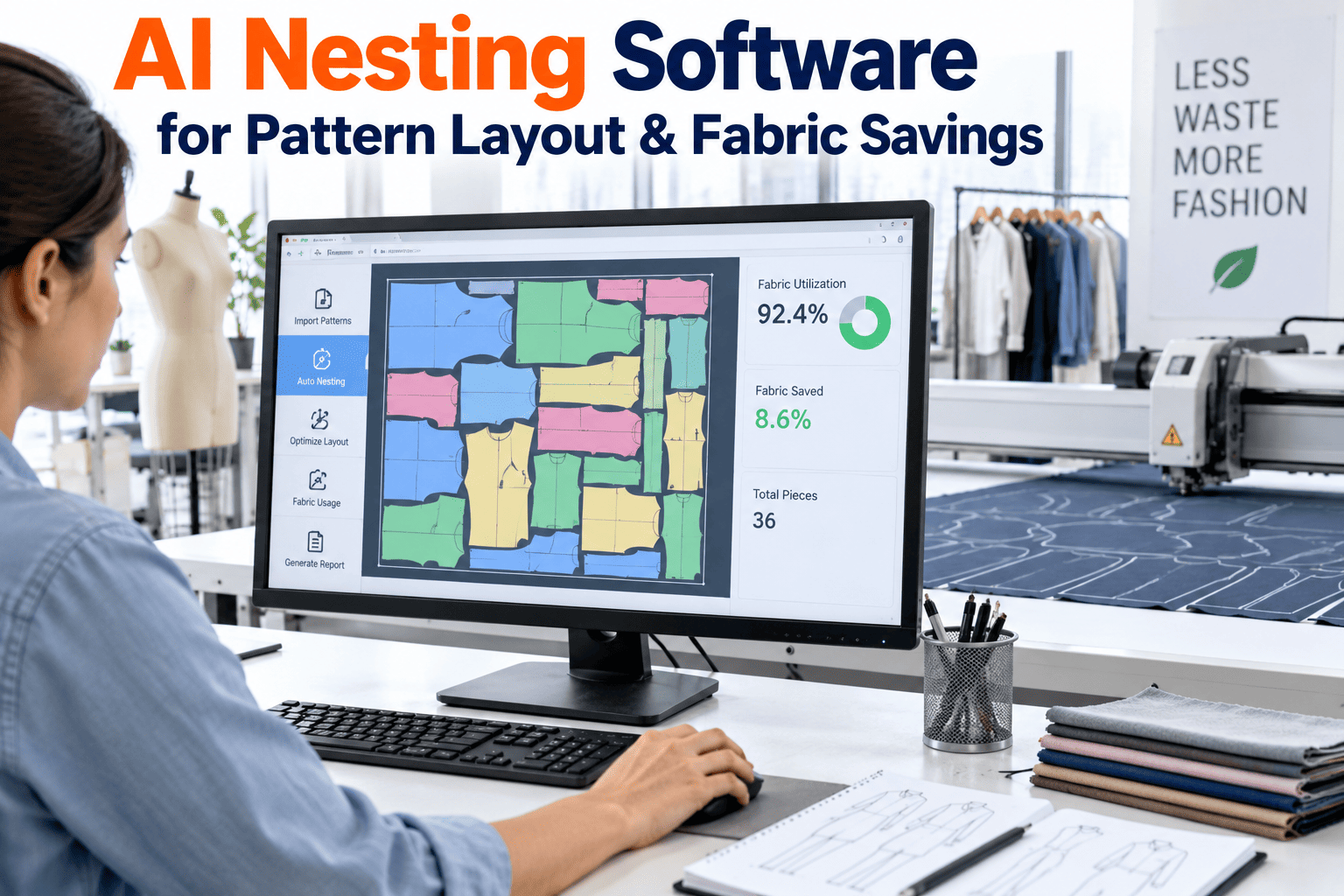
Nesting — arranging pattern pieces on a fabric roll to waste as little material as possible — is a mathematically brutal problem. It belongs to the class of problems computer scientists call NP-complete, meaning the number of possible layouts explodes exponentially with every pattern piece added, and no algorithm can guarantee a perfect answer in reasonable time. What's changed isn't the math — it's which algorithm gets thrown at it, and modern AI nesting software runs several of these algorithms together rather than betting on one. The result is a consistent 3-8% additional fabric savings over standard CAD nesting, on top of whatever a factory already recovered by moving off manual layout. Understanding which algorithm does what is what separates a real evaluation of nesting software from a features checklist, and teams comparing options can walk through the specific algorithms iFactory AI runs against their own pattern library.
The Algorithm Behind the Marker Decides How Much Fabric You Save
iFactory AI combines GPU-parallel genetic algorithms, no-fit-polygon geometry, and reinforcement learning to squeeze 3-8% more fabric utilization out of every marker than standard CAD nesting alone.
Why This Problem Resists a Clean Answer
Fabric fails one of the basic assumptions that makes packing problems tractable: pattern pieces are irregular, not rectangular. A sleeve curve, a collar point, and a dart don't stack like boxes in a shipping container. Every added piece multiplies the number of ways the set can be arranged, which is exactly why the problem is formally classified as NP-complete — there's no shortcut that guarantees the mathematically optimal layout in a useful amount of time, only algorithms that get progressively closer to it.
Four Algorithm Families, Compared Honestly
Nesting software isn't built on one algorithm — different approaches trade off speed, solution quality, and how well they handle genuinely irregular shapes. Knowing which is doing the work in a given tool changes what you should expect from it.
Fast, Simple, Limited
Places each piece as far down and left as it fits. Extremely fast and easy to implement, which is why it's been a staple of traditional CAD nesting for decades — but it settles for the first workable spot rather than searching for a better one.
Evolves Toward Better Layouts
Treats each candidate layout as an individual in a population, then applies selection, crossover, and mutation across generations to evolve toward higher-utilization arrangements — a widely used method for nesting specifically because it searches broadly rather than settling early.
Escapes Local Traps
Modeled on how metal atoms settle into a low-energy state as they cool, this method accepts occasional worse moves early on to avoid getting stuck in a decent-but-not-great layout, then narrows its search as it "cools" toward a final arrangement.
Combines Methods at Scale
GPU-parallel computation lets modern systems run genetic algorithms alongside no-fit-polygon geometry and reinforcement learning together, evaluating millions of placement permutations in minutes rather than one algorithm working alone for hours.
See the Algorithm Comparison Run on Your Pattern Library
Book a 30-minute session and iFactory AI will show utilization results across your actual pattern set, not a generic benchmark.
Manual, CAD, and AI Nesting — The Utilization Gap
The three approaches aren't equally matched. Each step up the ladder — from manual layout to standard CAD nesting to AI-driven nesting — closes part of the gap between what a human can reasonably arrange by eye and what the mathematics actually allows.
| Method | Typical Fabric Utilization | Time per Marker | Constraint Handling |
|---|---|---|---|
| Manual Layout | 72–85% | 2–4 hours | 3–4 constraints before quality degrades |
| Standard CAD Nesting | 80–86% | 30–60 minutes | Heuristic-based, limited permutation search |
| AI-Powered Nesting | 88–94% | 2–15 minutes | All constraints enforced on every permutation |
The time column matters as much as the utilization column — AI nesting isn't just finding a better layout, it's finding it faster than a human can even finish arranging pieces by hand, which is what makes running multiple layout candidates per order practical instead of prohibitive.
What Actually Feeds the Algorithm
An algorithm is only as good as the constraints it's given to respect. Real garment production carries fabric-specific rules that a purely geometric solver would happily violate if nobody told it not to.
Grain Direction
Woven fabric has structural warp and weft threads that dictate how a piece drapes — nesting without grain awareness can distort a collar or seam after washing.
Nap and Directional Pile
Velvet, corduroy, and similar fabrics need every piece oriented identically, or the finished garment shows visibly mismatched shading panel to panel.
Stripe and Plaid Matching
Patterns have to align at seams across panels, a constraint that shrinks the pool of valid placements dramatically compared to a plain fabric.
Defect Avoidance
Known flaws mapped by upstream fabric inspection get treated as no-go zones, so the algorithm routes pattern pieces around them automatically.
CAD/CAM Integration: Where the Algorithm Actually Lives
AI nesting doesn't replace a factory's CAD system — it plugs into the marker-making stage that CAD/CAM software already handles, reading pattern data in and pushing a cut-ready file back out to the same cutting equipment.
Pattern Ingestion
Pattern pieces import from major CAD formats — Gerber, Lectra, Optitex, or generic DXF — with grade rules, notches, and grain lines preserved intact.
Constraint Mapping
Fabric width, grain direction, nap, and any stripe or plaid repeat get mapped as hard constraints the algorithm has to respect on every candidate layout.
Algorithm Search
GPU-parallel computation runs genetic algorithms and geometric search together, scoring millions of layout permutations against fabric utilization and every mapped constraint.
Cut-Ready Output
The winning marker exports in the file format the existing cutter already reads, with a utilization report showing exact consumption and waste percentage.
A Composite Scenario: Where the Extra Points Came From
A mid-size apparel factory had already moved off manual marker making years earlier and was running a standard CAD nesting package, holding a respectable 84% average utilization across its dress shirt line — a number the production team considered close to as good as it would get.
Running the same pattern library through an AI nesting engine that layered genetic-algorithm search on top of the CAD-standard heuristic found consistent utilization gains concentrated specifically on the plaid and stripe-matched styles — patterns where the added matching constraint sharply narrowed the pool of valid placements, and where the CAD system's simpler heuristic had been settling for the first compliant arrangement rather than searching further. The plain-fabric styles gained less, since a bottom-left heuristic already performs reasonably well when there's no matching constraint to complicate placement. The blended result across the full order book landed within the typical 3-8% additional-savings range reported across garment categories with matching-intensive styles.
Questions to Ask Before Choosing Nesting Software
Which algorithms actually run, and in what combination?
A vendor citing "AI" without naming the underlying method — genetic algorithm, simulated annealing, reinforcement learning, or a hybrid — is a reason to ask more specific questions before committing.
How many constraints can it enforce simultaneously without degrading utilization?
Human marker makers manage three to four constraints reliably; the real test of nesting software is whether utilization holds up once grain, nap, stripe matching, and defect avoidance are all active at once.
Does it read your existing CAD format without a conversion step?
Native support for Gerber, Lectra, Optitex, or DXF avoids a lossy conversion that can quietly strip grade rules or grain line data before the algorithm ever sees the pattern.
What's the time-per-marker tradeoff against the utilization gain?
A marginally higher utilization number that takes an hour to generate may cost more in production delay than it saves in fabric — check both numbers together, not utilization alone.
None of these questions have a universally right answer — a factory running mostly plain-fabric basics has less to gain from an aggressive multi-algorithm search than one running heavily matched plaids and stripes, and the right amount of computational sophistication to pay for depends on where your own product mix actually sits. The value of asking is less about disqualifying vendors and more about calibrating expectations before the first production run, so a 3% gain on a plain-fabric line isn't mistaken for underperformance when the pattern mix simply had less room to improve.
iFactory AI's nesting engine connects to your existing CAD pipeline and cutting equipment — no format conversion, no hardware changes. The algorithm layer runs alongside your current workflow so the utilization gain shows up from the first production marker.
Frequently Asked Questions
Why does AI nesting outperform standard CAD nesting if both use algorithms?
Most standard CAD nesting relies on a bottom-left or similar heuristic that places each piece in the first workable spot rather than continuing to search for a better one, because evaluating more possibilities takes time a human operator waiting on the software doesn't have. AI nesting removes that time constraint through GPU-parallel computation, letting genetic algorithms and geometric search methods evaluate millions of layout permutations in the time a heuristic evaluates a handful. iFactory AI's team can walk through which methods run against your specific pattern types.
Is nesting a solvable problem, or just one that gets approximated?
It's formally NP-complete, which means no known algorithm can guarantee the mathematically optimal layout in practical time once the pattern count grows past a small number of pieces. Every nesting method — heuristic, genetic algorithm, simulated annealing, or hybrid AI — is an approximation strategy that gets closer to optimal without ever proving it has reached it. The practical question isn't which method is "correct," since none are, but which gets closest fastest for your specific pattern mix.
Does a genetic algorithm work well on highly irregular garment pieces?
Genetic algorithms are specifically well-suited to irregular shape nesting because they don't require the pieces to fit a predefined geometric template — they evolve candidate layouts through selection, crossover, and mutation across generations, which handles curves, notches, and asymmetric pattern pieces without the rigid assumptions a purely rectangular bin-packing method would need. This is a large part of why genetic algorithms show up so consistently in nesting research and production software.
How much additional fabric savings should we actually expect over our current CAD nesting?
A realistic range is 3 to 8 percent additional savings over standard CAD nesting, though the actual figure depends heavily on how matching-intensive your product mix is — plaid, stripe, and print-registration styles tend to show the largest gap because they carry constraints a simpler heuristic struggles to satisfy efficiently, while plain-fabric basics show a smaller gap since the CAD baseline is already reasonably close to optimal on those. Book a demo to see the gain calculated against your actual pattern library rather than an industry average.
Do we need to change our CAD system or cutting equipment to use AI nesting?
No — AI nesting engines are built to plug into the marker-making stage of an existing CAD/CAM pipeline, reading pattern data from formats like Gerber, Lectra, Optitex, or DXF and exporting a cut-ready marker in the same format your existing cutter already reads. The algorithm layer is additive rather than a replacement, which is why integration typically completes in a matter of weeks without hardware changes or production interruption.
See Which Algorithm Actually Wins on Your Pattern Library
iFactory AI combines genetic algorithms, geometric search, and reinforcement learning to consistently outperform standard CAD nesting by 3-8% additional fabric utilization. Book a walkthrough to see it run against your own patterns.