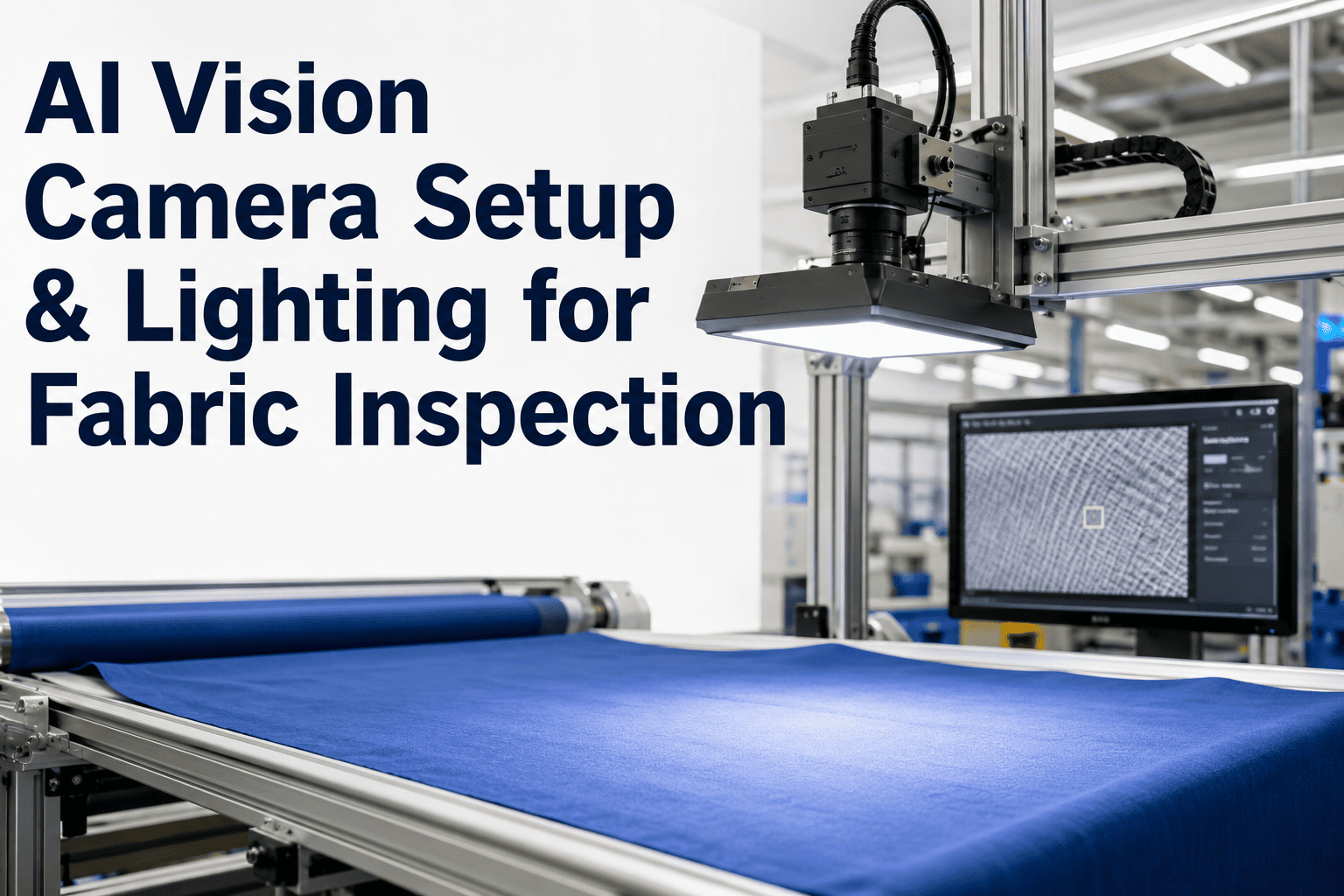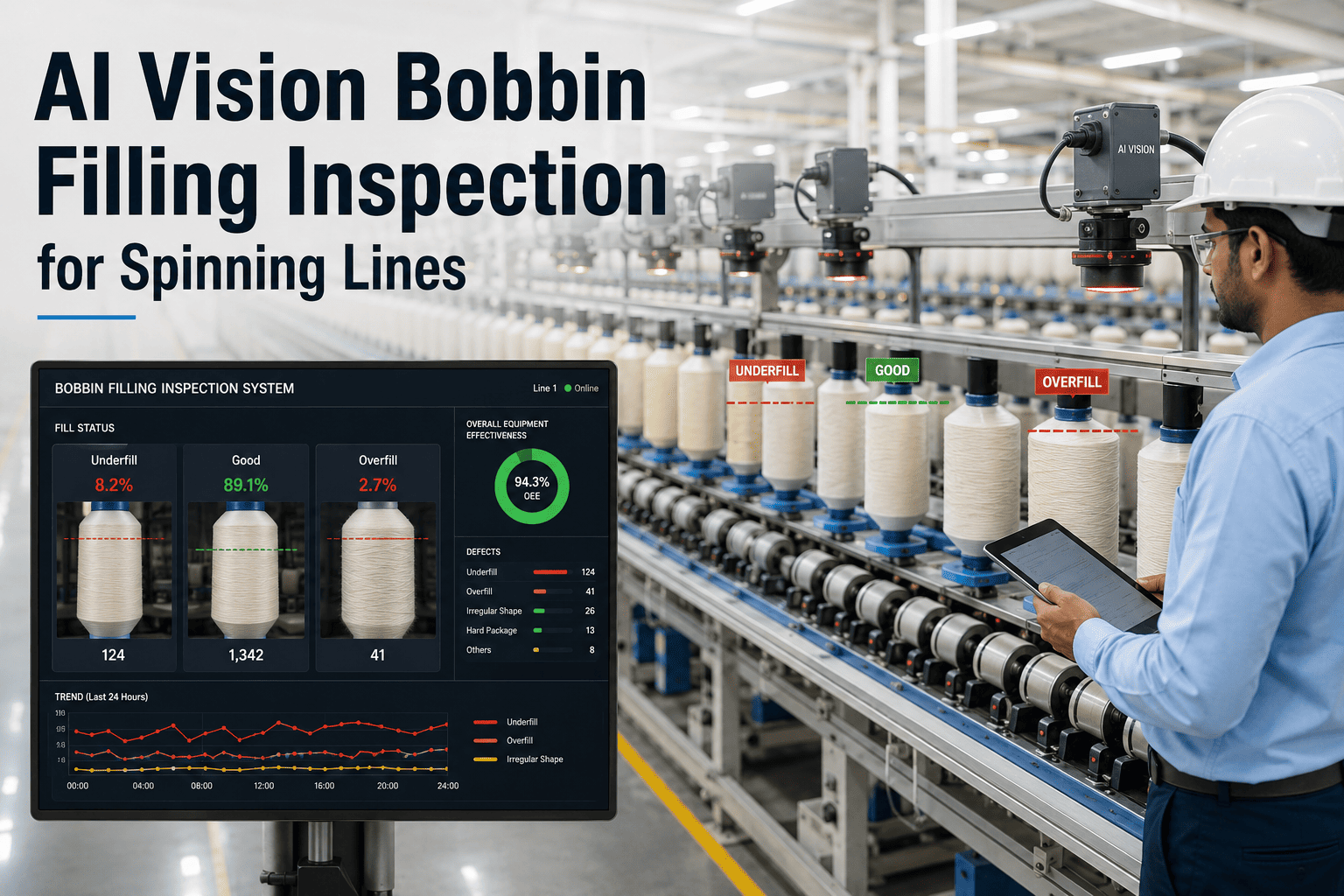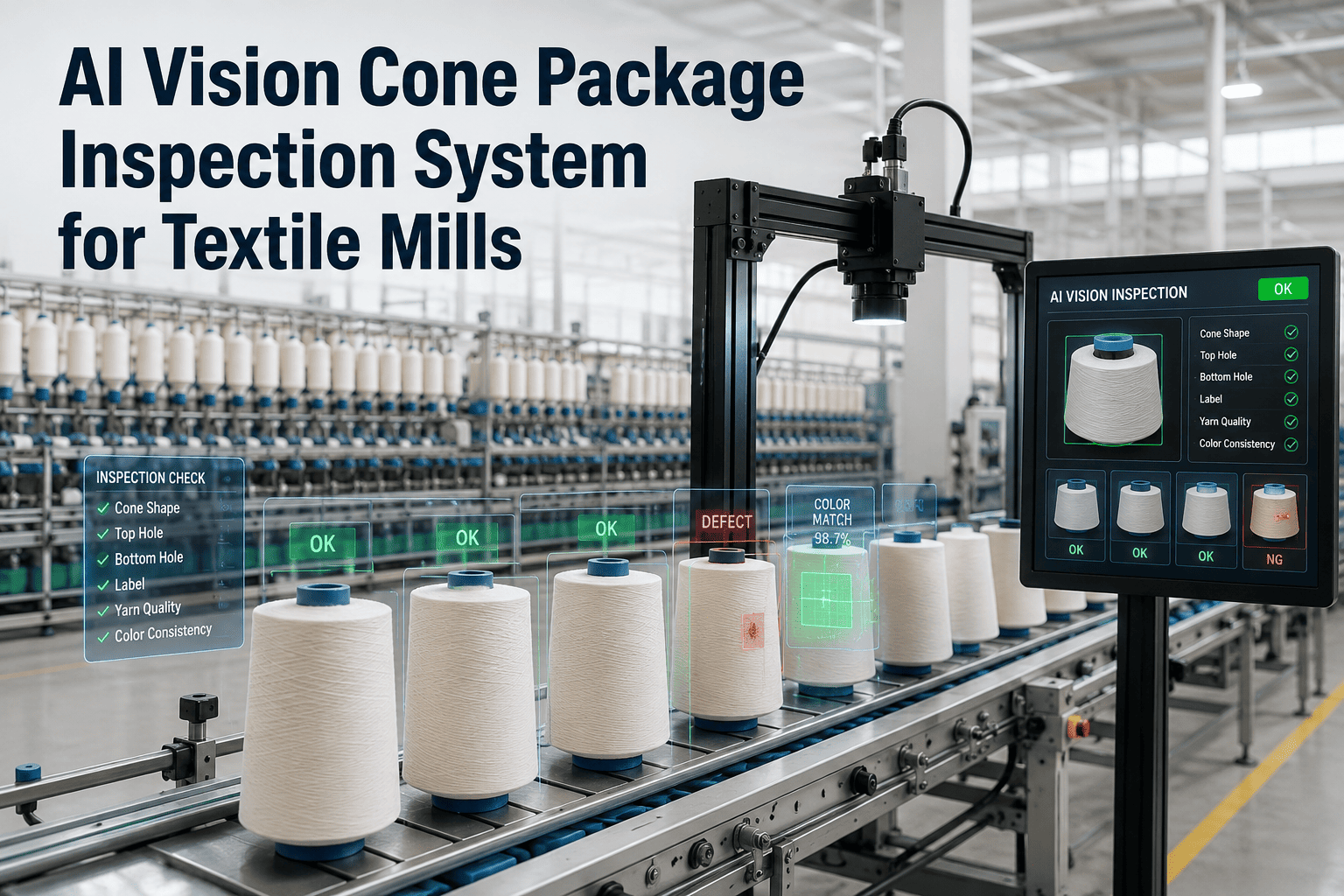
Walk from the bale opener to the finishing line in most textile mills and you'll pass through four completely different environments without ever leaving the same building. The opening room is thick with airborne fiber. The dyehouse runs hot and humid. The weaving floor never stops vibrating. The finishing line sits under whatever skylight or overhead fixture someone installed a decade ago. A camera system that was calibrated once, in one of those zones, is being asked to perform in all four — and that mismatch is the single most common reason an AI vision deployment underperforms its lab demo once it hits the real floor. iFactory engineers around exactly this problem before a camera ever gets mounted.
Your Mill Isn't a Lab. Your Vision System Shouldn't Be Calibrated Like One.
Dust, humidity, vibration, and shifting ambient light are the four environmental forces that quietly degrade AI vision accuracy on a real textile floor — and every one of them has a proven engineering fix.
Four Zones, Four Environments, One Camera Standard
A mill isn't one environment — it's a sequence of very different ones stitched together on a single production floor. Knowing what each zone throws at a camera system is the starting point for specifying hardware that survives all of them rather than just the one it was tested in.
Heaviest Airborne Fiber
Bale openers and carding machines generate the highest lint concentration in the plant, coating lenses and light fixtures faster than almost anywhere else on the floor.
Heat, Humidity, Condensation
Ambient humidity often runs 55 to 65 percent to control static, and temperature swings between running and shutdown cycles create condensation risk inside unsealed housings.
Continuous Mechanical Vibration
Looms and knitting machines run constant high-frequency vibration that transmits through the floor and frame to any camera not mechanically isolated from the source.
Shifting Ambient Light
Skylights, shift-dependent overhead lighting, and seasonal daylight all change the color temperature hitting the fabric throughout a single production day.
Why "It Worked Fine in the Demo" Doesn't Survive Week Three
Vendors demo AI vision systems under ideal conditions almost by default — clean lenses, stable lighting, a quiet corner of the floor away from the heaviest machinery. None of that is dishonest, but it does mean the gap between demo accuracy and week-three production accuracy is almost entirely explained by environmental factors the demo never had to face. A model that scores 99.5% in a controlled test can drop into the low nineties once real factory lighting, dust, and vibration enter the picture.
The frustrating part for a plant manager is that this gap rarely gets diagnosed correctly the first time. A dip in accuracy after installation almost always gets read as a model problem — not enough training data, wrong algorithm, needs retraining — when in a large share of cases the actual cause is sitting right in front of the camera in the form of a dirty lens, a shifted light fixture, or a new source of floor vibration nearby. Correctly separating environmental causes from genuine model issues is the difference between a fix that takes an afternoon and one that consumes weeks of unnecessary data science work.
Lens Contamination
A thin film of airborne fiber on the lens softens edges just enough to push borderline defects below the detection threshold, and it accumulates gradually enough that nobody notices until accuracy has already slipped.
Light Drift
A model trained under one lighting condition sees a different image entirely once the color temperature or intensity shifts, even though the fabric itself hasn't changed at all.
Motion Blur
Vibration transmitted into the camera mount introduces micro-movement during image capture, blurring fine defect edges the same way a shaky hand blurs a photograph.
A Camera That Works in the Demo Room Isn't the Same as One Built for Your Floor
iFactory specs hardware and lighting around your specific zone conditions before installation, not after accuracy problems show up in production.
Dust and Lint: The Slowest-Moving Threat on the Floor
Dust rarely causes a dramatic failure — it causes a gradual one, which is exactly why it's so often missed until accuracy has already drifted noticeably. Fiber accumulates on lenses, light diffusers, and housing vents at a rate that depends heavily on which zone the camera sits in, and the fix is almost entirely about hardware selection rather than software.
What makes textile dust particularly stubborn compared with dust in other manufacturing settings is its texture. Cotton and synthetic fiber lint isn't fine powder that settles evenly — it's stringy, static-charged material that clings to any surface with an electrical charge or an airflow eddy, which includes exactly the kind of small gaps and ventilation slots found in a poorly sealed camera housing. A housing rated for generic industrial dust exposure doesn't automatically perform the same way against airborne textile fiber, which is why mill-specific IP ratings and housing shapes matter more here than in a typical metalworking or electronics plant.
Light Dust Exposure
Adequate for finishing and packaging zones with moderate airborne particulate and no direct water exposure.
Recommended Mill Standard
Fully dust-tight with low-pressure water jet resistance — the practical minimum for opening rooms, carding, and dyehouse installations.
Heaviest Fiber or Washdown Zones
Full protection against powerful water jets or brief immersion, suited to wet processing areas with aggressive cleaning cycles.
Housing shape matters just as much as the rating printed on the spec sheet. A flat-top enclosure collects settled lint the same way a flat shelf collects dust in a workshop, while a sloped or curved housing sheds most of it through gravity and ambient vibration before it ever accumulates enough to matter. Support can walk through the right housing profile for a specific zone's fiber load.
Humidity and Temperature Swings: The Condensation Problem Nobody Plans For
Wet processing zones are deliberately humid by design, since controlled humidity reduces static and fiber breakage during dyeing and finishing. That's good for the fabric and genuinely difficult for a camera. The real risk isn't the steady-state humidity itself — most sealed housings handle that without issue — it's the temperature swing between a running line and a shutdown cool-down, when a warm sealed enclosure meets cooler ambient air and condensation forms on the inside of the lens.
Housing stays warm and stable while the line runs continuously through a shift
Warm sealed housing meets cooler ambient air, creating the condensation window on the lens interior
Silicone gaskets hold up better than standard EPDM across repeated heat cycling in these conditions, and a small vented desiccant chamber inside the housing gives any residual moisture somewhere to go instead of settling directly on the optics. Neither fix is exotic or expensive — both are standard practice for any camera installed anywhere near a dyehouse or wet finishing line.
Vibration: Isolating the Camera From the Machine It's Watching
Weaving and knitting floors vibrate constantly, and that vibration transmits through the floor slab, the machine frame, and any rigid mounting bracket connecting a camera to either one. The practical effect on image quality is motion blur — the same blur a handheld photo gets when the shutter is too slow for a shaky hand — and it degrades exactly the fine edge detail a defect detection model depends on most.
The instinct to bolt a camera directly onto the machine it's inspecting is understandable — it keeps the field of view fixed relative to the fabric — but it's also the single most common vibration mistake on a weaving floor. A rigid connection to the vibration source transmits that vibration straight into the optics with almost no attenuation, which is why the fix generally isn't about eliminating vibration at the source but about breaking the physical path between the source and the lens.
Isolated Mounting
Mounting the camera on its own rigid bracket, physically decoupled from the vibrating machine frame, is the single most effective and lowest-cost fix available.
Vibration-Dampening Materials
Where full isolation isn't practical, dampening pads between the bracket and the mounting surface absorb high-frequency vibration before it reaches the lens.
Strobed Lighting, Shorter Exposure
Flooding the inspection zone with brief, intense strobed light allows a much shorter exposure time per frame, which reduces how much vibration-induced blur can accumulate during capture.
Ambient Light: Why the Same Fabric Looks Different at 9am and 3pm
Color accuracy is non-negotiable in fabric inspection, and ambient light is the variable most likely to quietly undermine it. A shade card approved under one lighting condition can read as an entirely different color under another, which is why textile quality control has long depended on standardized viewing conditions — and why an AI vision system needs the same discipline a trained inspector already follows.
This matters more in textiles than in almost any other manufacturing sector because the product itself is being judged on color, and color is the single most light-dependent visual property there is. A dimensional defect on a machined metal part looks roughly the same under a fluorescent tube or a skylight. A pale blue denim shade does not. That's why buyers in the apparel and technical textile world specify exact lighting standards for quality control stations in the first place, and why a camera-based inspection system inherits that same requirement rather than getting to skip it.
Skylights, mixed fixture types, and shift-dependent overhead lighting shift color temperature throughout the day
A model trained under morning light misreads shade under afternoon conditions
Inspectors and cameras can disagree on the same roll depending on time of day
6500K daylight-simulation fixtures with CRI above 90 hold color temperature constant regardless of time or season
The camera sees the same fabric the same way at 9am and 3pm without adjustment
Shade grading matches what a buyer's approved reference card actually shows
The fixture spec matters more than most mills initially expect. A 4000K fixture installed where a D65 6500K standard was specified, or a CRI of 75 where the application calls for 90 or higher, is enough to cause a camera to reject fabric that would have passed under correct lighting — or worse, approve fabric that would have failed a buyer's actual reference standard.
Consistent Lighting Isn't a Nice-to-Have. It's the Foundation Everything Else Sits On.
iFactory specs D65-standard fixtures, sealed IP65+ housings, and vibration-isolated mounts as a baseline on every textile installation, matched to each zone's specific conditions.
What Getting the Environment Right Actually Saves
Environmental engineering rarely gets budgeted as its own line item, which is part of why it gets skipped or under-specified during installation planning. The cost of skipping it doesn't disappear, though — it just shows up later, spread across false rejects, unnecessary retraining cycles, and hardware replaced more often than it should need to be.
Fewer False Rejects
Consistent lighting and clean optics reduce the false-positive rate directly, which means less good fabric routed unnecessarily back to manual grading stations.
Longer Hardware Life
Properly sealed, vibration-isolated housings experience far less wear from fiber ingress and mechanical stress, extending the useful life of cameras and lighting fixtures well past their unprotected equivalents.
Fewer Unnecessary Retraining Cycles
When environmental causes get correctly ruled out before a retraining decision is made, teams stop spending data science effort chasing accuracy problems that a lens cleaning or a fixture swap would have solved instead.
None of this requires guessing at a return on investment months later. A zone-by-zone environmental assessment done before installation, matched against the specific dust, humidity, vibration, and lighting profile of each area, is the kind of upfront engineering work that prevents these costs from ever accumulating in the first place. Booking an assessment before hardware goes in the wall is consistently cheaper than diagnosing an accuracy problem after the fact.
A Composite Scenario: The Afternoon Sun That Was Failing Good Fabric
A knit fabric finisher installed AI vision shade inspection along a west-facing finishing line with several roof skylights overhead. Morning accuracy readings looked strong, matching manual grading closely, but the mill noticed a pattern in the rejection log — false shade-fail flags clustered heavily between roughly 1pm and 4pm, fading again by evening shift change.
An environmental review traced the pattern directly to the skylights: afternoon sun angle was adding a warm color cast to the inspection zone that the morning-calibrated model read as a shade deviation. The fix didn't touch the model at all. The mill installed light-blocking film on the affected skylights and added supplemental D65 fixtures to hold consistent color temperature across the full shift, and the afternoon false-fail cluster dropped to match the morning baseline within days of the fixture change.
Environmental Problems Get Blamed on the Model More Often Than They Should
Accuracy dropped, so the AI model must need retraining or replacing.
Lens contamination, lighting shifts, and vibration are all far more common causes of a sudden accuracy drop, and ruling them out first avoids an unnecessary and often ineffective retraining cycle.
Standard overhead factory lighting is good enough as long as operators can see the fabric clearly.
Human eyes adapt to color temperature shifts far better than a camera sensor does, so lighting that looks fine to an operator can still be introducing measurable inconsistency into camera-based grading.
IP-rated housings are only necessary in wet processing areas, not dry zones like weaving or finishing.
Airborne fiber is present throughout nearly every zone of a textile mill at some concentration, and a sealed housing protects against dust ingress just as much as it protects against moisture.
A Pre-Installation Checklist Worth Running Zone by Zone
Fiber concentration has been assessed for each planned camera location
Opening and carding zones need a higher IP rating and more frequent cleaning cycles than a finishing line further downstream.
Lighting fixtures meet a D65, CRI 90+ standard at every inspection point
Mixed fixture types or uncontrolled skylights near an inspection zone are one of the most common and most fixable sources of false readings.
Camera mounts are mechanically isolated from vibrating equipment
A rigid bracket bolted directly to a loom or knitting machine frame transmits vibration straight into the lens.
Housings near wet processing are rated for condensation, not just splash
A sealed housing without a vent path can trap condensation that forms during shutdown cool-down cycles, so the vent and gasket detail matters as much as the base IP rating.
Frequently Asked Questions
Can existing factory lighting be reused, or does AI vision always require dedicated fixtures?
Existing lighting can sometimes be supplemented rather than fully replaced, but any inspection point needs to hold a consistent D65, CRI 90+ standard regardless of time of day, which usually means adding dedicated fixtures near the camera even if general overhead lighting stays in place. Visit support to review what your current fixtures can support.
How often does a camera housing need cleaning in a heavy-lint zone like carding or opening?
It depends heavily on housing shape and IP rating, but a sloped or curved sealed enclosure in a heavy-fiber zone typically needs external cleaning on a weekly cadence, compared to monthly or longer in lower-dust areas like finishing or packaging.
Does vibration isolation require expensive specialized equipment?
No — an isolated, independently mounted bracket and basic dampening pads solve most vibration problems at low cost, and strobed lighting with a shorter exposure window handles the remaining cases without needing exotic hardware. Book a demo to see the mounting approach used on an active weaving floor.
How can a mill tell if an accuracy problem is environmental rather than a model issue?
Patterns tied to time of day, shift change, or a specific physical zone almost always point to an environmental cause rather than the model itself, since a genuine model drift issue typically shows up gradually and consistently rather than clustering around a schedule.
Is a full environmental assessment necessary before every new camera installation?
A short zone-by-zone review of dust, humidity, vibration, and lighting conditions before installation catches the majority of issues that would otherwise surface as accuracy problems months later. Contact support to scope an assessment for a new inspection point.
Engineer the Environment First. The Accuracy Follows.
iFactory assesses dust, humidity, vibration, and lighting zone by zone before installation, so your AI vision accuracy holds steady from the opening room to the finishing line.