A boiler that holds its set pressure on average can still be swinging wildly minute to minute — and it's the swing, not the average, that disrupts dyeing cycles and finishing lines downstream. iFactory, an on-premise AI platform with energy monitoring built in, tracks steam pressure stability continuously, not just whether the average sits near target. Utility and dyehouse teams who want this visibility on their own boiler can request a demo with our team.
Boiler Steam Pressure Stability · Textile Mills, 2026
Average Pressure Can Look Fine While the Swings Are Already Causing Problems
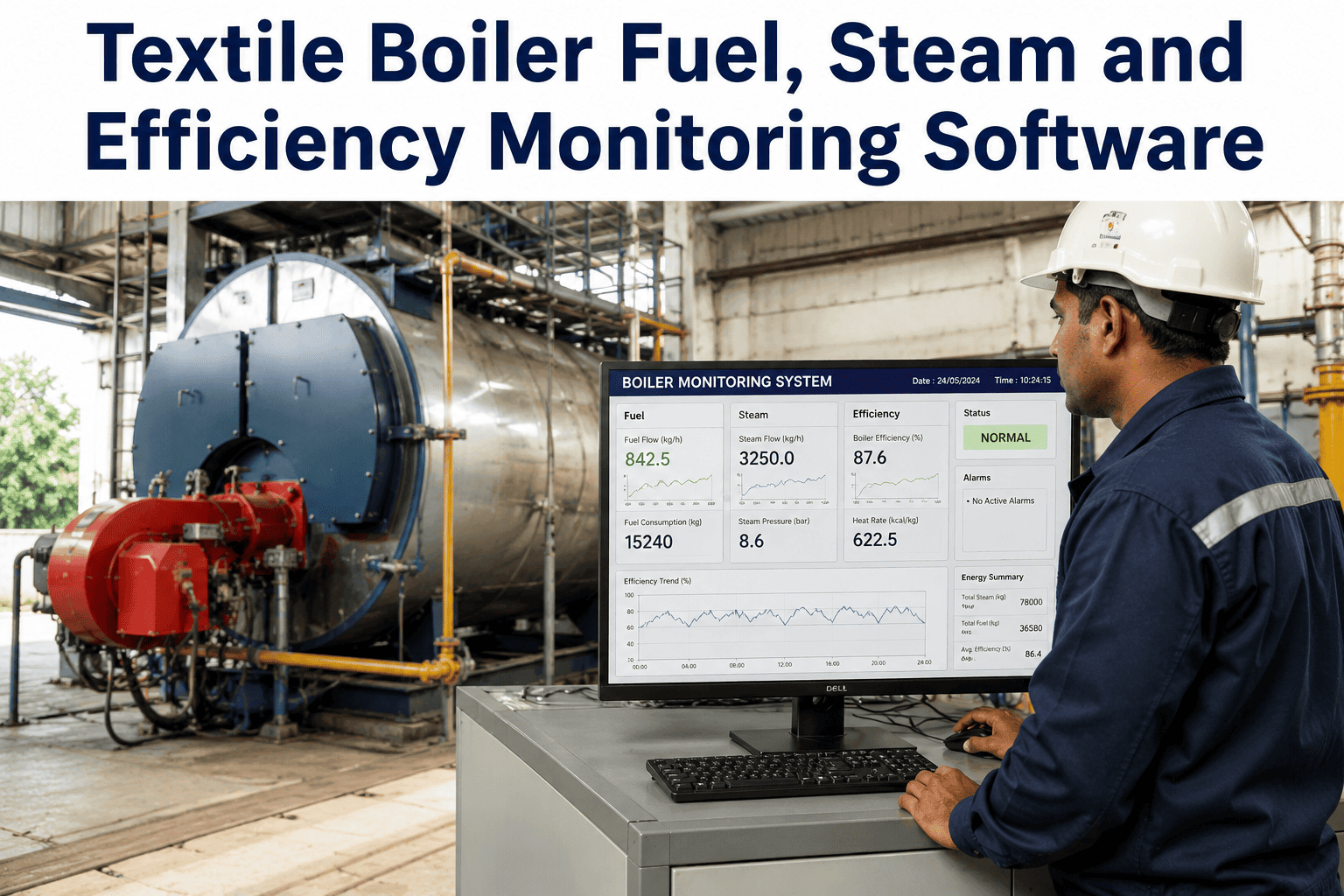
iFactory AI tracks steam pressure variability in real time, correlating fluctuations with boiler operation, distribution load, and downstream dyeing and finishing performance.
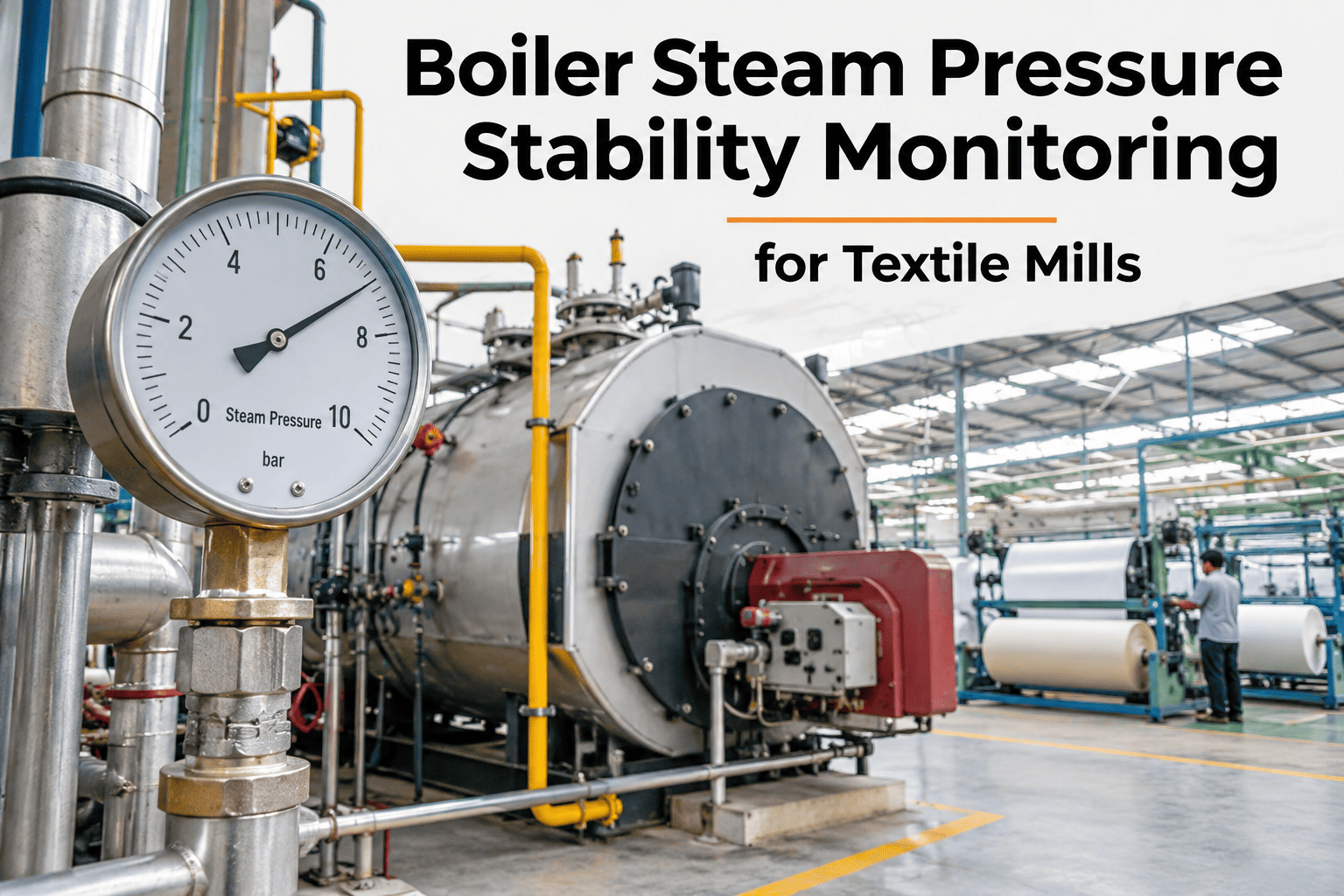
Pressure trace against target band — the swing matters more than the average
Why average pressure isn't the right metric
A Stable Average Can Hide an Unstable Process
Steam pressure reported as an hourly or shift average can mask minute-to-minute swings that are large enough to disrupt a dyeing machine's temperature control or a stenter's heat-setting consistency, even while the long-run average sits comfortably on target. Stability, measured as the actual variance around the setpoint, is a different and often more operationally relevant number than the average itself.
What causes instability
Four Common Sources of Pressure Fluctuation
Demand spikes
Multiple dyeing machines or finishing lines drawing steam simultaneously can momentarily outpace boiler response.
Burner cycling
A burner control struggling to modulate smoothly produces a sawtooth pressure pattern rather than a steady hold.
Distribution issues
Undersized piping, a failing pressure-reducing valve, or trap problems amplify swings downstream of the boiler itself.
Feedwater variation
Inconsistent feedwater temperature or flow forces the boiler to work harder to hold a steady output.
What instability costs downstream
Where the Swing Actually Shows Up
| Downstream process | Effect of unstable pressure |
|---|
| Dyeing | Temperature ramp inconsistency, contributing to shade and reproducibility issues |
| Stenter finishing | Heat zone temperature drift following steam supply fluctuation |
| Boiler itself | Accelerated wear on control valves and burner components from constant modulation |
See How Stable Your Steam Pressure Actually Is
Share your current boiler pressure logs and iFactory AI will show the real variability underneath your reported average.
Correlating cause and effect
Connecting a Pressure Event to What Was Drawing Steam
A pressure dip is far more useful once it's correlated against what else was happening on the steam network at that moment — if a known high-draw dyeing machine started a heating cycle at the exact same time, the fluctuation has an identifiable cause rather than being an unexplained boiler anomaly to chase down separately.
From instability to a fix
Four Steps From a Flagged Fluctuation to a Resolved Cause
1
Variance exceeds threshold
Pressure swing magnitude or frequency crosses a defined stability threshold.
2
Steam demand checked
Concurrent draw from dyeing and finishing equipment is reviewed against the timing of the swing.
3
Boiler and distribution reviewed
Burner modulation and distribution-side components are checked if demand alone doesn't explain it.
4
Stability confirmed
The corrected pressure trace is monitored to confirm the fix actually reduced the swing.
Expert review
What a Utilities Manager Checks First
Steam stability monitoring earns its place when it actually traces a downstream quality issue back to a specific pressure event, not just when it produces another chart nobody checks.
Verdict
Strong when pressure data is correlated with downstream dyeing and finishing timing, not reviewed in isolation.
Watch for
Reporting only average pressure when the real operational issue is variance around that average.
Do next
Pull a day of high-resolution pressure data, not just the hourly average, and check how much swing is actually hiding underneath it.
Frequently asked questions
What Textile Mills Ask About Steam Pressure Stability
Why isn't average pressure a good enough measure on its own?
An average can look stable while minute-to-minute swings large enough to disrupt downstream temperature-sensitive processes happen underneath it — stability is a measure of variance, not just the mean.
Discuss your current pressure monitoring approach.
How do we know if pressure fluctuation is actually affecting our dyeing results?
What sensor resolution do we need to actually see the swings?
A reading frequency fast enough to capture second-to-second or minute-to-minute variation is needed — an hourly average, which many boilers already report, isn't sufficient to see real instability.
Discuss sensor resolution for your boiler.
Is instability usually caused by the boiler or by what's drawing steam?
It can be either — demand-side spikes from simultaneous equipment draw are common, but burner modulation and distribution-side issues on the boiler side also contribute, so both need to be checked.
Ask support how to narrow down the cause.
Can scheduling help reduce pressure instability?
The swing matters more than the average
Track Steam Pressure Stability, Not Just the Mean
Book a demo to see how iFactory AI connects steam pressure fluctuations to dyeing and finishing performance on your mill.