A cloth dresser running 10 passes per meter instead of the calculated 8 will finish a batch of flannel that looks identical to the naked eye — until the dye house calls about diagonal banding that only shows up under finished lighting. Brushing, raising, and sueding all chase the same result, a lofted or textured surface fiber layer, but they get there through mechanically different actions on the fabric, and the wire gauge, cylinder speed, and pass count decisions made on the finishing floor determine whether a fleece feels plush or a flannel tears its warp. This guide breaks down what actually separates these three processes and the parameters that keep them consistent, batch after batch. Book a demo to see finishing parameter tracking built into iFactory's production monitoring.
Finishing & Garment Manufacturing
Brushing, Raising & Sueding: Surface Finish Guide
15 min read
8-15
Passes per meter — the typical working range for woollen raising before over-raise risk increases sharply
2mm
Maximum teasel or wire projection variance across a cylinder before visible diagonal banding appears on finished cloth
1:3
Common ratio of raising rollers to pile rollers on modern raising machines running alternated pile and counter-pile action
3
Distinct surface finishing processes covered in this guide, each suited to different fiber and fabric goals
The Core Distinction: What Each Process Actually Does to the Fiber
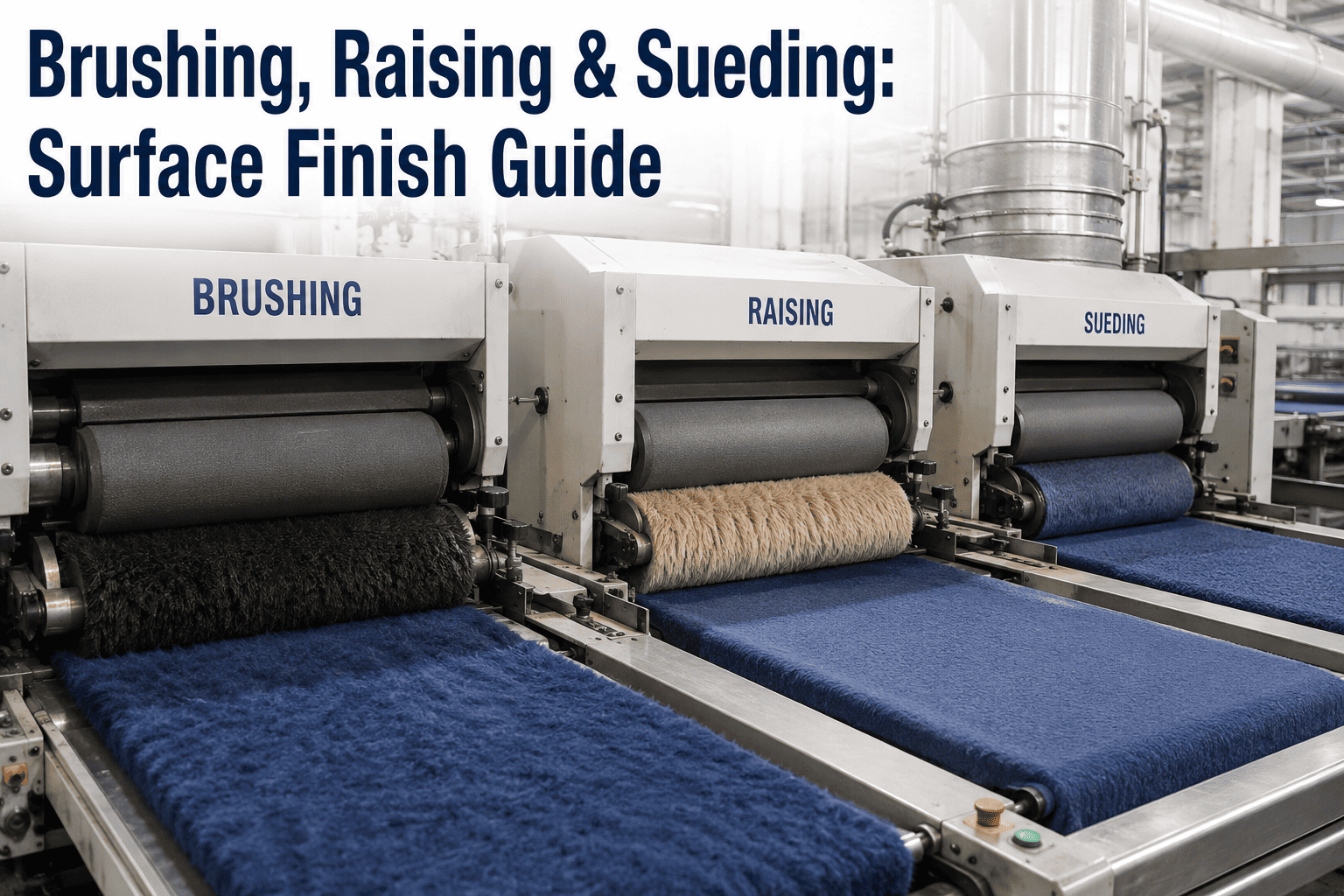
All three processes work by drawing fabric under tension past rotating cylinders that catch surface fiber ends and pull them up and away from the yarn structure. What differs is the tool doing the catching, and that single difference cascades into everything else — pile height, fabric hand, applicable fiber types, and production cost.
Brushing / Napping
Rollers covered in stiff wire bristles or fine steel pins comb and lift surface fibers without cutting them, producing a longer, more open nap. Best suited to staple fiber fabrics — cotton, wool, acrylic, and their blends — where cut fiber ends in the yarn give the wire plenty to catch.
Raising
The broader mechanical category covering both teasel and wire-card cylinder finishing. Teasel heads use natural hooked barbs that flex and release before pulling yarn out of the weave, while wire cards use fine metal points for higher-throughput, more consistent finishing.
Sueding
Uses sandpaper-covered or emery rollers instead of wire, producing a finer, lower, even peach-skin texture. Well suited to polyester and polyester-spandex substrates where the target is a smooth microfiber suede feel rather than a lofty pile.
Napping vs. Sueding: A Side-by-Side Comparison
Wire Selection: Teasel or Wire Card
The choice between teasel heads and wire card clothing is not primarily about throughput — it is a decision about how much you are willing to risk on fiber value versus how much consistency you need at volume. Start free trial to see wire wear tracking and pass count logging against your finishing line.
Teasel GigBest for high-value worsteds or any cloth where a torn warp ruins a costly piece. Hooked barbs flex and snap before generating enough force to pull yarn out of the weave — the self-limiting break behavior acts as built-in insurance against fabric damage.
Wire CardBest for high-volume mid-market production — blanket, melton, or fleece runs where consistency and throughput matter more than absolute fiber preservation. Many premium mills run wire card for bulk passes and finish with one or two teasel passes for surface character.
Cylinder Speed and Pass Count: Getting the Density Right
Raising density is governed by the relationship between cylinder rotation speed and cloth take-up speed — faster cylinder rotation relative to cloth speed increases passes per meter and raising density, but pushing too far in either direction creates a distinct failure mode.
Too Slow / Too Few PassesCloth comes off looking barely touched, with a thin, uneven nap that requires repeat passes to reach target density — costly in machine time and energy for a result that still needs correction.
Sweet SpotMost woollens land in an 8 to 15 passes per meter range, producing a dense, even nap while preserving enough yarn integrity that the ground weave stays structurally sound.
Too Fast / Too Many PassesOver-raising weakens the fabric and produces a fuzzy, undefined texture rather than a dense uniform nap — and on delicate warps, this is where a torn cylinder pass becomes a scrapped batch.
Quality Check
Measure teasel or wire projection with a depth gauge mid-pass, across the full cylinder width. A variance greater than 2mm across a standard cylinder will produce visible diagonal banding once the cloth is dyed and finished — a defect that is nearly invisible on greige goods but obvious on the finished product, which is exactly why it needs catching before the batch moves downstream.
Pile and Counter-Pile: Why Direction Matters
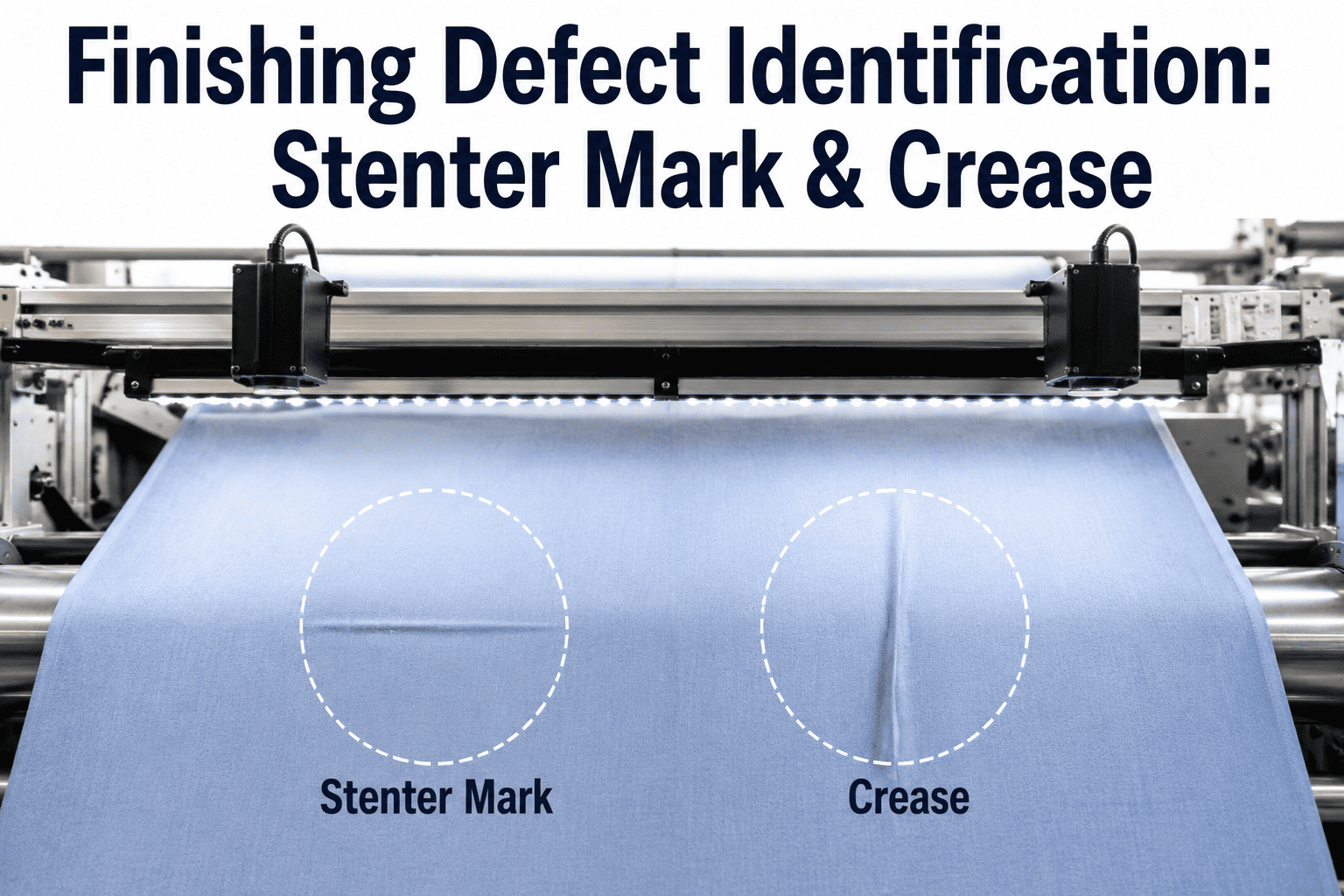
Modern raising machines alternate rollers running in pile direction with rollers running in counter-pile direction, commonly at a ratio around one counter-pile roller for every three pile rollers. This alternation minimizes fiber loss and resistance reduction compared to running all cylinders in a single direction. If pile action dominates too heavily over counter-pile, the cloth can cling to the pile rollers — creating tight tension on the feed side and slack on the backside, which shows up as creasing in the finished fabric.
Common Defects and What They Signal
Diagonal BandingUneven wire or teasel projection across the cylinder width — check with a depth gauge and correct through re-grinding or wire replacement.
CreasingPile action overpowering counter-pile action, causing the cloth to cling and tension to run uneven across the width — rebalance the pile-to-counter-pile ratio.
Lateral StripingOften traced back to yarn variation in the base fabric that was not visible before the raising process revealed it — a raw material issue rather than a machine setting issue.
Streaky or Patchy RaisingFrequently caused by residual finishing agents on the fabric surface interfering with fiber capture — trace back to the prior finishing step rather than the raising stage itself.
Fabric Applications: Matching Process to Product
Fleece
Polyester knit fabric brushed with wire rollers to break knit loops and raise fibers into a plush, textured surface — typically finished with shearing after brushing to achieve uniform pile thickness.
Flannel / Flannelette
Woven cotton or wool fabric run over wire-covered cylinders to raise surface fibers, producing a warmer, softer hand-feel. Specified as single-brushed or double-brushed depending on target warmth and softness.
Brushed Twill and Blankets
Higher-volume woven goods where wire card raising at consistent throughput matters more than the fiber preservation that teasel finishing offers on premium worsteds.
Peach-Skin Microfiber
Polyester or polyester-spandex substrates finished through sueding rather than brushing, producing the fine, even, low-pile texture associated with premium peach-skin apparel fabric.
Track Wire Wear and Pass Density Before Defects Reach the Dye House
iFactory connects cylinder speed, pass count, and wire condition data across your finishing line, flagging drift in raising density before diagonal banding or over-raising shows up in a finished batch.
Frequently Asked Questions
QCan brushing and sueding be combined on the same fabric?
Yes, some premium finishing operations run both processes in sequence — brushing first to raise and open the fiber structure, then sueding to refine and even the raised surface for a smoother, more premium hand feel. This combination is more common on synthetic and blended fabrics targeting a refined peach-skin surface with more body than sueding alone would produce, since the initial brushing pass gives the sueding stage more raised fiber to work with.
Book a demo to see multi-stage finishing parameters tracked together in one dashboard.
QWhy does sueding a knitted fabric present different challenges than sueding a woven fabric?
A knitted fabric's loop structure gives it significantly more extensibility in both length and width directions compared to an equivalent woven construction, and this extensibility affects how the fabric responds to the mechanical forces applied during the sueding process. Tension control that works well on a stable woven substrate can cause a knit to stretch unevenly under the same roller pressure, leading to distorted pile or dimensional instability in the finished fabric. Sueding parameters generally need separate calibration for knit versus woven goods rather than a single shared setting.
QHow do I know if my raising machine needs to run more passes or if the wire itself needs replacing?
If nap depth comes in light despite running at the calculated cylinder speed and pass count for your target density, check three things in order: teasel or wire wear first, since worn barbs lose their hook geometry and slide across the fiber rather than catching it; stripping brush loading second, since a packed cylinder lays fiber flat instead of raising it; and swift-to-cylinder pressure drift third, which on older mechanical gigs can walk out of adjustment by 10 to 15 percent over the course of a shift.
Start free trial to see wire wear and pressure drift tracked automatically across shifts.
QWhat determines whether a fabric should be single-brushed or double-brushed?
The decision comes down to target warmth, softness, and the strength of the base yarn — double-brushing both faces of the fabric produces a warmer, softer result on both sides, but if the base yarn is too thin or lightly constructed, double-brushing can tear the weave rather than simply raising the surface fiber. Fabric weight and yarn count need to be matched to the brushing intensity planned, which is why a fabric spec targeting double-brushing typically requires a heavier or more robust base construction than a single-brushed equivalent.
QDoes raising direction matter for garment cutting after the fabric leaves the finishing line?
Yes, raised and napped fabrics are directional — the raised fibers lay in a specific direction established during the raising process, meaning all cut pieces for a single garment need to face the same direction to keep color and texture appearance consistent. Cutting pieces in mixed nap directions on fabrics like fleece or flannel produces a visible shading difference between panels even when the fabric itself has no dye variation, which is a defect that traces back to garment cutting practice rather than the finishing process itself.
Bring Consistency to Every Batch of Brushed, Raised, or Sueded Fabric
iFactory monitors cylinder speed, pass density, and wire condition continuously across your finishing lines — catching drift toward over-raise, banding, or creasing before it reaches a finished batch.