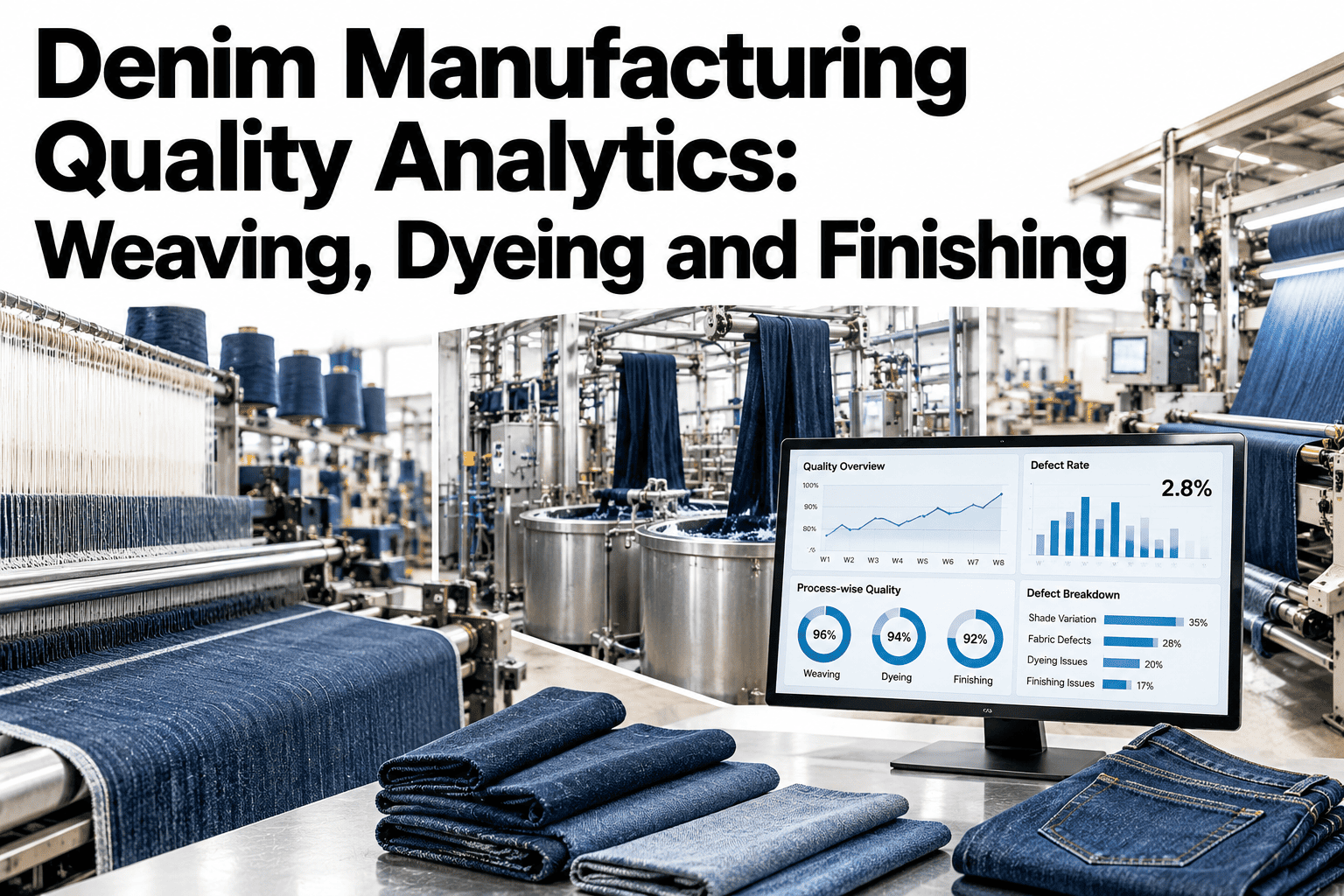
Denim looks simple from the outside — blue fabric, diagonal twill, a fading pattern everyone recognizes — but the process behind it is one of the more technically demanding sequences in textile manufacturing. Indigo dyeing chemistry alone involves controlling an oxidation-reduction cycle across dozens of dips, and the difference between a mill producing premium selvage denim and one producing commodity fabric often comes down to variables most people never think about — loom type, warp tension, dye penetration depth, and finishing sequence. For textile manufacturers and mill operators managing denim production lines, understanding this full sequence — from indigo chemistry through weaving construction to finishing — is what separates predictable, consistent output from a production floor constantly chasing quality variance. You can book a demo to see how production intelligence platforms track these variables across a full denim line.
Indigo Dyeing — The Chemistry Behind the Color Everyone Recognizes
Indigo is unusual among textile dyes because it will not dissolve in water in its natural form. To dye yarn with it, the indigo must first be chemically reduced into a soluble, colorless compound called leuco-indigo — typically using a reducing agent in an alkaline bath. Once yarn is dipped into this reduced dye bath and pulled back into the air, oxygen reacts with the leuco-indigo on the yarn surface and converts it back into insoluble indigo blue, which is what actually bonds the color to the fiber.
This oxidation-reduction cycle is why indigo dyeing is fundamentally different from most other textile coloring processes. Rather than a single dip producing full color depth, denim yarn typically passes through six to twelve individual dip-and-oxidize cycles, with each pass adding a thin additional layer of indigo to the yarn surface. This is also the reason indigo-dyed denim fades the way it does — because the dye sits primarily on the outer surface of the yarn rather than penetrating fully through to the core, wear and abrasion gradually expose the undyed core, producing the characteristic fading pattern that has defined denim's visual identity for well over a century.
Controlling this process consistently at mill scale is considerably harder than the chemistry description suggests. The reduction bath's chemical balance shifts continuously as yarn passes through it, oxygen is consumed, and reducing agent is depleted — which means a bath that produced a perfect shade an hour ago can drift out of specification without careful, continuous monitoring. Temperature, pH, and reducing agent concentration all interact, and a mill running multiple shades or multiple production lines simultaneously has to manage this chemistry precisely enough that a customer ordering the same denim shade in March gets a visually matching fabric in September, months and potentially different dye lots later.
Inside the Rope Dyeing Range — Stage by Stage
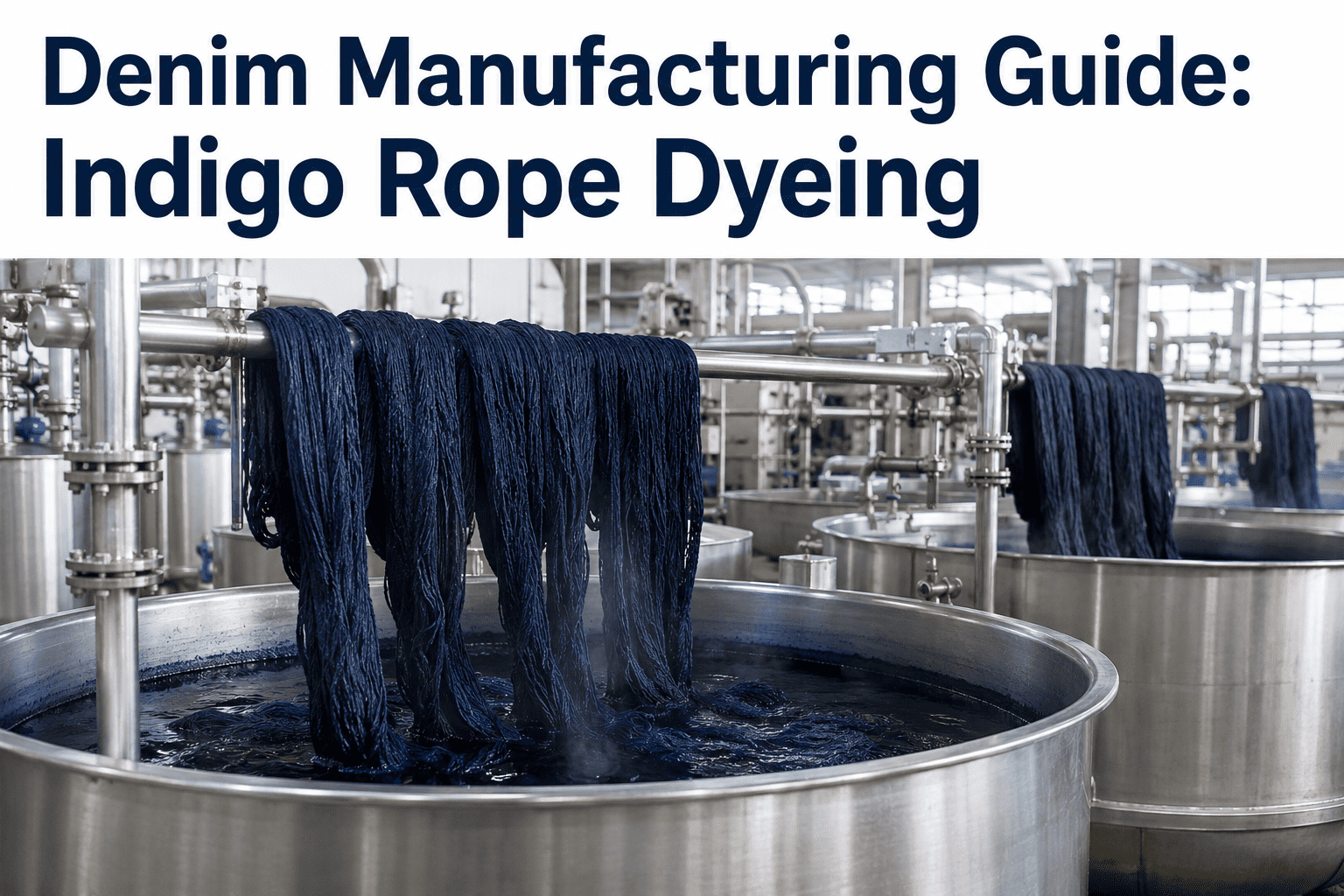
Rope dyeing is the dominant method for coloring denim warp yarn at commercial scale, and it earns its name from the way hundreds of individual yarn ends are twisted together into a thick rope before entering the dye range. This rope format matters chemically — because indigo needs oxygen exposure between dips to convert to its insoluble blue form, and a tightly twisted rope structure means only the outer surface yarns get consistent oxygen exposure, which is precisely the mechanism that creates denim's signature ring-dyed core. A modern rope dye range can process yarn continuously at meaningful speed, with the rope moving through a sequence of dye boxes, squeeze rollers, and open-air oxidation towers arranged to give each cycle enough exposure time to develop properly before the next dip.
How Denim's Twill Weave Actually Works
Denim is defined as much by its weave structure as by its indigo color. The fabric uses a twill weave, where the weft yarn passes over one or more warp yarns and then under two or more, creating the diagonal rib pattern visible on denim's face side. This construction is what gives denim its characteristic durability and diagonal texture — and it is also why denim has a distinct face and back side, since only the indigo-dyed warp yarn is visible on the fabric face while the undyed weft yarn dominates the reverse side. This structural asymmetry is not incidental; it is precisely why denim garments can be finished, sanded, or distressed on the face side to create fashion effects without disturbing the fabric's underlying strength, since the structural weft yarn on the reverse remains largely undisturbed by surface treatments applied to the face.
The specific weave pattern used has a direct effect on the fabric's visual texture and performance characteristics. A 3x1 twill — the most common denim construction — shows a pronounced diagonal line and tends to produce a slightly heavier, more durable fabric. A 2x1 twill produces a finer diagonal and a lighter hand feel, often used in fashion-forward or lighter-weight denim. Broken twill and crosshatch constructions intentionally interrupt the diagonal pattern, which reduces the leg-twisting effect that can occur in finished garments made from standard twill denim, particularly after repeated washing and drying cycles. Book a demo to see how weave pattern data connects to downstream quality tracking on a production floor.
Selvage Denim vs. Standard Denim — What the Loom Actually Determines
The difference between selvage and standard denim comes down almost entirely to the loom used to weave it, not the dyeing or finishing process. Selvage denim is woven on narrower shuttle looms that use a single continuous weft thread traveling back and forth across the fabric width, which creates a tightly finished, self-bound edge — the "self-edge" that gives selvage its name. This edge does not unravel and requires no additional finishing.
| Characteristic | Selvage Denim | Standard (Open-Width) Denim |
|---|---|---|
| Loom type | Narrow shuttle loom | Wide projectile or rapier loom |
| Fabric width | Typically 28–32 inches | Typically 60+ inches |
| Edge finish | Self-finished, tightly woven edge | Raw edge, requires overlock finishing |
| Weaving speed | Slower — lower output per hour | Significantly faster production rate |
| Fabric density | Typically denser, tighter weave | Variable, generally less dense |
| Typical market positioning | Premium, heritage-oriented denim | Mainstream commercial denim |
Denim Weight, Yarn Type, and What They Change
Denim weight — measured in ounces per square yard — has a direct relationship to durability, drape, and end use, and mills produce a wide range depending on target garment category. Beyond weight, the yarn construction used for the warp thread significantly changes the fabric's fading behavior and overall character, which is why "denim" covers a much broader technical range than the uniform blue fabric most people picture.
Ring-spun yarn, made by twisting fibers together in a continuous spinning process, produces a slightly irregular yarn surface that holds indigo unevenly — a texture that many premium denim buyers specifically seek out because it produces a more complex, higher-contrast fade over time. Open-end spun yarn, by contrast, produces a more uniform yarn surface and a flatter, more consistent color that is generally associated with commercial-grade denim rather than premium positioning.
From Loom to Finished Fabric — The Finishing Sequence
Woven greige denim off the loom is not yet finished fabric — it still carries sizing starch, requires stabilization, and typically needs mechanical treatment to achieve its final hand feel and shrinkage profile. The finishing sequence determines much of how the fabric will perform once it becomes a garment, and mills that manage this stage inconsistently often see quality variance that has nothing to do with the dyeing or weaving stages upstream. To see how finishing-stage data integrates with the rest of a denim production line, book a demo with our team.
Why Process Consistency Matters More in Denim Than Most Fabrics
Denim is unusually sensitive to process variation compared to solid-color woven fabrics, because so much of its final visual character depends on precisely repeatable dyeing and weaving conditions. A shift in dye bath concentration, oxidation exposure time, or loom tension that would be invisible in a solid-dyed fabric shows up immediately in denim as an inconsistent shade, an uneven fade pattern, or a fabric that behaves differently from the previous production run.
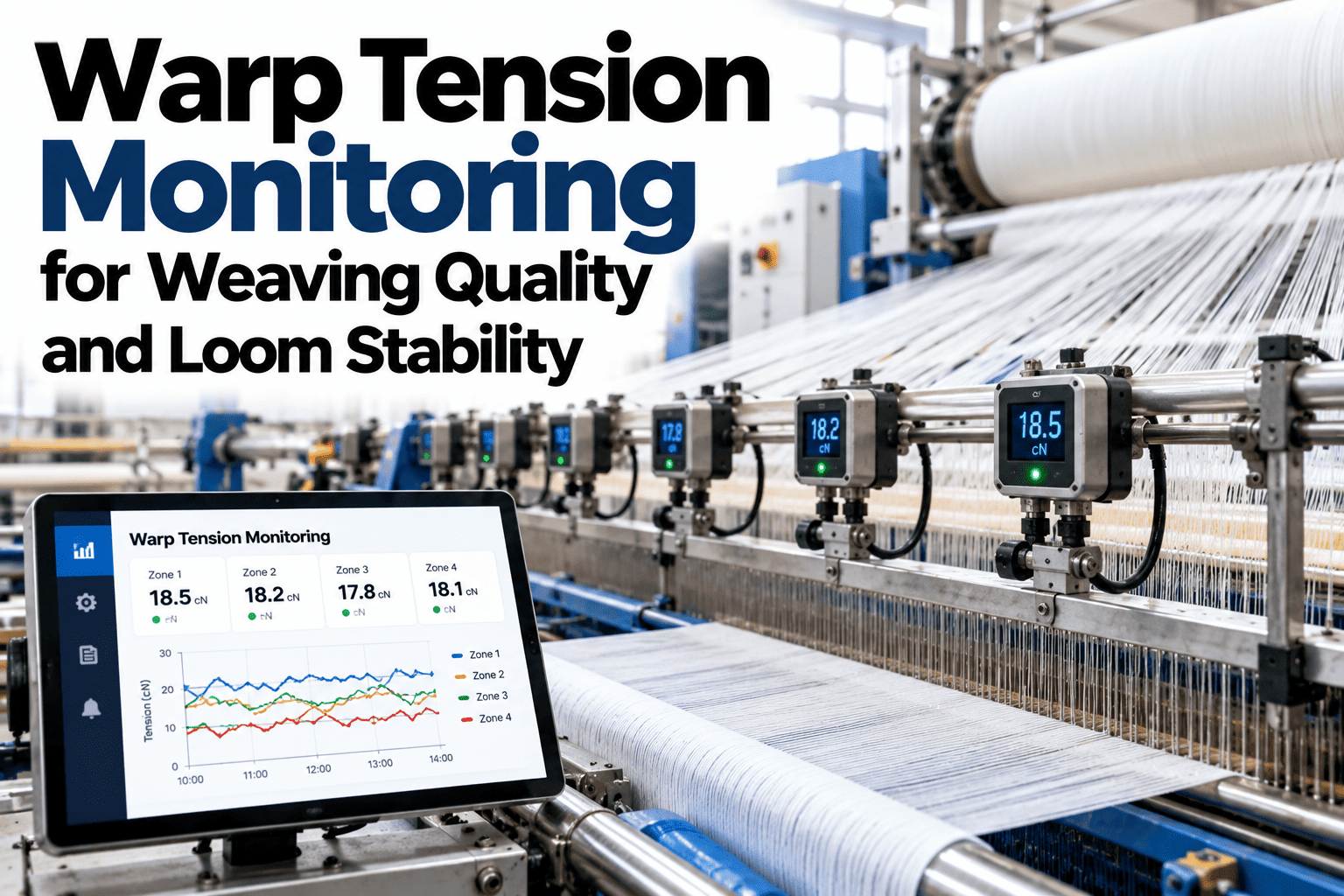
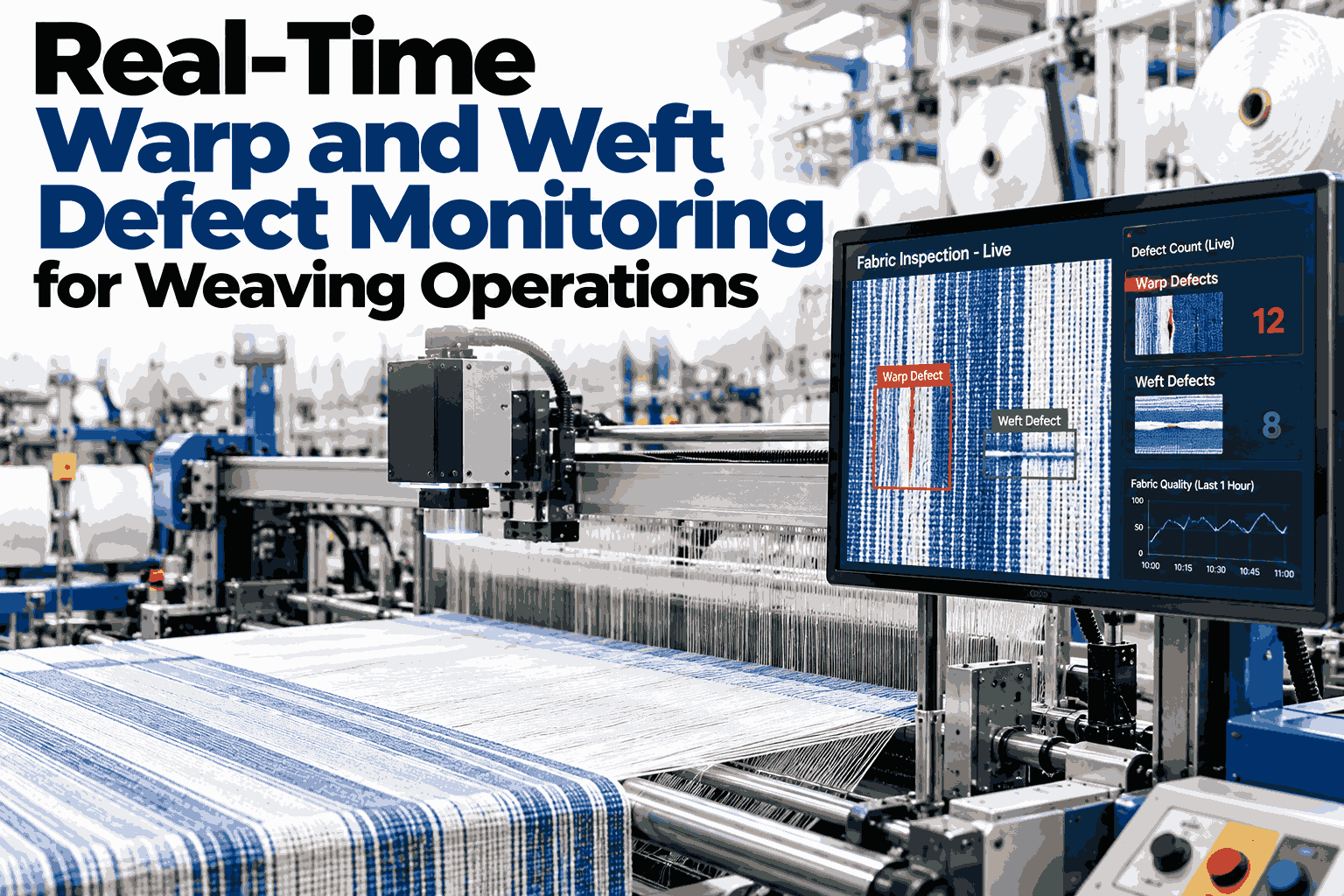
This sensitivity is exactly why mills producing denim at scale increasingly rely on continuous process monitoring rather than periodic spot-checks. Dye bath concentration, yarn tension through the rope dye range, loom speed and shed timing, and finishing-stage shrinkage all interact in ways that are difficult to track manually across a full production shift, let alone across multiple shifts and multiple production lines. Mills that treat these variables as one connected system — rather than separate departmental concerns — consistently produce more uniform fabric and catch quality drift before it reaches finished goods rather than after a customer complaint traces it back.
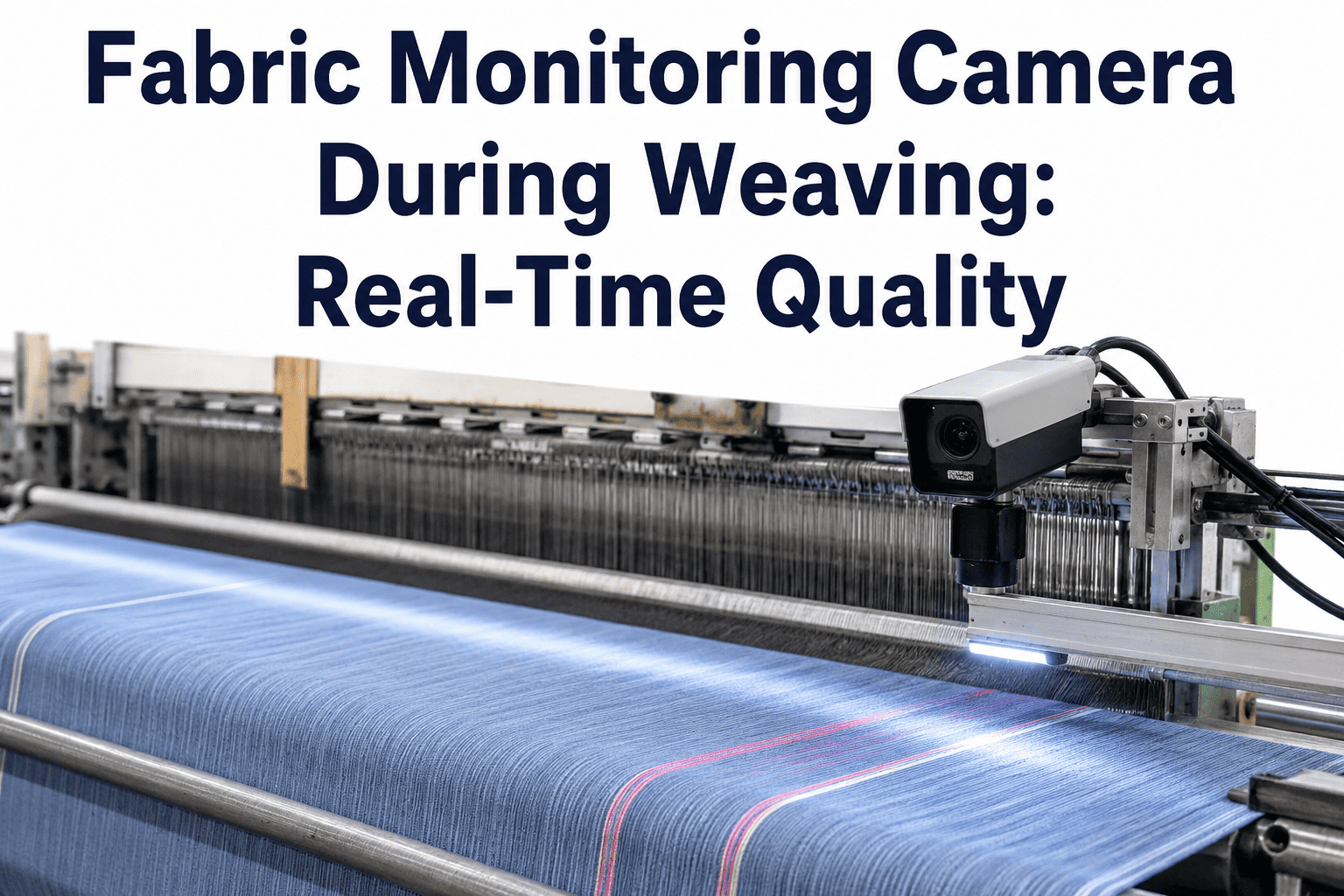
The commercial stakes of this consistency have also risen as denim buyers, particularly larger apparel brands, have become more sophisticated about specifying and verifying exact shade tolerances, weight consistency, and fade behavior across production lots. A mill that can demonstrate tight, documented process control across dyeing, weaving, and finishing is in a fundamentally different competitive position than one relying on end-of-line visual inspection alone — not just because it produces more consistent fabric, but because it can prove that consistency to buyers who increasingly demand the documentation as a condition of doing business.