
The difference between a dobby loom and a jacquard loom looks like a technical footnote until a mill has already committed capital to the wrong one — then it becomes the reason a design team keeps saying "we can't weave that here." A dobby loom lifts warp yarns in fixed groups through a limited number of harness frames, which makes it fast, mechanically simple, and inexpensive to run, but caps pattern complexity at whatever repeat those frames can produce. A jacquard loom lifts every single warp end independently through its own hook and harness cord, which removes that repeat limit entirely and opens the door to large-scale figured designs, but at a real cost in machine price, control complexity, and maintenance skill. This guide compares the two mechanisms, their pattern capability limits, their production speed and cost profiles, and the fabric categories each one actually wins — so a mill can match its patterning investment to its design roadmap instead of discovering the mismatch after the machine is on the floor. Mills evaluating a patterning upgrade can book a 30-minute demo to see how iFactory tracks design changeover time and pattern-related downtime across dobby and jacquard sheds.
Dobby vs Jacquard Weaving — Pattern Capability and Cost Compared
How each shedding mechanism actually lifts the warp, the pattern complexity ceiling each one imposes, production speed and investment differences, and which fabric categories belong on each machine.
Dobby looms typically work with up to roughly 28 shafts, controlling warp yarns in fixed groups, while jacquard looms control every warp end individually and can lift a very large number of yarns simultaneously. A jacquard head can lift anywhere from roughly 100 to 1,800 individual yarns at any instant, which is why fabric cost ranking runs jacquard above dobby above plain tappet weaving on the same base yarn.
How Each Mechanism Actually Lifts the Warp
The entire capability gap between these two systems comes down to one structural fact: whether warp yarns move in groups or move individually. That single design choice cascades into every other difference covered in this guide.
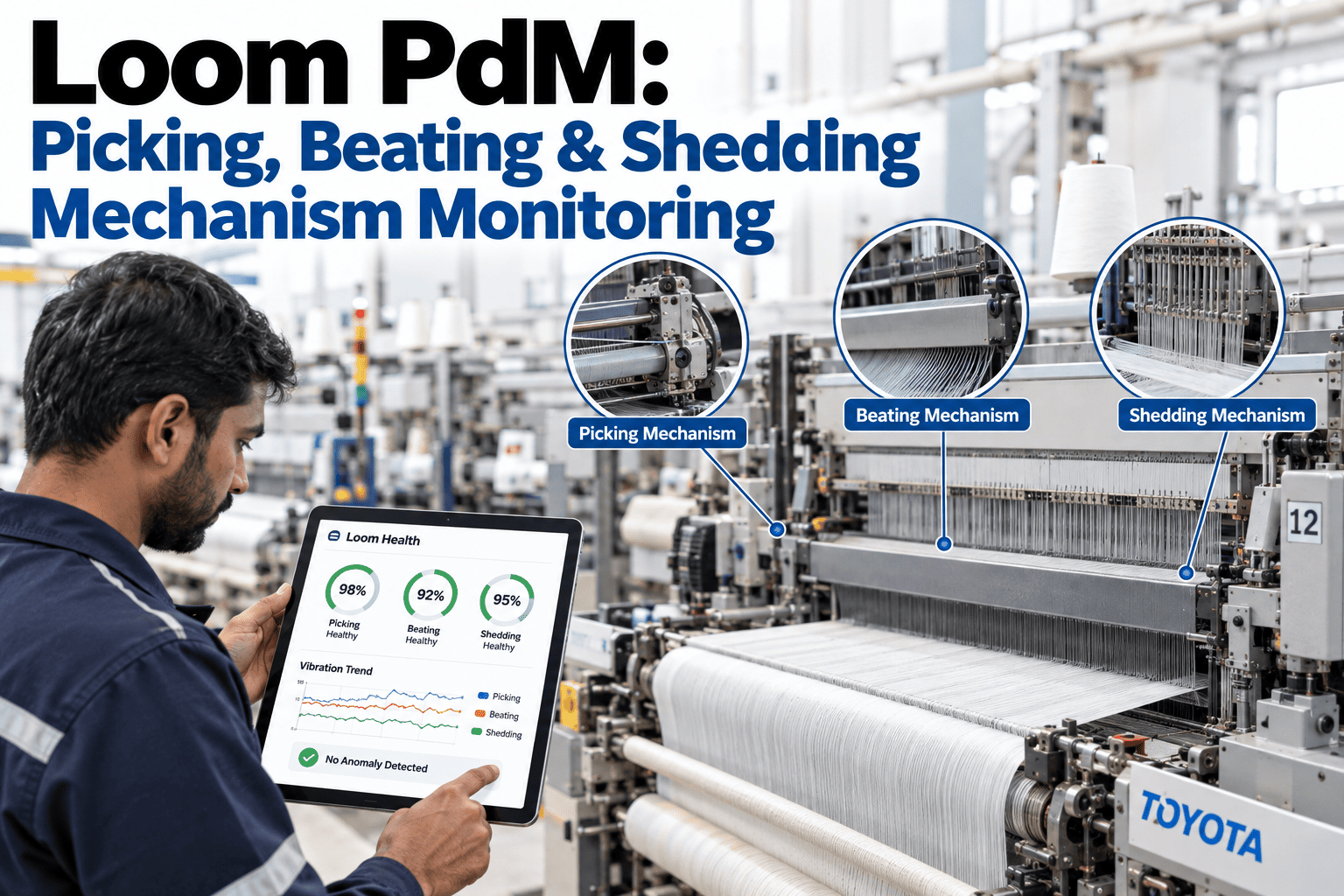
A dobby loom can only control warp yarns in groups, moved together by harness frames — when one harness lifts or lowers, every warp yarn attached to it moves together, and the number of harness frames the loom can physically hold sets a hard ceiling on how many distinct groups — and therefore how complex a pattern — the loom can produce.
A jacquard mechanism uses hooks, harness cords, and needles to control every warp thread individually, with one warp thread per harness cord and no heald shaft grouping involved at all — removing the group-size ceiling that limits a dobby's pattern repeat.
That is why a dobby pattern is described in terms of a repeat size measured in threads, while a jacquard pattern is described in terms of a full figured design that can span the entire fabric width without repeating at all.
Pattern Complexity — Where the Ceiling Actually Sits
Design teams often assume more harnesses simply means "a bit more detail." In practice the ceiling between dobby and jacquard patterning is not incremental — it is a different category of design entirely.
Mechanical vs Electronic Jacquard
Jacquard technology itself splits into two generations, and mistaking one for the other is a common sourcing error since both get called "jacquard" in casual conversation.
Mechanical Jacquard
Mechanical jacquard uses punched cards, hooks, or complex mechanical linkages to lift individual warp ends, historically unlocking highly intricate patterns but requiring significant manual setup with limited programmability. It remains valued for heritage weaving and craft-level detail, but pattern changeover is slow and labor-intensive.
Electronic Jacquard
Electronic jacquard replaces punched cards with digital pattern control, giving mills the scalability, rapid design change, and digital integration that modern fashion and technical textile markets demand. Pattern files can be uploaded and swapped in minutes rather than re-carding an entire mechanism.
Dobby looms sit between these two jacquard generations on cost and complexity — they are efficient for geometric or repeated designs and less costly than a full jacquard system, but they cannot produce very large or highly detailed designs regardless of how modern the dobby control electronics are. A mill weighing a patterning upgrade should treat this as three-way decision — mechanical jacquard, electronic jacquard, or dobby — not a simple two-way dobby-versus-jacquard call.
Investment and Maintenance — The Real Cost Difference
Machine price is the number every quotation leads with, but it is rarely the full cost difference a mill actually experiences over the equipment's working life.
Dobby looms are generally less expensive to purchase and easier to maintain, and punch-card or electronic dobby control means patterns can be changed relatively quickly without specialized technical staff on every shift.
Jacquard looms are more expensive to purchase and require technical expertise to maintain, with the complexity concentrated in the card or electronic head system and the harness cord assembly, both of which need trained technicians rather than general loom operators.
A dobby loom machine is built to support speed, stability, and production scale, while a jacquard loom is built to support creativity, design detail, and premium market positioning — which reframes this as a strategic question about what a mill is actually selling, not just a technical spec comparison.
Production Speed and Changeover Time
Speed and changeover time move in opposite directions between these two systems, and the trade-off is consistent enough to plan around.
Dobby Speed Advantage
Fewer moving parts per pick and simpler shedding motion allow dobby looms to run at higher sustained speeds than jacquard on comparable fabric, since the harness frame system is mechanically lighter than a full jacquard head.
Jacquard Changeover Advantage
Combined electronic-dobby-and-jacquard weaving machines now exist specifically because mills need both a heald frame system and a jacquard harness system working together on one machine, letting ground weave run on dobby-controlled frames while the figure motif runs on jacquard-controlled cords in the same fabric.
This hybrid dobby-and-jacquard configuration is increasingly common precisely because most figured fabrics need a plain or simple ground weave behind a complex motif — running the ground on dobby frames and the motif on jacquard hooks gets the speed benefit of dobby everywhere the design doesn't need jacquard's full flexibility.
Fabric Categories — Which Machine Actually Wins
Matching fabric application to mechanism is usually a faster decision than working through every spec line above. These are the categories where one system is the clear standard choice.
Small repeat, high-volume, cost-sensitive fabric where dobby's speed and lower cost outweigh jacquard's design range.
Jacquard mechanisms have specialized variants developed specifically for fabrics like damask and brocade where large-scale figured motifs are the entire product value.
Specialized jacquard types are built specifically for terry towel weaving where a branded border or figured design sits on an otherwise simple pile ground.
Digital pattern upload over punched cards lets a fashion-cycle mill turn around new motifs in minutes rather than days of manual re-carding.
Costing runs jacquard above dobby above plain tappet weaving — commodity fabric with no pattern requirement rarely justifies dobby's added cost over a simple tappet shedding motion, let alone jacquard.
A hybrid machine running ground weave on dobby frames and motif on jacquard cords balances speed against design flexibility on one loom.
Setup Complexity and Operator Skill
A dobby loom requires careful setup but is still much easier to set up and use than a jacquard loom, and general loom operators can typically manage pattern changes on a dobby with modest additional training. Jacquard setup — threading harness cords, loading pattern data, and verifying hook lift sequencing — demands a dedicated skill set that most mills either hire specifically for or send existing staff to be trained on. A mill switching from an all-dobby to a mixed dobby-jacquard shed should budget for this training cost as part of the capital decision, not treat it as a footnote after the machines arrive.
The right patterning investment matches your design roadmap, not just today's order book.
Dobby supports speed, stability, and scale on repeat-driven fabric; jacquard supports creativity, detail, and premium positioning on figured fabric. Most mills serving both segments run a mixed fleet, or invest in combined dobby-and-jacquard machines that put both control systems on one loom frame. iFactory's pattern-changeover and downtime tracking works across dobby, mechanical jacquard, and electronic jacquard lines from one dashboard.
Frequently Asked Questions
Can a jacquard loom weave everything a dobby loom weaves, just with more flexibility?
Technically yes on design range, but not economically. Jacquard's higher machine cost, more complex maintenance, and slower general throughput on simple repeat patterns mean it rarely makes financial sense for fabric that a dobby loom already handles well. The cost ranking of jacquard above dobby above tappet weaving reflects real added expense per meter, not just machine price — running commodity stripe fabric on jacquard capacity wastes a machine built for figured design complexity the fabric doesn't need. The right question is not "can jacquard do this" but "does this fabric's design actually require jacquard's individual-end control," since the answer for most repeat-pattern fabric is no. Book a demo to model cost-per-meter for your specific design mix across both machine types.
How many harnesses does a dobby loom typically need for a complex geometric design?
Dobby looms can create moderately complex patterns with up to roughly 28 shafts, and most commercial dobby installations run somewhere between 8 and 24 harnesses depending on the design repeat required. Each additional harness frame adds mechanical complexity and cost, so mills typically specify the minimum harness count that covers their expected design range rather than maximizing shaft count upfront. A design repeat exceeding what the installed harness count supports is the clearest practical signal that a fabric program has outgrown dobby capability and needs jacquard control instead. Contact iFactory Support for help auditing your current design repeat sizes against installed harness capacity.
What is the practical difference between mechanical and electronic jacquard for a mill already running mechanical?
Mechanical jacquard relies on punched cards or complex mechanical linkages, which require significant manual setup and offer limited programmability, while electronic jacquard replaces that with digital pattern control. For a mill already running mechanical jacquard, the upgrade decision usually comes down to design-change frequency: if patterns run for months at a time, the mechanical system's slower changeover matters less, but if the design calendar turns over every few weeks, the labor and downtime cost of re-carding mechanical jacquard for every new motif adds up fast enough to justify the electronic upgrade cost within a reasonably short payback period.
Is a combined dobby-and-jacquard machine worth the added complexity over running two separate looms?
A combined electronic-dobby-and-jacquard weaving machine integrates a heald frame system driven by a dobby mechanism together with a jacquard harness cord system on the same weaving body, letting one loom weave a plain or simple ground with dobby-controlled frames while a figure motif runs on jacquard-controlled cords in the same fabric pass. For mills whose product line consistently pairs a simple ground with a figured border or motif — terry towels with woven borders are the clearest example — this combined approach avoids running two separate fabric passes or two separate machines for what is functionally one fabric. For mills whose ground and motif fabric needs are unrelated, two dedicated machines usually remain the simpler and more maintainable choice.
How does pattern repeat size affect fabric cost beyond the loom investment itself?
Pattern repeat size affects warp preparation cost, not just weaving cost — a jacquard design with no fixed repeat typically needs a correspondingly larger and more carefully prepared warp beam, more careful tension control across thousands of individually controlled ends, and more rigorous quality inspection since a single hook or cord fault can show as a visible line running the length of the fabric roll. Dobby's smaller, fixed repeat is more forgiving of minor tension variation because each harness frame's yarns move together and small individual-yarn inconsistencies average out visually within the group. This is part of why jacquard fabric commands a cost premium beyond the loom's higher hourly rate — the entire preparation and quality process around it is more exacting. Book a demo to see warp preparation and quality tracking built for jacquard-level end control.
Track pattern changeover, hook faults, and design-related downtime — on dobby, mechanical jacquard, or electronic jacquard.
iFactory gives design and production teams one view of pattern-related stoppage causes across a mixed patterning fleet, so a design roadmap decision is backed by real changeover and fault data instead of a vendor's spec sheet. A 30-minute demo builds that view against your current loom mix.
.jpg)
