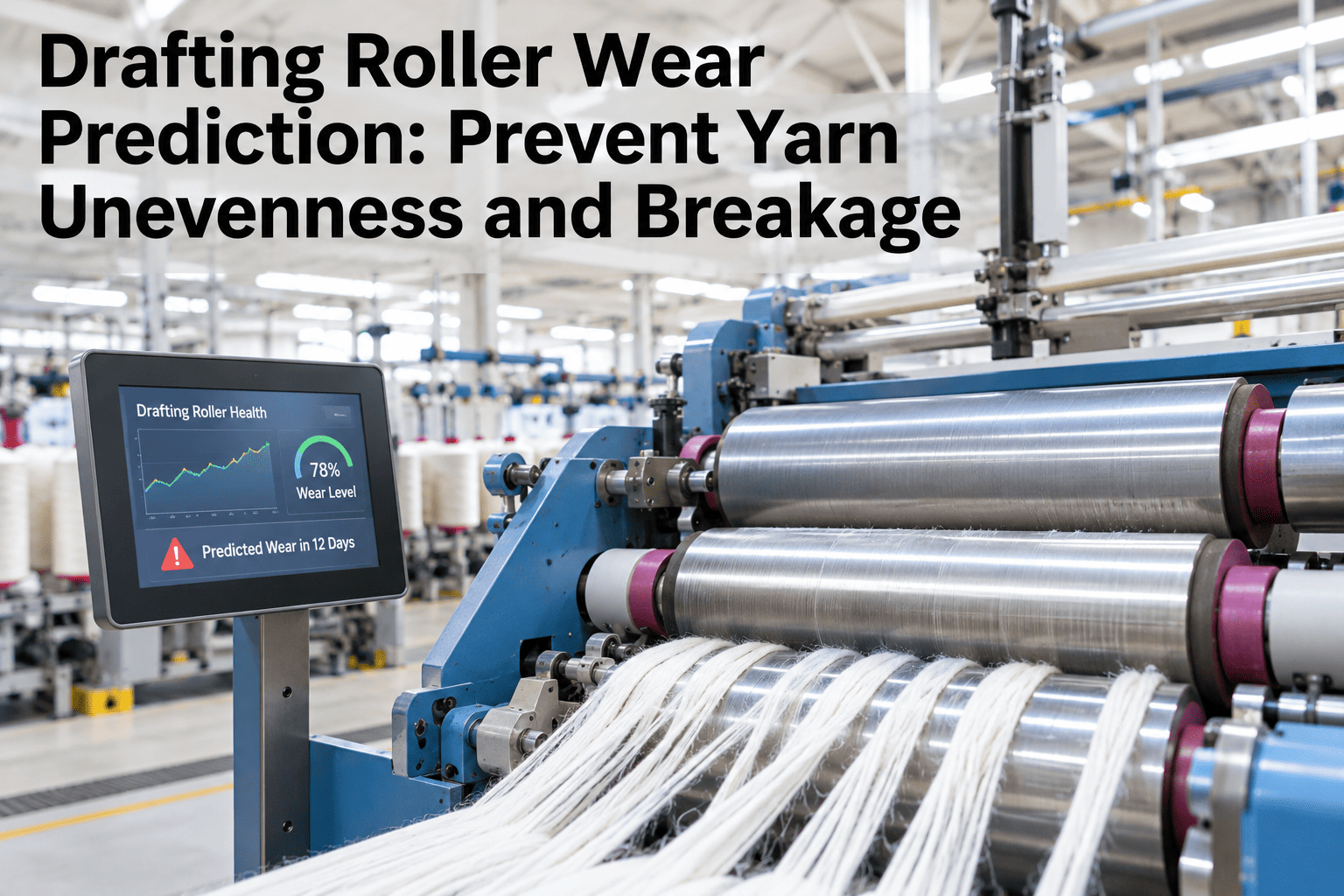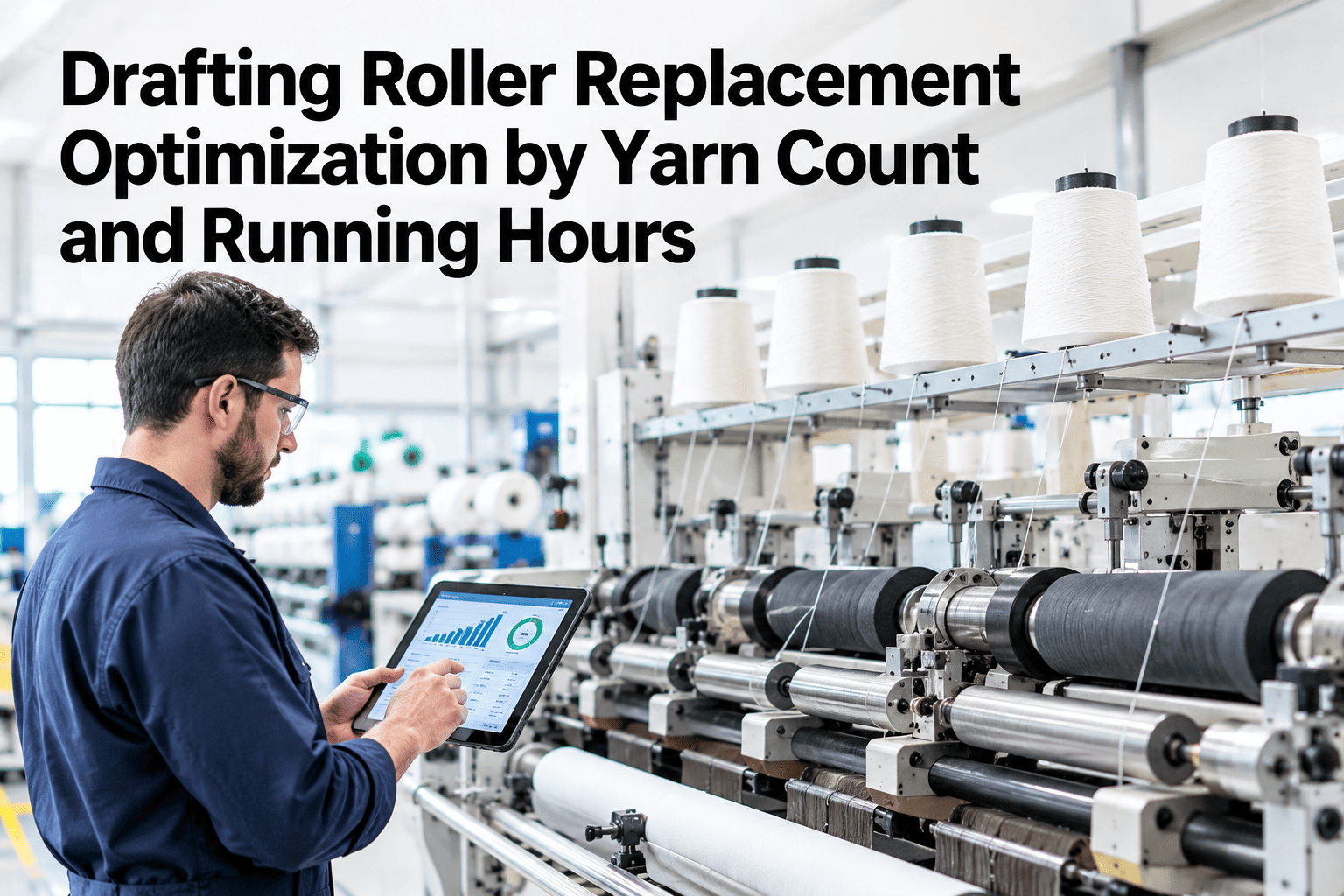
A fixed replacement interval for drafting rollers treats every position on every frame as if it wears identically, which is why mills running this way end up either replacing rollers that still have useful life left or running others past the point where yarn quality has already started slipping. Running hours, yarn count, breakage trend and actual surface condition together tell a much more accurate story than a calendar date ever can. iFactory AI, an on-premise AI platform for textile component monitoring, can map your current roller replacement schedule against actual condition data before the next changeover.
A Calendar Doesn't Know How Hard a Roller Has Actually Worked
Replacing drafting rollers by running hours, yarn count, breakage trend and surface condition together catches wear a fixed interval misses in both directions — rollers pulled too early, and rollers run too long.
Why Fixed Intervals Get It Wrong in Both Directions
A roller running fine yarn counts at high utilization wears faster than the same part on a low-count, lightly-run frame, yet a fixed calendar interval treats them identically. The result is predictable: the heavily-worked roller runs past its useful life and starts contributing to breaks and quality drift before its scheduled change date, while the lightly-worked one gets pulled with genuine service life still remaining, wasting a usable part.
Actual accumulated duty, not time since the last changeover.
Finer counts place different mechanical demands on roller surface.
A rising break rate at that position is a direct wear signal.
Physical wear inspection confirms what the other signals suggest.
Building a Condition-Based Replacement Rule
Each input adds confidence, and combining them avoids over-relying on any single signal that could mislead on its own. Our team can build this rule set against your current roller inventory.
Not per frame — individual drafting zones wear at different rates even on the same machine.
A running-hour budget for Ne 20 doesn't transfer directly to Ne 60.
A position trending worse than its peers is wearing faster than the schedule assumes.
Before final replacement, a surface inspection verifies the data-driven call.
Fixed Interval vs Condition-Based: What Changes
| Approach | Typical Outcome | Waste Pattern |
|---|---|---|
| Fixed calendar interval | Same schedule regardless of actual duty | Early replacement on light-use positions, late on heavy-use ones |
| Running-hours only | Accounts for duty, not count or trend | Can still miss count-driven wear differences |
| Hours + count + trend + condition | Replacement timed to actual wear | Minimal — each input corrects the others' blind spots |
See Where Your Current Schedule Is Over- or Under-Replacing
Bring your roller change log and running-hour data, and find out which positions are being replaced too early and which too late.
What Each Signal Catches That the Others Miss
Misses the extra demand finer counts place on roller surfaces.
Misses a position simply running far more hours than its peers.
Catches wear already affecting output, but later than hours or count would.
Accurate but expensive to check on every position every week.
A Composite Scenario: The Roller Replaced Three Times Too Often
Picture a mill running the same six-month replacement interval across every drafting position on every frame, regardless of which yarn counts each frame actually ran.
Positions on frames running coarser counts at lower utilization were consistently pulled with meaningful service life still remaining, while a handful of high-count, high-hour positions had already started contributing to a rising break trend before their scheduled date. Moving to condition-based replacement extended the low-utilization positions while catching the high-wear ones earlier. The scenario illustrates the pattern; actual savings depend on each mill's own usage mix.
Where iFactory AI Fits
iFactory AI tracks running hours per drafting position, weighted by yarn count, and correlates them against breakage and quality trend to flag when a position's actual wear — not its calendar date — calls for replacement.
Running hours tracked per drafting zone, not per frame.
Finer counts count more toward the replacement trigger.
Breakage and quality trend validate the schedule before a part is pulled.
Frequently Asked Questions
Finer counts generally place higher mechanical demand on drafting roller surfaces, so a position consistently running fine counts typically needs replacement sooner, in running-hour terms, than one running coarser yarn. Review wear patterns for your product mix.
Position-level tracking can be built from existing frame utilization and product-mix records even without new sensors, giving a workable starting estimate while more precise tracking is set up. Ask how to start without new hardware.
Yes, a position trending worse than its peers in breakage or quality is showing real wear regardless of what the hours-based schedule suggests, and that signal should move the replacement date earlier. Discuss trend-based overrides for your schedule.
A physical surface check is most useful as confirmation right before a scheduled replacement rather than a routine inspection on every position, since the other signals already narrow down which positions need attention. Review a practical inspection cadence.
Extending replacement on genuinely low-wear positions while catching high-wear ones earlier typically reduces both premature part costs and the downstream cost of running a worn roller too long, though the exact savings depend on how uneven usage already is across the mill. Estimate the potential for your mill.
Replace Rollers When They're Actually Worn, Not When the Calendar Says So
iFactory AI combines running hours, yarn count, breakage trend and condition to time drafting roller replacement to real wear.