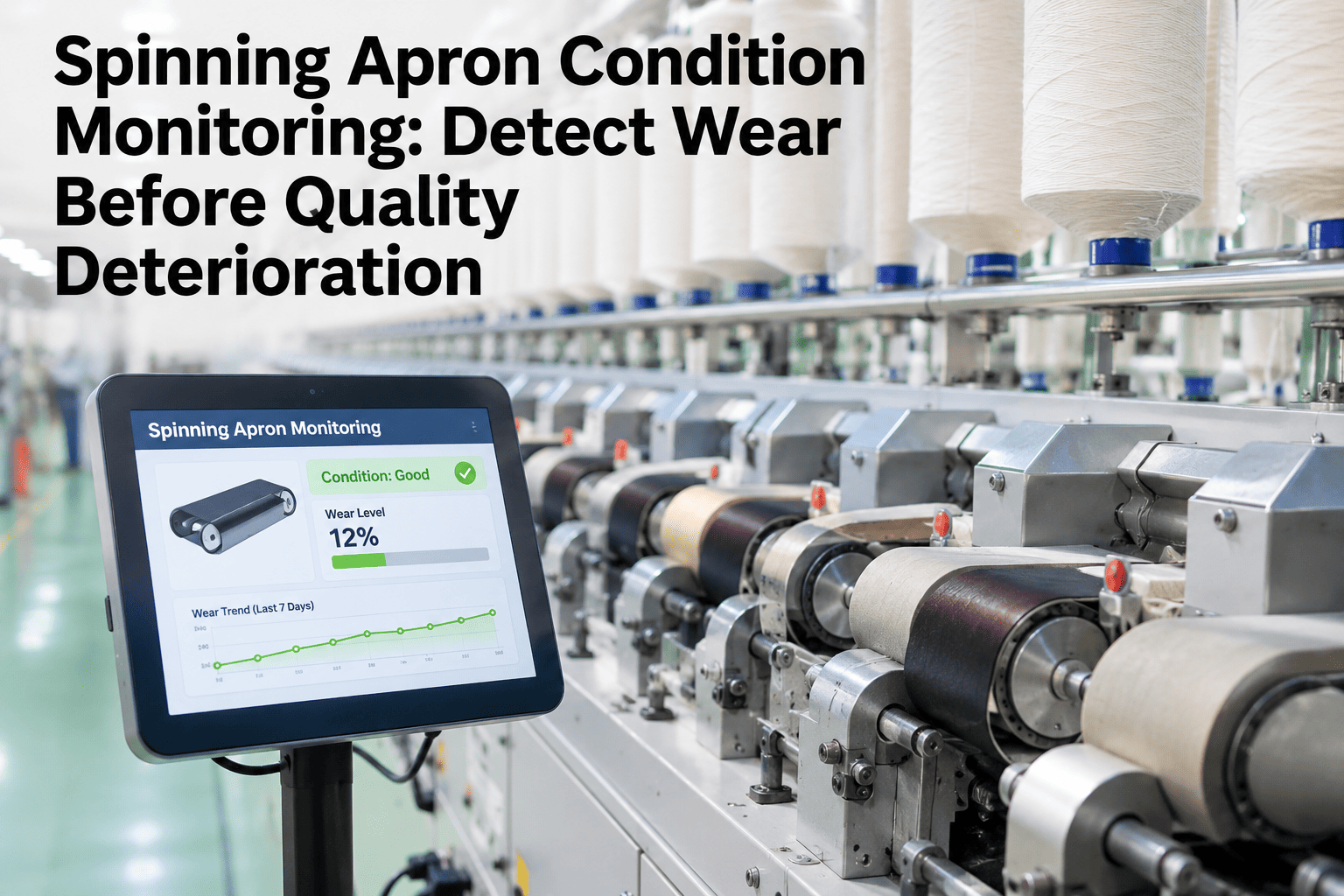
The apron on a ring spinning frame is the highest-friction drafting component, and it hardens quietly — often past the point of affecting quality by around six months of service (textile predictive maintenance industry research, 2026). iFactory, an on-premise AI platform with predictive maintenance built in, ties apron age and maintenance history to the yarn quality it drives. Spinning mill teams who want to see this against their own apron fleet can discuss their plant data with our team.
Spinning Apron Condition Monitoring · Ring Spinning, 2026
An Apron Hardens Quietly for Months Before Anyone Traces a Quality Drop Back to It
iFactory AI tracks apron age and condition against drafting-zone yarn quality, so a hardening apron is replaced on a planned schedule instead of discovered through a quality complaint.
0–3 mo
New, full elasticity and grip
3–6 mo
Early surface wear begins
6 mo+
Hardening threshold — drafting consistency at risk
What apron wear actually does
How a Hardening Apron Changes the Draft
A new apron grips fiber consistently through the drafting zone. As it hardens or glazes, grip becomes uneven, and the fiber is no longer controlled at the same point in the draft every time — which is exactly what produces mass irregularity in the finished yarn.
Reduced elasticity
The rubber loses its ability to maintain consistent nip pressure across the drafting zone.
Surface glazing
A smoothed, hardened surface grips fiber less consistently, especially at higher drafting speeds.
Tension drift
Aging aprons gradually lose tension, changing the nip geometry from its original setting.
Localized damage
Cuts, nicks, or embedded fiber create a repeating defect at the apron's rotational interval.
Maintenance history
Why Apron Age Alone Is Not Enough Context
| Record tracked | Why it matters | Typical source |
|---|
| Installation date | Baseline for calculating service age | Maintenance log |
| Fiber type and count run | Different fibers wear aprons at different rates | Production schedule |
| Last wash/clean date | Contamination accelerates hardening between cleans | Maintenance checklist |
| Tension check result | Confirms whether the apron is still within specification | Weekly inspection |
The quality signal
What to Watch in Yarn Data for an Apron-Driven Defect
Apron-related breaks are commonly clustered on specific spindle positions or roller pairs, often concentrated in one zone of the drafting system, and accompanied by mass irregularity in the yarn rather than a clean, sudden break. That pattern — position-specific, not random across the frame — is the signature that points back to the apron rather than to fiber or environmental conditions.
See Where Your Apron Fleet Sits Against the Hardening Window
Share your apron installation dates and recent quality data, and iFactory AI will show which positions are approaching the point where a replacement should be scheduled.
Reactive vs scheduled
Replacing Aprons After a Complaint Versus Before One
Reactive apron replacement
Apron investigated only after a quality complaint
Affected production has already shipped or been downgraded
Root cause traced backward instead of caught in advance
Condition-tracked replacement
Apron age and quality trend tracked together continuously
Replacement scheduled before quality drifts out of spec
Pattern confirmed against position-level data, not guesswork
Verification checklist
What a Weekly Apron Check Should Confirm
Apron surface free of glazing or visible hardening
No cuts, nicks, or embedded fiber on the surface
Tension within specification for the drafting setting
Alignment consistent with roller nip geometry
Cleaning schedule up to date for the fiber type run
Installation date logged and visible to the maintenance team
Apron compatibility
Not Every Apron Suits Every Count and Fiber Blend
Apron compound, surface texture, and bore size all need to match the fiber being run and the count being spun. A mismatch does not just shorten service life — it can introduce quality variation from day one, before any wear has even occurred.
| Factor | Why it matters | Risk if mismatched |
|---|
| Compound hardness | Controls grip and elasticity for the fiber being drafted | Slippage or premature glazing |
| Surface texture | Affects fiber control through the nip | Inconsistent draft on fine counts |
| Bore and cradle fit | Determines correct seating and tension | Uneven wear across the apron width |
Expert review
What a Spinning Quality Engineer Checks First
Apron condition monitoring is most useful when the quality signal and the maintenance record are reconciled against the same position, since either one alone tells only half the story.
Verdict
Strong when a position-specific break or CV% pattern is checked against apron age before any physical teardown happens.
Watch for
Treating all aprons on a frame as the same age when staggered replacement schedules mean they rarely are.
Do next
Cross-check your last ten position-specific drafting breaks against apron installation dates for those positions.
Frequently asked questions
What Spinning Mills Ask About Apron Monitoring
At what point does an apron typically start affecting quality?
Apron hardening beyond roughly six months of service is a commonly cited threshold where drafting consistency starts to suffer, though fiber type and running conditions shift this window (textile predictive maintenance industry research, 2026).
See how this maps to your apron fleet.
How do we tell an apron-driven break from a traveller or ring issue?
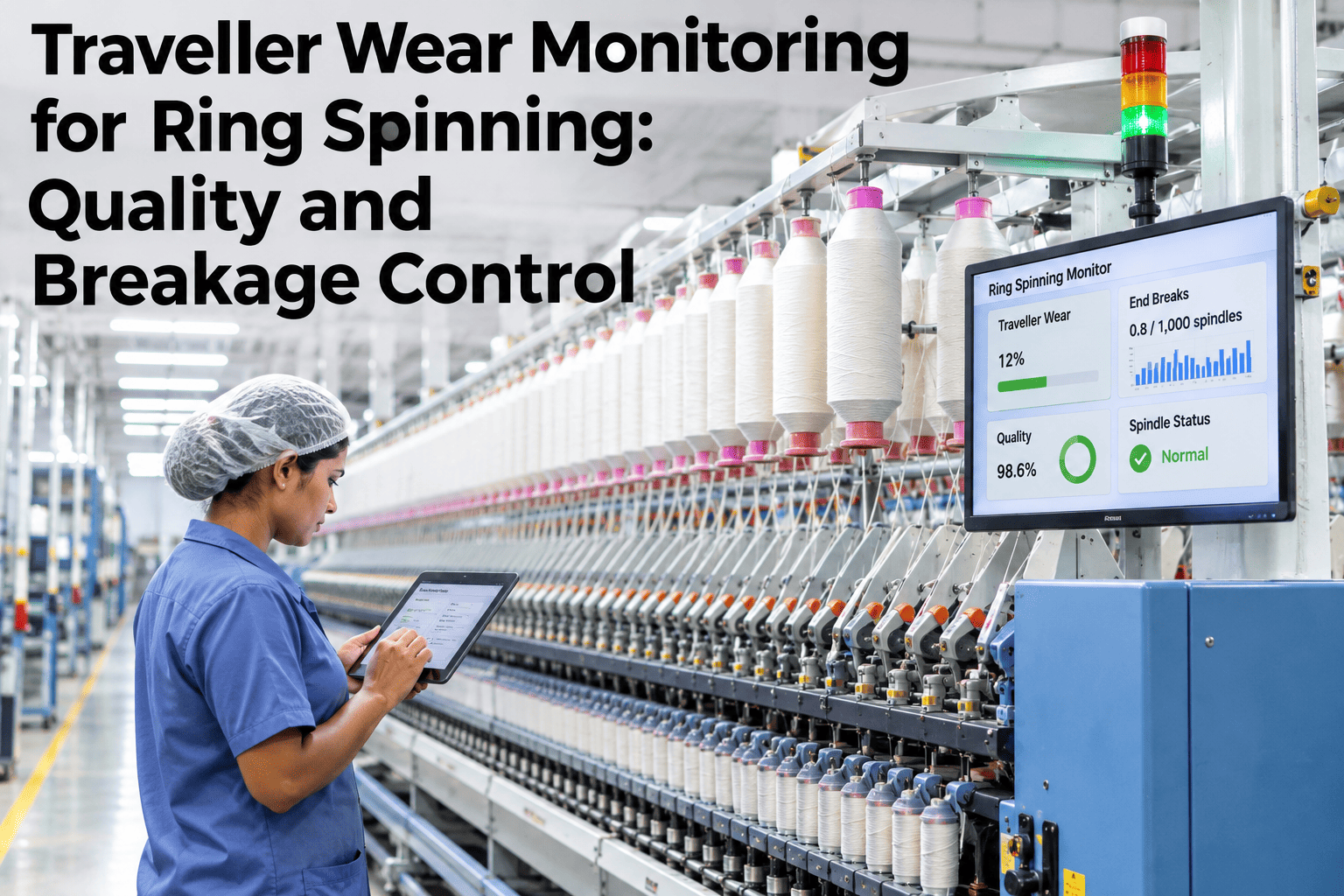
Apron-related breaks tend to cluster on specific drafting positions and come with mass irregularity in the yarn, while traveller and ring issues more often correlate with vibration and show as clean, sudden breaks.
Ask support how to read your break pattern.
Does fiber type change how fast an apron wears?
Yes — fiber type and count run both affect wear rate, which is why apron condition tracking should account for what has actually been running through each position, not just elapsed calendar time.
Discuss your fiber mix and wear patterns.
Can apron condition be checked without stopping the frame?
A visual and tension check typically requires the frame to be stopped briefly, but tracking the quality signal that an apron influences can be done continuously from yarn evenness data without any extra downtime.
Ask support about non-stop monitoring options.
How does this fit into our existing weekly maintenance checklist?
Apron condition tracking adds the age and quality-trend layer on top of the physical weekly check that most mills already run, so the checklist stays the same but the replacement decision gets better data behind it.
Talk through how this fits your checklist.
Schedule the swap before the complaint arrives
Track Apron Condition Against the Quality It Drives
Book a session with iFactory AI to see how connected apron tracking would work on your frames.
{"@context":"https://schema.org","@type":"FAQPage","mainEntity":[
{"@type":"Question","name":"At what point does an apron typically start affecting quality?","acceptedAnswer":{"@type":"Answer","text":"Apron hardening beyond roughly six months of service is a commonly cited threshold where drafting consistency starts to suffer."}},
{"@type":"Question","name":"How do we tell an apron-driven break from a traveller or ring issue?","acceptedAnswer":{"@type":"Answer","text":"Apron-related breaks tend to cluster on specific drafting positions with mass irregularity in the yarn, while traveller and ring issues more often show as clean, sudden breaks."}},
{"@type":"Question","name":"Does fiber type change how fast an apron wears?","acceptedAnswer":{"@type":"Answer","text":"Yes, fiber type and count run both affect wear rate."}},
{"@type":"Question","name":"Can apron condition be checked without stopping the frame?","acceptedAnswer":{"@type":"Answer","text":"A visual and tension check typically requires stopping the frame briefly, but the quality signal an apron influences can be tracked continuously."}},
{"@type":"Question","name":"How does this fit into our existing weekly maintenance checklist?","acceptedAnswer":{"@type":"Answer","text":"Apron condition tracking adds an age and quality-trend layer on top of the physical weekly check most mills already run."}}
]}