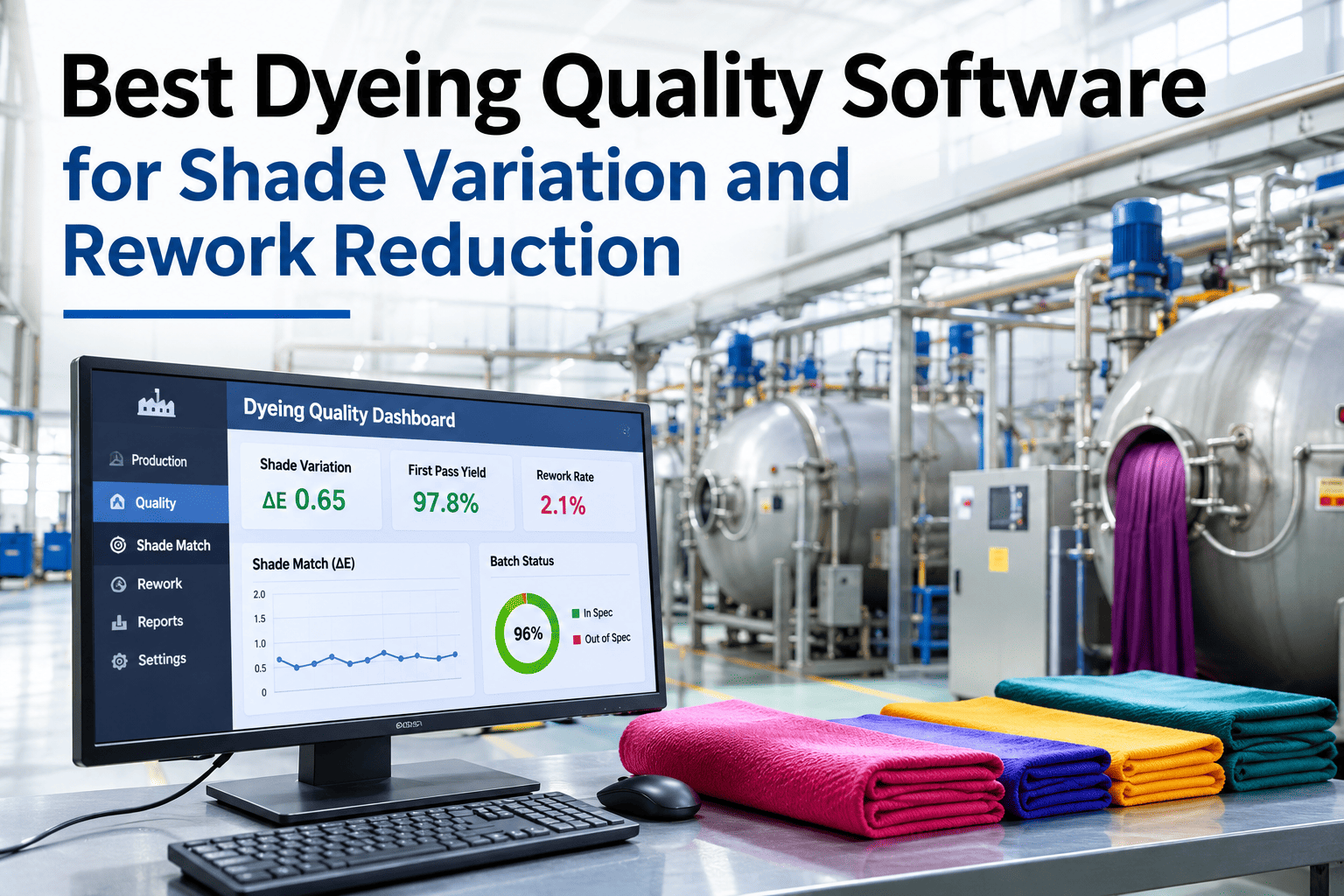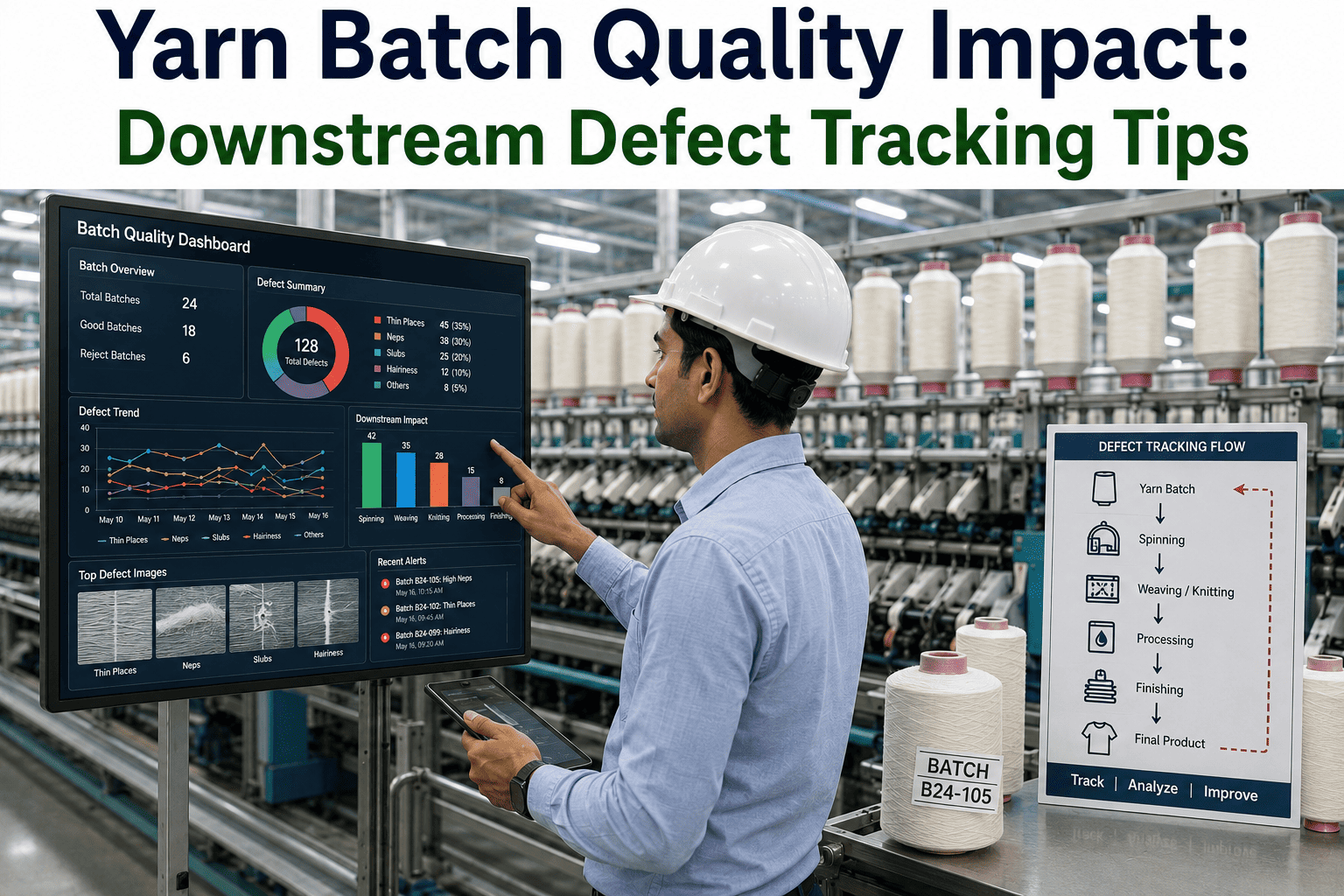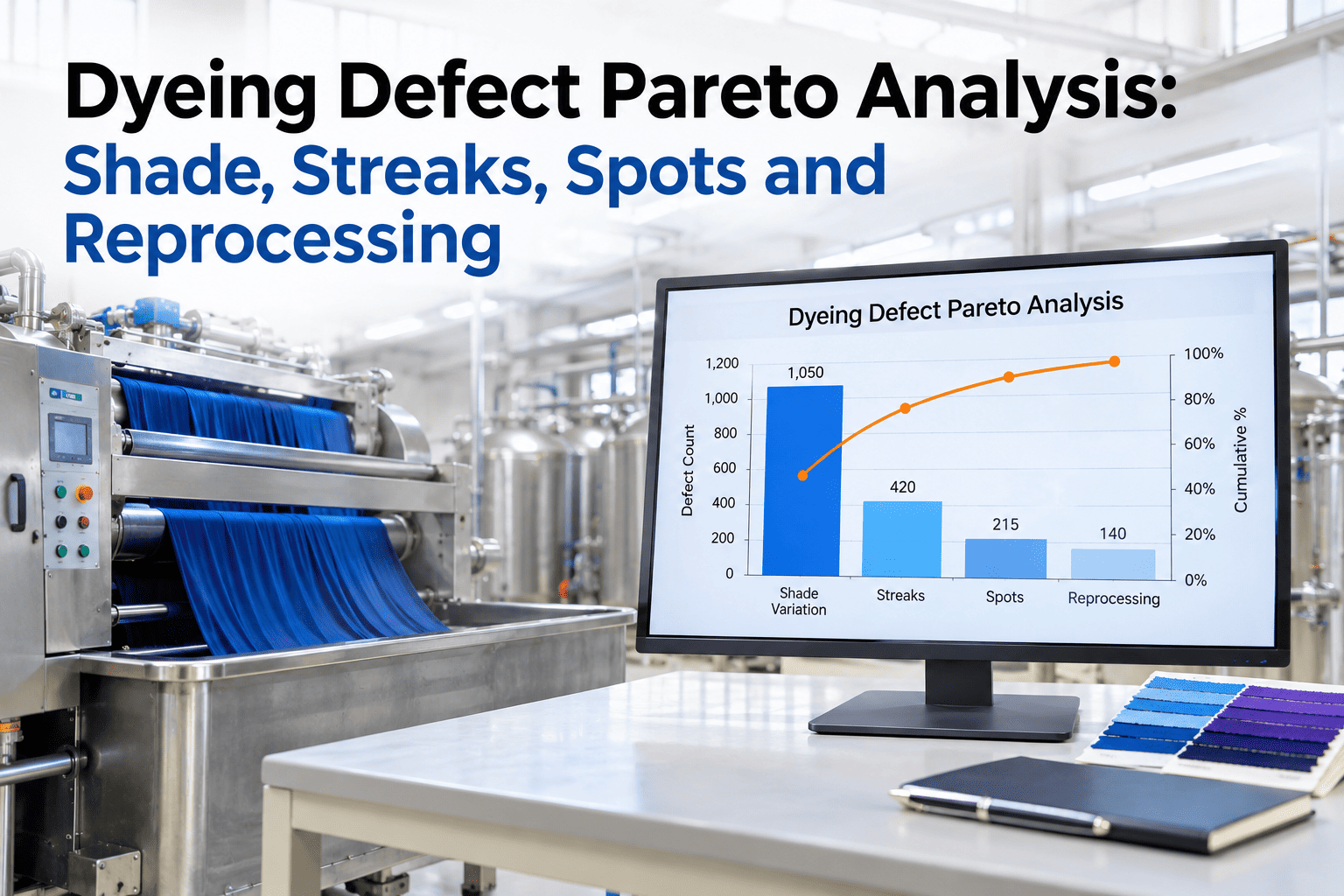
A dye house tracking defects by total reprocessing hours often finds that a handful of defect types — shade variation, streaks, spots — account for most of the loss, but without ranking them by batch, machine and recipe together, improvement effort tends to spread evenly across all of them instead of concentrating where it would actually help. A proper Pareto view ranks dyeing defects by real impact and breaks them down by the dimensions that reveal their cause. Dye house quality teams can review a defect Pareto built from their own reprocessing data with iFactory AI.
Shade, Streaks and Spots Don't Cost the Same — Rank Them to Find Out
iFactory AI ranks dyeing defects by batch, machine and recipe, focusing improvement effort on the highest-impact causes instead of spreading it evenly.
Illustrative Defect Ranking by Reprocessing Cost
The defect with the most individual occurrences is not always the one costing the most, since reprocessing time and severity differ meaningfully between defect types.
Breaking Each Defect Down by Cause
| Defect type | Common machine cause | Common recipe cause |
|---|---|---|
| Shade variation | Inconsistent circulation or heating | Dosing accuracy for the specific recipe |
| Streaks | Fabric handling or tension inconsistency | Chemical addition timing or sequence |
| Spots | Contamination in the machine or liquor | Incompatible chemical combination |
See Which Defect Is Actually Costing You the Most
Share recent reprocessing records and a short session will rank your own defects by real cost impact.
A Composite Scenario: The Defect That Was Actually the Priority
A dye house's quality team had been focused on reducing spots, the most frequently discussed defect in weekly meetings, while shade variation received comparatively little attention despite also appearing regularly. Ranking by actual reprocessing cost rather than complaint frequency showed shade variation accounted for substantially more total reprocessing time, since each occurrence typically required a longer correction process than a spot defect did. Redirecting improvement effort toward shade variation's machine and recipe causes produced a larger overall reduction in reprocessing cost than continued focus on spots would have — a reprioritization iFactory AI's team can help apply to your own defect data.
Why Machine and Recipe Breakdowns Matter Together
A defect type ranked highest by cost still needs its own breakdown by machine and recipe to point toward a specific fix. The same defect type can have different root causes on different machines or with different recipes, so the Pareto ranking tells you where to look, and the breakdown tells you what to actually fix.
Frequently Asked Questions
Focus Improvement on the Defect Actually Costing You the Most
iFactory AI ranks dyeing defects by batch, machine and recipe to find the real priority. Book a walkthrough with your own reprocessing data.