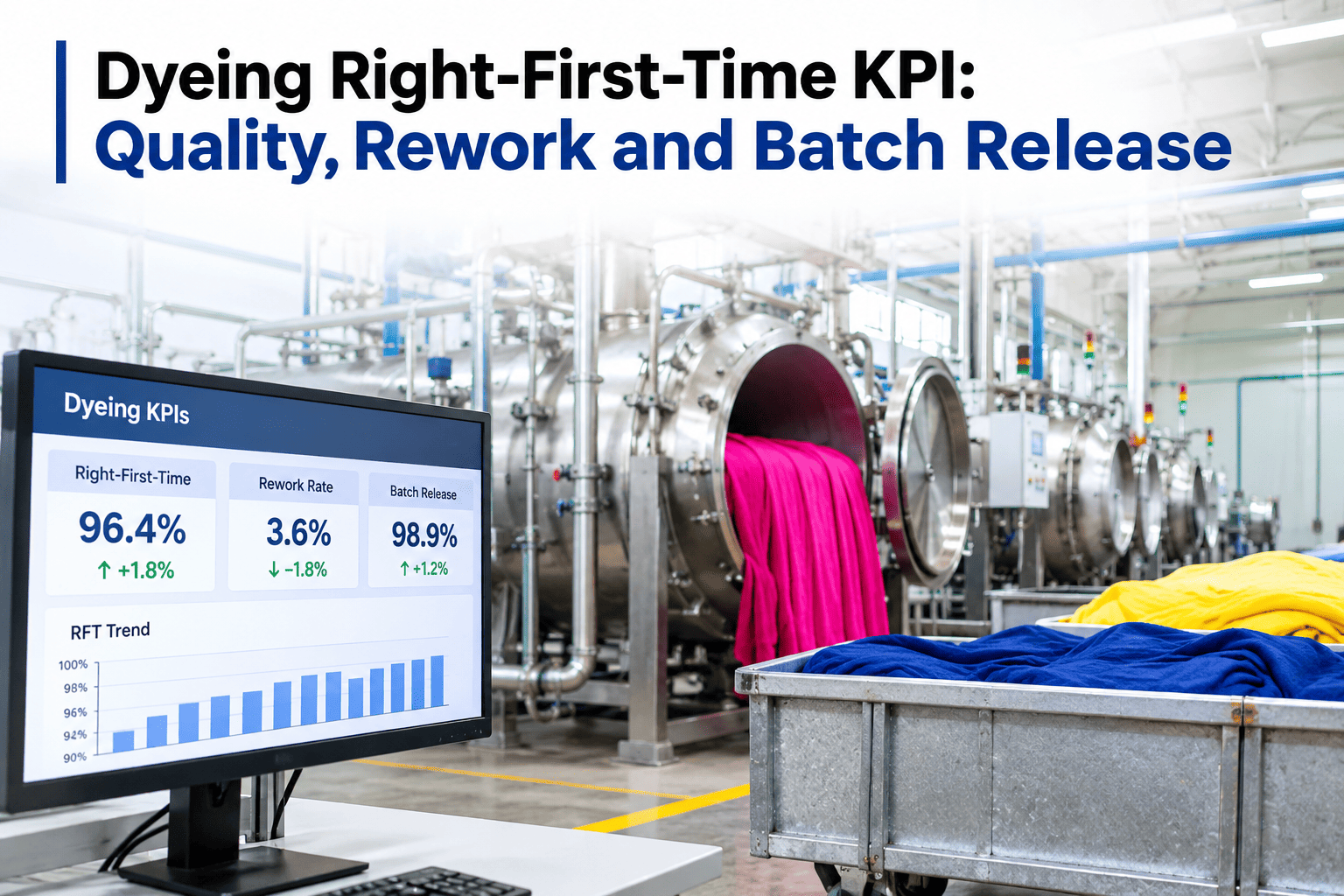
Right-first-time sounds like a simple number, but most dye houses can't actually produce it reliably, because shade approval, rework and re-dyeing records often live in separate logs that nobody has connected into one metric per batch. Measuring RFT properly means tracking every batch from initial dye through shade approval, rework if needed, and final release, so the number reflects what actually happened to each batch rather than an estimate. Dye house managers who want their own RFT measured this way can review an RFT tracking setup against their own batch records with iFactory AI.
Most Dye Houses Can't Actually Calculate a Trustworthy RFT Number
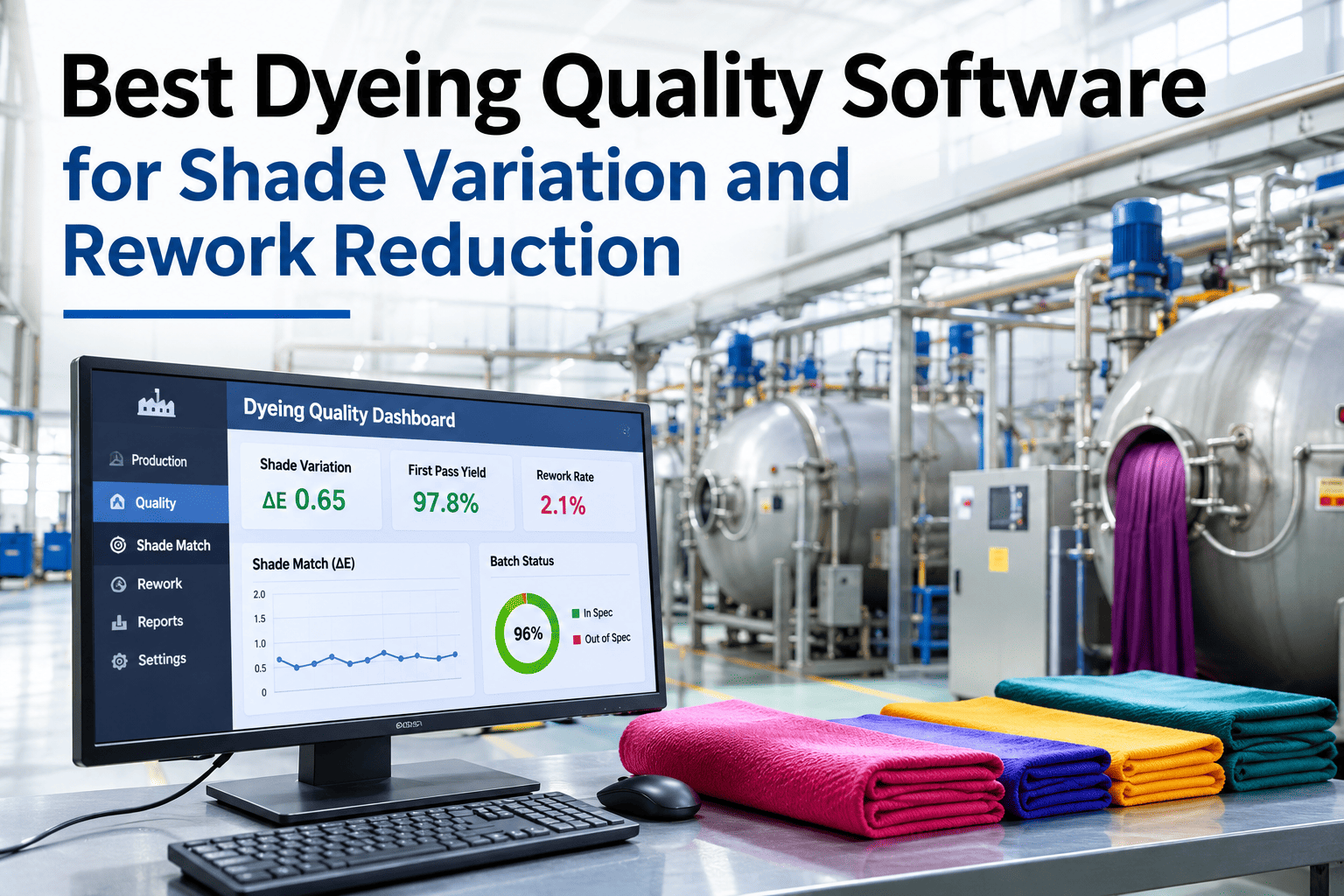
iFactory AI tracks every batch from dye through shade approval, rework and release, so right-first-time reflects what actually happened, not an estimate.
The Path Every Batch Takes
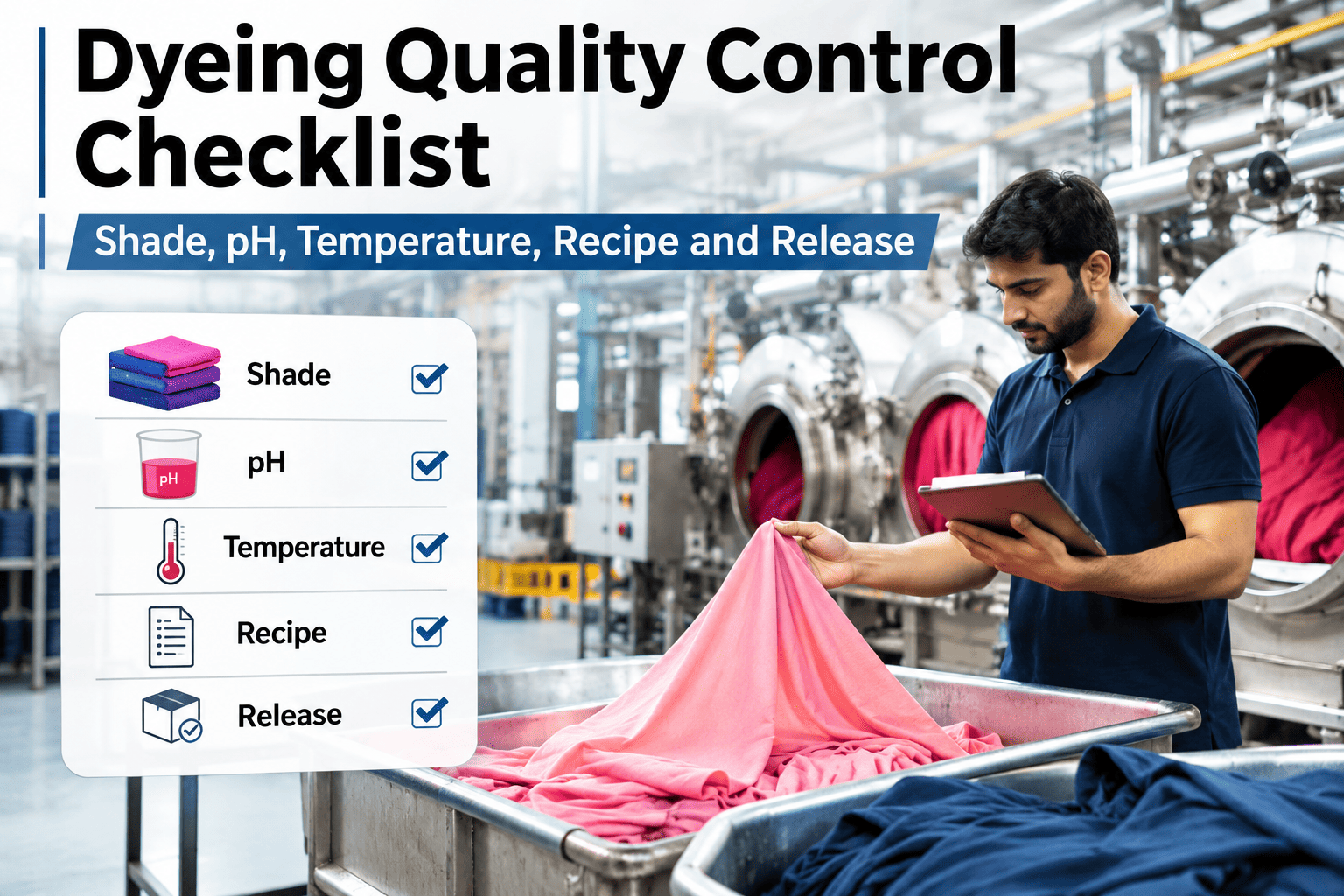
A batch that passes shade approval on the first attempt, with no rework, is right-first-time. Any detour from that path should count against the metric — but only if every step is actually tracked back to the same batch.
What Breaks a Trustworthy RFT Number
| Gap | Effect on RFT accuracy |
|---|---|
| Shade approval logged separately from batch record | RFT calculated from estimates, not actual batch outcomes |
| Minor rework not consistently logged | RFT overstated — some reworked batches counted as first-time |
| Re-dyeing tracked in a different system | Full batch history incomplete, understating true rework rate |
Check Whether Your Current RFT Number Is Actually Reliable
Walk through how your current RFT is calculated to see where the gaps might be inflating the number.
A Composite Scenario: The RFT Number That Was Too Good to Be True
A dye house reported a consistently high RFT rate for months, but the number was calculated from the shade approval log alone, which didn't capture minor rework done informally before a batch reached formal approval. Connecting the full batch path — dye, rework events, and approval — to one record per batch revealed the real RFT rate was meaningfully lower than reported, since a noticeable share of batches had undergone minor correction that the approval-only number never counted. Having an accurate baseline, even a less flattering one, let the dye house actually target the rework that mattered rather than working from a number that masked the real problem — a correction iFactory AI's team can help apply to your own RFT tracking.
Why an Accurate RFT Matters More Than a High One
An inflated RFT number feels good to report but provides no real basis for improvement, since it hides exactly the rework that should be driving corrective action. A lower but accurate number is far more useful, because it reflects reality closely enough to actually track whether improvement efforts are working.
Frequently Asked Questions
Measure an RFT Number You Can Actually Trust
iFactory AI tracks every batch from dye through approval and release in one connected record. Book a walkthrough with your own batch data.