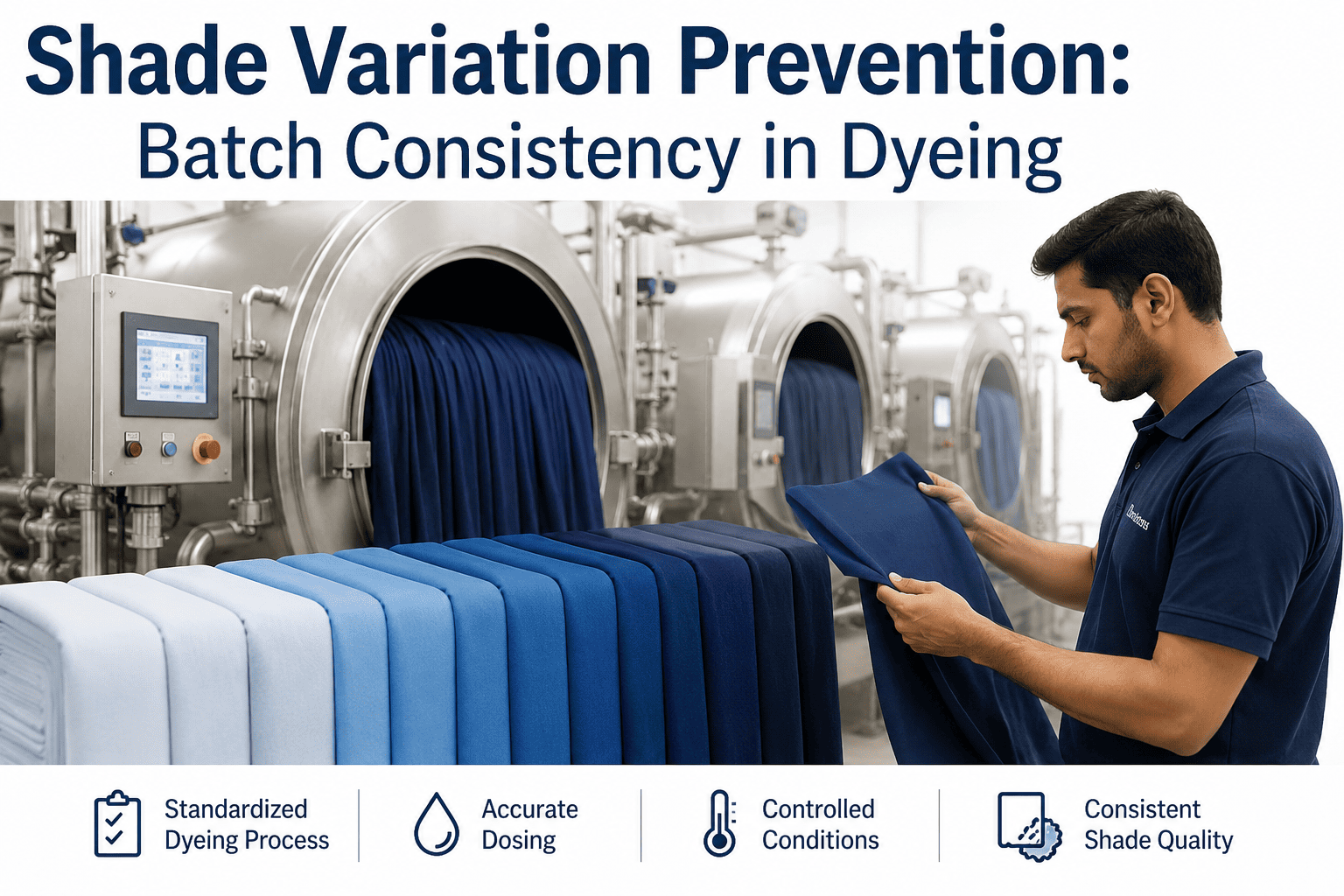
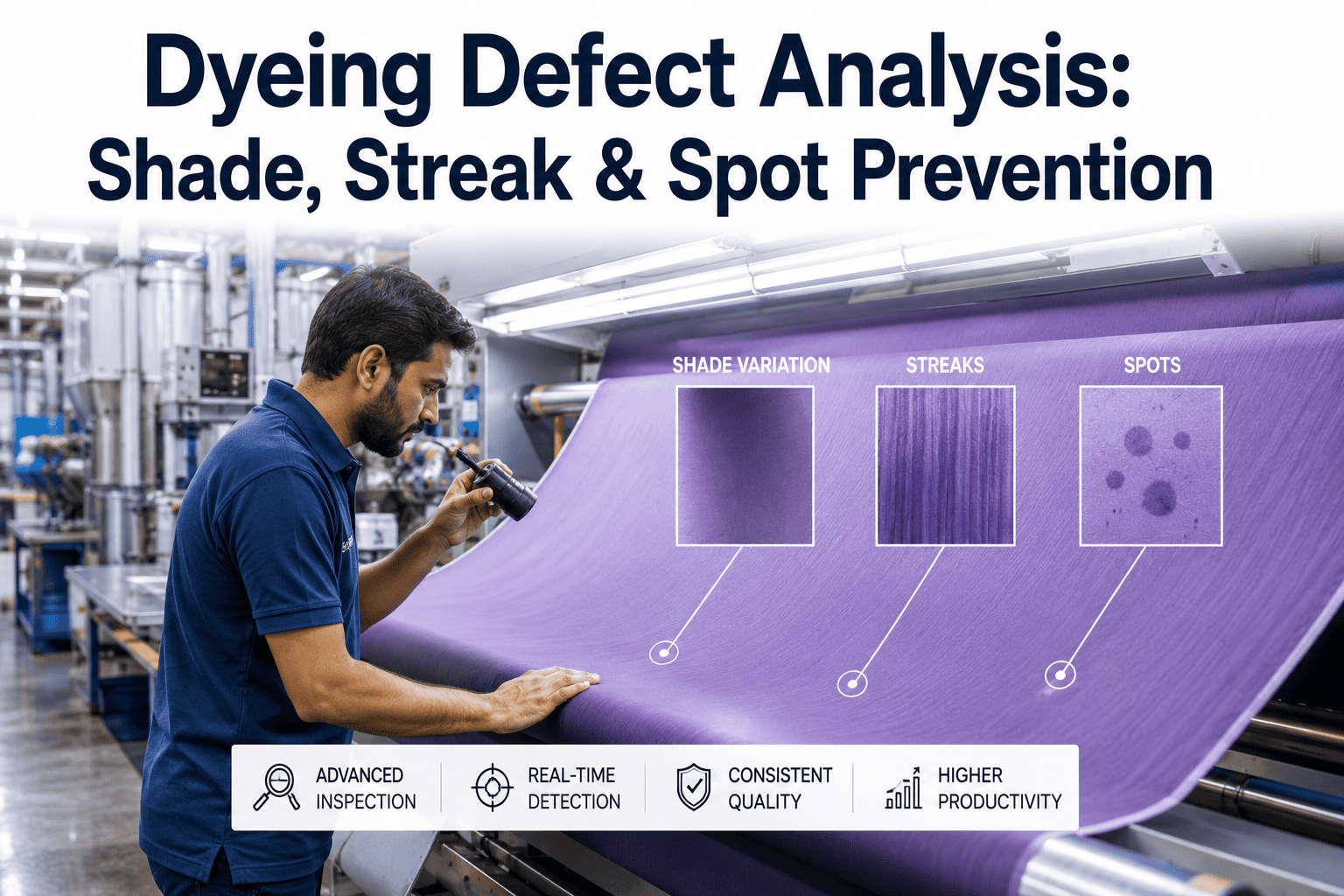
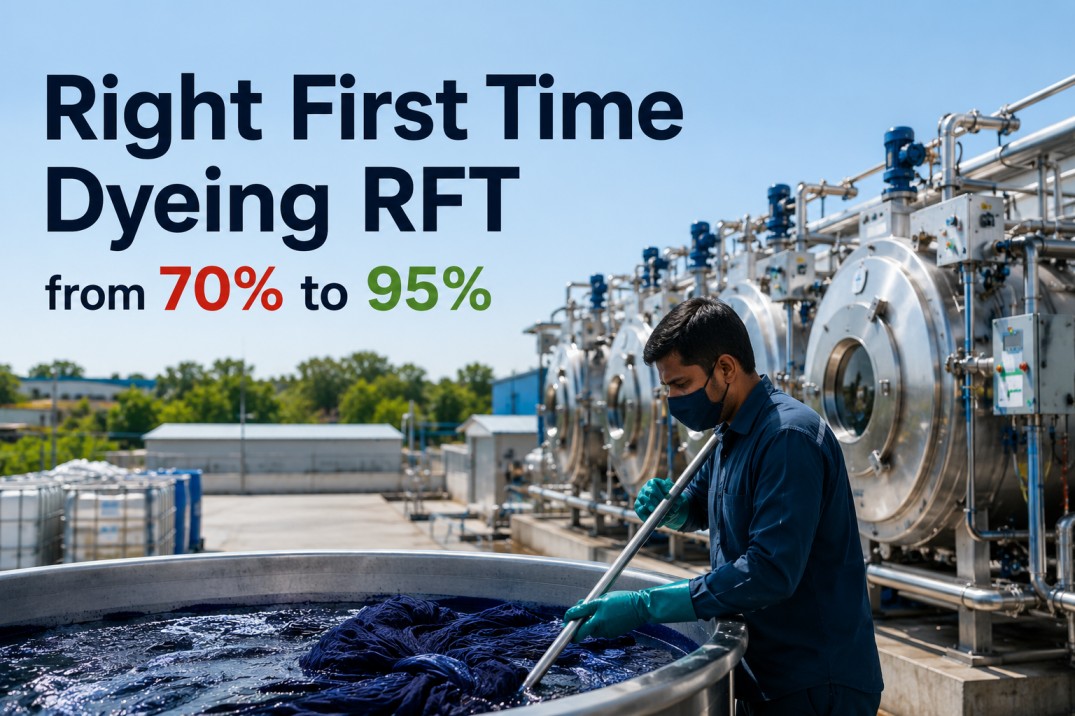
Getting a shade right the first time has traditionally depended on a colorist's experience and a fair amount of trial dyeing, which means the same skill walks out the door whenever an experienced colorist leaves. Machine learning models trained on a plant's own historical recipe-and-result data can now predict how a new recipe will actually dye on real fabric, and more importantly can suggest a correction mid-cycle when the developing shade starts drifting away from target. This does not replace the colorist's judgment so much as it gives that judgment a much larger and more consistent memory to draw on. Book a demo to see AI shade prediction trained on your own recipe history.
Where Traditional Shade Matching Runs Into Limits
Conventional shade matching is reactive by design, comparing a finished result against a standard rather than forecasting the result before it happens.
01
Correction happens after the batch, not during it
A spectrophotometer reading taken after dyeing tells you the batch is off, but by then the only option is a re-dye or a shade correction addition, both of which cost time, dye, and water that a mid-cycle correction would have avoided.
02
Recipe prediction relies on individual colorist memory
An experienced colorist carries years of pattern recognition about how specific dye combinations behave on specific fabric types, but that knowledge is rarely documented in a form the next colorist or a new machine can draw on directly.
03
New recipes still require trial dyeing
Without a data-driven prediction model, a genuinely new shade target usually goes through one or more physical trial dips before the production recipe is finalized, adding both time and material cost to every new development.
Turn Years of Recipe History Into a Predictive Model
iFactory trains shade prediction on your own historical recipe-and-result data, forecasting outcomes before the bath runs and flagging correction opportunities while it's still in progress.
How a Shade Prediction Model Actually Works
The model learns from the relationship between recipe inputs and measured outcomes across every batch a plant has already run, then applies that learned relationship forward.
1
Historical recipe-result pairs are compiledEvery past batch's recipe, dye class, fabric type, and the spectrophotometer-measured result are compiled into a structured dataset the model can learn patterns from.
2
A machine learning model is trained on that historyThe model learns how specific dye combinations, concentrations, and process conditions translate into measured shade outcomes on your specific fabrics and machines, not a generic industry average.
3
A new recipe is predicted before dyeingGiven a target shade and fabric type, the model forecasts the likely outcome of a candidate recipe, narrowing the number of physical trial dips needed to reach an acceptable match.
4
Mid-cycle readings are compared against the predictionAs the batch progresses, in-process readings are compared against the model's expected trajectory, and a meaningful deviation triggers a correction recommendation while the bath is still running.
Correction Timing: Traditional vs AI-Assisted
| Stage | Traditional Approach | AI-Assisted Approach |
| Recipe Development |
One or more physical trial dips |
Predicted from historical data, fewer trials |
| Mid-Cycle Monitoring |
Not typically checked until completion |
Compared against predicted trajectory in real time |
| Correction Point |
After batch, via re-dye or addition |
During batch, while correction is still feasible |
| Institutional Knowledge |
Held individually by senior colorists |
Captured in a model trained on plant history |
See a Prediction Model Built From Your Own Batches
iFactory builds shade prediction models from your plant's actual recipe-and-result history, not a generic dataset, so predictions reflect how your fabrics and machines really behave.
What This Delivers in Practice
95%+
Target Right-First-Time Rate With Mature Models
Mid-Cycle
Correction Point, Not Post-Batch
Fewer
Physical Trial Dips Per New Shade
Our best colorist retired after eighteen years, and we genuinely worried about how much of our shade-matching accuracy would go with him. We started feeding his recipe history into a prediction model a year before he left, and the model has since caught two mid-batch drifts that we would have only found at the final lab check under our old process.
Head of Color Lab
Reactive and Disperse Dyeing Unit — Surat
Frequently Asked Questions
QHow much historical data does a plant need before a prediction model becomes useful?
Model accuracy improves with more historical recipe-result pairs, but plants generally see useful predictions once a few hundred batches across the relevant dye classes and fabric types are available, with accuracy continuing to improve as more batches accumulate over time. A model trained on a narrow set of frequently repeated recipes tends to reach useful accuracy faster than one covering highly varied, one-off recipes.
QDoes AI shade prediction eliminate the need for a spectrophotometer?
No, spectrophotometer readings remain essential both as the ground truth data the prediction model trains on and as the mid-cycle and final verification against the prediction, so the two work together rather than one replacing the other. The model's value comes from using existing spectrophotometer data more predictively, not from bypassing objective color measurement.
QCan the model handle a genuinely new fabric type it has not seen before?
A model trained primarily on one fabric family will generally predict less accurately on a fabric type it has little or no history with, since it is learning patterns specific to how dye behaves on the fabrics it was trained against. Accuracy on a new fabric type improves as batches on that fabric accumulate, so the first several batches on any genuinely new fabric still benefit from closer manual oversight.
Talk to an expert about onboarding a new fabric type into your model.
QDoes this replace the colorist's role on the floor?
The model is designed to extend a colorist's judgment rather than replace it, narrowing down which recipes are worth trialing and flagging when a running batch is deviating from prediction, while the colorist still makes the final call on recipe approval and correction decisions. Plants that have implemented this typically describe it as giving every colorist access to the plant's collective recipe history rather than only their own personal experience.
QWhat happens if a mid-cycle correction recommendation turns out to be wrong?
Every prediction and correction recommendation is logged alongside the actual measured outcome, which both flags cases where the model's recommendation did not hold and feeds that discrepancy back into future model refinement, so accuracy improves over time rather than repeating the same miss. This feedback loop is part of why prediction accuracy tends to improve the longer a model has been running on a given plant's data.
Book a demo to see how correction accuracy is tracked over time.
Predict the Shade Before the Batch, Not After
iFactory builds AI shade prediction and mid-cycle correction from your own recipe history, moving right-first-time accuracy toward 95% and higher.